“A society that puts equality before freedom will get neither. A society that puts freedom before equality will get a high degree of both.” — Milton Friedman
In 1965 Malaysia kicked Singapore out of the Malaysian federation, and Tunku Abdul Rahman thought he had won. He had dumped a port city with no oil, no farmland, no fresh water, and two and a half million people crammed onto an island smaller than Lake Tahoe. Sixty years later Singapore's GDP per capita runs past $84,000 while Malaysia limps along under $12,000. The man who got expelled built the richest patch of dirt in Asia. The man who did the expelling built the New Economic Policy.
Let's study what happened.
Start with what Singapore lacked. No resources. No hinterland. No domestic market worth the name. By every theory that says a nation needs raw materials to prosper, Singapore should have starved. Instead Lee Kuan Yew made his country a place where capital felt safe. Low tariffs. Easy entry for foreign firms. Courts that enforced contracts instead of shaking down the parties. Corporate tax dropped to 17 percent, personal rates capped at 22, no tax on most capital gains. Money flowed in because money is not stupid.
Malaysia chose the opposite. The New Economic Policy was racial central planning dressed up as fairness. Bumiputera quotas demanded that ethnic Malays hold 30 percent of corporate equity, that government contracts favor Malay-owned firms, that universities admit by race rather than ability. The state picked winners by bloodline. Predictably, the productive Chinese and Indian minorities took their capital and brains elsewhere, much of it to (where else) Singapore. You distort prices and incentives long enough, the talented people leave. They always leave.
Lee Kuan Yew was not perfect. The man jailed opponents, sued journalists into poverty, and ran a soft authoritarian state with a fondness for caning. He banned chewing gum, which is the kind of thing a control freak does when he runs out of real problems. Singapore is no libertarian paradise. The government owns Temasek and GIC, sovereign wealth funds sitting on close to a trillion dollars combined, and public housing covers 80 percent of the population. Plenty there for a free market thinker to dislike.
But here is the lesson Malaysia missed. Lee understood the difference between an interventionist government and a parasitic one. Singapore's state stayed mostly out of the price system. It kept inflation low, the currency credible, the bureaucracy clean, and trade open. Transparency International ranks it the fifth least corrupt country on earth. Malaysia sits at 57th, with a former prime minister, Najib Razak, currently serving time for looting 1MDB to the tune of billions. One country treated public office as a trust. The other treated it as a buffet.
Capital responds to incentives, not slogans. When Singapore guaranteed property rights and kept the rules predictable, Exxon and Shell built refineries, banks set up regional headquarters, and the port became the busiest transshipment hub in the world. When Malaysia told investors that race would override merit and that the rules could change whenever a minister felt like it, the smart money discounted everything by a risk premium. Over fifty years that premium compounds into a $70,000 gap in living standards.
No, it’s not “Pride Month.” Not for me, and not for millions of others.
You’re welcome to be proud of whatever you want, in any month you like—because this is America. But what started in 1969 as a rebellion against persecution, morphed into a license for public depravity, and then morphed again into a weapon aimed at families and innocent children. Along the way it went from a day, to a week, and then a month and became official, and thereby effectively mandatory for all.
Enough!
If you’re gay and wondering why you are facing resistance now, the answer is that, with few exceptions, most of you didn’t stand up against the expansion and weaponization of “pride,” and the coercion that went with it. In that failure to resist, the gay community compromised any expectation that the rest of us should support “pride” at all, but especially the obscene display of hostility toward civilization and the families of which it is built, and for whom it exists.
If your hackles are raised by the idea that civilization is about families, realize that families are how civilizations persist through time. Not everyone needs to form one, but we all must respect and protect them—It is the foundation of what it means to be civilized.
For the small fraction of gays and lesbians who DID courageously stand up and resist expansion, coercion and the weaponization of “Pride,” I stand with you, and I have all along. But I won’t be celebrating, and I won’t be silent.
It’s not too late to join the voices of reason and to confront the insanity of what “pride” has become.
History will remember Elon Musk alongside DaVinci, Gutenberg, Fulton, Pasteur, Edison, Ford and Jobs.
History will have no recollection of any kind of Ro Khanna.
> you’ll never start a rocket company
> you’ll never build your own engines
> you’ll never be able to use off-the-shelf parts
> you’ll never survive three launch failures
> you’ll never reach orbit
> you’ll never win NASA’s trust
> you’ll never launch cargo to the ISS
> you’ll never compete with Boeing
> you’ll never compete with Lockheed
> you’ll never make rockets reusable
> you’ll never land a rocket vertically
> you’ll never land one on a drone ship
> you’ll never reuse a booster
> you’ll never fly the same booster 10 times
> you’ll never fly the same booster 20 times
> you’ll never fly the same booster 30 times
> you’ll never recover and reuse the fairing
> you’ll never lower launch costs
> you’ll never launch every month
> you’ll never launch every week
> you’ll never launch multiple times a week
> you’ll never carry astronauts
> you’ll never replace Roscosmos
> you’ll never fly civilians to orbit
> you’ll never manufacture satellites at scale
> you’ll never build the biggest constellation ever
> you’ll never make satellite internet work
> you’ll never make satellite internet fast
> you’ll never make satellite internet affordable
> you’ll never serve rural customers
> you’ll never serve aircraft and ships
> you’ll never build a methane rocket engine
> you’ll never make full-flow staged combustion work
> you’ll never build the most powerful rocket ever
> you’ll never build a rocket bigger than Saturn V
> you’ll never build it out of stainless steel
> you’ll never launch Starship
> you’ll never separate Super Heavy and Starship
> you’ll never relight Raptor in space
> you’ll never bring Super Heavy back
> you’ll never catch a booster with Mechazilla tower arms
> you’ll never launch 85% of mass to orbit worldwide
> you’ll never change the economics of space
> you’ll never force the entire industry to copy you
> you’ll never win
> you’ll never IPO
Congratulations to @elonmusk and the SpaceX team. You did what countless people said was impossible, and you did it time and time again.
Today is your day. You deserve this. May it be a glorious one.
Hello Senator....
This November it will be 50 years since you were first elected to Congress, so we want to be the first to say .
"Happy 50th Anniversary of drawing a taxpayer funded salary."
That is quite an achievement.
In fact - you are 2nd longest-still serving member in Congress.
It has been a long time since you held a private sector job.
AND yes 50 years ago - in 1976 (it was America's Bicentennial that year) - people still punched clocks back then. The world has changed a lot.
During your 50 years in Congress - you watched as the creators and inventors and producers changed the world, creating trillions in new wealth, millions of new jobs and dramatically raising living standards for everyone rich and poor alike.
And for 50 years you have voted to raise taxes and regulate and oversee every move of the private sector.
You have never created or invented or produced. Just taxed and regulated and outraged.
But thank you for using the platform the "TRILLIONAIRE class" has provided to the entire world for free to tell us all how disgusted you are.
We would never know otherwise.
John Maynard Keynes lived as a quintessential elitist who despised the very people his theories claimed to help. While you hear endless praise for his "compassionate" economics, the man himself viewed workers and savers with open contempt, calling them irrational actors who needed enlightened technocrats to manage their affairs.
The Cambridge don made his fortune speculating in currencies and commodities while simultaneously advocating for government controls that would eliminate such opportunities for ordinary people. He lost his shirt in 1928, then again in 1929, proving himself a mediocre investor despite his theoretical "brilliance". His personal financial disasters never dimmed his confidence that he could engineer prosperity for entire nations.
Keynes openly admitted his theories served political expediency rather than economic truth. In a 1944 letter to Friedrich Hayek, he wrote that he expected his ideas to be temporary measures, lasting perhaps 25 years before sounder thinking would prevail. He never intended his deficit spending prescriptions to become permanent doctrine.
The man who gave intellectual cover to every government's spending addiction actually agreed with free market economists on the long run. He simply believed political reality made sound economics impossible. His famous quip "in the long run we are all dead" was political cynicism: politicians need solutions that work before the next election, consequences be damned.
You celebrate Keynes as the savior of capitalism, but he designed his system to give politicians exactly what they wanted: intellectual permission to spend money they didn't have on programs that bought votes. He knew this would end badly. He just figured someone else would clean up the mess after he died.
Andrew Jackson destroyed the Second Bank of the United States in 1836, delivering the single greatest blow to financial tyranny in American history. You won't hear this story told correctly in any economics textbook, because it reveals how central banking works: as a government-sponsored cartel that redistributes wealth from productive citizens to politically connected bankers.
The Second Bank held a 20-year federal charter starting in 1816. It controlled the money supply, issued currency, and held government deposits. Sound familiar? Nicholas Biddle, the bank's president, wielded more economic power than any elected official. He could trigger financial panics at will by restricting credit. He bought newspapers and bribed congressmen. When Jackson opposed recharter in 1832, Biddle deliberately crashed the economy to punish him.
Jackson called it "a hydra of corruption" and he was right. The bank created artificial booms through credit expansion, then triggered busts when politically convenient. Biddle openly bragged about manipulating markets. Free market economists and Jackson both recognized the core insight: this was legalized counterfeiting with government backing, not free market banking.
The political establishment united against Jackson. Henry Clay, Daniel Webster, and the entire Whig Party defended the bank. Biddle spent millions buying influence. The press attacked Jackson as an economic ignoramus. Every "respectable" voice supported recharter. Jackson stood alone with the American people.
After Jackson killed the bank, the country experienced the strongest economic growth in its history. From 1837 to 1862, America operated without a central bank. Industry flourished. Wages rose. Innovation exploded. This wasn't coincidence. When you stop subsidizing financial speculation and let productive capital find its natural home, prosperity follows.
Central banks don't stabilize economies: they destabilize them for private gain.
@BIGBADCAPS@kevinnbass This response shows you are either a moron or you’re willing to look like a moron so you can get some clicks and make fifty bucks from X. Pathetic!
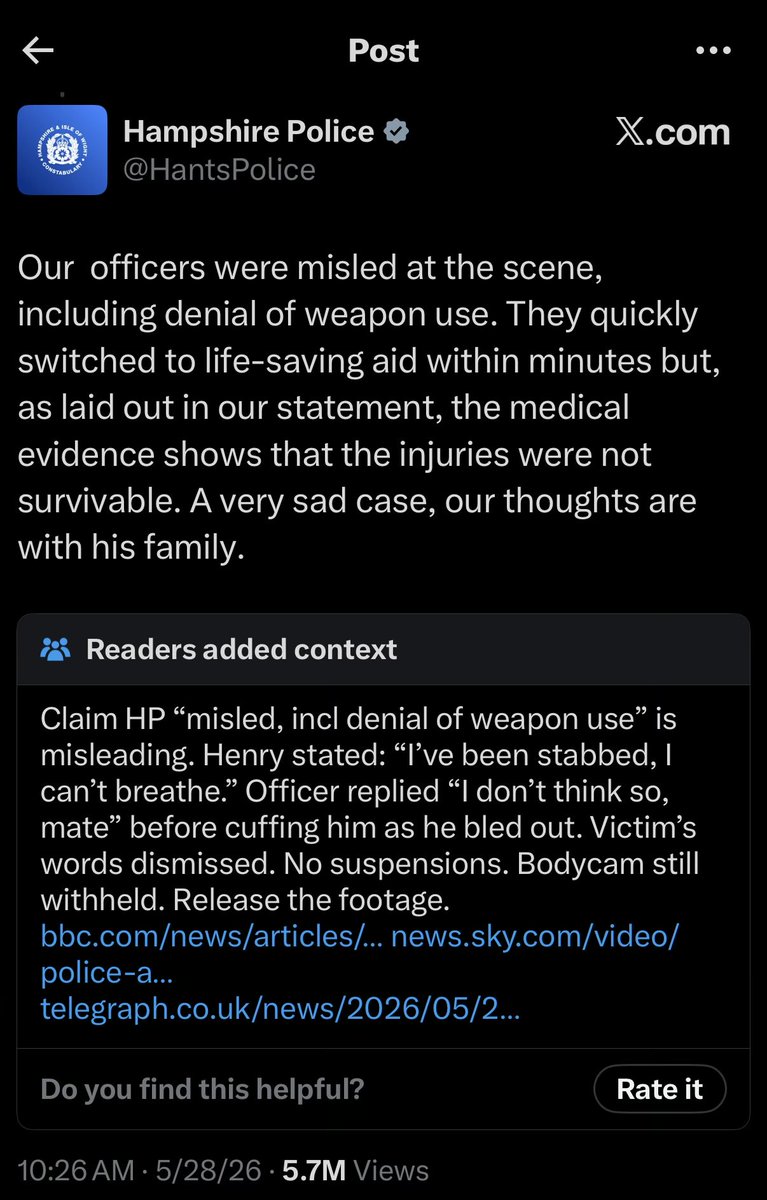
Henry Nowak died the same way a civilization dies: abandoned, handcuffed by authorities who neither trusted nor cared for him, and accused of hate crimes he did not commit. His murder is as tragic as it is enraging. He should still be alive today, and he would be if the last few generations of European elites had stood their ground against the politics of self-hatred and the mass invasion of migrants, many of whom despise the West and the people who love it.
Henry was far from the first to so needlessly lose his life, and I fear he won’t be the last. Each time a life like his is lost, the proper response—the only response—is righteous anger. One of the most important things the Trump administration has proven to the world is that stopping the flow of mass migration and defending national sovereignty is a matter of political will and leadership. Anything else is an excuse.
It is because we love the West that we want to preserve it. We love our civilization. We love our country. We love our children. And nobody—nobody—should ever die the way that Henry Nowak died. May God comfort those who loved him, and may God rest his soul.
The richest man in America signed a document that could have gotten him hanged, and when someone sneered that he was safe because no one would know which Charles Carroll to come for, he picked up the pen and told the British exactly where to find him.
His name was Charles Carroll, and the colonies were crawling with men who shared it. His own father was Charles Carroll of Annapolis. So when the Declaration of Independence came to him for signing in 1776, a delegate made a cruel little joke. He said Carroll risked nothing by signing. There were so many Charles Carrolls that the King's men would never know which one to hang.
Carroll didn't argue. He leaned over the page and added three words to his signature: "of Carrollton." The name of his estate. His address. He was the only signer in the entire room who wrote down where he lived, and he did it on purpose, so that if the British wanted to come hang the traitor, they would know exactly which door to knock on.
That is who Charles Carroll of Carrollton was.
Here is what makes the moment even sharper. He was not a man with little to lose. He was the single wealthiest man in the thirteen colonies and the largest private landowner among them. While George Washington and John Hancock get talked about as rich men, it was Carroll who topped them all. When he signed, he was wagering the biggest personal fortune in America against a noose.
And he was the last man anyone would have expected to be there at all. Carroll was Catholic. In colonial Maryland, a colony founded as a Catholic refuge that had since turned on its own, Catholics could not vote. They could not hold public office. They could not worship in public. The most educated, wealthiest man in America was, in the eyes of the law, a second-class subject barred from the very government he was helping to create. He had spent seventeen years being educated by Jesuits in France and spoke five languages fluently, and back home he still could not legally cast a ballot.
So he became the only Catholic to sign the Declaration of Independence, putting his name on a revolution that he hoped would build a country with room for men like him. That was its own enormous bet, made by a man the existing system had already shut out.
Then he simply outlived everyone.
Thomas Jefferson and John Adams both died on the same astonishing day, July 4, 1826, exactly fifty years after the Declaration. When they were gone, Charles Carroll of Carrollton was the last living signer left on earth. For six more years he was the final human link to that room in Philadelphia, the last hand that had signed, a living relic of the founding that ordinary Americans traveled to see and shake.
He finally died in November 1832 at the age of ninety-five, fifty-six years after he wrote his address on a treason document and dared the empire to come find him.
The richest man in America. The only Catholic. The last one standing. He had more to lose than any of them, every legal reason to stay quiet, and he signed his full address anyway.
We remember the names we were handed in school. We forget the man who made sure his couldn't be mistaken for anyone else's.
Which Founding Father do you think history shortchanged the most?
The Carroll case rested on a sequence of legal maneuvers with no precedent in American civil litigation. Democratic legislators passed a retroactive temporary law eliminating the statute of limitations for decades-old accusations that could not be dated, located, or defended with alibis. The day the temporary law took effect, Carroll filed her pre-prepared lawsuit, the first in the state to do so.
A Democratic mega-donor secretly funded the plaintiff’s legal costs through a nonprofit. The arrangement stayed hidden until one of Trump’s lawyers discovered it. A Clinton-appointed judge then sealed all records so the jury never learned the billionaire backer had publicly committed to Trump’s political destruction. Every participant in the legislative, funding, and judicial steps operated inside the same political network, and each decision produced the same cumulative result.
The jury explicitly checked “no” on the verdict form’s specific rape question. The judge ruled rape proven anyway, claiming the jury had used a common rather than statutory definition… an impossibility, since their rejection under the common definition precludes rape by any standard. Trump’s team was barred from arguing innocence before a second jury, which awarded $83.3 million ($65 million punitive) on the rape finding the first jury had rejected.
A defendant was sued for defamation over denying an accusation, prevented from asserting that denial as a defense, tried before a judge who concealed the plaintiff’s political funding, and hit with a nine-figure verdict built on facts the jury itself refused to find.
No comparable sequence exists in recorded U.S. civil litigation history.
Britain had a moment of silence for George Floyd. Our politicians kneeled en masse to show their outrage at his killing. "I can't breathe" became a slogan.
George Floyd died on the other side of the world. He wasn't British.
Henry Nowak *was* British and his treatment by the police was shocking and negligent in the extreme. Yet there is no minute of silence. There is no coordinated public campaign. There is no kneeling at sporting events.
And we all know why.
During the summer of BLM, some people said "All Lives Matter". This was treated as the highest form of racism and anyone who said this was immediately cancelled. Why? Because the people in charge don't actually think all lives matter in the same way.
They have created a racial hierarchy of victimhood where a career criminal who died through mistreatment by police in a foreign country with 0 evidence of racism like George Floyd is automatically sanctified because of the colour of his skin.
And Henry Nowak, a British man, one of ours, is automatically dismissed and ignored because of the colour of his.
This is the ugly fruit of so-called "anti-racism", an obsession with race that has created a two-tier society which treats people differently because of the colour of their skin.
This needs to stop.