A part of my PhD work is now out in @Nature.
We address one of the biggest open questions in GPCR biology — the structural basis of ligand efficacy.
Using naloxone (Narcan) and loperamide, we capture GDP-bound MOR–Gi intermediates, visualize nucleotide release, and derive a comprehensive model of how these drugs modulate signaling:
🔗 https://t.co/oYf3diWHpu
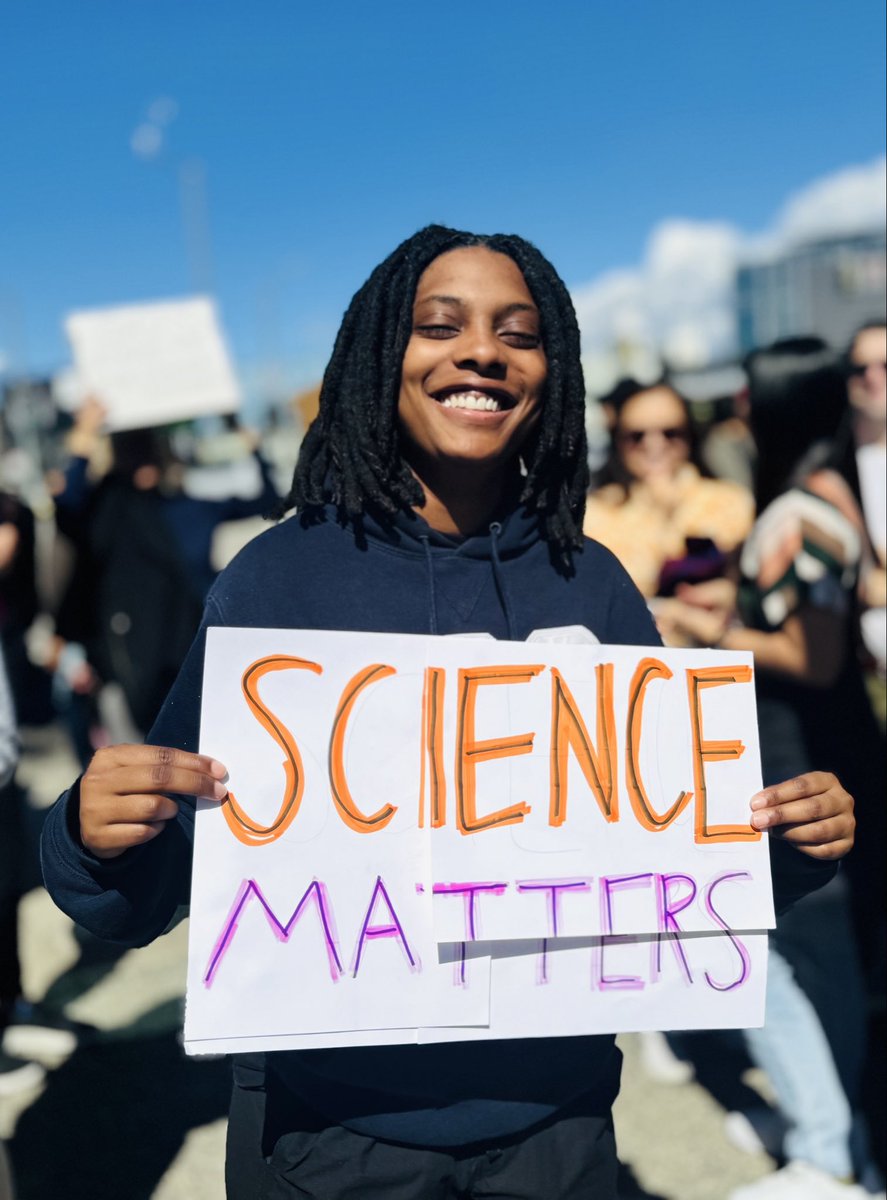
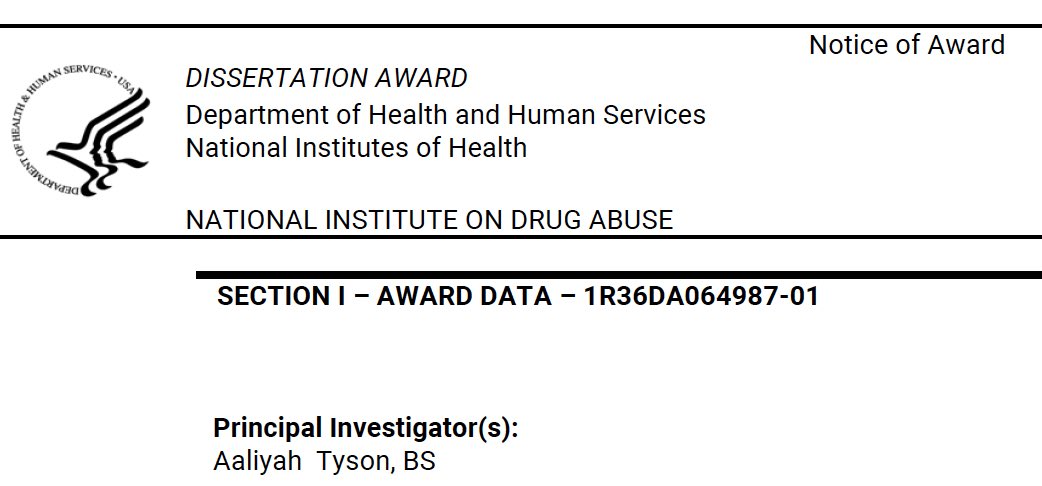
Fantastic news: our very own graduate student Aaliyah Tyson has been awarded a prestigious R36 NIDA Substance Use/Substance Use Disorder Dissertation Research Award.
Many congratulations to this very well deserved recognition! @803Ast@NIDAnews
…and here’s an excellent news feature on our recent @Nature paper on the μ-opioid receptor, written by first author Saif Khan @sfk_usc: https://t.co/r9BWYaumvi
If there is big biotech announcement happening, #MolecularNodes is being used for it. I only had the realisation in the past day, but it's strange to have my software very quickly become the visual face for $100M announcements and massive scientific breakthroughs.
Trojan scientists are one step closer to designing safer painkillers. At @USCDornsife, biologists visualized how opioids engage brain receptors. https://t.co/ppGfO7IiZ3
Interesting how two similar tweets - different scales - disciplines - appear in sequence on a social media. Look at the video in the left post https://t.co/b1u8b6dN1H Molecular machines moving on a backbone similar to the Mobile Servicing System movement on @Space_station #nanotechnology #genomics #astrobiology @CorneliusGati@NASAScience
A part of my PhD work is now out in @Nature.
We address one of the biggest open questions in GPCR biology — the structural basis of ligand efficacy.
Using naloxone (Narcan) and loperamide, we capture GDP-bound MOR–Gi intermediates, visualize nucleotide release, and derive a comprehensive model of how these drugs modulate signaling:
🔗 https://t.co/oYf3diWHpu
Supported by extensive molecular dynamics simulations, we assembled the first half of the G protein activation pathway — a major step toward understanding how GPCRs translate drug binding into cellular signaling. (7/n)
The mind-blowing part: a “latent” state — where the receptor and G protein both appear inactive, yet remain bound to each other. Naloxone traps this state, stalling activation. This likely explains its ability to block opioid signaling so effectively. (6/n)
Excited to share @Nature: How does naloxone (Narcan) stop an opioid overdose? We determined the first GDP-bound μ-opioid receptor–G protein (wt) structures and found naloxone traps a novel "latent” state, preventing GDP release and G protein activation. 🧵
https://t.co/E2fZXw2Pom
You can read all this and more in our paper that is out now in @Nature. I am deeply grateful to all those who have helped bring this work to life. First and foremost, my PhD advisor, the incredible @CorneliusGati, who makes it all possible. All our incredible co-authors. Gye Won Han for helping me survive new states, new maps and new models, on the daily! And a most special thanks to blender-sensei Vishwang (WANG-3D) for helping me create some stunning 3D art-work!
A part of my PhD work is now out in @Nature.
We address one of the biggest open questions in GPCR biology — the structural basis of ligand efficacy.
Using naloxone (Narcan) and loperamide, we capture GDP-bound MOR–Gi intermediates, visualize nucleotide release, and derive a comprehensive model of how these drugs modulate signaling:
🔗 https://t.co/oYf3diWHpu
The awesome Mohsen Ranjbar performed Molecular dynamics on these states, which tracked perfectly with the model we derived from experimental structures – GDP release follows a progressive loss of affinity driven by ligand-induced allosteric transitions across MOR–Gi. Efficacious ligands (e.g. loperamide) promote these transitions, while weaker ones (e.g. naloxone) stall them, precluding GDP release and Gi activation. Thus, addressing decades of debate on the structural and functional mechanisms of GDP in G-protein signaling.