Passionate about using AI to improve our world. Data Scientist @RapidMiner by day, genealogist by night. Always a Vermonter. Views are my own. He/Him/His.
It's wild to me how out of control the hype is. It's been a year since ChatGPT was released and almost nothing has changed. I was repeatedly promised unrelenting, exponential, world-ending change.
@elonmusk There have been many forks in the road of human destiny. Some you choose. Some are chosen for you.
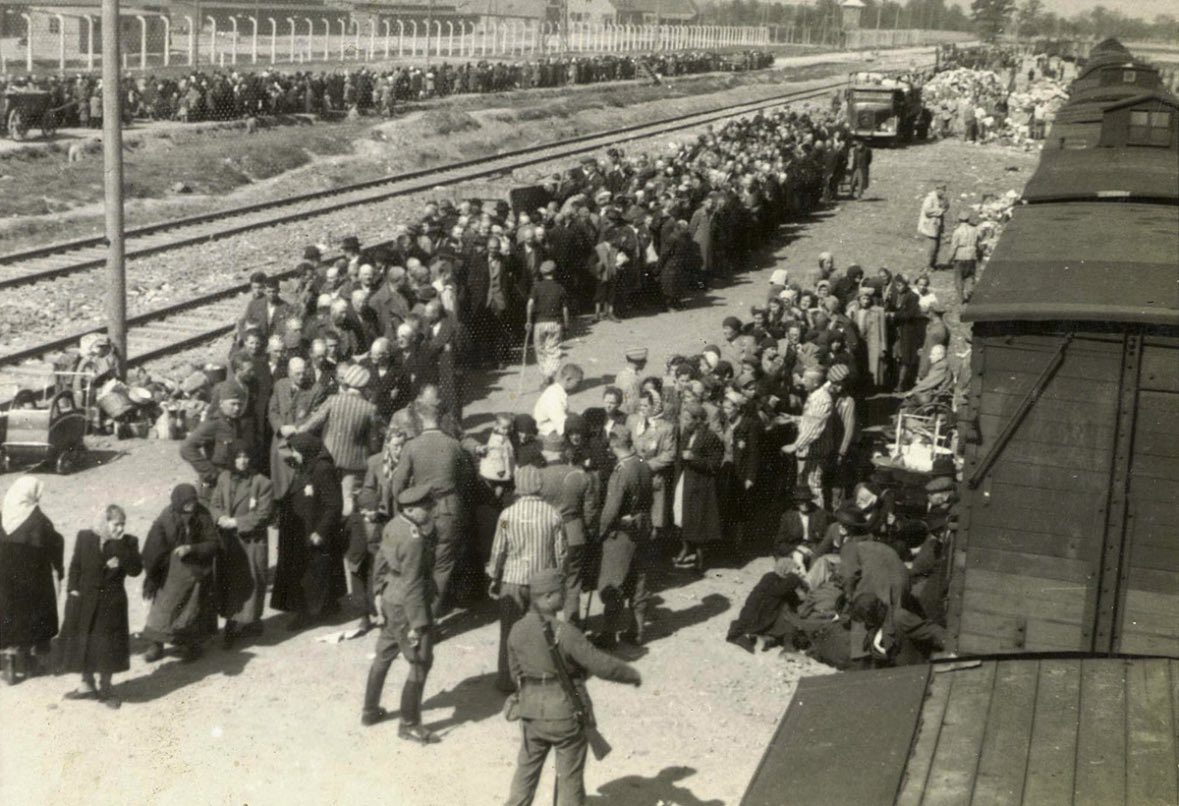
Let’s try to remember the past so we choose to never repeat it.
#NeverAgain
New: AI cameras took over one small American town. Now they're everywhere.
Hundreds of docs show how Fusus brings usually separate camera feeds (doorbells, CCTV, drones) into one central hub for cops and adds AI to them. Object recognition, "people" more https://t.co/q70APqCAQL
@BrianTvenstrup good article - thx @BrianTvenstrup . I must admit I still cannot get my head around this new job of “prompt engineer”. Isn’t the whole point of LLMs like ChatGPT so that we can *not* spend time crafting queries / prompts / keywords?
@Rainmaker1973 I had the privilege of studying this papyrus as part of my masters degree, and was able to see it in person. It resides in the back archives at the British Museum, hanging on a wall covered w paper.
Every Data Scientist needs to know these ideas.
They will blow your mind.
1. Correlation vs Causation
P(A | B) is the probability of A given B. It is the probability that we will observe A given that we have already observed B.
P(A | do(B)) is the probability of A given do(B). It is the probability that we will observe A given that we have intervened to cause B to happen.
In this context, an intervention simply means to take an action of some kind. Therefore do(B) means to take an action which causes B to happen.
The expressions P(A | B) and P(A | do(B)) might seem very similar but they represent very different situations.
2. We can only learn P(A|B) from the data alone.
Bob has an extremely accurate weather app and is always very good about bringing his umbrella when it rains. We observe Bob over several years and we find that whenever it rains, Bob always has his umbrella and he never brings his umbrellas on days when it doesn't rain.
In the language of probability, we say P(Umbrella | Rain) = 1 and P(Rain | Umbrella) = 1 as well.
What we can learn from this data alone is how to predict whether it rains with a 100% accuracy by checking whether Bob has an umbrella. We can also learn to predict with 100% accuracy whether Bob has an umbrella by checking if it's going to rain.
What we cannot learn is what will happen if we give Bob an umbrella on a random day of our choosing. The answer to this question is P(Rain | do(Umbrella) ) and it's unknowable from the data alone.
We need prior knowledge about how the world works to properly interpret the data we collected. We need to know that rain has an effect on Bob's behavior, but Bob's behavior has no effect on the rain.
Information about the effects of interventions are simply not available in raw data unless it is collected by controlled experimental manipulation.
3. Scientific Experiments work because they produce a very special kind of data.
You may have heard of what many people call a scientific experiment. Take a collection of objects, animals or people. Randomly split that collection into a control group and a treatment group. Apply your intervention to the treatment group while leaving the control group alone. If you observe any differences between the treatment group and the control group, it is logical to attribute these differences to the treatment. You can therefore say the differences were caused by the treatment.
In statistics, the procedure I just described is called a Randomized Controlled Trial. It is a procedure for generating a specific kind of data where:
P(Difference | Treatment) = P(Difference | do(Treatment) )
This is why traditional science experiments work. They are designed to capture causal information. This is not the case for vast majority of data that we collect in society.
Without human guidance or access to real world knowledge, statistical algorithms and artificial intelligences can only learn P(A | B) from the raw data. This is a fundamental mathematical limitation on the use of data alone.
That's it for now. This post is part of a series of posts about the concept of causal inference. They are based on the content of the Book of Why by Judea Pearl with lots of commentary from me.
Follow me (@kareem_carr) so you don't miss out on the next post.
Please show support by liking and retweeting the thread.
Interested in optimising your manufacturing operations? This @Altair webinar will inspire you with some real-life examples. #AI#Analytics#manufacturing
https://t.co/xauGLpfjFD
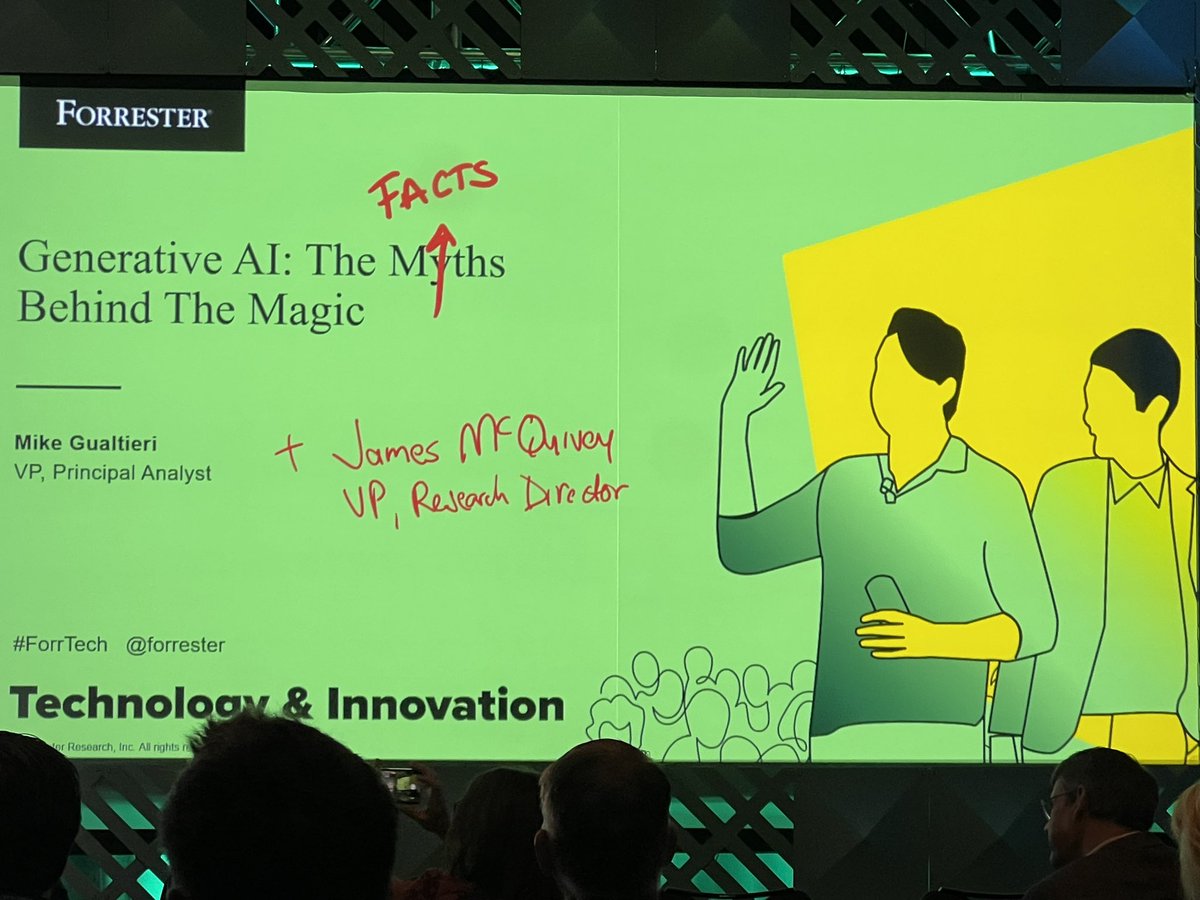
“I know how to use my power tools. But I don’t know how to build the motors and lithium ion batteries in the tools.” @mgualtieri The analogy for #AI is that we don’t need to build the core technology, but need to understand how to use the tools. Let someone else build the tools. Learn how to use them to solve business problems. #forrtech
@EdKrassen As an American genealogist, I look at ship manifests filled with immigrants every day. Only 3 things look different now than 100 yrs ago: (1) they came from Europe instead of South America, (2) we admitted most of them upon entry at Ellis Isl., (3) they came to NY instead of TX.