No jumping, No Running. Workouts at home at any time. Best 15 min Beginner Home Workout for Weight Loss .🧘♀No jumping, No Running. Workouts at home at any time. Best 15 min Beginner Home Workout for Weight Loss .🧘♀️
When Ringo Starr was sidelined with tonsillitis in 1964, drummer Jimmie Nicol stepped in to play with The Beatles for eight concerts. For 10 unforgettable days, he lived the life of a global superstar before quietly returning home. Pictured here, Nicol sits alone at Melbourne Airport on June 15, 1964, waiting for the flight that would take him back to his ordinary life.
In June 1964, London session drummer Jimmie Nicol was living a relatively ordinary life when he received an extraordinary phone call. With Ringo Starr hospitalized with acute tonsillitis just before the Beatles’ world tour, Nicol was asked to fill in with only a day’s notice. After hastily learning the band’s setlist, he joined John Lennon, Paul McCartney, and George Harrison for eight concerts across Denmark, the Netherlands, Hong Kong, and Australia, finding himself at the center of Beatlemania almost overnight.
This photograph, taken at Melbourne Airport on June 15, 1964, captures the end of that remarkable journey. After Ringo recovered and rejoined the band in Australia, Nicol quietly boarded a flight home alone, returning to the anonymity he had known just ten days earlier. Although he continued working as a musician, he never again experienced the worldwide fame that came with briefly becoming “the fifth Beatle.” The image has since become one of rock history’s most iconic photographs, reminding us how quickly fame can appear—and just as quickly fade away.
The "Do I feel lucky?" scene in Dirty Harry is a masterclass in character introduction, establishing everything you need to know about Harry Callahan’s worldview, his methods, and his relationship to the law in just over 3 minutes, completely bypassing the need for expositional bullshit.
The scene starts with Harry sitting at a diner counter, casually eating a hot dog. When the alarm goes off, he doesn't panic, drop his food, or wait for the cavalry he just called in. He handles a bank robbery while casually chewing on a hot dog. Just another Tuesday for Harry to blow away bad guys.
This establishes him as a rogue operator who views official police protocols as annoying obstacles to actual justice, which must be swift if justice means anything.
The sheer destructive force of his response with cars flipping over, hydrants erupting, windows shattering tells the audience that Harry doesn't care about collateral damage, personal safety (still out in the open even after confirming his leg is wounded), or protocol. He cares about stopping the threat by the most direct, violent means available.
The "Do I feel lucky?" monologue isn't just a cool speech but a great look into his psyche. He hooks the wounded robber with a psychological trap.
By withholding the one piece of information the criminal desperately needs whether the gun is empty, Harry enjoys exerting absolute physical and psychological control over criminals.
The final hammer clicking and Harry's smirk tell you everything about his nature. He doesn't feel a shred of remorse or hesitation about pointing a massive hand cannon at an unarmed, bleeding man and pulling the trigger just to see what happens.
This also sets up his moral compass. In Harry’s view, if you cross the line into criminality, you forfeit your right to empathy, due process, or safety.
This all happens inside a shade of 4 minutes.
Masterful stuff.
Dirty Harry (1971) | Don Siegel
A supermarket in Japan that had been operating for 75 years finally shut down.
The owners gave their loyal customers an emotional farewell in this touching way.
This is what respect for customers looks like.
The harmonies on "Seven Bridges Road" never get old. The Eagles were already an incredible live band, but moments like this remind you just how special those voices sounded together. One of the greatest live vocal performances in rock history.
B.B. Kingの曲をカバーしているが、Johnny Winter版ではそのストーリーを保ちながら、Texas bluesとロックンロールの感触を強く混ぜた仕上がりになっている。
「古いブルースの名曲が、Winterの手にかかると別の生命を持つ」と言われて来ているが、それの最たる曲😎💐
B.B. King, Freddie King
Albert King, Jimi Hendrix
Stevie Ray Vaughan
B.B. King フレディキング
アルバートキング ジミ・ヘンドリックス
スティーヴィレイヴォーン
Johnny Winter - Be Careful With A Fool
True Mediterranean cooking doesn't hide behind heavy creams or over-engineered sauces; instead, it relies on a few intensely flavorful pantry staples to do the heavy lifting. There is no finer example of this philosophy than Spaghetti alla Bottarga, a dish that is unapologetically briny, intensely salty, and beautifully simple.
For the uninitiated, the star of this dish can seem a bit mysterious. Bottarga is an ancient delicacy made from salted, pressed, and cured fish roe. Originating thousands of years ago with Phoenician traders, the process transforms a delicate pouch of fish eggs into a dense, amber-colored block that can be grated or shaved over food like a maritime version of Parmigiano-Reggiano.
Depending on which Italian island your itinerary takes you to, you will encounter two very distinct expressions of this ingredient.
In the rugged waters of Sardinia, producers focus on bottarga di muggine (grey mullet roe), which dries into a beautiful golden block and delivers a refined, savory salinity. Travel south to Sicily, however, and the culinary landscape shifts to bottarga di tonno (tuna roe). Tied to the island's historic tonnarafishing networks, Sicilian tuna bottarga is darker, saltier, and possesses a profoundly robust flavor that commands the plate.
To prepare the dish authentically, the spaghetti is simply swirled in a light, hot pan of premium extra virgin olive oil infused with crushed garlic and a pinch of chili. The pan is pulled completely away from the stove before the bottarga is introduced, allowing the residual heat of the pasta to melt the grated golden powder into a rich, clinging glaze that tastes cleanly of the Mediterranean tide.
🎥 mauro_bortignon | IG
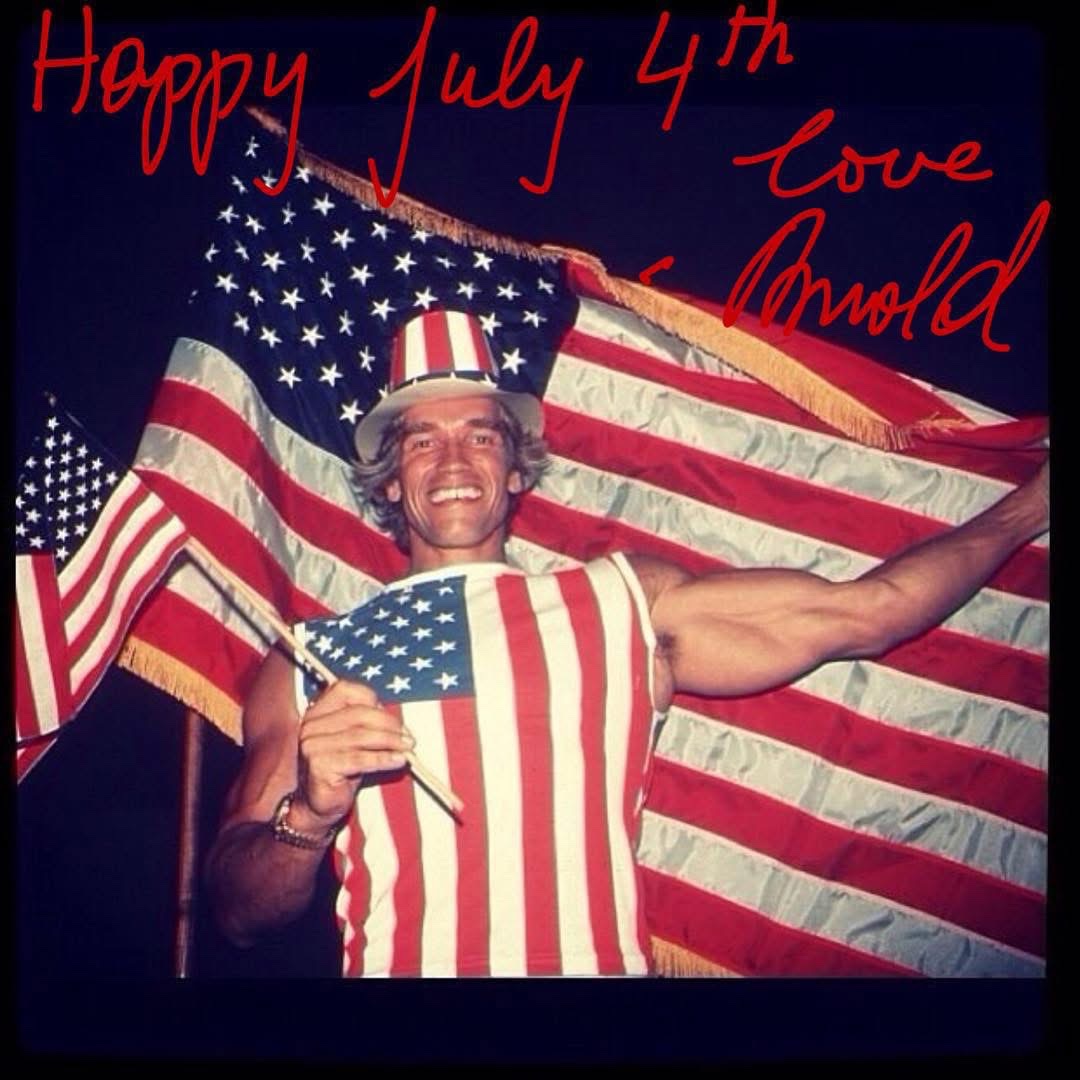
Happy Independence Day!
There’s a story from the end of the Revolutionary War I want to tell as we celebrate America’s 250th Birthday, and it’s one everyone in the world can learn from.
George Washington, at that moment, after commanding the American forces to victory, was the most powerful man in the new country. Many people talked about making him King of America.
Across the ocean, King George was sitting with an American painter, and asked what he thought Washington would do now that the war was ending. The painter said he believed he would go back to his farm.
The King said, “If he does that, he will be the greatest man in the world.”
As the war officially ended, Washington came to speak to Congress and said, “Having now finished the work assigned me, I retire from the great theater of Action.” He returned his commission they’d given him in 1775 - after more than 8 years of leading the Americans to victory without pay, and he was home at Mount Vernon for Christmas.
Of course, he was elected as our first President a few years later, and after two terms, showed the same selflessness again when he willingly gave up his power and went back to Mount Vernon again.
That’s true greatness. He had all the power in the world. But power, alone, does not make you great.
Washington’s greatness came from being a true servant - to a cause much bigger than himself. His greatness was his complete lack of selfishness.
The whole story of American Independence is a story of selflessness. It’s a story of people who set their self-interest aside and worked for each other.
We’ve all heard the line about “We must all hang together, or, most assuredly, we shall all hang separately.”
Apparently, Ben Franklin might have actually never said that.
But that’s fine, because the same mentality is right there in the last line of the Declaration of Independence, published on this day 250 years ago:
“And for the support of this Declaration, with a firm reliance on the protection of divine Providence, we mutually pledge to each other our Lives, our Fortunes and our sacred Honor.”
We mutually pledge to each other.
No one was in this alone. No one was in it for themselves. This was a group of people with different backgrounds who were in it for each other.
Today is a reminder: greatness comes from what we do for each other, never what we do for ourselves.
That’s a lesson that applies no matter what country you call home.
It’s a lesson that doesn’t require any law passed by a politician, because, let’s be honest, if you’re waiting for selfless politicians, I really hope you are not holding your breath.
All of us have the power to be there for the people around us. For our families and friends. For our neighbors. For everyone.
All of us can reach for greatness.
It’s as simple as looking beyond yourself, seeing past the mirror, picking your eyes up from your phone, and pledging to be there for each other.
Happy Fourth. May you all find your own version of greatness today by lifting each other up.
Lift up your neighborhood. Lift up America. Lift up the World.
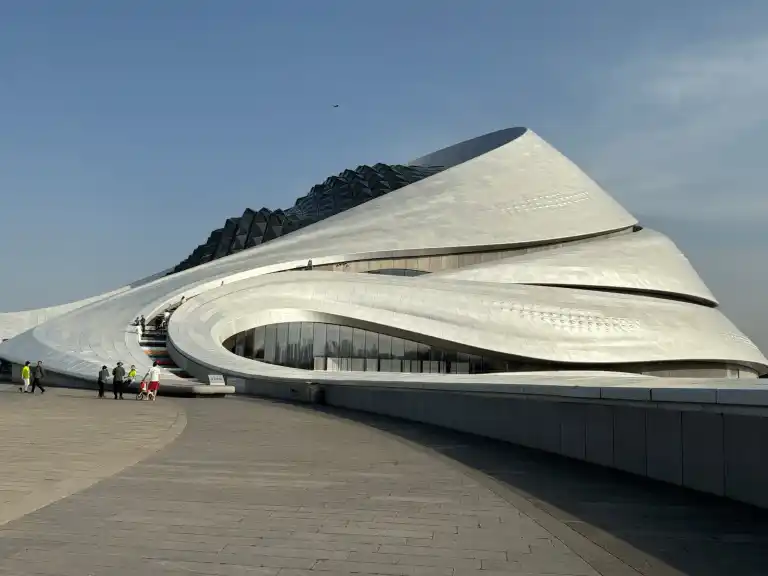
🏛️ One of the world's greatest buildings is falling apart.
Cracks. Stains. Poor maintenance.
And yet Ma Yansong's Harbin Opera House may still be one of the most powerful works of architecture built this century.
👉 Aaron Betsky explains why: https://t.co/ocOQf8rBUq
#Architecture #MaYansong #MADArchitects #China #Design
“Take Five” by Dave Brubeck Quartet was recorded 67 years ago today.
Two years later it became a surprise hit and the biggest-selling jazz single ever.