Pages of the Glorius Qur'ān today, Monday 8/6/26, Sūrah al-'Araf (7): 23-37, tafakkur verse 7: 33
Theme: The Comprehensive Prohibition of Evil and the Foundations of Righteousness
{قُلۡ إِنَّمَا حَرَّمَ رَبِّیَ ٱلۡفَوَ ٰحِشَ مَا ظَهَرَ مِنۡهَا وَمَا بَطَنَ وَٱلۡإِثۡمَ وَٱلۡبَغۡیَ بِغَیۡرِ ٱلۡحَقِّ وَأَن تُشۡرِكُوا۟ بِٱللَّهِ مَا لَمۡ یُنَزِّلۡ بِهِۦ سُلۡطَـٰنࣰا وَأَن تَقُولُوا۟ عَلَى ٱللَّهِ مَا لَا تَعۡلَمُونَ}
"Say, My Lord has only forbidden immoralities - what is apparent of them and what is concealed - and sin, and oppression without right, and that you associate with Allāh that for which He has not sent down authority, and that you say about Allāh that which you do not know.".
LESSONS:
This verse summarizes some of the greatest sins that corrupt individuals and societies: immorality, sin, oppression, shirk, and speaking about Allah without knowledge. It teaches that true righteousness requires purity in belief, conduct, and speech.
1. Allah forbids both public and hidden immoralities; a believer must purify both conduct and intention.
2. Sin is not only what society condemns; it is whatever Allah has forbidden.
3. Oppression is forbidden in all forms, whether against Muslims or non-Muslims.
4. Shirk is the gravest violation because it gives Allah’s right to others.
5. Speaking about Allah without knowledge is dangerous; religion must be taught with evidence, humility, and caution.
O Allah, we ask You for guidance, piety, chastity, and contentment. O Allah, purify our hearts from all immoralities, whether open or hidden, and keep us away from sin and unjust oppression. O Allah, protect us from every form of shirk, whether we know it or not, and do not allow us to speak about You except with truth. Our Lord, show us the truth as truth and grant us the ability to follow it, and show us falsehood as falsehood and grant us the ability to avoid it. Āmīn.
@FedExEurope@FedEx I was expecting a parcel today. Tracking first showed a delivery window, then stated I missed the delivery, but it now shows as delivered. The sender also confirmed it as delivered, yet I have not received the item. Please investigate and advise. Thank you.
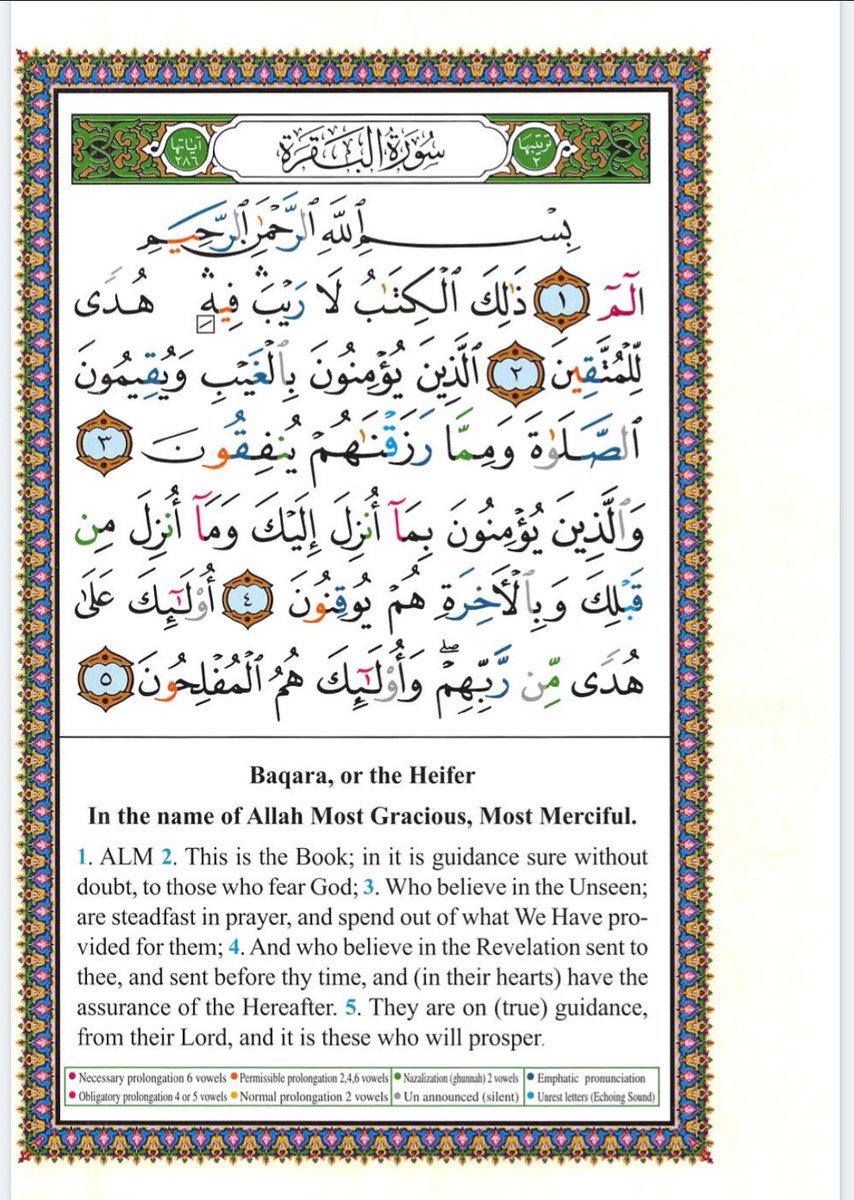
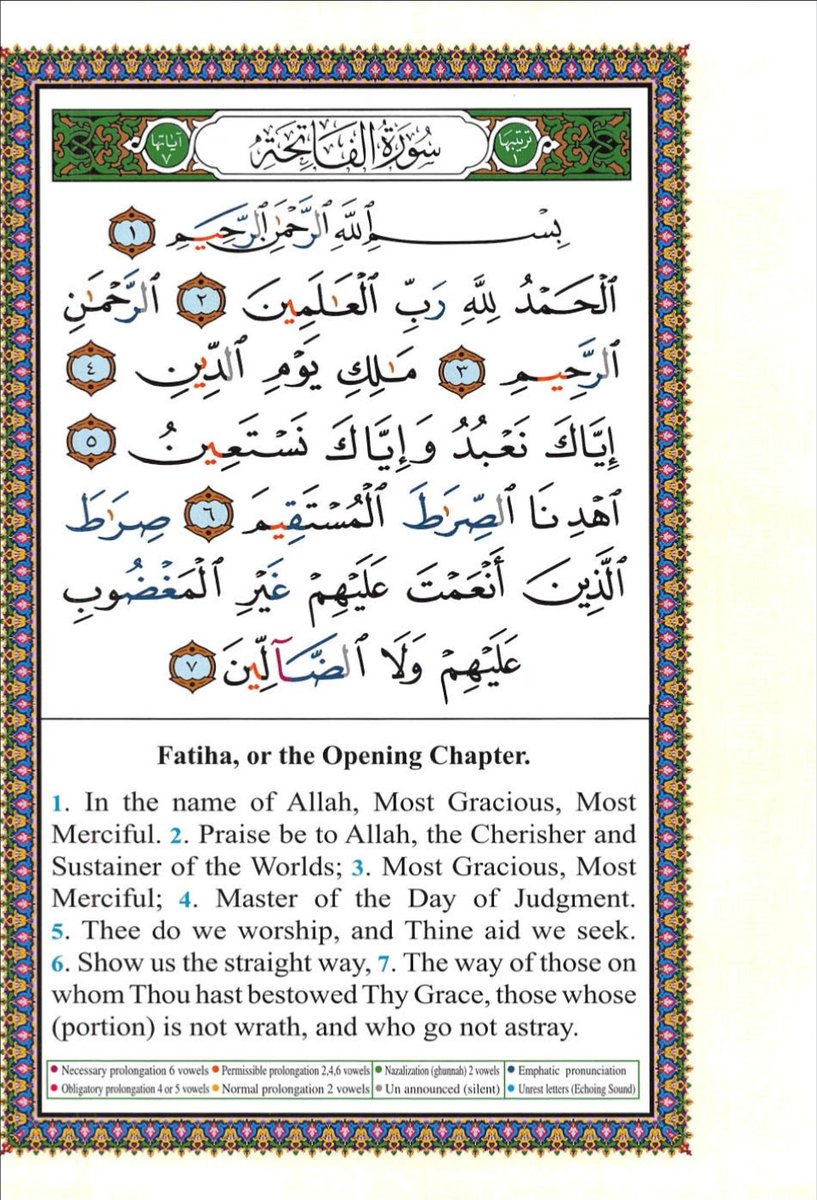
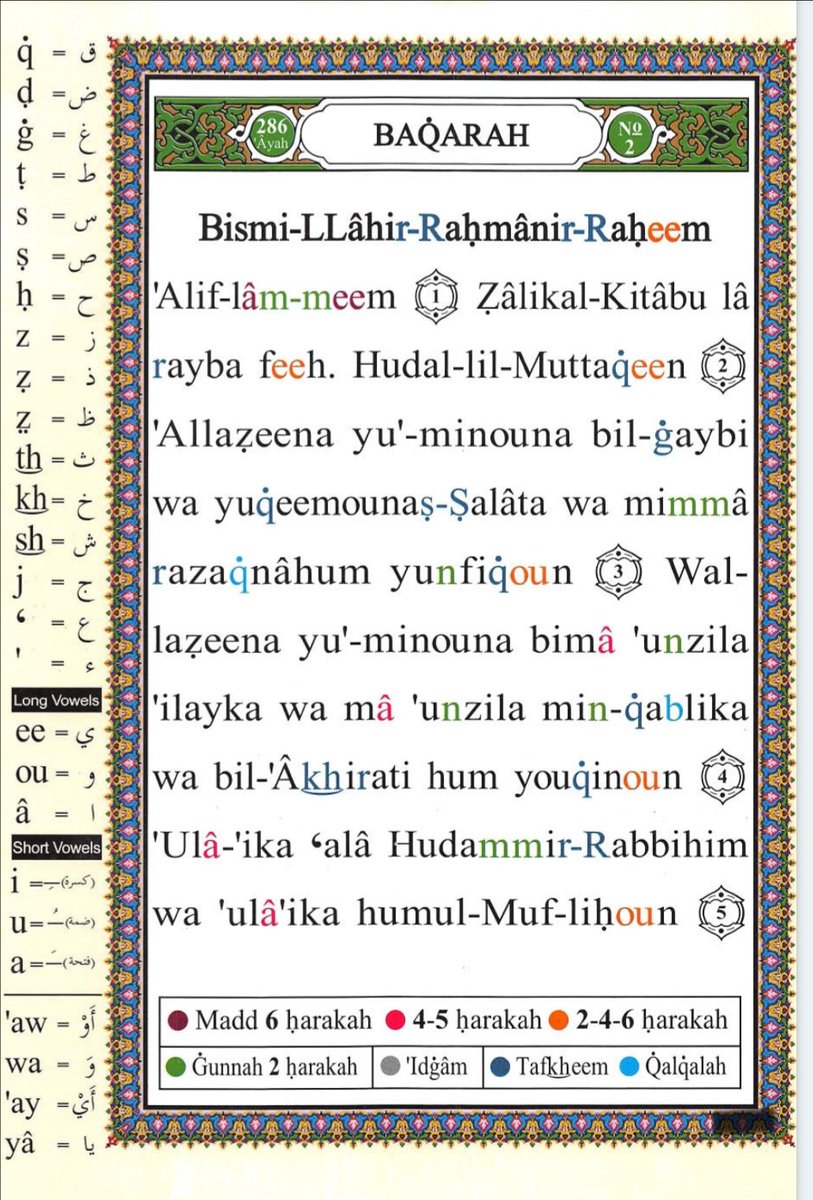
Pages of the Glorius Qur'ān today, Wednesday 25/3/26, Sūrah al-Fātiḥah (1): 1-7 & al-Baqarah (2): 1-5, tafakkur verse 2: 3.
Theme: True faith is determined through belief in Allah, and His promises
{ٱلَّذِینَ یُؤۡمِنُونَ بِٱلۡغَیۡبِ وَیُقِیمُونَ ٱلصَّلَوٰةَ وَمِمَّا رَزَقۡنَـٰهُمۡ یُنفِقُونَ}
"Who believe in the unseen, establish prayer, and spend out of what We have provided for them".
LESSONS:
1. Faith begins beyond what is seen: True belief starts with accepting realities that cannot be perceived by the senses, such as Allah, the Hereafter, and divine decree. This teaches the believer to rise above material limitations and develop trust in Allah’s wisdom and guidance.
2. Prayer is a disciplined and living connection with Allah: Establishing prayer means more than performing it; it involves consistency, sincerity, and presence of heart. Through this, a believer builds a structured life centered on Allah and nurtures spiritual growth.
3. Everything we possess is a trust from Allah: Recognizing that all provision comes from Allah instills humility and gratitude. It reminds the believer that wealth and resources are not purely personal achievements, but responsibilities entrusted to them.
4. Giving is a proof of sincere faith: Spending from what one has been given reflects genuine belief. It shows compassion, detachment from worldly attachment, and a commitment to supporting others and advancing good in society.
5. A complete Muslim balances belief, worship, and service: The verse highlights a holistic model of faith, inner conviction, consistent worship, and outward generosity. True righteousness is achieved when these three dimensions work together in harmony.
May Allah make us among those who believe sincerely, worship consistently, and give generously. Āmīn.
🌅 Daily Adhkār aṣ-Ṣabah & al-Masā’ 🌙
Join us every day from 6:20 AM – 8:00 AM on X (Twitter) Spaces for the morning and evening remembrance of Allah.
Follow and turn on notifications for these handles to get the links and updates daily:
@Oniwe_luqman | @hant_qudeee | @MansurBKareem | @IdrisAOni1 | @AsakeRoqeebah
✨ Spaces are recorded, so even if you miss one, you can catch up by following these accounts and checking the recordings.
Let’s strengthen our connection with Allah together, morning and evening!
Pages of the Glorious Qur'ān today, Tuesday 10/2/26 (22 Sha'bān 1447AH), Sūrah al-Baqarah (2): 164-176, tafakkur verses 2: 173
Theme: Allah permits for us only that which is good for us
{إِنَّمَا حَرَّمَ عَلَیۡكُمُ ٱلۡمَیۡتَةَ وَٱلدَّمَ وَلَحۡمَ ٱلۡخِنزِیرِ وَمَاۤ أُهِلَّ بِهِۦ لِغَیۡرِ ٱللَّهِۖ فَمَنِ ٱضۡطُرَّ غَیۡرَ بَاغࣲ وَلَا عَادࣲ فَلَاۤ إِثۡمَ عَلَیۡهِۚ إِنَّ ٱللَّهَ غَفُورࣱ رَّحِیمٌ}
"He has only forbidden to you dead animals, blood, the flesh of swine, and that which has been dedicated to other than Allāh. But whoever is forced [by necessity], neither desiring [it] nor transgressing [its limit], there is no sin upon him. Indeed, Allāh is Forgiving and Merciful".
LESSONS:
1. Clear boundaries in matters of ḥalāl and ḥarām
Allāh explicitly lists what is forbidden, teaching that Islamic law is not vague or arbitrary. What is prohibited is limited, defined, and rooted in divine wisdom, while what is permitted is far broader. This protects both faith and human well-being.
2. Life and necessity are preserved in Sharīʿah
The allowance given in cases of compulsion shows that Islam prioritizes the preservation of life. When survival is at stake, the law flexes without breaking, proving that Sharīʿah is merciful, realistic, and responsive to human circumstances.
3. Necessity does not justify excess
The condition “neither desiring it nor transgressing its limit” teaches discipline even in hardship. Permission in necessity is only to the extent required, not an excuse for indulgence or deliberate violation of Allah’s commands.
4. Intentions matter deeply in Islamic ethics
The verse ties moral accountability to inner intention. One who consumes the forbidden unwillingly, without desire or rebellion, is not sinful. This reinforces the principle that actions are judged not only by form, but by purpose and state of heart.
5. Allah’s mercy frames His law
The verse ends with “Indeed, Allāh is Forgiving and Merciful”, reminding believers that divine law is enveloped in compassion. Obedience is not meant to crush people but to guide them, and when hardship forces difficult choices, Allah’s mercy precedes His judgement.
Pages of the Glorious Qur'ān today, Monday 26/1/26 (7 Sha'bān 1447AH), Sūrah al-'ādiyāt (100), al-Qār'iah (101), at-Takāthur (102), al-'asr (103), al-Humazah (104), al-Fīl (105); tafakkur verse 104: 1
Theme: Do not ruin yourself
{وَیۡلࣱ لِّكُلِّ هُمَزَةࣲ لُّمَزَةٍ}
"Woe to every scorner and mocker"
LESSONS:
1. Islam Treats Human Dignity as Sacred: This verse teaches that honour (ʿird) is sacred in Islam, just like life and property. To attack a person’s reputation is to violate something Allah Himself protects.
The Prophet ﷺ said:
“Your blood, your wealth, and your honour are sacred to you.”
Thus, mocking or defaming someone is not a personal issue, it is a transgression against divine boundaries. Islam does not tolerate a culture where humiliation becomes entertainment or social currency.
2. Mockery Is a Sign of Spiritual Disease: Allah does not describe the scorner and mocker by their actions alone, but by their character. Persistent ridicule reflects:
Arrogance
Envy
Hardness of hearts
Lack of God-consciousness
The Qur’ān consistently links mockery to spiritual blindness. A believer who truly recognizes their own weakness before Allah cannot find pleasure in humiliating others.
3. Backbiting and Slander Corrupt the Moral Fabric of Society: Backbiting (ghībah) and slander (buhtān) are not private sins; they poison communities.
They destroy trust
They spread suspicion
They fracture families and friendships
They create cycles of hatred and retaliation
This is why the Qur’ān likens backbiting to eating the flesh of one’s dead brother, a graphic image meant to awaken moral disgust. What mocking does to social cohesion, violence does to physical security.
4. Verbal Sins Are Often Underestimated but Heavily Punished: One of the dangers highlighted by this verse is that sins of the tongue feel light but weigh heavy with Allah.
People often excuse mockery as:
“Just jokes”
“Freedom of expression”
“Speaking the truth”
“Criticism”
Yet Islam teaches that truth without wisdom can still be sinful, and humour that humiliates is corruption, not play. The Prophet ﷺ warned that a person may utter a single word without thinking, and it plunges them into Hellfire.
5. Mockery Leads to Moral Reversal and Divine Humiliation: Those who mock others assume a position of superiority. This verse shatters that illusion. Allah reverses the roles:
The mocker becomes the disgraced
The slanderer becomes the condemned
The one who laughed becomes the one who weeps
Divine justice ensures that no insult goes unanswered, even if it escapes human courts. On the Day of Judgment, honour will be restored and every word will be accounted for.
6. Digital and Public Defamation Fall Directly Under This Warning: In our time, this verse applies powerfully to:
Social media ridicule
Online shaming
Character assassination
Anonymous insults
Viral mockery and cancel culture
The tools may be modern, but the sin is ancient, and the warning remains unchanged. The speed and reach of modern speech only multiply the harm and the accountability.
7. True Piety Is Measured by How We Treat Others
This verse reminds us that religiosity is not only:
Prayer
Fasting
Ritual devotion
But also:
Respect
Mercy
Ethical speech
A person may appear devout, yet be ruined by their tongue. Islam does not separate worship from character; both are inseparable.
“Woe to every scorner and mocker” is a moral alarm bell in the Qur’ān. It warns that slander, backbiting, mockery, and defamation are not social flaws but spiritual crimes that invite divine wrath, destroy communities, and corrupt the soul.
Islam seeks to build a society where:
Honour is protected
Speech is accountable
Differences are handled with dignity
Whoever guards their tongue safeguards their faith. Whoever abuses it endangers their Hereafter.
Pages of the Glorious Qur'ān today, Wednesday 21/1/26 (2 Sha'bān 1447AH), Sūrah al-Burūj (85), Aṭ-Ṭāriq (86), and al-'alā (87): 1-15, tafakkur verse 86: 5-7
Theme: Reflect on your humble beginning from Allah and your humble return to Allah
{ فَلۡیَنظُرِ ٱلۡإِنسَـٰنُ مِمَّ خُلِقَ (5) خُلِقَ مِن مَّاۤءࣲ دَافِقࣲ (6) یَخۡرُجُ مِنۢ بَیۡنِ ٱلصُّلۡبِ وَٱلتَّرَاۤىِٕبِ (7)}
"So let man observe from what he was created.
He was created from a fluid, ejected,
Emerging from between the backbone and the ribs".
LESSONS:
1. Reflect on your humble origins to stay grounded and humble: Allah commands us to think deeply: "So let man observe from what he was created" (verse 5). You started as a tiny, insignificant drop of fluid, something lowly and weak. This reminder helps crush arrogance (kibr). No matter your wealth, status, or achievements, remember where you came from. This builds humility, gratitude, and prevents showing off or looking down on others.
2. Recognize Allah's unlimited power (qudrah) over life and resurrection: The verse describes your first creation from something simple and "ejected." Then verse 8 immediately says: "Indeed, He is Able to return him [to life]." If Allah can create you from a mere fluid, He can easily recreate you on the Day of Judgment. This strengthens iman in the afterlife (akhirah), motivates good deeds, and reduces fear of death, because the same power that made you once will bring you back.
3. Appreciate the miraculous precision of human creation as a sign of Allah: Whether understood through embryology (where reproductive origins trace back to the embryonic area between the developing spine and ribs) or as a description of the reproductive process involving both parents, the verse points to Allah's perfect knowledge and design. It encourages Muslims to study science and nature, not to challenge faith, but to see more signs (ayat) of Allah in the body and creation. This deepens tawhid and love for the Creator.
4. Value both parents and the sacredness of family and procreation: Many classical explanations (from Ibn Abbas and others) see "between the backbone and ribs" as referring to the man's loins/back and the woman's chest/ribs, highlighting the joint role of father and mother in creating new life. This teaches respect for parents, the importance of a halal family, and gratitude to both mother and father. It also reminds us that reproduction is a divine trust, so we should approach marriage, intimacy, and raising children with purity and responsibility.
5. Use reflection on creation to prepare for accountability: The surah starts with oaths to the sky, the piercing star, and every soul having a watcher (guardian angel recording deeds). Then it shifts to your origin to drive home: since Allah created you so precisely and watches you constantly, every action matters. This pushes us toward self-accountability, avoiding sins, increasing good deeds, and fearing Allah more than people. It turns a biological fact into a moral wake-up call for taqwa (God-consciousness).
These lessons keep the focus on guidance, iman, and good character rather than debate. The verse isn't a biology textbook, it's Allah inviting us to ponder His signs so we live better and return to Him prepared.
May Allah make us among those who reflect and act upon His words. Āmīn.
Pages of the Glorious Qur'ān today, Thursday 15/1/26 (25 Rajab 1447AH), Sūrah al-Qiyāmah (75): 20-40 and al-Insān (76): 1-25, tafakkur verse 76: 8-11,
Theme: Seek Allah's pleasure by serving humanity
وَيُطْعِمُونَ الطَّعَامَ عَلَىٰ حُبِّهِۦ مِسْكِينًا وَيَتِيمًا وَأَسِيرًا
إِنَّمَا نُطْعِمُكُمْ لِوَجْهِ ٱللَّهِ لَا نُرِيدُ مِنكُمْ جَزَآءً وَلَا شُكُورًا
إِنَّا نَخَافُ مِن رَّبِّنَا يَوْمًا عَبُوسًا قَمْطَرِيرًا
فَوَقَىٰهُمُ ٱللَّهُ شَرَّ ذَٰلِكَ ٱلْيَوْمِ وَلَقَّىٰهُمْ نَضْرَةً وَسُرُورًا
"They give food, despite their love for it, to the poor, the orphan, and the captive.
[Saying], “We feed you only for the sake of Allah; we desire from you neither reward nor thanks.”
Indeed, we fear from our Lord a Day that is harsh and distressful.
So Allah protected them from the evil of that Day and granted them radiance and joy".
LESSONS:
1. Sincerity (Ikhlāṣ) in Worship and Charity Is the Peak of Faith: Allah describes the believers as those who give food “despite their love for it” ('alā hubbihi), meaning they part with something dear and needed. Yet, their hearts remain detached from people’s praise.
These verses establish that the true worth of any righteous deed lies not in its outward form, but in its inner intention. Charity, worship, and service become weighty on the scale only when they are done solely for Allah’s pleasure, free from the desire for recognition, applause, or worldly gain. Such ikhlāṣ is the soul of faith and the key to divine acceptance.
2. Preferring the Needy Over One’s Own Desires Defines True Generosity: The believers choose to feed the poor (miskīn), the orphan (yatīm), and even the captive (asīr), despite their own need and attachment to the food. This teaches that Islamic generosity is not limited to giving from surplus, but rather giving when it costs the giver something.
This level of selflessness reflects deep empathy, moral courage, and spiritual maturity. It is generosity rooted in compassion, not convenience. Islam elevates such sacrifice as a defining trait of righteousness and a hallmark of genuine benevolence.
3. Conscious Fear of the Hereafter Is a Powerful Moral Force: Their generosity is not driven by emotion alone, but by deep awareness of accountability. This fear (khawf) is not despair or hopelessness, but reverential awe, a consciousness of standing before Allah on a Day so severe that it makes faces frown and hearts tremble. Such awareness disciplines the soul, restrains selfishness, and fuels consistent righteousness. A believer who remembers the Hereafter lives responsibly in this world.
4. Divine Protection and Eternal Joy Are the Fruits of Sincerity and Taqwā: Because of their pure intentions, sacrifice, and fear of Allah, Allah declares: “So Allah protected them from the evil of that Day and granted them radiance and joy.”
This is divine justice at its finest. Those who fear the hardship of the Hereafter are shielded from it. Those who brighten the lives of others are gifted with nadrāh (radiant faces) and surūr (deep, lasting joy). Allah replaces their worldly sacrifices with eternal beauty, peace, and happiness.
5. The Ideal Believer Is Defined by Selfless Service Anchored in God-Consciousness: These verses present a complete portrait of the ideal believer, one who unites generous action, pure intention, and constant awareness of the Hereafter. Their lives compel us to reflect deeply:
Are our deeds truly for Allah alone?
Do we give even when it is difficult?
Do we live with awareness of the Day that will humble all faces?
Whoever walks this path earns Allah’s protection, mercy, and unimaginable joy.
May Allah make us among those who give sincerely for His sake, prefer others over themselves, fear that awesome Day, and meet Him with radiant faces and joyful hearts. Āmīn. 🌿
O Allah, give me glad tidings of what pleases me, and avert from me what harms me, and strengthen my faith, and provide me with lawful sustenance that suffices me, and keep away from me everything that hurts me.




![IdrisAOni1's tweet photo. Pages of the Glorious Qur'ān today, Tuesday 10/2/26 (22 Sha'bān 1447AH), Sūrah al-Baqarah (2): 164-176, tafakkur verses 2: 173
Theme: Allah permits for us only that which is good for us
{إِنَّمَا حَرَّمَ عَلَیۡكُمُ ٱلۡمَیۡتَةَ وَٱلدَّمَ وَلَحۡمَ ٱلۡخِنزِیرِ وَمَاۤ أُهِلَّ بِهِۦ لِغَیۡرِ ٱللَّهِۖ فَمَنِ ٱضۡطُرَّ غَیۡرَ بَاغࣲ وَلَا عَادࣲ فَلَاۤ إِثۡمَ عَلَیۡهِۚ إِنَّ ٱللَّهَ غَفُورࣱ رَّحِیمٌ}
"He has only forbidden to you dead animals, blood, the flesh of swine, and that which has been dedicated to other than Allāh. But whoever is forced [by necessity], neither desiring [it] nor transgressing [its limit], there is no sin upon him. Indeed, Allāh is Forgiving and Merciful".
LESSONS:
1. Clear boundaries in matters of ḥalāl and ḥarām
Allāh explicitly lists what is forbidden, teaching that Islamic law is not vague or arbitrary. What is prohibited is limited, defined, and rooted in divine wisdom, while what is permitted is far broader. This protects both faith and human well-being.
2. Life and necessity are preserved in Sharīʿah
The allowance given in cases of compulsion shows that Islam prioritizes the preservation of life. When survival is at stake, the law flexes without breaking, proving that Sharīʿah is merciful, realistic, and responsive to human circumstances.
3. Necessity does not justify excess
The condition “neither desiring it nor transgressing its limit” teaches discipline even in hardship. Permission in necessity is only to the extent required, not an excuse for indulgence or deliberate violation of Allah’s commands.
4. Intentions matter deeply in Islamic ethics
The verse ties moral accountability to inner intention. One who consumes the forbidden unwillingly, without desire or rebellion, is not sinful. This reinforces the principle that actions are judged not only by form, but by purpose and state of heart.
5. Allah’s mercy frames His law
The verse ends with “Indeed, Allāh is Forgiving and Merciful”, reminding believers that divine law is enveloped in compassion. Obedience is not meant to crush people but to guide them, and when hardship forces difficult choices, Allah’s mercy precedes His judgement.](https://pbs.twimg.com/media/HAxeBYNaAAMqndq.jpg)
![IdrisAOni1's tweet photo. Pages of the Glorious Qur'ān today, Tuesday 10/2/26 (22 Sha'bān 1447AH), Sūrah al-Baqarah (2): 164-176, tafakkur verses 2: 173
Theme: Allah permits for us only that which is good for us
{إِنَّمَا حَرَّمَ عَلَیۡكُمُ ٱلۡمَیۡتَةَ وَٱلدَّمَ وَلَحۡمَ ٱلۡخِنزِیرِ وَمَاۤ أُهِلَّ بِهِۦ لِغَیۡرِ ٱللَّهِۖ فَمَنِ ٱضۡطُرَّ غَیۡرَ بَاغࣲ وَلَا عَادࣲ فَلَاۤ إِثۡمَ عَلَیۡهِۚ إِنَّ ٱللَّهَ غَفُورࣱ رَّحِیمٌ}
"He has only forbidden to you dead animals, blood, the flesh of swine, and that which has been dedicated to other than Allāh. But whoever is forced [by necessity], neither desiring [it] nor transgressing [its limit], there is no sin upon him. Indeed, Allāh is Forgiving and Merciful".
LESSONS:
1. Clear boundaries in matters of ḥalāl and ḥarām
Allāh explicitly lists what is forbidden, teaching that Islamic law is not vague or arbitrary. What is prohibited is limited, defined, and rooted in divine wisdom, while what is permitted is far broader. This protects both faith and human well-being.
2. Life and necessity are preserved in Sharīʿah
The allowance given in cases of compulsion shows that Islam prioritizes the preservation of life. When survival is at stake, the law flexes without breaking, proving that Sharīʿah is merciful, realistic, and responsive to human circumstances.
3. Necessity does not justify excess
The condition “neither desiring it nor transgressing its limit” teaches discipline even in hardship. Permission in necessity is only to the extent required, not an excuse for indulgence or deliberate violation of Allah’s commands.
4. Intentions matter deeply in Islamic ethics
The verse ties moral accountability to inner intention. One who consumes the forbidden unwillingly, without desire or rebellion, is not sinful. This reinforces the principle that actions are judged not only by form, but by purpose and state of heart.
5. Allah’s mercy frames His law
The verse ends with “Indeed, Allāh is Forgiving and Merciful”, reminding believers that divine law is enveloped in compassion. Obedience is not meant to crush people but to guide them, and when hardship forces difficult choices, Allah’s mercy precedes His judgement.](https://pbs.twimg.com/media/HAxeBYLbsAAa-BD.jpg)
![IdrisAOni1's tweet photo. Pages of the Glorious Qur'ān today, Tuesday 10/2/26 (22 Sha'bān 1447AH), Sūrah al-Baqarah (2): 164-176, tafakkur verses 2: 173
Theme: Allah permits for us only that which is good for us
{إِنَّمَا حَرَّمَ عَلَیۡكُمُ ٱلۡمَیۡتَةَ وَٱلدَّمَ وَلَحۡمَ ٱلۡخِنزِیرِ وَمَاۤ أُهِلَّ بِهِۦ لِغَیۡرِ ٱللَّهِۖ فَمَنِ ٱضۡطُرَّ غَیۡرَ بَاغࣲ وَلَا عَادࣲ فَلَاۤ إِثۡمَ عَلَیۡهِۚ إِنَّ ٱللَّهَ غَفُورࣱ رَّحِیمٌ}
"He has only forbidden to you dead animals, blood, the flesh of swine, and that which has been dedicated to other than Allāh. But whoever is forced [by necessity], neither desiring [it] nor transgressing [its limit], there is no sin upon him. Indeed, Allāh is Forgiving and Merciful".
LESSONS:
1. Clear boundaries in matters of ḥalāl and ḥarām
Allāh explicitly lists what is forbidden, teaching that Islamic law is not vague or arbitrary. What is prohibited is limited, defined, and rooted in divine wisdom, while what is permitted is far broader. This protects both faith and human well-being.
2. Life and necessity are preserved in Sharīʿah
The allowance given in cases of compulsion shows that Islam prioritizes the preservation of life. When survival is at stake, the law flexes without breaking, proving that Sharīʿah is merciful, realistic, and responsive to human circumstances.
3. Necessity does not justify excess
The condition “neither desiring it nor transgressing its limit” teaches discipline even in hardship. Permission in necessity is only to the extent required, not an excuse for indulgence or deliberate violation of Allah’s commands.
4. Intentions matter deeply in Islamic ethics
The verse ties moral accountability to inner intention. One who consumes the forbidden unwillingly, without desire or rebellion, is not sinful. This reinforces the principle that actions are judged not only by form, but by purpose and state of heart.
5. Allah’s mercy frames His law
The verse ends with “Indeed, Allāh is Forgiving and Merciful”, reminding believers that divine law is enveloped in compassion. Obedience is not meant to crush people but to guide them, and when hardship forces difficult choices, Allah’s mercy precedes His judgement.](https://pbs.twimg.com/media/HAxeBYKaAAMytvN.jpg)


![IdrisAOni1's tweet photo. Pages of the Glorious Qur'ān today, Wednesday 21/1/26 (2 Sha'bān 1447AH), Sūrah al-Burūj (85), Aṭ-Ṭāriq (86), and al-'alā (87): 1-15, tafakkur verse 86: 5-7
Theme: Reflect on your humble beginning from Allah and your humble return to Allah
{ فَلۡیَنظُرِ ٱلۡإِنسَـٰنُ مِمَّ خُلِقَ (5) خُلِقَ مِن مَّاۤءࣲ دَافِقࣲ (6) یَخۡرُجُ مِنۢ بَیۡنِ ٱلصُّلۡبِ وَٱلتَّرَاۤىِٕبِ (7)}
"So let man observe from what he was created.
He was created from a fluid, ejected,
Emerging from between the backbone and the ribs".
LESSONS:
1. Reflect on your humble origins to stay grounded and humble: Allah commands us to think deeply: "So let man observe from what he was created" (verse 5). You started as a tiny, insignificant drop of fluid, something lowly and weak. This reminder helps crush arrogance (kibr). No matter your wealth, status, or achievements, remember where you came from. This builds humility, gratitude, and prevents showing off or looking down on others.
2. Recognize Allah's unlimited power (qudrah) over life and resurrection: The verse describes your first creation from something simple and "ejected." Then verse 8 immediately says: "Indeed, He is Able to return him [to life]." If Allah can create you from a mere fluid, He can easily recreate you on the Day of Judgment. This strengthens iman in the afterlife (akhirah), motivates good deeds, and reduces fear of death, because the same power that made you once will bring you back.
3. Appreciate the miraculous precision of human creation as a sign of Allah: Whether understood through embryology (where reproductive origins trace back to the embryonic area between the developing spine and ribs) or as a description of the reproductive process involving both parents, the verse points to Allah's perfect knowledge and design. It encourages Muslims to study science and nature, not to challenge faith, but to see more signs (ayat) of Allah in the body and creation. This deepens tawhid and love for the Creator.
4. Value both parents and the sacredness of family and procreation: Many classical explanations (from Ibn Abbas and others) see "between the backbone and ribs" as referring to the man's loins/back and the woman's chest/ribs, highlighting the joint role of father and mother in creating new life. This teaches respect for parents, the importance of a halal family, and gratitude to both mother and father. It also reminds us that reproduction is a divine trust, so we should approach marriage, intimacy, and raising children with purity and responsibility.
5. Use reflection on creation to prepare for accountability: The surah starts with oaths to the sky, the piercing star, and every soul having a watcher (guardian angel recording deeds). Then it shifts to your origin to drive home: since Allah created you so precisely and watches you constantly, every action matters. This pushes us toward self-accountability, avoiding sins, increasing good deeds, and fearing Allah more than people. It turns a biological fact into a moral wake-up call for taqwa (God-consciousness).
These lessons keep the focus on guidance, iman, and good character rather than debate. The verse isn't a biology textbook, it's Allah inviting us to ponder His signs so we live better and return to Him prepared.
May Allah make us among those who reflect and act upon His words. Āmīn.](https://pbs.twimg.com/media/G_KY-hiWoAEiyIA.jpg)
![IdrisAOni1's tweet photo. Pages of the Glorious Qur'ān today, Wednesday 21/1/26 (2 Sha'bān 1447AH), Sūrah al-Burūj (85), Aṭ-Ṭāriq (86), and al-'alā (87): 1-15, tafakkur verse 86: 5-7
Theme: Reflect on your humble beginning from Allah and your humble return to Allah
{ فَلۡیَنظُرِ ٱلۡإِنسَـٰنُ مِمَّ خُلِقَ (5) خُلِقَ مِن مَّاۤءࣲ دَافِقࣲ (6) یَخۡرُجُ مِنۢ بَیۡنِ ٱلصُّلۡبِ وَٱلتَّرَاۤىِٕبِ (7)}
"So let man observe from what he was created.
He was created from a fluid, ejected,
Emerging from between the backbone and the ribs".
LESSONS:
1. Reflect on your humble origins to stay grounded and humble: Allah commands us to think deeply: "So let man observe from what he was created" (verse 5). You started as a tiny, insignificant drop of fluid, something lowly and weak. This reminder helps crush arrogance (kibr). No matter your wealth, status, or achievements, remember where you came from. This builds humility, gratitude, and prevents showing off or looking down on others.
2. Recognize Allah's unlimited power (qudrah) over life and resurrection: The verse describes your first creation from something simple and "ejected." Then verse 8 immediately says: "Indeed, He is Able to return him [to life]." If Allah can create you from a mere fluid, He can easily recreate you on the Day of Judgment. This strengthens iman in the afterlife (akhirah), motivates good deeds, and reduces fear of death, because the same power that made you once will bring you back.
3. Appreciate the miraculous precision of human creation as a sign of Allah: Whether understood through embryology (where reproductive origins trace back to the embryonic area between the developing spine and ribs) or as a description of the reproductive process involving both parents, the verse points to Allah's perfect knowledge and design. It encourages Muslims to study science and nature, not to challenge faith, but to see more signs (ayat) of Allah in the body and creation. This deepens tawhid and love for the Creator.
4. Value both parents and the sacredness of family and procreation: Many classical explanations (from Ibn Abbas and others) see "between the backbone and ribs" as referring to the man's loins/back and the woman's chest/ribs, highlighting the joint role of father and mother in creating new life. This teaches respect for parents, the importance of a halal family, and gratitude to both mother and father. It also reminds us that reproduction is a divine trust, so we should approach marriage, intimacy, and raising children with purity and responsibility.
5. Use reflection on creation to prepare for accountability: The surah starts with oaths to the sky, the piercing star, and every soul having a watcher (guardian angel recording deeds). Then it shifts to your origin to drive home: since Allah created you so precisely and watches you constantly, every action matters. This pushes us toward self-accountability, avoiding sins, increasing good deeds, and fearing Allah more than people. It turns a biological fact into a moral wake-up call for taqwa (God-consciousness).
These lessons keep the focus on guidance, iman, and good character rather than debate. The verse isn't a biology textbook, it's Allah inviting us to ponder His signs so we live better and return to Him prepared.
May Allah make us among those who reflect and act upon His words. Āmīn.](https://pbs.twimg.com/media/G_KY-hhWMAAtEFQ.jpg)
![IdrisAOni1's tweet photo. Pages of the Glorious Qur'ān today, Wednesday 21/1/26 (2 Sha'bān 1447AH), Sūrah al-Burūj (85), Aṭ-Ṭāriq (86), and al-'alā (87): 1-15, tafakkur verse 86: 5-7
Theme: Reflect on your humble beginning from Allah and your humble return to Allah
{ فَلۡیَنظُرِ ٱلۡإِنسَـٰنُ مِمَّ خُلِقَ (5) خُلِقَ مِن مَّاۤءࣲ دَافِقࣲ (6) یَخۡرُجُ مِنۢ بَیۡنِ ٱلصُّلۡبِ وَٱلتَّرَاۤىِٕبِ (7)}
"So let man observe from what he was created.
He was created from a fluid, ejected,
Emerging from between the backbone and the ribs".
LESSONS:
1. Reflect on your humble origins to stay grounded and humble: Allah commands us to think deeply: "So let man observe from what he was created" (verse 5). You started as a tiny, insignificant drop of fluid, something lowly and weak. This reminder helps crush arrogance (kibr). No matter your wealth, status, or achievements, remember where you came from. This builds humility, gratitude, and prevents showing off or looking down on others.
2. Recognize Allah's unlimited power (qudrah) over life and resurrection: The verse describes your first creation from something simple and "ejected." Then verse 8 immediately says: "Indeed, He is Able to return him [to life]." If Allah can create you from a mere fluid, He can easily recreate you on the Day of Judgment. This strengthens iman in the afterlife (akhirah), motivates good deeds, and reduces fear of death, because the same power that made you once will bring you back.
3. Appreciate the miraculous precision of human creation as a sign of Allah: Whether understood through embryology (where reproductive origins trace back to the embryonic area between the developing spine and ribs) or as a description of the reproductive process involving both parents, the verse points to Allah's perfect knowledge and design. It encourages Muslims to study science and nature, not to challenge faith, but to see more signs (ayat) of Allah in the body and creation. This deepens tawhid and love for the Creator.
4. Value both parents and the sacredness of family and procreation: Many classical explanations (from Ibn Abbas and others) see "between the backbone and ribs" as referring to the man's loins/back and the woman's chest/ribs, highlighting the joint role of father and mother in creating new life. This teaches respect for parents, the importance of a halal family, and gratitude to both mother and father. It also reminds us that reproduction is a divine trust, so we should approach marriage, intimacy, and raising children with purity and responsibility.
5. Use reflection on creation to prepare for accountability: The surah starts with oaths to the sky, the piercing star, and every soul having a watcher (guardian angel recording deeds). Then it shifts to your origin to drive home: since Allah created you so precisely and watches you constantly, every action matters. This pushes us toward self-accountability, avoiding sins, increasing good deeds, and fearing Allah more than people. It turns a biological fact into a moral wake-up call for taqwa (God-consciousness).
These lessons keep the focus on guidance, iman, and good character rather than debate. The verse isn't a biology textbook, it's Allah inviting us to ponder His signs so we live better and return to Him prepared.
May Allah make us among those who reflect and act upon His words. Āmīn.](https://pbs.twimg.com/media/G_KY-hSXIAA1rKI.jpg)

![IdrisAOni1's tweet photo. Pages of the Glorious Qur'ān today, Thursday 15/1/26 (25 Rajab 1447AH), Sūrah al-Qiyāmah (75): 20-40 and al-Insān (76): 1-25, tafakkur verse 76: 8-11,
Theme: Seek Allah's pleasure by serving humanity
وَيُطْعِمُونَ الطَّعَامَ عَلَىٰ حُبِّهِۦ مِسْكِينًا وَيَتِيمًا وَأَسِيرًا
إِنَّمَا نُطْعِمُكُمْ لِوَجْهِ ٱللَّهِ لَا نُرِيدُ مِنكُمْ جَزَآءً وَلَا شُكُورًا
إِنَّا نَخَافُ مِن رَّبِّنَا يَوْمًا عَبُوسًا قَمْطَرِيرًا
فَوَقَىٰهُمُ ٱللَّهُ شَرَّ ذَٰلِكَ ٱلْيَوْمِ وَلَقَّىٰهُمْ نَضْرَةً وَسُرُورًا
"They give food, despite their love for it, to the poor, the orphan, and the captive.
[Saying], “We feed you only for the sake of Allah; we desire from you neither reward nor thanks.”
Indeed, we fear from our Lord a Day that is harsh and distressful.
So Allah protected them from the evil of that Day and granted them radiance and joy".
LESSONS:
1. Sincerity (Ikhlāṣ) in Worship and Charity Is the Peak of Faith: Allah describes the believers as those who give food “despite their love for it” ('alā hubbihi), meaning they part with something dear and needed. Yet, their hearts remain detached from people’s praise.
These verses establish that the true worth of any righteous deed lies not in its outward form, but in its inner intention. Charity, worship, and service become weighty on the scale only when they are done solely for Allah’s pleasure, free from the desire for recognition, applause, or worldly gain. Such ikhlāṣ is the soul of faith and the key to divine acceptance.
2. Preferring the Needy Over One’s Own Desires Defines True Generosity: The believers choose to feed the poor (miskīn), the orphan (yatīm), and even the captive (asīr), despite their own need and attachment to the food. This teaches that Islamic generosity is not limited to giving from surplus, but rather giving when it costs the giver something.
This level of selflessness reflects deep empathy, moral courage, and spiritual maturity. It is generosity rooted in compassion, not convenience. Islam elevates such sacrifice as a defining trait of righteousness and a hallmark of genuine benevolence.
3. Conscious Fear of the Hereafter Is a Powerful Moral Force: Their generosity is not driven by emotion alone, but by deep awareness of accountability. This fear (khawf) is not despair or hopelessness, but reverential awe, a consciousness of standing before Allah on a Day so severe that it makes faces frown and hearts tremble. Such awareness disciplines the soul, restrains selfishness, and fuels consistent righteousness. A believer who remembers the Hereafter lives responsibly in this world.
4. Divine Protection and Eternal Joy Are the Fruits of Sincerity and Taqwā: Because of their pure intentions, sacrifice, and fear of Allah, Allah declares: “So Allah protected them from the evil of that Day and granted them radiance and joy.”
This is divine justice at its finest. Those who fear the hardship of the Hereafter are shielded from it. Those who brighten the lives of others are gifted with nadrāh (radiant faces) and surūr (deep, lasting joy). Allah replaces their worldly sacrifices with eternal beauty, peace, and happiness.
5. The Ideal Believer Is Defined by Selfless Service Anchored in God-Consciousness: These verses present a complete portrait of the ideal believer, one who unites generous action, pure intention, and constant awareness of the Hereafter. Their lives compel us to reflect deeply:
Are our deeds truly for Allah alone?
Do we give even when it is difficult?
Do we live with awareness of the Day that will humble all faces?
Whoever walks this path earns Allah’s protection, mercy, and unimaginable joy.
May Allah make us among those who give sincerely for His sake, prefer others over themselves, fear that awesome Day, and meet Him with radiant faces and joyful hearts. Āmīn. 🌿](https://pbs.twimg.com/media/G-rcKaaWsAAGO8p.jpg)
![IdrisAOni1's tweet photo. Pages of the Glorious Qur'ān today, Thursday 15/1/26 (25 Rajab 1447AH), Sūrah al-Qiyāmah (75): 20-40 and al-Insān (76): 1-25, tafakkur verse 76: 8-11,
Theme: Seek Allah's pleasure by serving humanity
وَيُطْعِمُونَ الطَّعَامَ عَلَىٰ حُبِّهِۦ مِسْكِينًا وَيَتِيمًا وَأَسِيرًا
إِنَّمَا نُطْعِمُكُمْ لِوَجْهِ ٱللَّهِ لَا نُرِيدُ مِنكُمْ جَزَآءً وَلَا شُكُورًا
إِنَّا نَخَافُ مِن رَّبِّنَا يَوْمًا عَبُوسًا قَمْطَرِيرًا
فَوَقَىٰهُمُ ٱللَّهُ شَرَّ ذَٰلِكَ ٱلْيَوْمِ وَلَقَّىٰهُمْ نَضْرَةً وَسُرُورًا
"They give food, despite their love for it, to the poor, the orphan, and the captive.
[Saying], “We feed you only for the sake of Allah; we desire from you neither reward nor thanks.”
Indeed, we fear from our Lord a Day that is harsh and distressful.
So Allah protected them from the evil of that Day and granted them radiance and joy".
LESSONS:
1. Sincerity (Ikhlāṣ) in Worship and Charity Is the Peak of Faith: Allah describes the believers as those who give food “despite their love for it” ('alā hubbihi), meaning they part with something dear and needed. Yet, their hearts remain detached from people’s praise.
These verses establish that the true worth of any righteous deed lies not in its outward form, but in its inner intention. Charity, worship, and service become weighty on the scale only when they are done solely for Allah’s pleasure, free from the desire for recognition, applause, or worldly gain. Such ikhlāṣ is the soul of faith and the key to divine acceptance.
2. Preferring the Needy Over One’s Own Desires Defines True Generosity: The believers choose to feed the poor (miskīn), the orphan (yatīm), and even the captive (asīr), despite their own need and attachment to the food. This teaches that Islamic generosity is not limited to giving from surplus, but rather giving when it costs the giver something.
This level of selflessness reflects deep empathy, moral courage, and spiritual maturity. It is generosity rooted in compassion, not convenience. Islam elevates such sacrifice as a defining trait of righteousness and a hallmark of genuine benevolence.
3. Conscious Fear of the Hereafter Is a Powerful Moral Force: Their generosity is not driven by emotion alone, but by deep awareness of accountability. This fear (khawf) is not despair or hopelessness, but reverential awe, a consciousness of standing before Allah on a Day so severe that it makes faces frown and hearts tremble. Such awareness disciplines the soul, restrains selfishness, and fuels consistent righteousness. A believer who remembers the Hereafter lives responsibly in this world.
4. Divine Protection and Eternal Joy Are the Fruits of Sincerity and Taqwā: Because of their pure intentions, sacrifice, and fear of Allah, Allah declares: “So Allah protected them from the evil of that Day and granted them radiance and joy.”
This is divine justice at its finest. Those who fear the hardship of the Hereafter are shielded from it. Those who brighten the lives of others are gifted with nadrāh (radiant faces) and surūr (deep, lasting joy). Allah replaces their worldly sacrifices with eternal beauty, peace, and happiness.
5. The Ideal Believer Is Defined by Selfless Service Anchored in God-Consciousness: These verses present a complete portrait of the ideal believer, one who unites generous action, pure intention, and constant awareness of the Hereafter. Their lives compel us to reflect deeply:
Are our deeds truly for Allah alone?
Do we give even when it is difficult?
Do we live with awareness of the Day that will humble all faces?
Whoever walks this path earns Allah’s protection, mercy, and unimaginable joy.
May Allah make us among those who give sincerely for His sake, prefer others over themselves, fear that awesome Day, and meet Him with radiant faces and joyful hearts. Āmīn. 🌿](https://pbs.twimg.com/media/G-rcKYBaQAAoeQw.jpg)
![IdrisAOni1's tweet photo. Pages of the Glorious Qur'ān today, Thursday 15/1/26 (25 Rajab 1447AH), Sūrah al-Qiyāmah (75): 20-40 and al-Insān (76): 1-25, tafakkur verse 76: 8-11,
Theme: Seek Allah's pleasure by serving humanity
وَيُطْعِمُونَ الطَّعَامَ عَلَىٰ حُبِّهِۦ مِسْكِينًا وَيَتِيمًا وَأَسِيرًا
إِنَّمَا نُطْعِمُكُمْ لِوَجْهِ ٱللَّهِ لَا نُرِيدُ مِنكُمْ جَزَآءً وَلَا شُكُورًا
إِنَّا نَخَافُ مِن رَّبِّنَا يَوْمًا عَبُوسًا قَمْطَرِيرًا
فَوَقَىٰهُمُ ٱللَّهُ شَرَّ ذَٰلِكَ ٱلْيَوْمِ وَلَقَّىٰهُمْ نَضْرَةً وَسُرُورًا
"They give food, despite their love for it, to the poor, the orphan, and the captive.
[Saying], “We feed you only for the sake of Allah; we desire from you neither reward nor thanks.”
Indeed, we fear from our Lord a Day that is harsh and distressful.
So Allah protected them from the evil of that Day and granted them radiance and joy".
LESSONS:
1. Sincerity (Ikhlāṣ) in Worship and Charity Is the Peak of Faith: Allah describes the believers as those who give food “despite their love for it” ('alā hubbihi), meaning they part with something dear and needed. Yet, their hearts remain detached from people’s praise.
These verses establish that the true worth of any righteous deed lies not in its outward form, but in its inner intention. Charity, worship, and service become weighty on the scale only when they are done solely for Allah’s pleasure, free from the desire for recognition, applause, or worldly gain. Such ikhlāṣ is the soul of faith and the key to divine acceptance.
2. Preferring the Needy Over One’s Own Desires Defines True Generosity: The believers choose to feed the poor (miskīn), the orphan (yatīm), and even the captive (asīr), despite their own need and attachment to the food. This teaches that Islamic generosity is not limited to giving from surplus, but rather giving when it costs the giver something.
This level of selflessness reflects deep empathy, moral courage, and spiritual maturity. It is generosity rooted in compassion, not convenience. Islam elevates such sacrifice as a defining trait of righteousness and a hallmark of genuine benevolence.
3. Conscious Fear of the Hereafter Is a Powerful Moral Force: Their generosity is not driven by emotion alone, but by deep awareness of accountability. This fear (khawf) is not despair or hopelessness, but reverential awe, a consciousness of standing before Allah on a Day so severe that it makes faces frown and hearts tremble. Such awareness disciplines the soul, restrains selfishness, and fuels consistent righteousness. A believer who remembers the Hereafter lives responsibly in this world.
4. Divine Protection and Eternal Joy Are the Fruits of Sincerity and Taqwā: Because of their pure intentions, sacrifice, and fear of Allah, Allah declares: “So Allah protected them from the evil of that Day and granted them radiance and joy.”
This is divine justice at its finest. Those who fear the hardship of the Hereafter are shielded from it. Those who brighten the lives of others are gifted with nadrāh (radiant faces) and surūr (deep, lasting joy). Allah replaces their worldly sacrifices with eternal beauty, peace, and happiness.
5. The Ideal Believer Is Defined by Selfless Service Anchored in God-Consciousness: These verses present a complete portrait of the ideal believer, one who unites generous action, pure intention, and constant awareness of the Hereafter. Their lives compel us to reflect deeply:
Are our deeds truly for Allah alone?
Do we give even when it is difficult?
Do we live with awareness of the Day that will humble all faces?
Whoever walks this path earns Allah’s protection, mercy, and unimaginable joy.
May Allah make us among those who give sincerely for His sake, prefer others over themselves, fear that awesome Day, and meet Him with radiant faces and joyful hearts. Āmīn. 🌿](https://pbs.twimg.com/media/G-rcKXeXkAAWfEq.jpg)




![IdrisAOni1's tweet photo. Pages of the Glorious Qur'ān today, Tuesday 10/2/26 (22 Sha'bān 1447AH), Sūrah al-Baqarah (2): 164-176, tafakkur verses 2: 173
Theme: Allah permits for us only that which is good for us
{إِنَّمَا حَرَّمَ عَلَیۡكُمُ ٱلۡمَیۡتَةَ وَٱلدَّمَ وَلَحۡمَ ٱلۡخِنزِیرِ وَمَاۤ أُهِلَّ بِهِۦ لِغَیۡرِ ٱللَّهِۖ فَمَنِ ٱضۡطُرَّ غَیۡرَ بَاغࣲ وَلَا عَادࣲ فَلَاۤ إِثۡمَ عَلَیۡهِۚ إِنَّ ٱللَّهَ غَفُورࣱ رَّحِیمٌ}
"He has only forbidden to you dead animals, blood, the flesh of swine, and that which has been dedicated to other than Allāh. But whoever is forced [by necessity], neither desiring [it] nor transgressing [its limit], there is no sin upon him. Indeed, Allāh is Forgiving and Merciful".
LESSONS:
1. Clear boundaries in matters of ḥalāl and ḥarām
Allāh explicitly lists what is forbidden, teaching that Islamic law is not vague or arbitrary. What is prohibited is limited, defined, and rooted in divine wisdom, while what is permitted is far broader. This protects both faith and human well-being.
2. Life and necessity are preserved in Sharīʿah
The allowance given in cases of compulsion shows that Islam prioritizes the preservation of life. When survival is at stake, the law flexes without breaking, proving that Sharīʿah is merciful, realistic, and responsive to human circumstances.
3. Necessity does not justify excess
The condition “neither desiring it nor transgressing its limit” teaches discipline even in hardship. Permission in necessity is only to the extent required, not an excuse for indulgence or deliberate violation of Allah’s commands.
4. Intentions matter deeply in Islamic ethics
The verse ties moral accountability to inner intention. One who consumes the forbidden unwillingly, without desire or rebellion, is not sinful. This reinforces the principle that actions are judged not only by form, but by purpose and state of heart.
5. Allah’s mercy frames His law
The verse ends with “Indeed, Allāh is Forgiving and Merciful”, reminding believers that divine law is enveloped in compassion. Obedience is not meant to crush people but to guide them, and when hardship forces difficult choices, Allah’s mercy precedes His judgement.](https://pbs.twimg.com/media/HAxeBbUaAAItGYu.jpg)

![IdrisAOni1's tweet photo. Pages of the Glorious Qur'ān today, Wednesday 21/1/26 (2 Sha'bān 1447AH), Sūrah al-Burūj (85), Aṭ-Ṭāriq (86), and al-'alā (87): 1-15, tafakkur verse 86: 5-7
Theme: Reflect on your humble beginning from Allah and your humble return to Allah
{ فَلۡیَنظُرِ ٱلۡإِنسَـٰنُ مِمَّ خُلِقَ (5) خُلِقَ مِن مَّاۤءࣲ دَافِقࣲ (6) یَخۡرُجُ مِنۢ بَیۡنِ ٱلصُّلۡبِ وَٱلتَّرَاۤىِٕبِ (7)}
"So let man observe from what he was created.
He was created from a fluid, ejected,
Emerging from between the backbone and the ribs".
LESSONS:
1. Reflect on your humble origins to stay grounded and humble: Allah commands us to think deeply: "So let man observe from what he was created" (verse 5). You started as a tiny, insignificant drop of fluid, something lowly and weak. This reminder helps crush arrogance (kibr). No matter your wealth, status, or achievements, remember where you came from. This builds humility, gratitude, and prevents showing off or looking down on others.
2. Recognize Allah's unlimited power (qudrah) over life and resurrection: The verse describes your first creation from something simple and "ejected." Then verse 8 immediately says: "Indeed, He is Able to return him [to life]." If Allah can create you from a mere fluid, He can easily recreate you on the Day of Judgment. This strengthens iman in the afterlife (akhirah), motivates good deeds, and reduces fear of death, because the same power that made you once will bring you back.
3. Appreciate the miraculous precision of human creation as a sign of Allah: Whether understood through embryology (where reproductive origins trace back to the embryonic area between the developing spine and ribs) or as a description of the reproductive process involving both parents, the verse points to Allah's perfect knowledge and design. It encourages Muslims to study science and nature, not to challenge faith, but to see more signs (ayat) of Allah in the body and creation. This deepens tawhid and love for the Creator.
4. Value both parents and the sacredness of family and procreation: Many classical explanations (from Ibn Abbas and others) see "between the backbone and ribs" as referring to the man's loins/back and the woman's chest/ribs, highlighting the joint role of father and mother in creating new life. This teaches respect for parents, the importance of a halal family, and gratitude to both mother and father. It also reminds us that reproduction is a divine trust, so we should approach marriage, intimacy, and raising children with purity and responsibility.
5. Use reflection on creation to prepare for accountability: The surah starts with oaths to the sky, the piercing star, and every soul having a watcher (guardian angel recording deeds). Then it shifts to your origin to drive home: since Allah created you so precisely and watches you constantly, every action matters. This pushes us toward self-accountability, avoiding sins, increasing good deeds, and fearing Allah more than people. It turns a biological fact into a moral wake-up call for taqwa (God-consciousness).
These lessons keep the focus on guidance, iman, and good character rather than debate. The verse isn't a biology textbook, it's Allah inviting us to ponder His signs so we live better and return to Him prepared.
May Allah make us among those who reflect and act upon His words. Āmīn.](https://pbs.twimg.com/media/G_KY-kFWsAIPw_N.jpg)

![IdrisAOni1's tweet photo. Pages of the Glorious Qur'ān today, Thursday 15/1/26 (25 Rajab 1447AH), Sūrah al-Qiyāmah (75): 20-40 and al-Insān (76): 1-25, tafakkur verse 76: 8-11,
Theme: Seek Allah's pleasure by serving humanity
وَيُطْعِمُونَ الطَّعَامَ عَلَىٰ حُبِّهِۦ مِسْكِينًا وَيَتِيمًا وَأَسِيرًا
إِنَّمَا نُطْعِمُكُمْ لِوَجْهِ ٱللَّهِ لَا نُرِيدُ مِنكُمْ جَزَآءً وَلَا شُكُورًا
إِنَّا نَخَافُ مِن رَّبِّنَا يَوْمًا عَبُوسًا قَمْطَرِيرًا
فَوَقَىٰهُمُ ٱللَّهُ شَرَّ ذَٰلِكَ ٱلْيَوْمِ وَلَقَّىٰهُمْ نَضْرَةً وَسُرُورًا
"They give food, despite their love for it, to the poor, the orphan, and the captive.
[Saying], “We feed you only for the sake of Allah; we desire from you neither reward nor thanks.”
Indeed, we fear from our Lord a Day that is harsh and distressful.
So Allah protected them from the evil of that Day and granted them radiance and joy".
LESSONS:
1. Sincerity (Ikhlāṣ) in Worship and Charity Is the Peak of Faith: Allah describes the believers as those who give food “despite their love for it” ('alā hubbihi), meaning they part with something dear and needed. Yet, their hearts remain detached from people’s praise.
These verses establish that the true worth of any righteous deed lies not in its outward form, but in its inner intention. Charity, worship, and service become weighty on the scale only when they are done solely for Allah’s pleasure, free from the desire for recognition, applause, or worldly gain. Such ikhlāṣ is the soul of faith and the key to divine acceptance.
2. Preferring the Needy Over One’s Own Desires Defines True Generosity: The believers choose to feed the poor (miskīn), the orphan (yatīm), and even the captive (asīr), despite their own need and attachment to the food. This teaches that Islamic generosity is not limited to giving from surplus, but rather giving when it costs the giver something.
This level of selflessness reflects deep empathy, moral courage, and spiritual maturity. It is generosity rooted in compassion, not convenience. Islam elevates such sacrifice as a defining trait of righteousness and a hallmark of genuine benevolence.
3. Conscious Fear of the Hereafter Is a Powerful Moral Force: Their generosity is not driven by emotion alone, but by deep awareness of accountability. This fear (khawf) is not despair or hopelessness, but reverential awe, a consciousness of standing before Allah on a Day so severe that it makes faces frown and hearts tremble. Such awareness disciplines the soul, restrains selfishness, and fuels consistent righteousness. A believer who remembers the Hereafter lives responsibly in this world.
4. Divine Protection and Eternal Joy Are the Fruits of Sincerity and Taqwā: Because of their pure intentions, sacrifice, and fear of Allah, Allah declares: “So Allah protected them from the evil of that Day and granted them radiance and joy.”
This is divine justice at its finest. Those who fear the hardship of the Hereafter are shielded from it. Those who brighten the lives of others are gifted with nadrāh (radiant faces) and surūr (deep, lasting joy). Allah replaces their worldly sacrifices with eternal beauty, peace, and happiness.
5. The Ideal Believer Is Defined by Selfless Service Anchored in God-Consciousness: These verses present a complete portrait of the ideal believer, one who unites generous action, pure intention, and constant awareness of the Hereafter. Their lives compel us to reflect deeply:
Are our deeds truly for Allah alone?
Do we give even when it is difficult?
Do we live with awareness of the Day that will humble all faces?
Whoever walks this path earns Allah’s protection, mercy, and unimaginable joy.
May Allah make us among those who give sincerely for His sake, prefer others over themselves, fear that awesome Day, and meet Him with radiant faces and joyful hearts. Āmīn. 🌿](https://pbs.twimg.com/media/G-rcKa-bQAMYROh.jpg)