Ask someone why the ontological argument for God's existence fails, and you will probably hear the familiar response: "Existence is not a predicate."
That is Kant's famous objection. But it is only one part of his criticism.
Kant actually develops a much broader case against the ontological argument, challenging it at several different points. And those challenges are not all the same.
He questions whether the absence of contradiction establishes that God is genuinely possible. He denies that existence is a perfection added to a thing's nature. He argues that the necessity of a judgment does not establish the existence of its subject. He maintains that we can deny a subject together with all its predicates without contradiction. And when the defender insists that God is an exception, Kant charges him with begging the question.
Then comes what I call the Kantian Dilemma.
If "God exists" is analytic, Kant argues, the conclusion merely repeats what was already included in the concept. If it is synthetic, existence cannot be established merely by analyzing that concept.
But there is something even more interesting about Kant's history.
In 1763, Kant rejected the Cartesian ontological argument while defending a different demonstration of God's existence. He argued that the possibility of anything at all requires an actual foundation, and that this foundation must exist.
By 1781, in the Critique of Pure Reason, he had changed his position. He no longer believed speculative reason could demonstrate God's existence. The ground of all possibility became an ideal formed by reason, not an independently existing being whose existence reason could establish.
That is a remarkable philosophical development.
The accompanying diagram maps Kant's objections against the steps of the ontological argument and shows how they fit within his larger account of the limits of human reason.
I am working through these issues in The Ontological Argument for the Existence of God, Volume I: Its History and Development.
My aim is to reconstruct the arguments of the great philosophers in their own terms, including the objections they raised and the replies their opponents actually gave.
Kant deserves to be taken seriously. But so do Anselm, Bonaventure, Scotus, Descartes, and Leibniz.
And the central question remains:
Does Kant's criticism apply equally to ordinary finite beings and to a being whose very nature excludes nonexistence?
That is a much deeper question than simply repeating that existence is not a predicate.
#Philosophy #ImmanuelKant #OntologicalArgument #PhilosophyOfReligion #Metaphysics
Persians are deeply arrogant people.
I have never met a Persian, religious or not, who is not extremely proud of their culture and heritage. Persian arrogance is also coded into the South Asian tradition of Shiism, seen all the way from Parachinar to Kashmir to Lucknow.
As a child, I actually spent a lot of time in the Two Holy Mosques. Iranians would come together in large organized groups, and sort of take over all facilities.
They would try to make a public show of their beliefs, which is not really in line with the Sunni tradition but is also deeply uncomfortable for Saudis, who are a lot more reserved in their religious practice.
I actually think the Saudis were a lot more accommodating towards Iranians than their own religious tradition (strict, austere Salafism) allows them to be.
Almost all of their Arab neighbors are a lot more prosperous than they are. Even the one brown neighbor that they look down upon (Pakistan) is a much stronger and resilient state with none of the theocracy that makes citizens' lives miserable. The Pakistani state adopts to the Pakistani society, which constantly evolves with the times.
A great example of this is the Pakistani Balochistan versus Iranian Balochistan. While Iranian Balochistan might have a higher HDI, Pakistani Baloch have a lot more cultural, intellectual, and constitutional freedom.
Baloch curse the Pakistani state all the time, both inside and outside of our shared judicial and legislative institutions. We just listen patiently. The desi tolerance of dissent is worthy of respect.
Mahrang Baloch and Akhtar Mengal would probably be dead in an Iranian Balochistan. Here, they are in parliament/can make it back into parliament anytime.
https://t.co/pS1C4QMRsN
Mearsheimer’s theory can't explain why the US went to wars that ran counter to its national interest. Hence, he is forced to look at ideological commitments & domestic politics. His theory of realism requires book-length asterisks devoted to exceptions.
My new article in Quillette on : Will We All Go Together When We Go? Intelligence, consciousness, altruism, rationality, and the difference between AI safety and AI doom. https://t.co/22UEfWqqUq
Morgenthau to those who rejected his realist theory rooted in the concept of balance of power: “Well, you may be against food, but then you are going to die." -- Such a delightful read this essay is. https://t.co/E1gRgQ5wf3
Dr. Taimur, Every child knows that! For a Pakistani, hiding behind hatred of Israel is easy! Any street mullah can do that! As an academic you are supposed to do better! What you are finding difficult to explain is Pakistan Army’s massacres & rapes of its own citizens, in former East Pakistan! Much larger than Israeli massacres of Palestinians! Do Baluch consider our Army as Punjabi Army of occupation or not? Do these conflict sound “Ethno-Centric” or not? If you have no moral courage to admit the crimes of your own side, then what you teach in a class room? Any Colonel Sb can speak in English against Israel, India and the West..@Taimur_Laal
What are you talking Moeed? You have been on the pay roll of agencies. You came to me for assistance in helping you to formulate some erroneous policy you were assigned to work out and I had showed you the door. Just shut up. However, in your new role you are free to voice your concerns about authoritarianism in Pakistan we have been fighting for decades.
Steven Pinker (@sapinker) has written a magnificent 13,000 word essay expounding on intelligence, consciousness, rationality and the AI doom movement.
It's now free to read in @Quillette
https://t.co/pAlCJKunR5
Hashwanis lost control of PC hotels because they pledged shares to borrow loans. One of the lenders was Dawood Ibrahim! Still, how could a 10- 15 billion rupee loan doom the company? PC hotel Lahore alone must be worth 30-50 billion https://t.co/loz0MEz9e5
The 1945–46 elections could be called a referendum on the idea of, or demand for, Pakistan, but no one in Bengal or Punjab, Hindu or Muslim, who voted for the Muslim League or the Unionist Party knew that their province would be divided. The outcome might have been different if they had known. It was the Congress and its affiliates, from Hindu groups such as the Arya Samaj to Sikh organizations, that demanded Punjab's partition, fearing that they would be reduced to second-class citizens in Pakistan. So no one was asked whether they wanted to leave their homes. The Palestinian case is entirely different. There, European and American Jews were allowed to settle in Palestine following the Balfour Declaration. Muslims in India, on the other hand, were, as Gandhiji famously said, of the same stock as other Indians, merely a body of converts. There are numerous oddities, contradictions, and even absurdities in the idea of Pakistan, but being a settler-colonial project is not one of them.
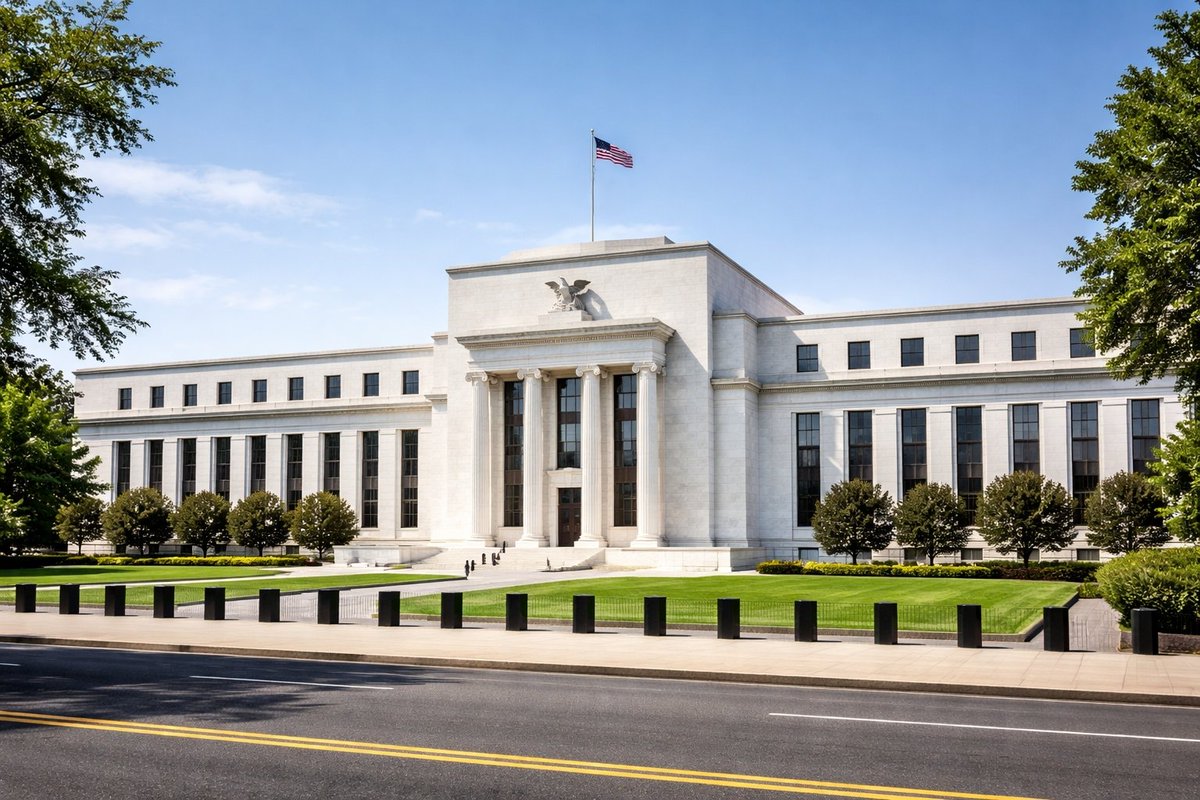
Banks do not take money on deposit and lend it out. They create it, from nothing, with a few keystrokes, and the entire system depends on you never noticing.
When you deposit $10,000 in cash at JPMorgan Chase, the bank records a liability to you and an asset for itself. Under fractional reserve banking, the Federal Reserve requires banks to hold only a fraction of deposits as reserves. For decades, that requirement sat around 10%, and in March 2020 the Fed dropped it to zero. That means JPMorgan can lend out the full $10,000 you deposited, while still owing you that $10,000 on demand. The borrower who receives that $10,000 deposits it elsewhere. That bank then lends it out again. The same dollars multiply through the system, spawning new purchasing power at each stage without a single additional dollar being printed.
Murray Rothbard called this counterfeiting conducted through respectable institutions, and I think that word fits. If you printed money in your basement and spent it, you would transfer real wealth from later dollar-holders to yourself. Banks do precisely this, they just call the process "credit creation" and charge interest for the privilege of doing it.
The price you pay seems hidden at first. Every new dollar dilutes your "old" dollars. When credit expansion drives a housing boom, as it did between 2003 and 2007, asset prices rise first for the people closest to the new money, the borrowers, the developers, the leveraged speculators. By the time ordinary wages and savings adjust, you have already been taxed by dilution of purchasing power without a single congressman casting a vote.
This system contains the seed of every business cycle. Cheap credit manufactured by banks sends false signals to entrepreneurs, who invest in projects that the real pool of savings cannot support. The boom turns to bust when reality reasserts itself, usually violently, usually on your tab through bailouts.
Fractional reserve banking is state-licensed privilege, enforced by deposit insurance and central bank backstops that socialize the losses while the gains flow upward. This is how the rich become richer, and the poor get poorer, not "capitalism," as economically illiterate politicians like to claim.
The money supply does not need to grow for an economy to grow. A fixed stock of money serves a growing economy perfectly well, because prices adjust downward as production expands. More goods chasing the same number of dollars means each dollar buys more. That is prosperity.
Central bankers treat deflation like a contagious disease, but falling prices are simply the market telling you that someone got more efficient. When Ford cut the price of the Model T from $850 in 1909 to $260 by 1925, consumers did not stop buying cars while waiting for prices to fall further. They bought millions of them. Falling prices driven by productivity growth do not paralyze economies; they reward savers and punish waste.
The key insight sits in the unit of account. Murray Rothbard made this explicit in "The Case for a 100 Percent Gold Dollar": the actual quantity of money in an economy is largely irrelevant to its functioning, because money's job is to facilitate exchange, not to exist in any particular volume. If the total supply of gold were fixed at, say, 10,000 tons forever, prices across the economy would simply denominate in smaller and smaller fractions of an ounce as output grew. The math scales indefinitely. A dollar divisible to eight decimal places (as Bitcoin already is, reaching units called satoshis at 0.00000001 BTC) gives you 2.1 quadrillion discrete units from a capped supply of 21 million coins. No economy in human history has needed more pricing granularity than that.
Governments expand the money supply because it lets them spend without taxing you directly, transferring purchasing power from your savings to whoever receives the new money first (typically banks and politically connected borrowers). By the time the new dollars reach your wages, prices have already adjusted upward. You paid the tax; someone else collected it.
A fixed money supply eliminates that mechanism. Producers compete to offer you more value per unit of currency rather than lobbying the Fed for favorable credit conditions. Capital allocation returns to the actual preferences of actual people, expressed through voluntary exchange, rather than the distorted signals that cheap credit manufactures. The economy needs honest money, denominated in units small enough to price anything from a country's GDP to a cup of coffee.
Ironically, he’s echoing an influential strand of Indian discourse that, for various reasons, invented an artificial history of an India gracefully absorbing invasion after invasion that supposedly created a unique composite culture.
The alternative idea borne out by an honest survey of Indian history is about an enduring and unbroken civilizational identity and culture originating several thousand years ago. It’s resilience was tested in the past thousand years with waves of self-proclaimed foreign rulers who sought to suppress or erase that dominant civilization with the force of arms, and, yet failed in that quest.
India’s liberal ethos, inclusivity and ability to peacefully co-exist in the modern epoch with different belief systems is because of the essence of its civilization. This remarkable resilience despite great odds is the real story of India.
You might get bored that I post the same names of stocks again and again. But that's my approach. I stick with my favorite list of stocks for a long period. And it hardly changes.
Even for next year, you might see no major changes.
#KSE100#PSX
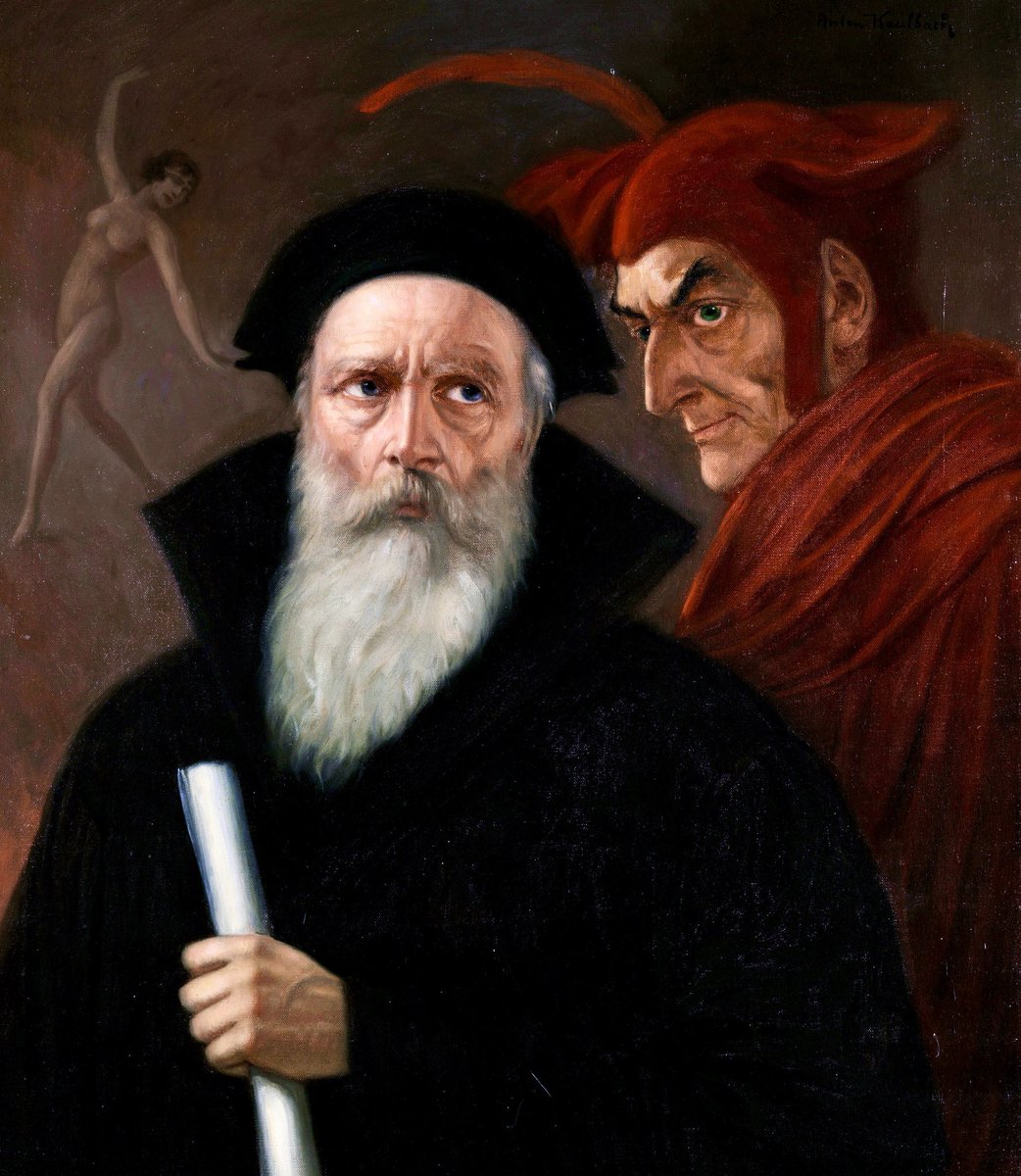
The Western soul is Faustian – and what it really means
(And who is Mephisto…)
Oswald Spengler gave the Western soul that name a century ago, after Goethe's Faust. Faust is the scholar who has read everything and knows everything, and still he is not satisfied. So he makes a pact with the devil to get more.
That is us. We always want more: more knowledge, more space, more speed, more freedom. Other civilizations built temples to stand still. We built cathedrals pointing at the infinite. We sailed past the horizon, looked into the stars with the telescope, and went down into the atom.
At the center of it all stands the individual: my soul, my conscience, my life, my ambition. He is alone before God, alone before the market, alone before himself.
And we are told it comes at a cost. Restlessness, burnout, loneliness, anxiety, envy. The family dissolved, tradition burned for fuel. After all, Faust sold his soul, didn't he?
But does it really?
Read Goethe to the end. The deal with the devil was not that Faust would want more. It was the opposite. Faust loses his soul the moment he is satisfied, the moment he says to a passing moment, "Stay, you are so beautiful."
The devil doesn't win when you strive. He wins when you stop.
And what does Faust see in his last vision? A free people on free land, working. That is the Faustian dream. Then the angels carry him up, singing that whoever keeps striving can be redeemed. Goethe's verdict on the Faustian soul is not damnation. It is salvation.
Now look at the bill honestly. The civilizations that did not want more did not live in peace. They lived in poverty, and then they were conquered by those who did want more. The cost of wanting more is real. The cost of wanting less is much higher, only it is paid quietly, by people who never get to complain.
So who is Mephisto today?
Listen to who sells "less." Degrowth. Sobriety. Equality of outcome. Be content, be safe, the state will take care of you. Stay, you are so beautiful.
That is the devil's offer in our time. He no longer tempts us with more. He tempts us with enough.
And the price is the same as always – your soul.
The voice whispering it most often now belongs to the intellectuals.
Why do intellectuals always need to be looking for a hole in what is the most accomplished arrangement of humanity, rather than helping refine it even further?
Are they its enemies?
The answer is most often more prosaic – they are not on top in this arrangement and they hold a grudge. And criticizing it gives them a raison d'être.
At school, the clever boy with good grades was king. Robert Nozick saw it clearly: the intellectual grows up in a little society that rewards words, and then walks out into a bigger one that rewards results. Suddenly the boy who sat at the back, the one who fixed engines after school, earns ten times more.
The Faustian order is unfair to the intellectual in exactly one way. It does not pay for being clever. It pays for being useful.
That is the grudge.
And then there is the business. The intellectual needs the problem, and if there is none, he needs to make it up. If the problem is fixed, the career is over. So the problem must never be fixed, only discovered again, in a new form, every year.
To refine something you have to understand how it works. To criticize it you only need words, and words cost nothing. The builder answers for what he builds. The critic answers for nothing.
Goethe knew this character well. Mephisto introduces himself to Faust as the spirit that always denies. He builds nothing and he wants nothing, only to say no to everything someone else made.
Faust strives; Mephisto denies.
And here is the final irony. The only arrangement in history that pays its critics, gives them a chair at the university and a column in the newspaper, and lets them attack it freely is the very one they attack.
Mephisto at least knew he was the devil. Our intellectuals think they are the conscience.