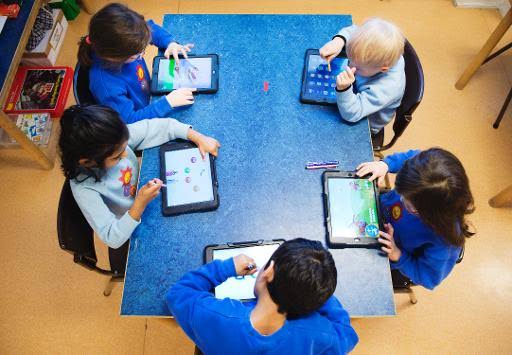
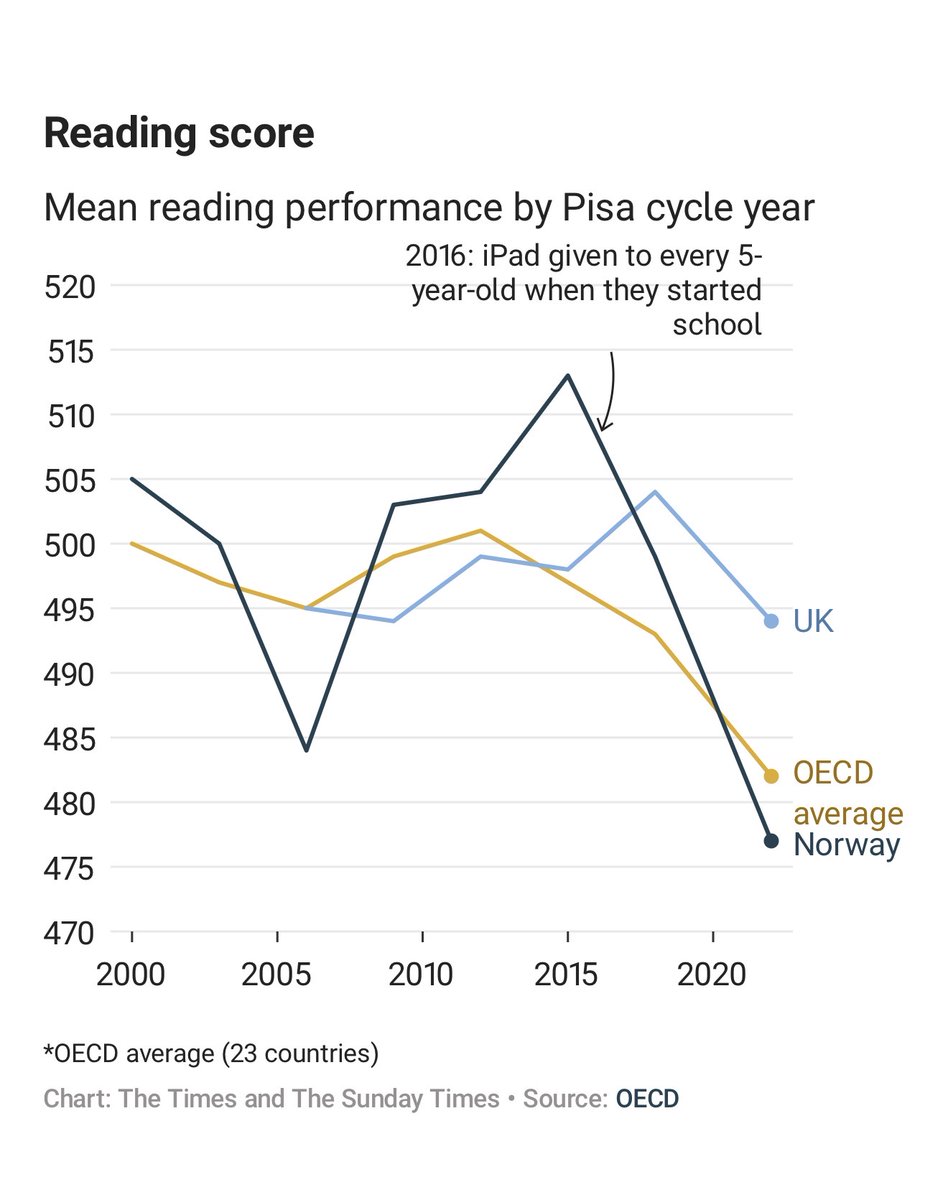
In 2016, Norway gave every 5-year-old in the country a personal iPad. By 2023 their children ranked dead last out of 65 countries on reading enjoyment, and reading scores had dropped below the OECD average for the first time in two decades.
The devices had no parental controls. Teachers who raised concerns were dismissed as dinosaurs. Books disappeared from classrooms. Within a few years, roughly 500,000 of Norway's 5.6 million citizens could not read a text message or follow simple written instructions.
The mechanism is straightforward. Reading acquisition between ages 5 and 7 requires sustained attention on a static, low-stimulation medium. The brain is wiring the neural circuitry that links visual symbol to sound to meaning. That circuit needs long stretches of uninterrupted focus to form. iPads are engineered to prevent exactly that. Every app delivers novelty on a cycle measured in seconds.
The PISA data shows the timeline clearly. Norway tracked above the OECD average from 2000 to 2014. Starting 2016, scores dropped below. Britain, using far less classroom tech, pulled ahead in the same window.
Now Norway is spending millions to reverse it. Libraries run rollerskating and rap workshops to pull kids through the door, then hand them books. Several municipalities have removed tablets from early primary grades entirely.
Norway has a $2 trillion sovereign wealth fund and 96% electric vehicle adoption. The same policy apparatus that executed one of the fastest energy transitions in modern history also executed the fastest literacy collapse in the developed world.
Every country that adopted classroom tech got the same pitch: faster learning with modern tools. Norway just ran the experiment. The device sold as a learning accelerator broke the foundational skill all learning depends on.
ඔබටත් ඔබේ පවුලේ සැමටත් සාමය සතුට පිරි සුභ අලුත් අවුරුද්දක් වේවා 🙏🏽
உங்களுக்கும் உங்கள் குடும்பத்தினருக்கும் இனிய புத்தாண்டு நல்வாழ்த்துக்கள் 🙏🏽
Wish you & your family a happy and peaceful new year 🙏🏽
Real Luxuries in Life
1. Living 10 minutes from work
2. Living 5 minutes from the gym
3. Having quiet neighbors
4. Having money left at the end of the month and investing it
5. Peace at home
6. Drinking coffee without rushing
7. Sleeping with a clear conscience
8. Laughing with people who truly get you
9. Traveling every year
10. Waking up naturally without an alarm
11. Enjoying a home-cooked meal with loved ones
12. Having time to read a book in one sitting
13. Finding joy in simple daily routines
14. Having a pet that greets you happily at the door
These are the things that actually feel rich.
SriLankan Airlines has reported a loss of LKR 2.7 billion for FY 2024/25, compared to a profit of LKR 7.9 billion in the previous year. Revenue declined by 10.8%, while the cost of sales dropped by 11.7%, resulting in a modest 1% improvement in gross profit. However, the sharp increase in finance costs has completely eroded operating profits.
With a gross margin of only 9.38%, the airline’s business model raises serious concerns about long-term viability. As a full-service carrier - not a budget airline - SriLankan should ideally deliver stronger margins. Recovering the accumulated losses of LKR 379 billion under the current structure appears nearly impossible. It’s time to face reality and proceed with privatization without further delay.
Government will allow any junk metal piece on the road just because it can transport a few working class people and arrest victims when things go wrong.