Indian journalist Palki Sharma has a point
Israel does not allow Omani pilot from flying into Israel
Under Israeli aviation guidelines and regional normalization frameworks like the Abraham Accords, pilots from nations without diplomatic relations with Israel are barred from flying into the country
Operating agreements for foreign carriers, such as flydubai, explicitly state that their flight crews must come from countries that maintain normal relations with Israel
Oman does not have diplomatic ties with Israel
ONE MAN. ONE MOSQUE. CENTURIES OF HISTORY.
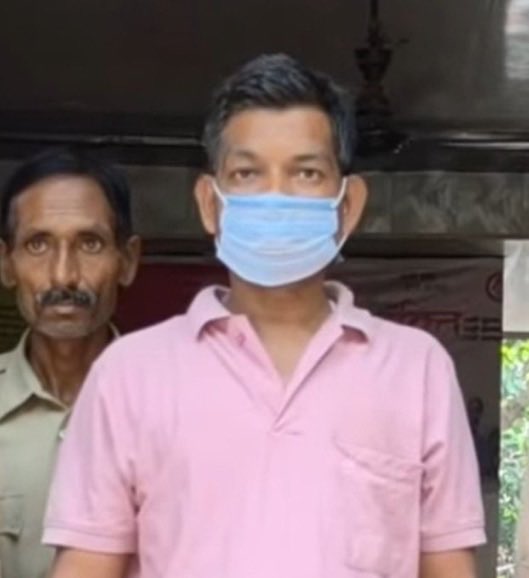
A lone man standing between the police and the Shahi Masjid of Ujjain. The mosque has become the centre of a heated dispute over the removal of a portion of the structure for road widening ahead of Simhastha 2028.
The Madhya Pradesh High Court had dismissed petitions challenging the proposed removal on September 9, while protests erupted again as work began.
The mosque’s management says the Shahi Masjid dates back to 1390, which would make it more than six centuries old. Historical documentation cited in recent reporting confirms the mosque’s presence by the 20th century, although the precise 1390 origin remains a claim by the mosque management rather than an independently established fact.
For those who worship there, it is not simply a building. It is a place of prayer, memory, community and belonging.
Development is important. But so are heritage, faith, dialogue and the peaceful resolution of disputes.
A mosque can be rebuilt. But the history, memories and emotions attached to a centuries-old place cannot simply be erased.
बाबरी तो बस एक बहाना था,
उनको तो सारी मस्जिदें गिराना था ।
Wake Up, It's Already Too Late !!
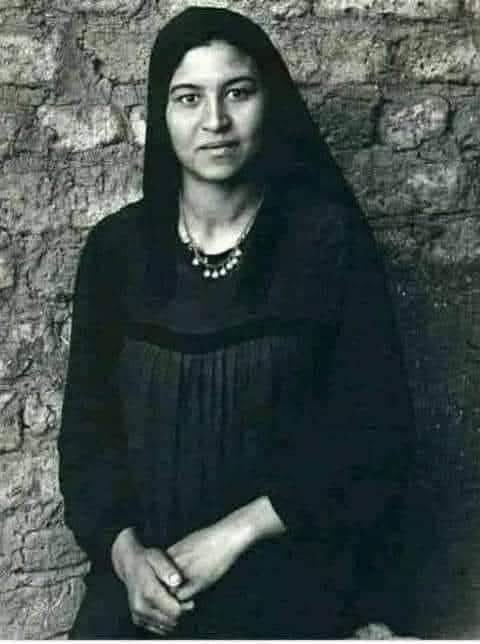
In 1879, in a modest village in Kafr El-Sheikh, Egypt, a peasant woman named Mubarka Khafaji married Ibrahim Atta, a farmer who survived on daily wages.
Life was already difficult. Then, while Mubarka was still in the final months of pregnancy, financial pressure led her husband to divorce her.
She returned to her mother and brother and moved to Alexandria, Egypt, where she gave birth to her son, Ali Ibrahim Atta.
She had every reason to surrender to hardship.
Instead, she made a decision: her son would receive the education and future she herself had never been given.
Mubarka could barely make ends meet. She worked on the streets of Alexandria selling cheese to provide for Ali. She could have sent him to work as a child, but she chose sacrifice over surrender.
She enrolled him at Ras El-Tin Primary School.
After he completed his primary education, his father came to take him away, intending for him to stop studying and begin working.
But his mother refused to let poverty decide her son’s destiny.
In a remarkable act of determination, Mubarka secretly moved Ali from the roof of their home to the neighboring roof and escaped with him to Cairo, Egypt.
There, she enrolled him at the Khedivial School in Darb El-Gamamiz and found work with a family so she could continue paying for his education.
Ali studied relentlessly.
His mother’s sacrifices eventually opened a door neither of them could have imagined.
In 1897, he entered medical school.
In 1901, he graduated as a doctor.
Years later, Sultan Hussein Kamel, the ruler of Egypt, became seriously ill. Doctors struggled to determine what was wrong with him.
Then Dr. Othman Ghaleb recommended Dr. Ali Ibrahim.
Ali successfully performed the difficult operation.
His reputation changed overnight.
He was appointed chief surgical consultant and personal physician to the Sultan and was given the title Bey.
In 1922, King Fuad I elevated him to the title Pasha.
Then came another historic achievement.
In 1929, Dr. Ali Pasha Ibrahim became the first Egyptian dean of the Faculty of Medicine at Fouad I University, now Cairo University. He later became president of the university.
In 1940, he was appointed Egypt’s Minister of Health.
That same year, he founded the Egyptian Medical Syndicate and became its first president. He also served in the Egyptian Parliament.
But behind all those titles doctor, Bey, Pasha, dean, university president and minister stood a woman whose name history could easily have forgotten.
Mubarka Khafaji.
An uneducated rural woman.
A divorced mother.
A poor street vendor.
Yet she refused to let poverty become her son’s inheritance.
She could not give him wealth.
So she gave him opportunity.
She could not give him a privileged upbringing.
So she gave him education.
And ultimately, she helped raise a man who would leave a lasting mark on Egyptian medicine and public life.
The lesson is bigger than one family:
Sometimes the person changing history is not the one standing on the stage. It is the mother who sacrificed everything so her child could reach it.
Respect to every mother who becomes a child’s first teacher, strongest supporter, and school of life. ❤️
Look at the strength of faith of mothers and sisters in Ujjain they came out of their homes to stand up for the protection of the mosque. Thankfully, everything is fine for now.
Allegations have emerged that, during clashes over the removal of part of the Shahi Mosque in connection with the Ujjain road-widening project, police personnel brutally beat members of the Muslim community who were protesting.