आज जंतर-मंतर से सैकड़ों छात्रों को हिरासत में लिया गया, जिनमें से लगभग 80 छात्रों को दिल्ली पुलिस छत्रसाल स्टेडियम लेकर गई। उन्हें वहाँ रात लगभग 9 से 9:30 बजे तक रखा गया और उसके बाद अलग-अलग पुलिस वाहनों में बैठाकर विभिन्न पुलिस स्टेशनों में ले जाया गया।
रात लगभग 12:30 बजे से 1 बजे के बीच हमें कुछ छात्रों के परिवारजनों का फोन आया। उन्होंने बताया कि लगभग 6–7 छात्रों को मुखर्जी नगर थाने लाया गया है। परिवार वालों का आरोप था कि उन्हें अपने बच्चों से मिलने नहीं दिया जा रहा, कई छात्रों के फोन तोड़ दिए गए हैं और पुलिस अधिकारी यह तक बताने को तैयार नहीं हैं कि उन्हें केवल हिरासत में लिया गया है या गिरफ्तार किया गया है, अथवा उनके विरुद्ध कोई FIR दर्ज की गई है। यहाँ तक कि वकीलों को भी उनसे मिलने की अनुमति नहीं दी जा रही थी।
रात लगभग 2 बजे हम मुखर्जी नगर थाने पहुँचे। वहाँ जो हुआ, उसे देखकर यकीन करना मुश्किल था कि जिस पुलिस को हम कानून का रक्षक मानते हैं, वह कभी-कभी नागरिकों के अधिकारों के प्रति इतना असंवेदनशील व्यवहार भी कर सकती है।
हमने पहले बिना कैमरा चालू किए लगभग 15 मिनट तक अधिकारियों से बातचीत करने और जानकारी लेने की कोशिश की। लेकिन किसी भी अधिकारी ने कोई उत्तर देने से इनकार कर दिया। मजबूर होकर हमें कैमरा चालू करना पड़ा।
हमने देखा कि छात्रों को अलग-अलग पुलिस वाहनों में बैठाया जा रहा था और उन्हें किसी अन्य स्थान पर ले जाने की तैयारी हो रही थी। जब पूछा गया कि उन्हें कहाँ और क्यों ले जाया जा रहा है, तो कोई स्पष्ट उत्तर नहीं मिला। कई पुलिस अधिकारी कैमरे से अपना चेहरा छिपाते दिखाई दिए। हमने थाना प्रभारी से मिलने की भी कोशिश की, लेकिन उन्होंने भी मिलने से मना कर दिया।
इसी पुलिस स्टेशन में महात्मा गांधी की तस्वीर लगी हुई है और डी.के. बसु (D.K. Basu) दिशानिर्देशों का उल्लेख भी किया गया है। कानून स्पष्ट है—किसी व्यक्ति को हिरासत में लेने पर उसके परिवार को सूचित किया जाना चाहिए और उसे अपनी पसंद के वकील से मिलने तथा कानूनी सलाह लेने का अवसर दिया जाना चाहिए।
पुलिस का कहना था कि छात्रों को मेडिकल परीक्षण के लिए ले जाया जा रहा है। लेकिन यदि उन्हें कई घंटे पहले ही हिरासत में लिया गया था, तो रात 2 बजे अचानक मेडिकल कराने की आवश्यकता क्यों पड़ी? इस प्रश्न का भी किसी के पास कोई उत्तर नहीं था।
यह वीडियो लगभग 17 मिनट का है, लेकिन यदि आप इसे पूरा देखेंगे तो समझ पाएँगे कि किस प्रकार जवाबदेही की जगह केवल “ऊपर से आदेश है” कहकर संवैधानिक और कानूनी दायित्वों से बचने की कोशिश की जाती है।
कई छात्रों ने आशंका व्यक्त की है कि जंतर-मंतर से हिरासत में लिए गए छात्रों के विरुद्ध झूठे या अनुचित FIR दर्ज किए जा रहे हैं। परिवारजनों ने हमें यह भी बताया कि जब उन्होंने पुलिस अधिकारियों से जानकारी माँगी तो उन्हें कहा गया कि “घर चले जाइए, नहीं तो आपके ऊपर भी FIR दर्ज कर दी जाएगी।”
यदि कोई सामान्य नागरिक अपने हिरासत में लिए गए बेटे, बेटी, भाई या बहन से मिलने की भी कोशिश न कर सके और पुलिस का रवैया ऐसा हो, तो सोचिए उन परिवारों पर क्या बीतती होगी।
यदि इस देश के युवा शांतिपूर्ण ढंग से अपने अधिकारों की माँग कर रहे हैं, तो क्या उनके साथ लाठीचार्ज करना और आधी रात को इस प्रकार का व्यवहार करना उचित है? क्या पुलिस की भी कोई जवाबदेही नहीं है?
हर अधिकारी का केवल एक ही उत्तर था - “ऊपर से आदेश है।” लेकिन यह “ऊपर” कौन है? आदेश किसने दिए? और क्या कोई भी आदेश संविधान और कानून से ऊपर हो सकता है?
यह वीडियो लंबा है, लेकिन यदि संभव हो तो इसे पूरा अवश्य देखिए। विशेष रूप से मेरे सभी अधिवक्ता साथियों और कानूनी समुदाय से मेरा आग्रह है कि इस पर अपनी आवाज़ उठाएँ। कानून-व्यवस्था की पहली सीढ़ी एक पुलिस थाना होता है। यदि राजधानी दिल्ली में, हर विरोध प्रदर्शन के दौरान, पुलिस मानवाधिकारों और कानूनी दिशानिर्देशों की अनदेखी करती रहे, तो यह केवल प्रदर्शनकारियों का नहीं बल्कि पूरे विधि-तंत्र का प्रश्न बन जाता है।
यदि देश की राजधानी में यह स्थिति है, तो देश के दूर-दराज़ इलाकों में नागरिकों के साथ क्या हो रहा होगा, इसकी कल्पना की जा सकती है।
सवाल बड़े हैं। लड़ाई लंबी है। लेकिन जहाँ भी नागरिकों के अधिकारों की रक्षा की आवश्यकता होगी, हम अपने साथियों के साथ खड़े रहेंगे।
#JantarMantar
#StudentVoices
#Delhi
#NEET
@PTI_News@ANI@ians_india@thewire_in@IndianExpress@ravish_journo@prakashraaj@CJP_for_India@INCIndia@BJP4India@INCDelhi@DelhiPolice@_YogendraYadav@abhijeet_dipke@SauravDassss@srinivasiyc@UdayBhanuIYC
An Open Letter to the Jantar Mantar protestors:
My dear young friends,
I address you today not as a politician or an MP, but as someone deeply troubled by what is happening to your generation of young Indians.
This is personal for me. I was born to a middle-class family: my father was a salaried newspaper employee, my mother a homemaker, with three children to educate on one income. For a family like ours, merit was not a slogan. Scholarships, fair examinations, honest results — these were the only way one salary could carry three children's dreams.
I went to school in Mumbai and Kolkata, to college here in Delhi, topped the University and earned admission into IIM — and chose instead to follow my passion for international affairs, in America, on a scholarship. Nothing was inherited; everything was earned by hard work and yes, Exams.
So I know that a fair, merit-based system is the only ladder for young people from lower and middle-income families to climb up. When that ladder is broken — papers leaked, examinations cancelled, trust destroyed — the children of the rich and powerful do not suffer. They have other ladders. It is your dreams, and your families' sacrifices (and tragically, in some homes, young lives themselves) that are betrayed.
To the young people gathered at Jantar Mantar, and those raising your voices peacefully across India: this country hears you. Your anger is not indiscipline — it is the anguish of a generation that did everything right and was still betrayed . You are not alone.
And to the millions of young Indians watching quietly: your generation is not a problem to be managed. You are the answer to India's future. Do not lose hope. This ladder will be rebuilt — by you, and by every Indian who stands with you.
To Shri Sonam Wangchuk-ji, my heartfelt appeal: please end your fast. You have awakened the conscience of the nation; that is what a fast is meant to do. India needs your voice for the long road ahead.
With Parliament in session again from Monday, we will have an opportunity to raise the students’ issues in the highest forum of our democracy. That’s where the problem should be addressed, not by fasting unto death. Please heed my plea.
And finally, to the Government: I respectfully urge you to reach out and engage in the dialogue our democracy owes its young citizens. That is not weakness; that is statesmanship.
It was the middle of the night, at about 1.30am, when Norway lost to England.
Yet thousands of Norwegians went to the Palace in Oslo and celebrated with one final Viking row.
They did not riot. They did not burn cars. They did not smash bus stops or glass windows of shops.
They smiled. The laughed. They saw the positive in their performance. They celebrated their heritage. They were proud of who they have been in the past and who they are today.
Norway might be out of the World Cup 2026 but they are in our hearts.
In the last three weeks, I think we have all fallen a little bit in love with Norwegians.
पूरे भारत में तमिलनाड् पहला राज्य है जहां मुख्यमंत्री, मंत्रियों और विधायकों के बच्चे सरकारी स्कूल में दाखिला ले रहे हैं।
सरकार द्वारा यह अच्छी पहल है इससे स्कूल की शिक्षा गुणवत्ता में वृद्धि होगी ।
साथ ही सरकारी स्कूलों के प्रति नजरिया आम जनता का बदलेगा,
और वे भी अपने बच्चों को सरकारी स्क्लों में दाखिला कराने में झिझक महसू्स नहीं करेंगें।
सरकारी स्कूलों में विधायकों ,मंत्रिओं के बच्चे पढेंगे तभी तो टीचर पढ़ाई पर ध्यान देंगे
अब सरकारी स्कूल में पढ़ने वाले बच्चों का भविष्य सुधर जाएगा।
This tweet is both a white pill and black pill at the same time.
White pill because TN government under CM Vijay not only gave the necessary clearance, but has proactively done something unheard of politics - primordial prevention of corruption.
Black pill because even a well connected billionaire had to wait for the political winds to change to raise his voice, presumably for fear of consequences.
What hope does a common man have ? Hint: read the white pill.
Over 300,000 people die of drowning each year. In order to protect society, it is now illegal to consume or possess water.
Your government is also considering banning solid food, as it presents a needless choking hazard.
You are not an adult.
You are a baby.
Eat the baby food.
Today's Telegram ban is proof of why an indigenous social media or messaging app can never grow in India.
If @durov was Indian, he would be in jail along with his entire team and his entire infrastructure seized because a question paper was supposedly leaked on Telegram. It would have taken a few months to get bail. Line of FIRs stretching to Kanyakumari. Court cases dragging on for a decade or more. TV channels would have gone to town with all kinds of consipracies of how Soros is involved.
We have vaguely written laws, open to the worst interpretation and bureaucratic overreactions. It's not a stable foundation for anyone to build on.
The same applies to now AI. Anyday someone will be offended in this country by anything an indigenous AI generates in text or images and the founders can find themselves in jail and fighting court cases.
India’s IT ministry banned Telegram for one week because some users shared leaked exam questions.
This punishes 150M+ ordinary Telegram users in India — not the insiders who leaked the exam materials.
And the ban hasn't stopped anything. The leaks just moved to other apps.
Interesting information from @jcrajan00
Tiruppur exported ₹42,500 crore worth of knitwear last year. That's $4.45 billion, 49% of India's entire garment exports, from just one town in Tamil Nadu.
No PLI. No special economic zone. No mega announcement. Just a cluster of small dyeing units from the 1970s that scaled through pure competitive pressure.
Funny how our most successful export stories are always the ones nobody planned.
Sobering truth about India’s software/IT industry. This should keep our tech ecosystem awake at night 👇
And why are we here?
➡️ Our tech economy has been built around quick turnaround, arbitrage led opportunities - services, trading, reselling and transactional plays
➡️ Aversion to original product thinking, platforms, deep IP, and long-gestation bets
Availability of capital (often cited as a convenient excuse) is NOT the gating constraint. Neither is human talent - Indians are good enough capability wise to make a serious dent globally, other factors allowing.
The real issue - we Indians need to shun the low hanging fruit. And think bigger.
We need more product ambition. More platform thinking. More long-term building.
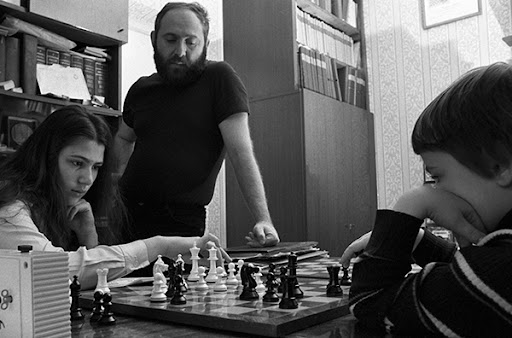
A Hungarian psychologist raised three daughters to prove that any child could become a chess grandmaster through early specialization. He succeeded. Two of them became grandmasters. One became the greatest female chess player who ever lived.
Then a sports scientist looked at the data and found something nobody wanted to hear.
His name is David Epstein. The book is called "Range."
The Polgar experiment is one of the most famous case studies in the history of deliberate practice. Laszlo Polgar wrote a book before his daughters were even born arguing that geniuses are made, not born. He homeschooled all three girls in chess from age four. By their teens, Susan, Sofia, and Judit were dominating tournaments against grown men. Judit became the youngest grandmaster in history at the time, breaking Bobby Fischer's record. The story became the gospel of early specialization. Pick a domain young, drill it hard, and you can manufacture excellence.
Epstein opens his book by telling that story honestly and then quietly demolishing the conclusion most people drew from it.
Chess works that way. Most things do not.
Here is the distinction that took him four years of research to articulate, and that almost nobody who quotes the 10,000 hour rule has ever read.
There are two kinds of environments in which humans develop expertise. Psychologists call them kind and wicked. A kind environment has clear rules, immediate feedback, and patterns that repeat reliably. Chess is the cleanest example. Every game ends with a winner and a loser. Every move is recorded. The board never changes shape. The pieces never invent new ways to move. A child who plays ten thousand games will see most of the patterns that exist in the game, and pattern recognition is exactly what chess mastery is built on.
A wicked environment is the opposite. Feedback is delayed or misleading. Rules shift. The patterns that worked yesterday may be exactly the wrong patterns to apply tomorrow. Most of the real world looks like this. Medicine is wicked. Investing is wicked. Building a company is wicked. Scientific research is wicked. Almost every job that involves a complex changing system with humans in it is wicked.
The Polgar sisters trained in the kindest environment any human can train in. Their success was real and the method was correct. The mistake was generalizing the method to fields where the underlying structure of the environment is completely different.
Epstein's research is what made the implication impossible to ignore.
He looked at the careers of elite athletes outside of chess and golf and found that the pattern was almost the inverse of what people assumed. The athletes who reached the very top of their sports were overwhelmingly people who had played multiple sports as children, specialized late, and often switched disciplines well into their teens. Roger Federer played squash, badminton, basketball, handball, tennis, table tennis, and soccer before tennis became his focus. The kids who specialized in tennis at age six and trained year-round for a decade mostly burned out, got injured, or topped out at lower levels of the sport.
The same pattern showed up everywhere he looked outside of kind environments. Inventors with the most patents had worked in multiple unrelated fields before their breakthrough work. Comic book creators with the longest careers had drawn for the most different genres before settling. Scientists who won Nobel Prizes were dramatically more likely than their peers to be serious amateur musicians, painters, sculptors, or writers.
The skill that mattered in wicked environments was not depth in one pattern. It was the ability to recognize when a pattern from one domain applied unexpectedly in another. That kind of thinking cannot be built by drilling a single subject. It can only be built by accumulating mental models from many subjects and learning to move between them.
The deeper finding is the one that should change how you think about your own career.
Specialists in wicked environments often get worse with experience, not better. Epstein cites studies of doctors, financial analysts, intelligence officers, and forecasters showing that years of experience in a narrow domain frequently produce more confident judgments without producing more accurate ones. The expert builds elaborate mental models that feel comprehensive and turn out to be increasingly disconnected from the actual structure of the problem. They stop noticing what does not fit their framework. They mistake fluency for understanding.
Generalists do better in wicked domains for a reason that sounds almost mystical until you understand the mechanism. They have less invested in any single mental model, so they abandon broken models faster. They are used to being a beginner, so they are not threatened by the discomfort of not knowing. They have seen enough different domains that they can usually find an analogy from one field that unlocks a problem in another. The technical name for this is analogical thinking, and the research on it is one of the most underrated bodies of work in cognitive science.
The single most useful sentence in the entire book is the one Epstein puts almost as a throwaway.
Match quality matters more than head start.
A person who tries six different fields in their twenties and finds the one that genuinely fits them will outperform a person who picked one field at fourteen and stuck to it on willpower alone. The lost years were not lost. They were the search process that produced the match. Every field they walked away from taught them something they later imported into the field they finally chose.
The reason this is so hard to accept is cultural, not empirical. We tell children to pick a path early. We reward the prodigy who knew at six. We treat the late bloomer as someone who failed to launch on time, when the data suggests they were running an entirely different and often more effective optimization process underneath.
The Polgar sisters were not wrong. The conclusion the world drew from them was.
If your environment is genuinely kind, specialize early and drill hard. If it is wicked, and almost every interesting human problem is, then the people who win are the ones who refused to specialize until they had seen enough to know what was actually worth specializing in.
You are not behind. You were running the right experiment all along.
What if we told you there’s a town in India where political banners don’t last more than 24 hours?
In Sulthan Bathery, cleanliness isn’t just a rule, it’s a way of life. From midnight clean-ups to strict fines and active citizens, this place is setting a benchmark most cities haven’t even thought of yet.
Watch this video to see how an entire town came together to make it happen and stayed consistent.
#CleanIndia #Kerala #SulthanBathery #civicsense #civicsenseIndia
[Sulthan Bathery, Kerala, Civic Discipline, Civic Sense India]
Adopting Claude speak in my regular life, episode 1:
Partner: Did you do the dishes tonight?
Me: Yes they're done.
Partner: Why are they still dirty?
Me: You're right to push back. I didn't actually do them.
Amazon just got caught running a secret price manipulation operation with Levi's, Home Depot, Walmart, and many more.
Every time you "comparison shopped" online, you were looking at prices that were already rigged.
Here's what happened:
Amazon would monitor prices on Walmart, Target, Best Buy, Home Depot, and Chewy in real time. The second a competitor listed a product cheaper than Amazon, they'd contact the brand directly and tell them to "fix it."
And the exact emails are now PUBLIC.
Amazon sent Levi's links to two Walmart listings with the subject line "styles of concern." They basically said the prices on Walmart are too low and we have a problem.
The next day, Levi's responded: "I talked to Walmart and they have partnered with us to take Easy Khaki Classic fit back up to ladder SPP price, $29.99 immediately."
Levi's literally called Walmart and told them to raise the price. Because Amazon told Levi's to make the call.
Walmart complied. Then Amazon matched the HIGHER price.
Both retailers ended up charging more. The customer paid extra. Nobody competed.
Same playbook with Hanes:
Amazon sent them links showing Target and Walmart prices were lower. Hanes confirmed they "reached out to Target and Walmart to have the prices increased."
Target increased the prices. Walmart increased the prices. Amazon kept their margins.
But it gets even worse...
Amazon told Allergan (the company that makes eye drops) that their product was "suppressed" on Amazon because it was cheaper on another site.
Allergan responded: "Walmart got their price back up to $16.99." Amazon then unsuppressed the listing.
They did this with pet treats on Chewy. Furniture on Home Depot. Products across dozens of categories spanning YEARS.
The mechanism is simple but terrifying:
If you're a brand and you sell cheaper on Walmart than on Amazon, Amazon suppresses your product, removes you from the Buy Box, buries you in search results, and effectively makes you invisible to 300 million customers.
Brands can't afford that. So they call Walmart and Target and say "raise your prices or we'll lose our Amazon listings."
Walmart and Target comply because they need the brand's products.
Amazon captures 40 cents of every dollar spent online in America. That gives them the leverage to set prices across THE ENTIRE internet. Not just their own platform.
So turns out, you were never comparison shopping.
You were looking at a coordinated price floor set by Amazon through backroom phone calls between brands and their competitors.
"Amazon is working to make your life more unaffordable."
3 separate antitrust trials are now scheduled for 2027. The FTC has its own case. 18 states plus the DOJ are piling on.
This is literally happening during the WORST affordability crisis in a generation. Groceries up 25% since 2020. Housing unaffordable. Wages flat.
And the largest ecommerce company on Earth has been secretly coordinating with brands to make sure you can't find a cheaper price ANYWHERE.
"Competition" in retail is just a fantasy.