I accidentally made Claude Code dumber by building too much on top of it.
35 skills. 76 memory files. CLAUDE.md rules. MCP plugins. All packed into the system prompt every turn. 46,000 tokens before I even typed hello.
Built a token optimizer: skills and memory load on-demand instead of all at once. 46K down to 3.3K. Just ask Claude "audit my system prompt" to see where your tokens are going.
https://t.co/yPJggWNrlN
Your 50th customer meeting prep takes just as long as your first. You've gotten better at building a company. Your process hasn't. That gap is the Admin Tax.
Enterprise workflows are getting automated. But something critical is getting lost.
Across industries - insurance, enterprise sales, medtech approval, we kept seeing the same failure pattern.
Agents consistently broke down at edge cases.
It’s structural collapse. At https://t.co/QjlvKunkT9, we’re building the missing layer from day zero. Every agent run emits a decision trace. Over time, those traces form a living context graph, a system that remembers not just what was decided, but why.
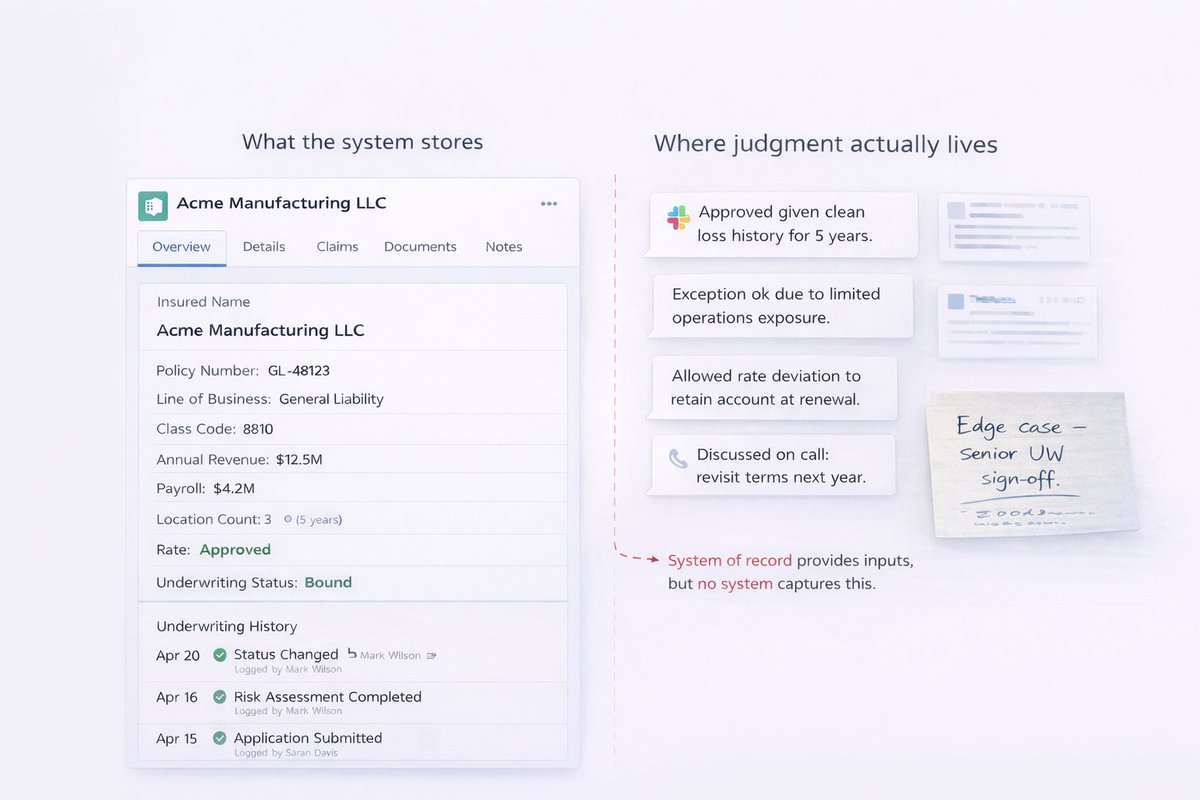
Worse, precedent never compounds. A justified exception last quarter can’t inform a similar decision today. So agents inherit the same blindness. When they hit edge cases. the moments where senior humans add the most value, they fall back to rigid rules or guesswork.
Judgment isn’t. Every exception is contextual, time-bound, and precedent-setting. Encoding it forces endless custom fields and branching logic, until the system becomes brittle.
An underwriter approves a non-standard policy.
A sales leader authorizes a 25% discount.
A compliance officer signs off on an exception.
The system records the outcome. It never records why.
6/6 The winners won’t be teams that bolt AI into their SaaS. They’ll be the ones who reinvent the category around intelligence. Full post by Pete: https://t.co/kXnWlUWV9I
5/6
At @lumifai, this is core to how we design agents.
Not rigid UX with AI tacked on —
But adaptive systems that learn your voice, workflows, and intent.