@tejeshwi_sharma@bitspilaniindia@BITSPilaniGoa I would add the ‘New Venture Creation’ and having experts speak. I thoroughly enjoyed doing it. Also the BITS Spark- did the first investment from BITS alumni angels- Grey Orange Robotics .
IIT Madras incubates 100+ start-ups in a fiscal for second year in a row
Overall, the institute's portfolio now includes 567 start-ups that are collectively valued at over ₹74,100 Crore ($8 billion).
@businessline
https://t.co/MiOrEncM6o
Congratulations to Chef @TheVikasKhanna on being named to the @TIME 100 Most Influential People of 2026. Very well deserved recognition.
Besides tirelessly promoting Indian cuisine, he makes incredible efforts to promote Indian festivals, culture, dance, textile and other art forms.
@MEAIndia@IndianEmbassyUS@IndianDiplomacy
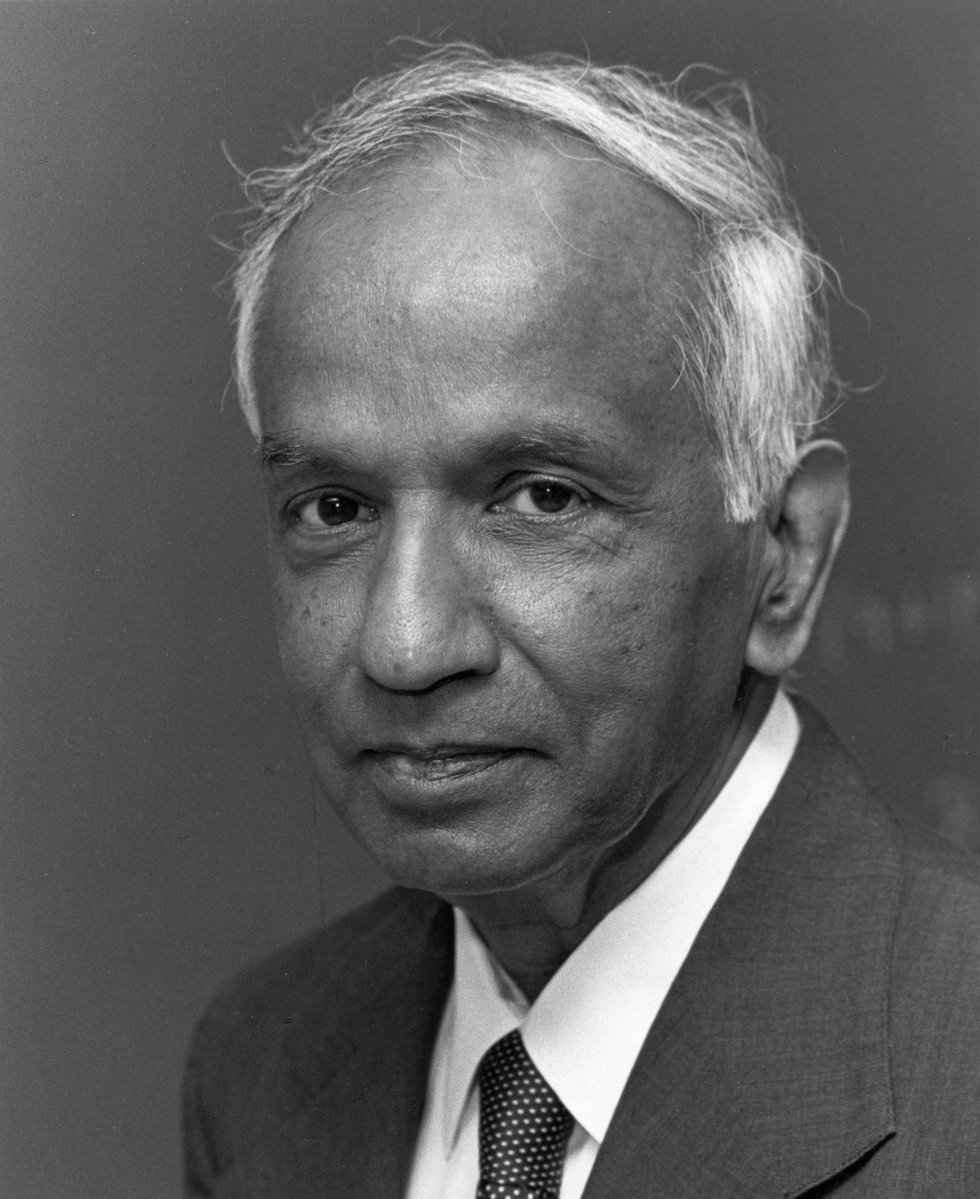
His name was Subrahmanyan Chandrasekhar.
In 1930, he was 19 years old. A boy from Madras is boarding a ship to England on a scholarship to Cambridge.
During that sea voyage, he opened his notebook and started calculating.
By the time the ship docked in Southampton, he had worked out something no one in the history of science had understood before.
Stars do not simply fade and die. Stars above a certain mass collapse into themselves with such force that nothing can stop them. Not light. Not time. Not physics as anyone understood it.
What he had discovered on that ship would eventually be called black holes.
He arrived at Cambridge. He spent four years refining his calculations. He showed them to Arthur Eddington. The most famous astronomer in the world at that time. The man who had proven Einstein right.
Eddington watched his progress. Encouraged him. Asked him to present his findings at the Royal Astronomical Society in January 1935.
Then Eddington gave his own presentation immediately after.
He publicly ridiculed Chandrasekhar in front of the entire scientific establishment. He said the theory had no physical meaning. He called it absurd. He used his enormous reputation to crush a 24-year-old Indian student in front of everyone who mattered.
Chandrasekhar left that conference devastated.
He appealed to the president of the International Astronomical Union. He was told not to respond to Eddington publicly.
He left England.
He went to America. To the University of Chicago. He drove 150 miles every week to teach a class of just two students. Those two students were Tsung-Dao Lee and Chen-Ning Yang.
Both of them won the Nobel Prize before he did.
He spent 50 years working quietly. He never stopped.
In 1983, the Nobel Committee called.
53 years after he worked out the existence of black holes on a ship as a teenager, the Nobel Prize in Physics was his.
NASA later named its most powerful X-ray telescope after him.
The Chandra X-Ray Observatory.
The universe he described is real. Eddington was wrong. The boy on the boat was right.
Most Indians have never heard his name.
They should say it every day.
Follow for real stories about Indians who changed the world.
John F. Kennedy was one of America's best speechwriters, and his secret weapon was a rhetorical trick called Chiasmus.
Some examples:
1) "Ask not what your country can do for you; ask what you can do for your country."
2) "Mankind must put an end to war, or war will put an end to mankind."
3) "Let us never negotiate out of fear, but let us never fear to negotiate."
All of these follow the same pattern.
The lesson is that humans love symmetry. Both in buildings like the Taj Mahal or St. Paul's Cathedral, and with language when we have symmetrical sentences like the ones JFK used to use so often.