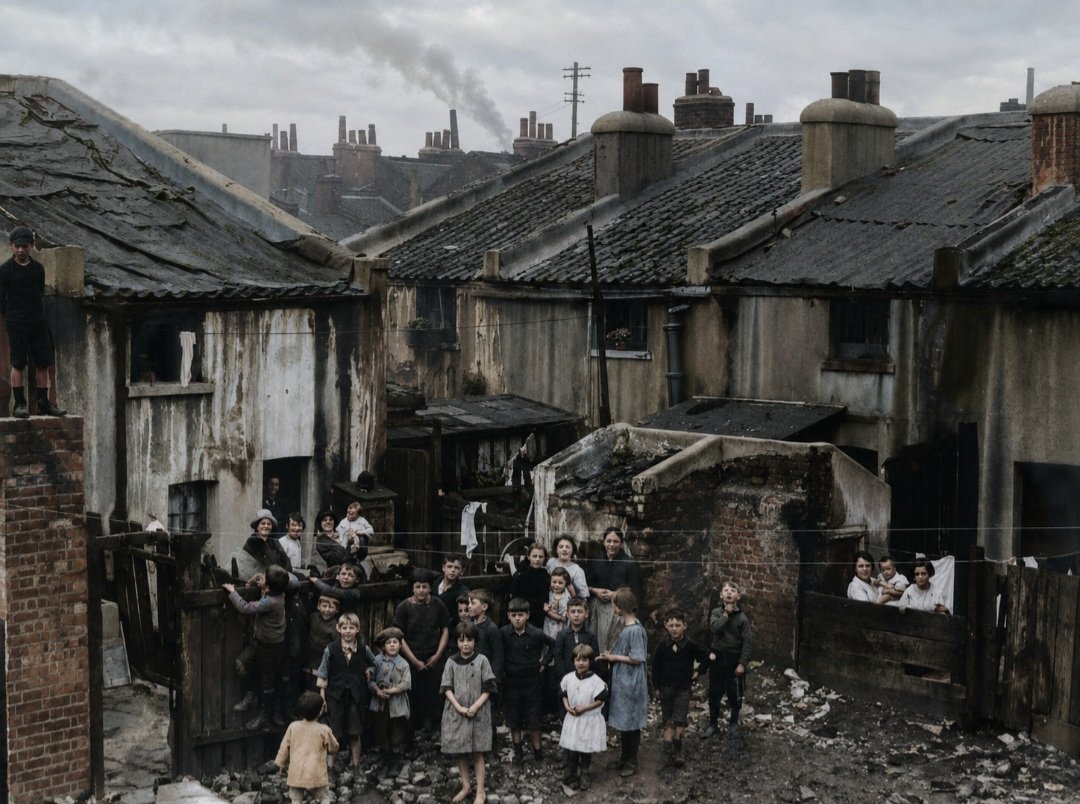
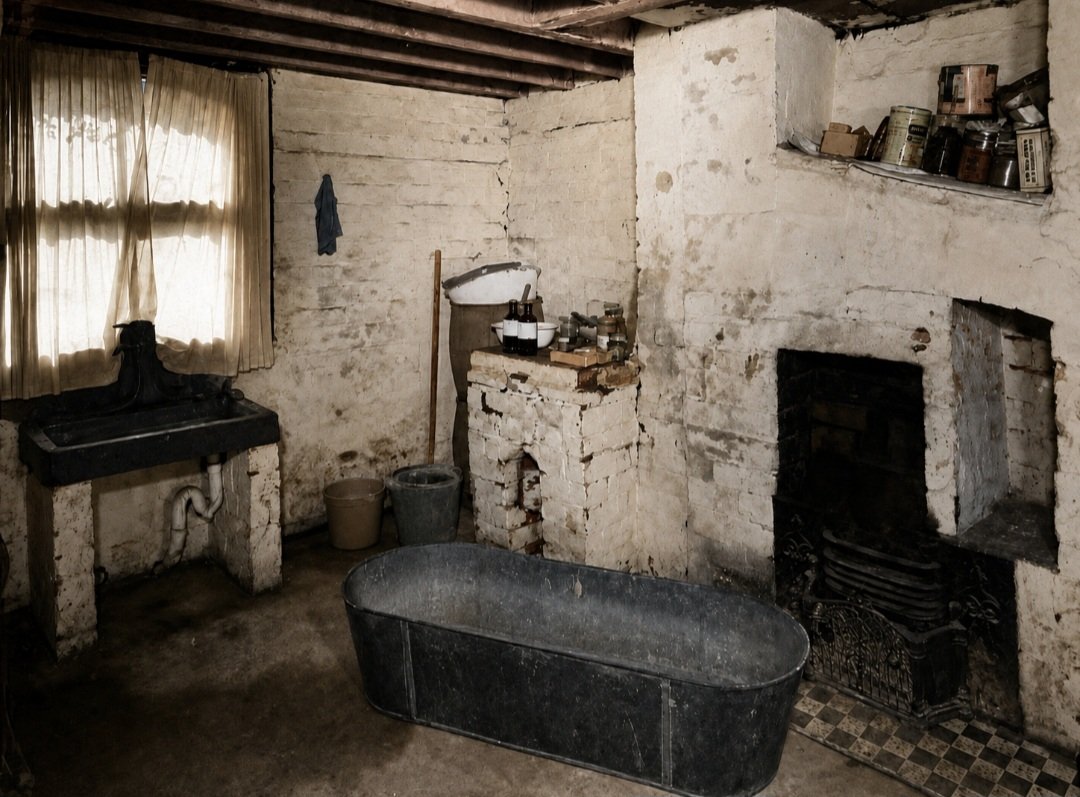
Working-class Britons had it harder than slaves on the average American plantation.
Children as young as nine were forced to work twelve or thirteen hours a day, sometimes longer, with barely enough time to eat. Those who slowed through exhaustion were beaten with straps or struck with machinery rollers. Many were physically broken before reaching adulthood, while mill owners simply threw them aside and replaced them with another desperate child.
A plantation owner had paid money for his labourers and therefore had a financial interest in keeping them fed, housed, alive and capable of working. A British industrialist did not own his workers and had invested nothing in them. He could work a man, woman or child into sickness, injury or an early grave, dismiss them and replace them the following morning.
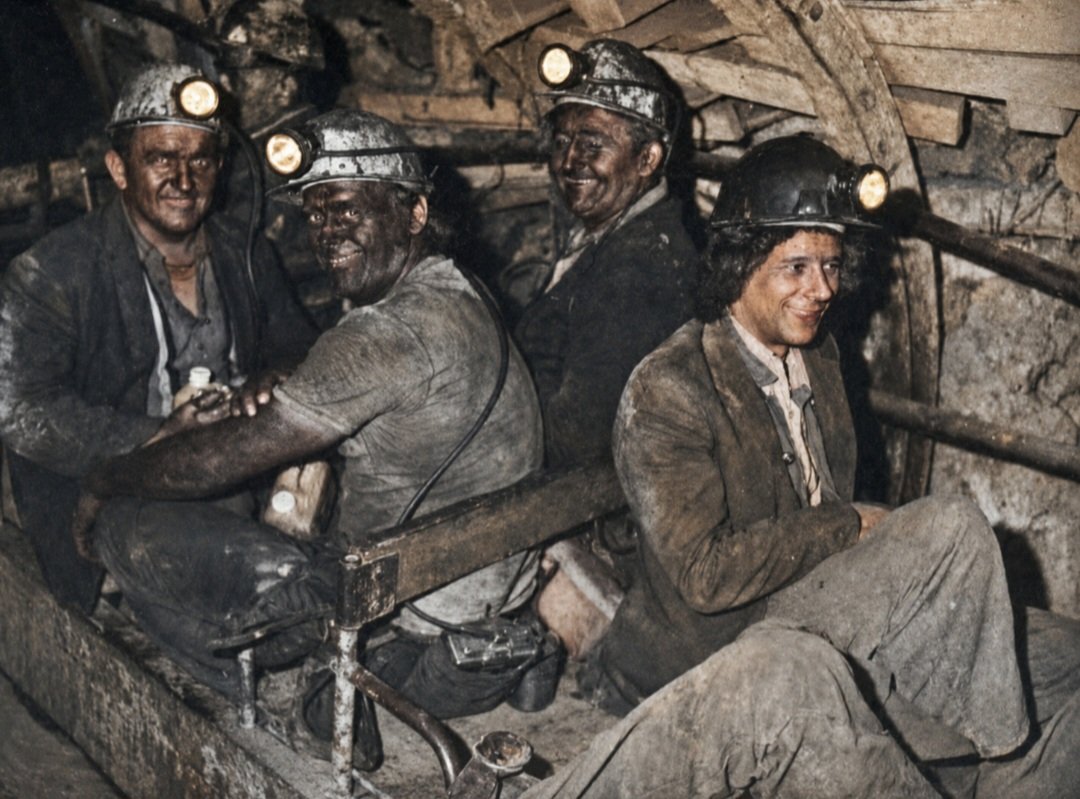
Plantation labour was often carried out in the open air and natural light. British workers spent twelve-hour shifts trapped underground or inside mills, foundries and potteries, breathing coal smoke, cotton dust, silica, soot, metal particles and poisonous fumes. Miners crawled through cramped tunnels beneath the earth; potters slowly destroyed their lungs with clay and lead dust; steelworkers faced furnaces hot enough to scorch the flesh; dockers broke their bodies carrying crushing loads in all weather.
There was no fresh air, no safety equipment, no compensation and often no escape from the machinery until the shift ended. Men were burned, crushed, blinded, poisoned or buried alive. Children lost fingers and limbs in exposed gears and belts. Those who survived were commonly worn out before middle age.
The plantation slave was valuable property. The British labourer was disposable.
Industrial Britain was built on the backs of working-class men, women and children whose lives were consumed for profit and then largely forgotten. They had it tougher and much harsher than the average slave in America and the Caribbean who had it rather easy in comparison. 🏴
@PoliticsPollss Depends in the rate of tax. And if the rise in income tax means VAT is removed from 'luxury' items such as bottled water, eating out, etc.
I’ll tell you what was better in the old days. You could have opposing opinions and still keep your job or share a pint together. Makes no odds to me where your land lies. This is diversity. This is what diversity means.
The BBC has had thirty eight years and £3.8 billion a year to explain British farming to the British public. The job was eventually done by an American shopping website, in eight episodes, fronted by the man the BBC itself dropped over a row about a steak.
Countryfile first went out on 24 July 1988, and its origin is the part nobody brings up. It replaced Farming, a programme that had spent thirty years making news for the people who actually did the work. The new show was deliberately widened to take in everybody who merely liked the countryside as well as those who lived off it. Widened meant softened. In 2009 it moved to Sunday evenings, where five to six million people still watch, and it has been settled ever since into an hour of scenery, a ramble, a calendar competition and the weather.
Then in June 2021 a company best known for selling doorbells put out a series about a man failing to farm a thousand acres, and within a week the British public understood the subsidy system.
Look at what an American retailer put on screen that thirty eight years of Sunday nights had not. A thousand acres, a full year of work, £144 profit. A crop drowning in the field with nobody coming to help. A farmer selling at a price he is not allowed to set. A council able to shut a restaurant standing on a man's own land. The accounts, open, with jokes over the top.
James Rebanks, who keeps sheep for a living rather than for a segment, reckoned Clarkson did more for farmers in one series than Countryfile had managed in thirty years. The NFU said the same thing in nicer words.
Now the funding, which is where it gets genuinely funny.
Countryfile is paid for by £180 a year, rising on 1 April, taken from every household in Britain that watches live television, on pain of prosecution. Twenty three million licences. Three point eight billion pounds. Guaranteed money, a captive audience, a national mandate and a prime Sunday slot.
Clarkson's Farm is paid for by people voluntarily pressing play, and it goes out in more than 240 countries.
The nation's farmers had one broadcaster legally funded by them, obliged to serve them, sitting on the biggest slot in British television. It gave them a weather forecast and a photography competition, and when a bloke with a Lamborghini tractor did the actual job for free, the same building's stars went on a sofa to complain about his opening credits.
The BBC had the money, the mandate, the Sunday night and thirty eight years.
It used them to film the view.
@SamaHoole@jfoster2019 I found Jeremy odious, but I agree, he has done more to highlight the financial logistics & everyday life of small farmers than Countryfile has done in decades. Farmers I know are asset rich, money poor. Jeremy highlights that, but is at pains he is in lucky circumstances.
The idea that anyone can pick up a Bible, with no knowledge of the ancient languages, history or theology, and assume their interpretation is just as valid as 2,000 years of Christian teaching is deeply flawed.
The Scriptures were written in Hebrew, Aramaic and Greek, within a particular historical, cultural and theological context. Understanding them properly often requires far more than simply reading an English translation.
That is why the Church's teaching and tradition matter. For nearly 2,000 years, faithful Christians have dedicated their lives to studying the Scriptures, preserving the apostolic faith, and faithfully handing down sound doctrine from one generation to the next.
We are not the first Christians, and we should not act as though we are.
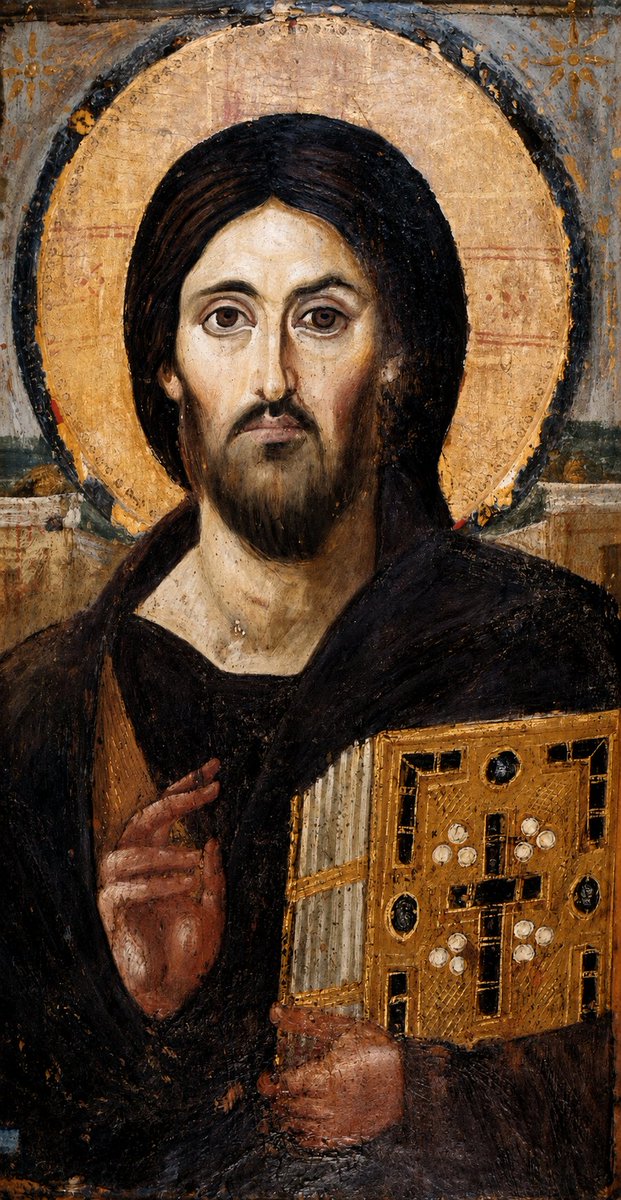
Jesus Christ is God – The Only Way, the Only Truth, the Only Life
The Bible does not leave room for doubt: Jesus is God in the flesh. He is not “just a prophet” or “just a teacher.” He is the eternal Word who became man to save us.
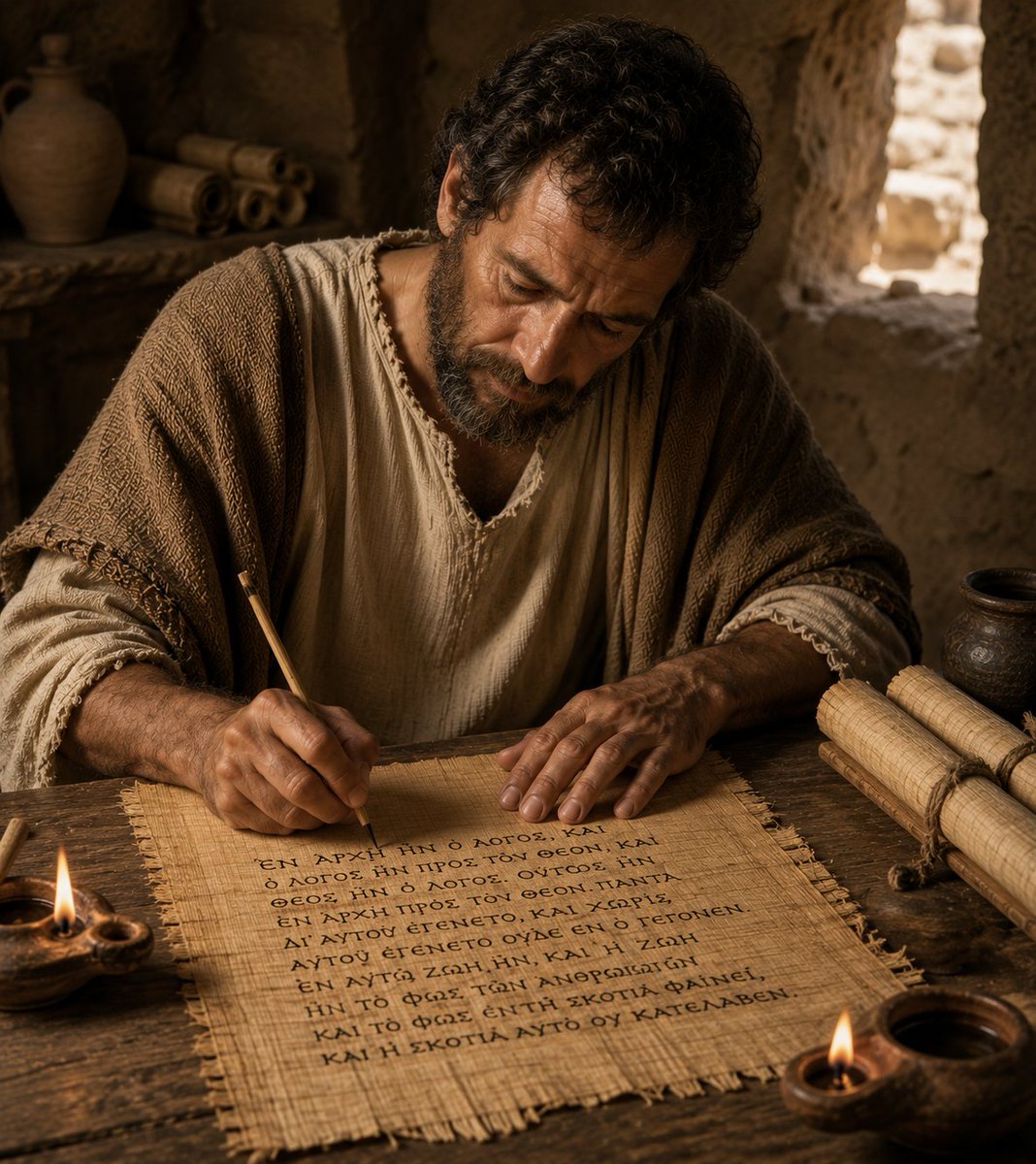
“In the beginning was the Word, and the Word was with God, and the Word was God… The Word became flesh and made His dwelling among us.” – John 1:1, 14
“Thomas said to Him, ‘My Lord and my God!’ Then Jesus told him, ‘Because you have seen Me, you have believed; blessed are those who have not seen and yet have believed.’” – John 20:28–29
“For in Christ all the fullness of the Deity lives in bodily form.” – Colossians 2:9
Jesus did not claim to be “a way.” He said plainly:
“I am the Way and the Truth and the Life. No one comes to the Father except through Me.” – John 14:6
There is no other path. No religion, no philosophy, no idol, no good works can save. Only Jesus Christ.
“Salvation is found in no one else, for there is no other name under heaven given to mankind by which we must be saved.” – Acts 4:12
The world offers many lies and false hopes, but the truth is eternal:
Jesus is God.
Jesus is the Way.
Jesus is the Truth.
Jesus is the Life.
♱ 🏴
🇬🇧✍️ 1.3 million signatures. Most of these people could not vote. But they could sign. 🇬🇧 🏴✍️
Britain, 1833. The trade in human beings was already outlawed, but slavery itself was not.
Hundreds of thousands remained enslaved across the Caribbean colonies. Parliament had debated it for years and done little.
So it was not Parliament that moved first. It was the country.
🖋️ In factory towns, mill workers queued on their one free hour. In rural villages, labourers signed after church, some marking an X because they had never been taught to write their name. In Scottish highland settlements and Welsh valleys, whole communities added their names. People signed in public houses, in assembly rooms, at market stalls.
Nobody was paid to sign. Nobody was made to. Most of them had no property, and so no vote. Women had no vote at all. They queued anyway, and put their name to it.
👩 Women organised a petition entirely their own. Over 187,000 women signed the women's national petition, a separate document carried alongside the general one.
📜 Town by town, the count climbed. In the end, the total stood at 1.3 million signatures, carried to London by road, river and rail, and piled at the doors of Parliament higher than a man. Members of the Commons had never seen anything like it.
Politicians had not led this. They had followed it.
⚖️ Within months, Parliament passed the Slavery Abolition Act. It promised freedom throughout the British Empire, and more than 800,000 enslaved people began to be freed. But freedom did not come all at once: the law bound most of them to years more unpaid labour first, a period it called apprenticeship. Full freedom for most did not arrive until 1838.
Back in Britain, nobody who signed had done it for reward. Most of them would never sit in Parliament themselves. They had no ballot to cast, only a name to give. And the name they gave was enough to move the law of the land.
━━━━━━━━━━━━━━
1.3 million people signed a law they had no vote to make.
You come from people like them. Stand a little taller.
We are the home of British heroes. There is a place for you in it. 👇🙏
👉 https://t.co/wN9S2gRmFj 👈
Be part of us. ☝️🇬🇧
Be Proud Of Us. 🙏🇬🇧
🏴🇬🇧 The man who invented the equals sign died in a debtors' prison. 🏴🇬🇧
2 small lines. You have drawn them all your life. A Welshman drew them first.
Robert Recorde was born in Tenby around 1512, a merchant's son. Oxford made him a fellow, Cambridge a doctor of medicine. But learning lived in Latin, locked away from people like his.
✍️ So he wrote his mathematics in plain English, as a friendly talk between a master and his pupil. The Ground of Artes, 1543. Arithmetic for anyone. Sailors learned from it. Shopkeepers. Merchants' clerks. Britain kept it in print for over 150 years.
The crown noticed and gave him the royal mint at Bristol. Then, in 1549, a powerful soldier came demanding the king's money for his army: Sir William Herbert. Recorde asked for the king's warrant. None came. So the mathematician refused the soldier.
⚔️ Herbert called it treason. Recorde spent 60 days under guard. He was released. The grudge was not.
The crown sent him to Ireland to run its silver mines. The mines failed and he came home unpaid. And the soldier he had refused was now the Earl of Pembroke. In 1556, Recorde accused the earl of misconduct at the crown's mints. True or not, it was a fight a scholar could not win.
⚖️ Pembroke sued him for libel. The court awarded the earl £1,000, money Recorde did not have.
And with ruin hanging over him, he wrote one last book. The Whetstone of Witte, 1557, the first English book of algebra. Page after page, he tired of writing the words "is equalle to". So he drew 2 parallel lines instead, "bicause noe 2 thynges, can be moare equalle."
🔥 The equals sign. Born on a page in 1557.
Within months, they came for him. The King's Bench prison, Southwark. A gaol for debtors. He died there in 1558. The crown itself still owed him £1,000 for Ireland. It paid the debt 12 years after his death.
🏛️ The earl got his verdict. The Welshman got every equation on Earth.
━━━━━━━━━━━━━━
Nobody taught you his name. But you have drawn his 2 lines all your life.
That is yours now. Stand a little taller.
We are the home of British heroes. There is a place for you in it. 👇🙏
👉 https://t.co/wN9S2gRmFj 👈
Be part of us. ☝️🇬🇧
Be Proud Of Us. 🙏🇬🇧
16 July 1054 – A Turning Point in Christian History
On this day in 1054, Cardinal Humbert entered Hagia Sophia in Constantinople and placed a papal bull of excommunication on the altar against Patriarch Michael Cerularius.
This dramatic act became the most famous symbol of the growing divide between the Churches of East and West. While the separation had been developing for centuries over questions of authority, theology, culture, and politics, 16 July 1054 is widely remembered as the defining moment of the Great Schism.
More than 970 years later, it remains one of the most significant events in the history of Christianity, shaping the paths of both the Western and Eastern Churches to this day.
The Britons – England’s First Christians
The Britons, the native people of this land, were among the first in Europe to follow Christ. By the 2nd and 3rd centuries, Britain already had bishops, churches and martyrs such as St Alban, who died for the faith around AD 304.
They were farmers, herdsmen, warriors and builders, a rooted people who worked the land, raised families and defended their homes. They spoke an ancient tongue, created bold designs in metal and stone, and held a deep love for this island and its soil.
When the old order fell, they kept the Gospel alive in villages, hills and along the ancient roads. Across the lands later called Staffordshire, Derbyshire, Cheshire and Shropshire, they built chapels, raised crosses and passed down the faith.
The Britons did not vanish when the Angles and Saxons came. They mixed, married and fought alongside them, and in time became one people.
From that union came the English, heirs of both Briton and Saxon. The blood and faith of those first Christians still flows through our veins.
For nearly two thousand years, Christianity has lived in this land. We carry the legacy, courage and duty of our ancestors. 🏴
@farmingandJesus That's what the fight is. If you leave, Satan has won this battle.
It's hard to fight the Lord of lies, but Jesus has already won, and you are his mighty and so precious child.
Be strong with God.
🙏✝️❤️
You have a birthday.
So does England. 🏴
And it’s today. The 12th of July.
Almost 1,100 years ago, on this exact day, England became a country. Almost no one knows it.
The island was old long before it had a name. Farmers. Romans. Saxons. Then out of the sea came the Danes. ⚔️
They came to raid. They stayed to farm. And one hard question hung over the whole land.
Two peoples, Saxon and Dane, one small island. Whose country was it now?
Alfred of Wessex held the last corner and turned the tide. But he wanted more than a truce. One country. For both peoples. One England.
He died before he could build it. 🔥
So his family finished it. His son took back town after town. His daughter Æthelflæd led the armies herself. A woman commanding armies more than 1,000 years ago.
But it was Alfred’s grandson who ended the work.
Æthelstan.
In 927 he rode north and took York, the last Viking crown in England. One man now held every English kingdom.
Then he did something stranger. He called the other kings of Britain to a bridge in the north. A quiet place called Eamont. 📜
Scots. Welsh. The kings of the north. There, by the river, they bent the knee.
And that morning he took a new title. Not king of Wessex. Not king of the Saxons.
King of the English. All of them.
That bridge, on this day in 927, is the closest thing we have to the morning a country began. ⚖️
He made it real. One law, coast to coast. One coin, struck the same everywhere. On it he wears a crown, not a war helmet.
Then in 937 they came to destroy it. Vikings, Scots, the men of the north. The largest army the island had ever seen. They met him at Brunanburh.
Dawn to dark. Five kings fell. And when the sun went down, Æthelstan was still standing. 🏛️
England had been tested. And England had held.
He left no son. He died in 939 and chose a quiet abbey at Malmesbury. Alone, in the country he had made.
But it never came apart. Every king and queen of England since has sat on the throne he built. More than 1,000 years. Unbroken.
You were taught 1066. The Tudors. The wars. But not this. Not the king who made the country. Not the bridge. Not the 12th of July.
Æthelstan. The first king of England. And the one we forgot.
Next year it turns 1,100.
England has a birthday. And now you know when it is. 🇬🇧
You did not choose to be born here. But you inherited a country with a beginning. A name won on a bridge, 1,100 years ago. That is yours. No one can take it from you.
Help us remember the king who made us.
Help us remember who we are. 👇🙏
👉 https://t.co/rih7iKwnvf 👈
Be part of us. ☝️🇬🇧
Be Proud Of Us. 🙏🇬🇧