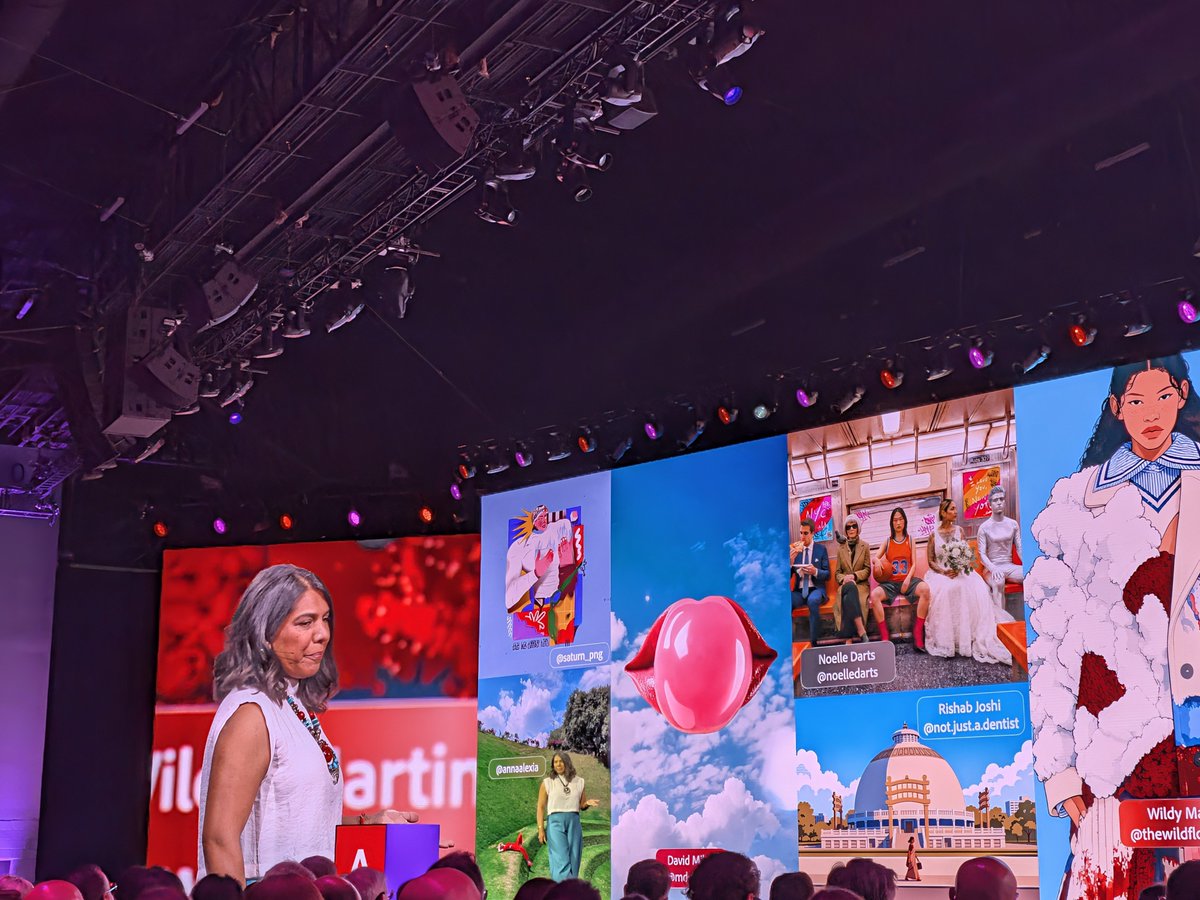
#AdobeMAX Day 2 getting tips from @DirectorDrex
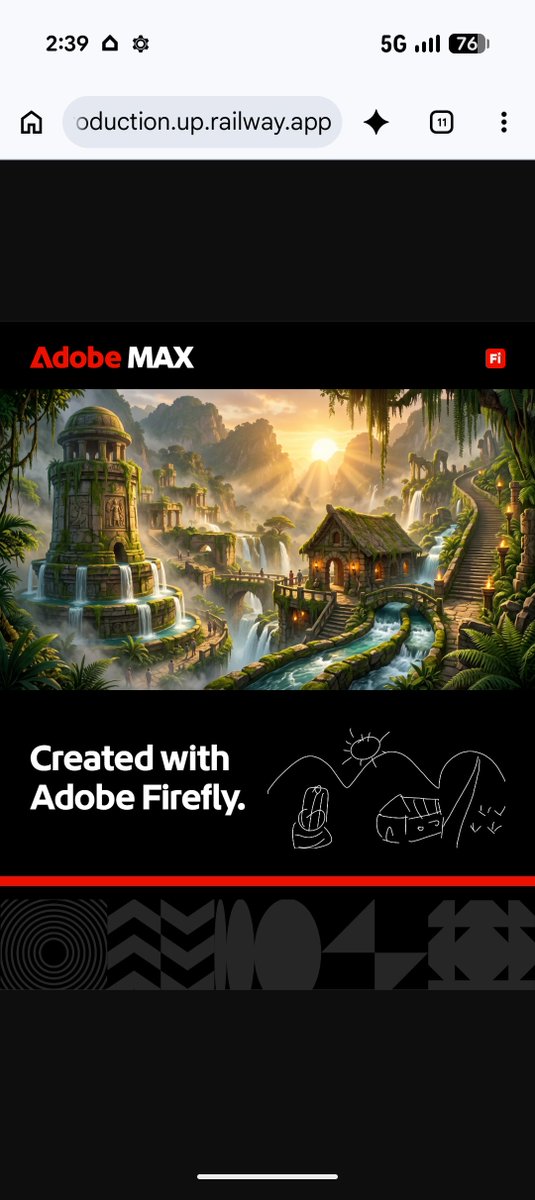
Wow! Phones and @Adobe Firefly is a powerful combination.
I'm experimenting with Claude and Firefly boards!
The session ended appropriately with a "Boom"!
At #AdobeMAX in Miami Beach, the most interesting part of the L'Oréal demo happened before any image was generated.
Working in CX Enterprise Coworker, @Adobe 's customer experience agent, the team reviewed the last Anthelios UV Sport campaign and compared its images side by side.
Portraits with a natural face and a clear product story performed best, while portraits with hidden eyes or an exaggerated expression performed worst.
Coworker then recommended the next hero portrait based on those results. The brief, set in Firefly Graph, kept the person's appearance unchanged and limited AI to lighting and assembly, and Coworker pulled up the workflow the team had used on an earlier campaign.
The generation of images only occurred after those initial decisions were finalized using campaign data, brand guidelines, and a saved workflow, all of which were consolidated in a single location.
The Disney Imagineering booth showed the same idea starting from a drawing. A rough sketch became a realistic scene that the team can test before anyone builds it, using models that Adobe says are fine-tuned on Imagineering's own artwork through Firefly Foundry. The accuracy of the conversion from sketch to image was the standout.
One phrase heard at the event was "prompt and pray," which describes typing a long description and hoping the result fits.
Adobe's approach is to supply much of that context from what the tool already holds, such as saved brand preferences, a brief's guardrails, and earlier workflows.
Firefly Graph, which lets a creative build a workflow once and hand it to a marketing team, is still in beta. Adobe also announced native Model Context Protocol support and showed outside agents operating Photoshop and Illustrator, work it says is coming soon.
For buyers, the L'Oréal demo raises a practical question about readiness. It worked because results, a written brief, and a reusable workflow were already connected.
Pick one campaign your team ran this year and check whether its results, brand rules, and workflow could feed a tool like Coworker today. Then ask your Adobe account team for dates and pricing on Firefly Graph beyond beta and on outside-agent access.
Which team in your organization would build the first shared workflow, and which team would inherit it?
https://t.co/oPLebQXGFr
#AdobeMAX #Adobe #Firefly #GenerativeAI #MarTech #CreativeOps #AgenticAI
Adobe MAX opened with a problem every creative team knows.
The layout is nearly done, and forty small production tasks still stand between the designer and the finished file.
@Adobe organized its keynote around three pillars: precision and control, quality and performance, and the Adobe Creative agent inside the apps people already use.
The line that matters most for buyers came from @iamdeepa : users decide when to work hands-on and when to hand a task to the agent.
That choice raises the buying questions.
Which tasks can the agent complete inside the apps today, and which are still on the roadmap?
How are agent edits tracked and reversed?
Can a designer see exactly what changed before a file goes to a client?
For Creative Cloud customers, how is agent use priced and metered?
A keynote sets direction.
Demos show how far along it is.
Bring your team's most repetitive production work to the next demo and ask to see the agent finish it end to end.
Which task would you hand to a creative agent first, and which would you keep for yourself?
#AdobeMAX #CreativeCloud #AgenticAI #DesignOps
A designer has the layout almost done, and forty small production tasks still stand between her and a finished file. Every creative team knows that moment, and at @Adobe MAX this morning Adobe built its keynote around it.
Deepa Subramaniam framed the morning around three pillars. The first is precision and control, with control "down to the last detail," whether you get there through tools and workflows or through intelligent assistance. The second is quality and performance: the polish, reliability, and speed that users have been asking for. The third is modernizing the apps by bringing intelligent assistance into the tools people already use, through the Adobe Creative agent.
The line that matters most for operators is that users decide when to work hands-on and when to hand a task to the agent. "You always make the call on how you want to work."
That choice is where the buying questions start. Creative leaders will want to see which tasks the agent can actually complete inside the apps today, and which ones are still on the roadmap. They will want to know how edits made by the agent are tracked and reversed, and whether a designer can see exactly what changed before a file goes to a client. Teams that already pay for Creative Cloud will also want to know how agent use is priced and metered.
A keynote sets the direction, and the demos show how far along it is. The useful test is to bring your team's most repetitive production work to the next demo and ask to see the agent do it end to end.
Which task would you hand to a creative agent first, and which would you keep for yourself?
#AdobeMAX #CreativeCloud #AgenticAI #GenerativeAI #DesignOps #MarTech
At @Adobe Max, Adobe introduced its Creative Agent, responding to feedback from creatives who want agents built for real workflows that can work alongside them, help develop ideas, and take on tedious production tasks.
The goal is straightforward: free up more time for the judgment, taste, and creative decisions that still require a human. Adobe positions the agent as being grounded in decades of experience with how creative work actually gets done, which is a deliberate attempt to differentiate it from more generic AI assistants. For an analyst covering AI and creative technology, the interesting question is whether this orchestration layer meaningfully reduces friction in existing Creative Cloud tools without eroding the control professionals expect.
@Cisco booked $9.3 billion in hyperscale AI infrastructure orders in fiscal 2026, about 4.5 times the year before.
Most of that money reaches Cisco through the clouds you already rent from. Your own budget meets Cisco somewhere else: agent security.
Three acquisitions show where Cisco is aiming:
• Galileo, now running as Splunk Agent Observability
• Astrix Security, slated for Identity Intelligence, Secure Access, and Duo
• WideField Security, slated for Splunk
Only Galileo ships today. Astrix and WideField are integration plans.
If your team is picking an agent-oversight vendor this quarter, put two questions to your Cisco account team:
• Which Astrix and WideField capabilities have a committed ship date?
• Does agent oversight require Splunk, or will it work with the SIEM you run now?
I break down the silicon bets, the cloud-customer concentration, and Cisco's open-weight security models here:
https://t.co/gH7g8wGdGD
Would you buy agent oversight from your network vendor, or keep it with a separate supplier?
#Cisco #AgenticAI #AISecurity #CIO #Splunk
When your network provider moves up the stack, is that better than an app provider moving down?
@Cisco is making the first move. On November 9 it announced that select enterprises will be able to aim Anthropic's Claude Mythos at their own AI agents to find weaknesses.
The Test: Mythos plans attacks inside Cisco AI Defense against systems a customer registers. Coming soon for select enterprises.
The Measure: Splunk Eval-G1 models and the evaluation tuner are available this month. Tokenomics, which reports cost per agent, enters private preview in December and reaches general availability in early 2027.
The Fix: Cisco IQ links exposure findings to Cisco Partners and Cisco Professional Services.
What to do: list your agents and mark which run on Amazon Bedrock, ask Cisco in writing which model plans your attacks if the Mythos terms change, and ask your app vendors what they log outside their own product.
My analysis: https://t.co/IoRT0USn8T
#AISecurity #AgenticAI
Adobe MAX keynotes are built for creators, but the decisions they spark land on a chief marketing officer's or chief information officer's desk months later.
I'll be in Miami Beach November 10 to 12 for @Adobe MAX, and I'm bringing questions I think software buyers will want answered when it's time to renew.
What does generative AI cost at scale? Credit-based pricing can seem manageable in a pilot.
What happens when hundreds of people are generating content every day?
Which models come with which protections?
Adobe offers partner AI models alongside its own Firefly models. Legal and brand teams need to know which outputs come with Adobe's commercial-use assurances.
How do creative tools fit into content operations?
Marketing leaders want approvals, rights, and brand rules to stay with an asset as it moves through the rest of their marketing software. I want to see that working, not described.
How does Adobe show up when creative work starts in AI assistants and other apps? More of that work begins outside Adobe's own tools, and buyers will want to know where Adobe fits.
If you're weighing an Adobe renewal or considering alternatives this year, what would you want answered on the show floor?
I'll share what I learn in Miami and which answers hold up beyond the demos.
#adobemax #creativesoftware #generativeai #martech #cmo
Can a fake ticket get a bot past your website's front door?
@Cloudflare published research on quantum-proofing Privacy Pass, the anonymous token that lets people and trusted AI agents skip the puzzle without being tracked.
- Privacy holds: a quantum attacker still could not link a token to its owner.
- Forgery is the risk: on Q-Day, attackers could mint tokens past rate limits and bot checks.
- 2029: Cloudflare's target for full post-quantum security.
- 4.3 KB: estimated size of a quantum-safe blind signature.
- 65%+: human traffic to Cloudflare already on post-quantum encryption.
Before you sign a bot-management or CDN contract that runs past 2029, ask the vendor which cryptography sits behind every anonymous token it verifies, including for your AI agents, and get a replacement date in writing.
My analysis: https://t.co/JD5h4mCttq
#PostQuantum #Cybersecurity
How do you keep proprietary AI models private while they run in the cloud?
Today @googlecloud and @AMD announced TPU 8tx: Google's AI accelerators paired with 5th Gen AMD EPYC hosts for confidential computing.
- 10+ hyperscalers and AI labs use EPYC as host processor, per AMD
- Up to 2x lower latency than TPU 8t with near-zero performance penalty, per Google
Ask Google which links it attests, when TPU 8tx ships, and which protections it enables.
My analysis: https://t.co/TOdpOhhbXS #ConfidentialComputing #AIInfrastructurehttps://www.shashi.co/2026/11/google-cloud-tpu-8tx-amd-epyc.html
Does your bring-your-own-device policy cover the new Motorola Signature 27?
@MotorolaUS 's $1,599.99 phone ships with Android 17. What changes for IT:
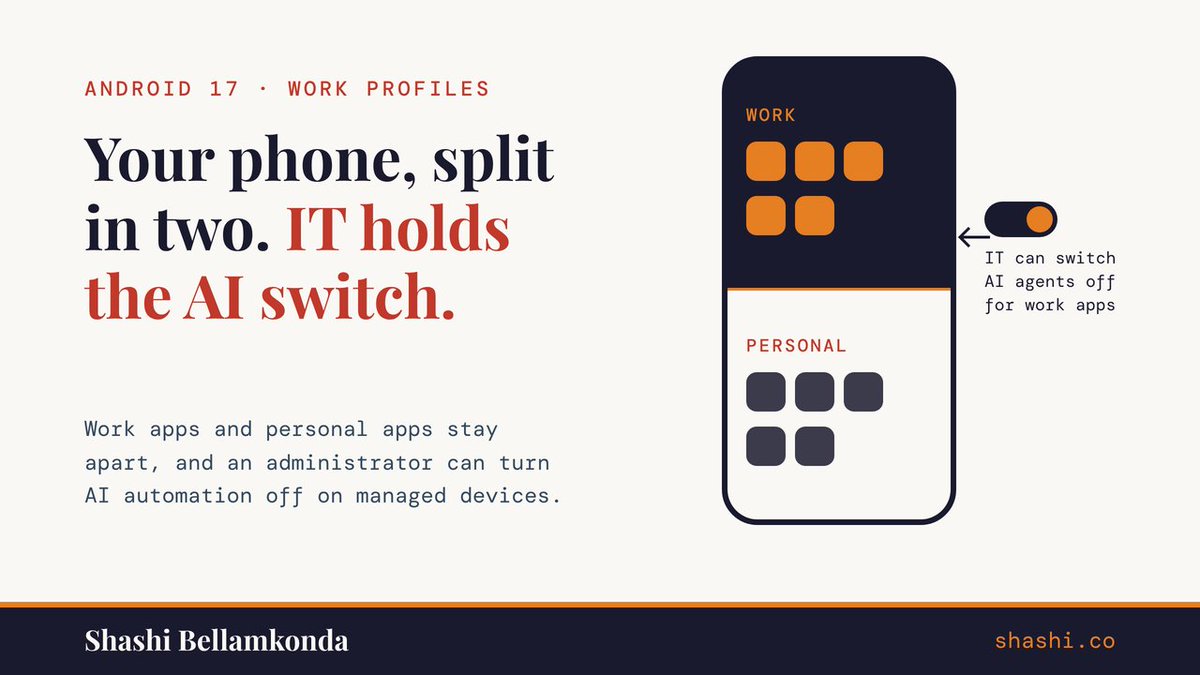
- Work profile: Corporate apps and data stay apart from personal ones.
- AI switch: Agents in the personal profile cannot reach work apps, and admins can disable AI automation on managed devices.
- Certificates: Certificate Transparency is on by default, which can break internal apps that use private certificates.
- Updates: Seven OS upgrades and up to seven years of security updates.
What to do: add the Signature 27 and Amazon's new Alexa tablets to your supported device list, enroll one of each in a work profile with your current management tool, test internal certificates under Android 17, and watch on-device AI, including Motorola's Qira assistant.
My analysis: https://t.co/K0Yf35Vqac
#Android17 #BYOD
Is your company's content ready for an AI agent to read?
@Hyland has published new customer results from banks, health systems, universities and government agencies in Brazil. Most of the gains came from organizing documents before any AI showed up.
- Banco Société Générale Brasil automated 95% of its foreign exchange contracts and stopped printing about 230,000 pages a year.
- DETRAN-ES, a Brazilian state traffic department, cut its accident-report backlog by 99%.
- MetroHealth in Ohio reduced missing reports by more than 80%. Its CMIO estimates the project was 10 to 15% technology and 85 to 90% people and process.
- Hyland built its own HR benefits agent in 2.5 weeks, after putting all the benefits documents in one governed place.
Before your first AI agent: pick the one document type it will read, find every system that holds it, and ask your vendor for an outside customer running that kind of agent in production.
My analysis: https://t.co/8ARhngUWtU
#EnterpriseAI #AIAgents
Nice to see automatic gates for TSA Pre Touchless at IAD. Worked well but backup was after the gates as the space to luggage scanning is short. Still a welcome sign.