Ecom sauce 101, Want subscribers to stick around longer?
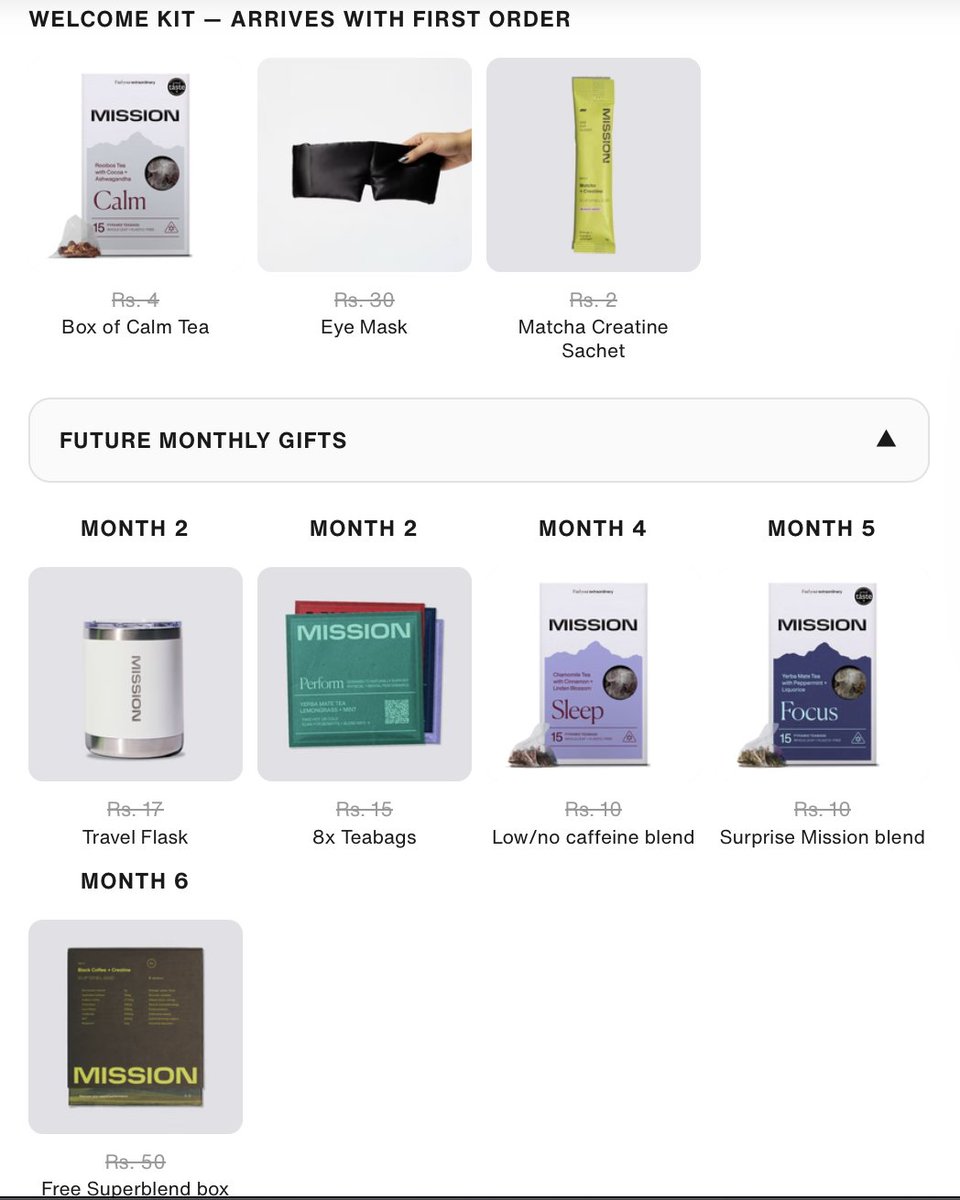
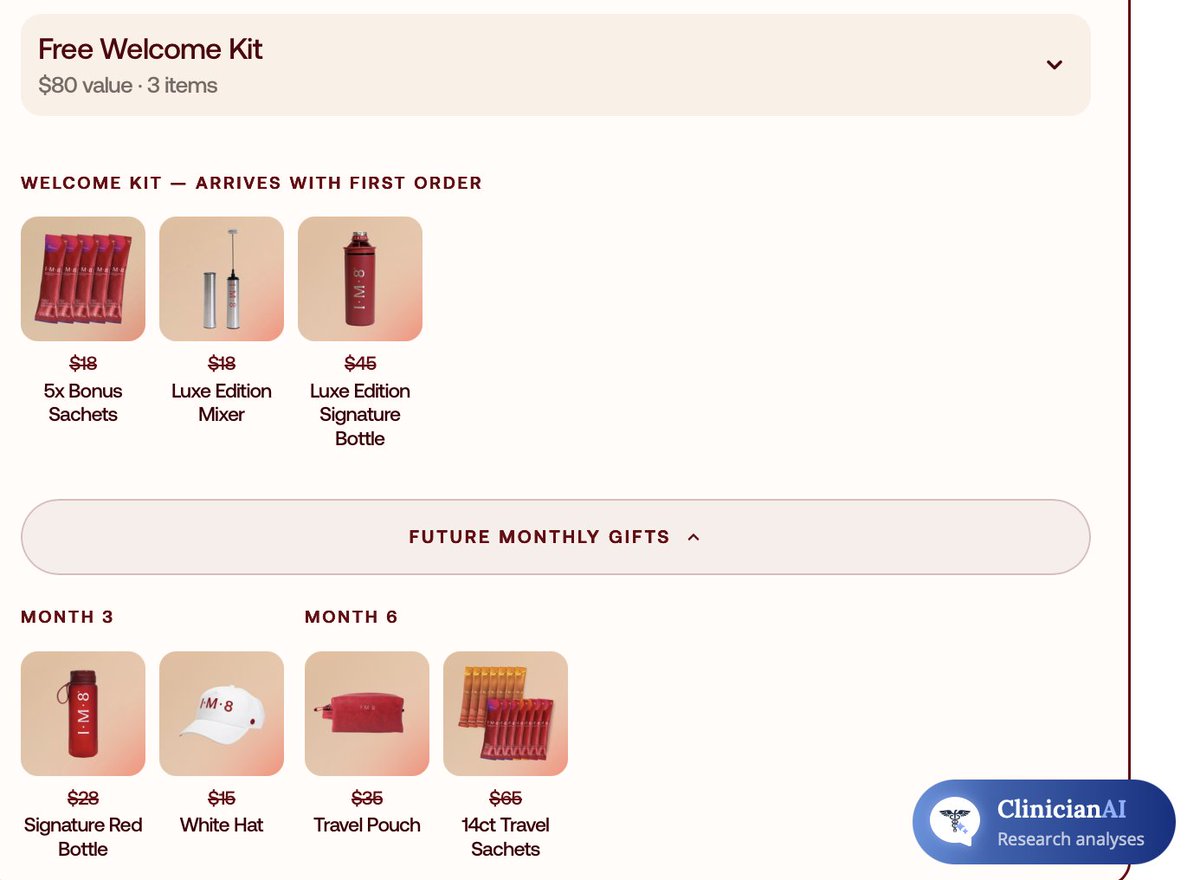
Stop giving away your biggest discount in Month 1.
You're practically inviting discount hunters to subscribe, grab the deal, and cancel immediately.
Instead, divide that customer rewards into 2nd, 3rd or even 4th order, depending on your margins.
This gives them a reason to stay longer while your product gets enough time to prove its value and become part of their routine.
Unpopular opinion?
Some brands sell products that take 60–90 days to show results.
Then offer a one-time purchase that lasts just 30 days.
How does that make sense?
The customer finishes the product, barely notices a difference, and now you're expecting them to pull out their card again?
If you're selling an outcome that takes 90 days, your offer should reflect that.
A 90-day bundle. A subscription. Something that actually gives customers enough time to experience the results.
I get that people want to try before committing.
But selling someone 30 days of a product that needs 90 days to work might be hurting your repeat purchase rate before they even get to order #2.
!! STOP BLASTING DISCOUNTS EVERY WEEK !!
A 10% discount requires 33% more sales just to make the same profit.
Basic margin math most brands skip.
At 30% margin, a 10% discount requires 50% more sales volume to generate the same net profit and at 20% margin, your sales should double!
Discounting regularly also changes buyer psychology against you.
So use it wisely and save your business. Stop running after sales spike, it’s good for dopamine, terrible for your business.
Hiring a Figma Email Designer!
Looking for someone who understands ecom and can create clean, conversion-focused email designs.
If that’s you, send over your Figma portfolio + rates.
Know someone good? Tag them below :)
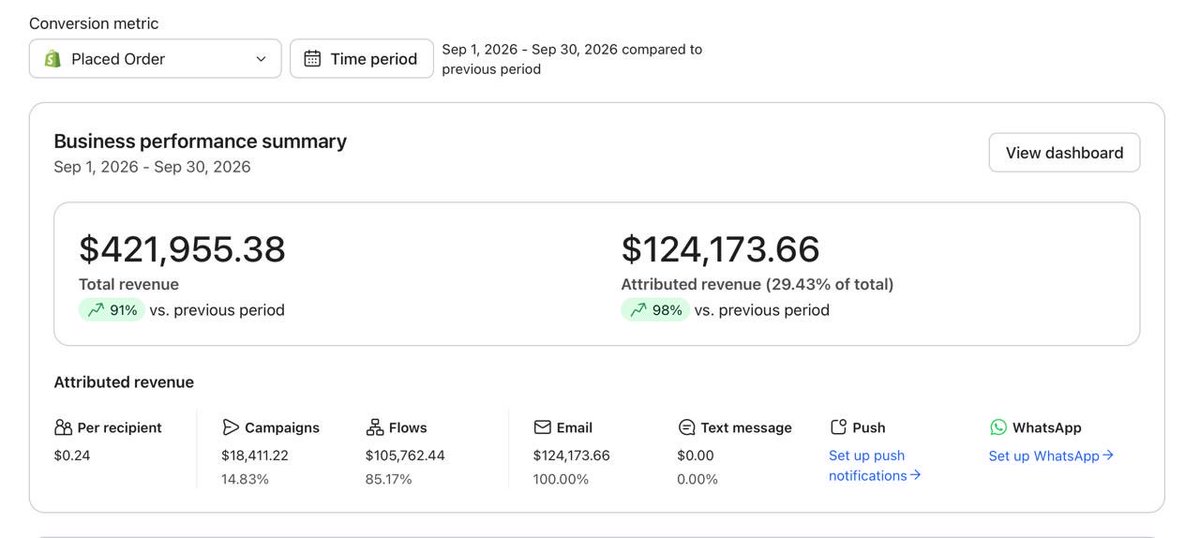
We had to pull back heavily on campaigns & SMS for this brand in September.
Email still generated $124k.
$105k of that came from automated flows alone, ~25% of the brand’s entire monthly revenue.
That’s what good flows are supposed to do.
Capture revenue from customer behavior, even when you’re not actively hitting “send.”
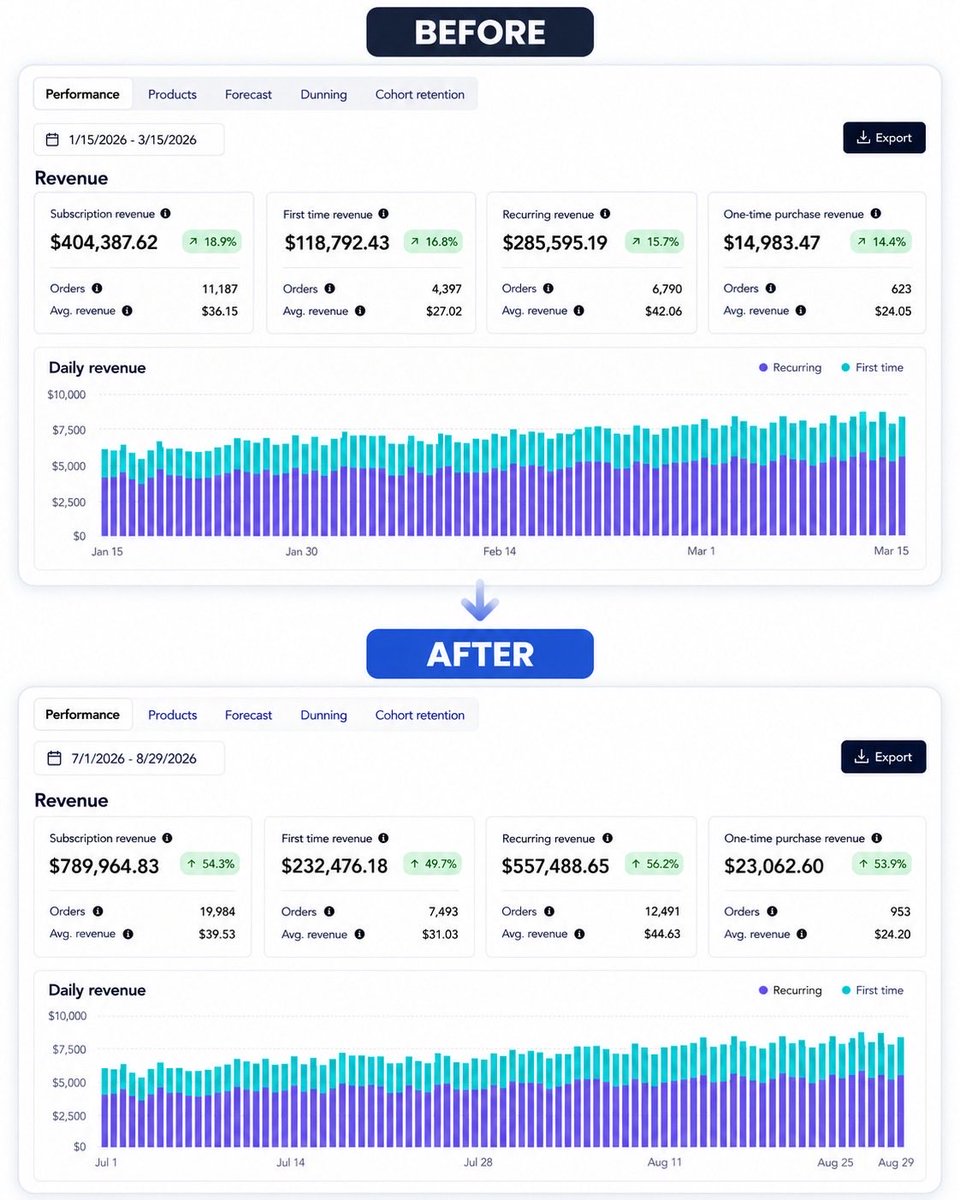
Same brand. Same products. Different retention strategy.
Before-
• Subscription revenue: $404,387
• Recurring revenue: $285,595
• Orders: 11,187
After-
• Subscription revenue: $789,964
• Recurring revenue: $557,488
• Orders: 19,984
The biggest shift was treating subscription as more than just:
“Customer subscribes ➡️charge them every X days.”
There’s a lot happening underneath that.
-When the next charge happens. -How much product they actually consume. -When you introduce a larger order. -How you handle skips and pauses. -What happens when a payment fails. -What you do before someone cancels. -How you bring cancelled subscribers back.
Individually, none of these sound like massive changes.
But subscription businesses are built on small improvements compounding across thousands of customers.
A little longer retained. One extra order. A few more failed payments recovered. A few more cancellations saved.
That’s how you end up with two very different sets of numbers from the same brand.
#RetentionMarketing #EmailMarketing #SMSMarketing #DTC #Ecom #SubscriptionBrand #Klaviyo #CustomerRetention #LTV
Literally not even 10% of ecom brands are doing this...
The immediate post-purchase window, from when someone clicks “Confirm Order” to when they actually receive it, is a golden window of attention.
And barely any brands take advantage of it.
It’s also a great upsell opportunity.
Something simple you can test:
Send customers who recently purchased, but haven’t received their order yet, an email with a complementary product.
“Your order is on the way. We also think this would go really well with what you purchased, so we’ll ship it to you for free if you want to add it.”
Add an irresistible offer if the margins allow it.
The customer has just purchased, they’re waiting for their order, and your brand still has their attention.
That small window is worth testing.
Everyone talks about lowering CAC.
And while that matters for every ecom brand, subscription brands need to pay just as much attention to the other side of the equation: LTV.
If it costs you $50 to acquire a customer and that customer only generates $60 over their entire lifecycle, the economics get difficult very quickly.
And that opens up a completely different set of questions:
-What % of first-time buyers make it to order #2?
-Where in the subscription lifecycle does churn spike?
-How long does the average subscriber actually stay?
-Can we increase AOV on repeat orders?
-What’s actually causing customers to cancel, pause, or skip?
Lowering CAC makes each new customer cheaper.
Increasing LTV makes each new customer more valuable.
The best economics come from understanding both sides.