New post on https://t.co/j5UaKGaEf3!
Imperfect Commitment in Maximal Extractable Value Auctions
By:
- @nuconstruct
🔗 https://t.co/VCGkuGwnLh
Highlights:
- Builder honesty/commitment is modeled as a defection probability ε: after seeing bids and payloads, a builder may deviate and replicate the winner’s MEV; this undermines outcomes regardless of whether the auction format is “optimal.”
- Replicability is type-specific via γ(τ): some MEV (e.g., sandwiches) is mechanically easy to copy (γ≈1), while others (e.g., complex liquidations) are much harder (γ≪1); this heterogeneity is central to incentives and observed bidding patterns.
- Equilibrium bidding becomes piecewise: low-value opportunities follow the usual competitive first-price bidding β(v), but high-value opportunities switch to a “deterrence bid” b=γ(τ)v to make builder theft unprofitable; this implies a right-tail “plateau” in bribe share data.
- Empirically, the paper estimates large exposed surplus: foregone frontrun surplus is about $49.4M, roughly 48.8% of observed tips; naked arbitrage and liquidations are most exposed, while sandwiches show almost no additional exposure because competition already drives bids near full extractable value.
- Sustaining honesty via reputation is hard when detection probability is low; credible MEV auctions therefore require structural constraints that reduce builders’ ability to act on observed bid/payload information ex post (e.g., TEEs, payload encryption/commitment, upstream settlement/slashing), not just switching auction formats.
ELI5:
Imagine a contest where many people (searchers) offer money (bids) to a referee (builder) to let them do a profitable trade in the next block. The problem: the referee can peek at everyone’s bids and the winning trade details, then sometimes steal the trade for themselves. How stealable a trade is depends on the kind of MEV (some are easy to copy, some are hard). Because of this risk, searchers either (1) bid normally and accept the risk, or (2) bid extra high to ‘scare off’ the builder from stealing. The paper measures how much value is at risk from this stealing and argues that better auction formats aren’t enough—you also need technical or cryptographic limits so the builder can’t exploit what they see after bids are submitted.
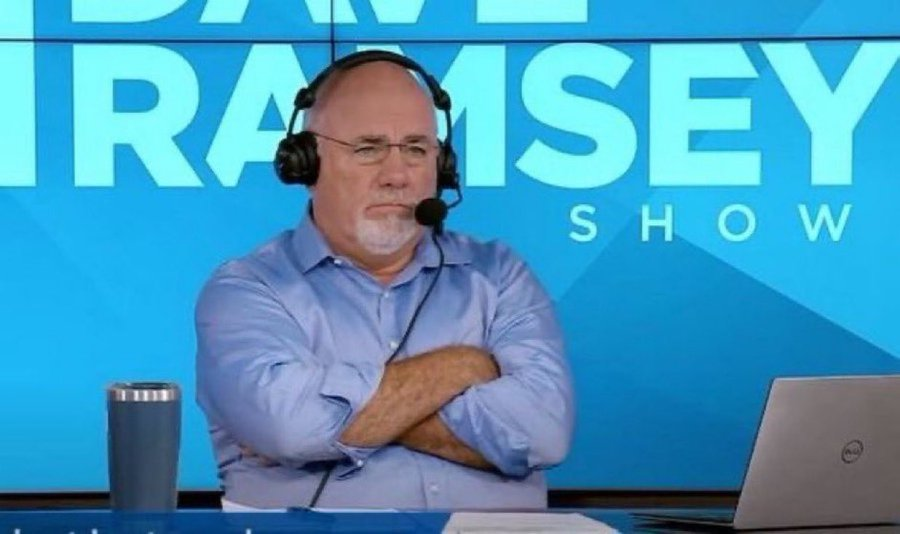
"so you staked your ETH on the Ethereum blockchain to earn yield?"
"yes, Dave"
"except you didn't want your capital to be locked up so you actually staked it with a liquid staking protocol called Lido?"
"that's correct, Dave"
"and Lido gave you a liquid staking receipt token called stETH in return?"
"yes, Dave"
"and then you didn't think that was enough, so you juiced the yield even further by depositing your stETH receipt tokens into a restaking protocol called Eigenlayer?"
"you are correct, Dave"
"and now you didn't want to lock up your capital, so you actually restaked with a liquid restaking protocol called KelpDAO who provided you with a liquid restaking receipt token called rsETH?"
"you got it, Dave"
"and then that was surely not enough juice, so you then deposited your rsETH tokens into a lending protocol called AAVE so that you could open a leveraged looping position that borrows ETH against the rsETH collateral and restakes the ETH into rsETH which is then deposited as collateral, except it turns out rsETH used a cross-chain bridge called LayerZero whose security is held together by a 1/1 toothpick, which was obviously hacked by north koreans causing rsETH to become undercollateralized and now these looping positions are stuck and unprofitable, and everyone is pointing fingers at each other, and also DeFi is a very serious industry"
"you are 100% correct, dave"
jfc.
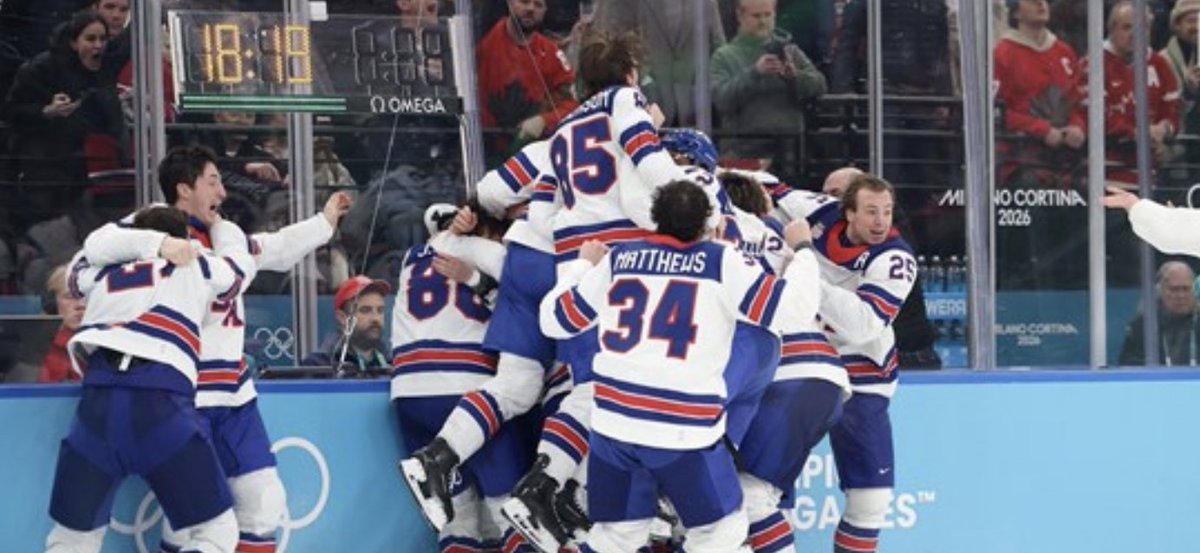
Team USA just won its first Olympic hockey gold in 46 years.
On February 22. The exact anniversary of the Miracle on Ice.
Forget the storybook narrative for a second.
What happened today is a masterclass in what performance science teaches us about pressure, identity, and legacy.
Consider the pressure this team was under.
They walked into today carrying 46 years of near misses.
The US hadn't won Olympic gold since 1980.
They lost the gold medal game in 2002 and 2010...both times to Canada. Last year at the 4 Nations tournament, Canada beat them in overtime. That loss was still raw.
The 1980 hero, Mike Eruzione, was in the building. He told the players before the game: "It's just a hockey game."
It wasn't. And everyone knew it.
Canada outshot the US 41-26.
They dominated the second and third periods.
Nathan MacKinnon missed an open net. Macklin Celebrini had a breakaway and couldn't convert. Devon Toews had Hellebuyck beaten and somehow the puck stayed out. Then Charlie McAvoy cleared a puck off the goal line with his glove.
This was not a dominant performance. It was a team surviving enormous pressure and refusing to break. That distinction matters.
How does a team perform under that kind of weight? It starts with the environment the coach creates.
Mike Sullivan is now the only American-born coach to win multiple Stanley Cups AND Olympic gold.
When he took over the Pittsburgh Penguins in 2015, the team was loaded with talent — Crosby, Malkin, Letang — and completely broken. His description: "There was a dark cloud over the locker room."
His first move wasn't a new system or a motivational speech. It was a reframe.
He told the team: "There are certain things in life we can control and certain things we can't. We needed to focus on the things that we could control and not dedicate any cognitive resources or worry to things we couldn't control."
The team adopted a two-word motto: "Just play."
Six months later, they won the Stanley Cup. Tonight, he helped USA do it again on the biggest stage in the world.
Sullivan builds what he calls a "safe zone for learning."
His video review sessions are explicitly NOT about blame.
"We don't want a player walking into our video room on eggshells worried about 'Am I going to be in the film? Is Coach going to yell at me?' It's a game of mistakes. Our responsibility is to learn from them."
His guiding principle from his college coach:
"Before players want to know what you know, they want to know that you care."
It's the difference between compliance and buy-in. Buy-in wins championships.
Research backs up Sullivan.
Fear-based environments don't produce peak performance. Especially when pressure is already high...
They produce anxiety, risk-aversion, and choking.
When people feel psychologically safe — when they know mistakes won't be weaponized against them — they take smarter risks, recover faster from errors, and perform better under pressure.
We could see it in how Sullivan framed this moment in the weeks before the game.
"What an incredible opportunity we have in front of us."
Not a burden or expectation...Opportunity.
He took the unusual step for a hockey team and kept the team in the Olympic Village instead of a hotel.
His reasoning: "The Village is part of the experience."
The Hughes brothers roomed together. The Tkachuk brothers roomed together.
He didn't try to ignore or isolate them from the pressure. He was embedding them in it, together.
And then there's the guy who scored the goal.
Jack Hughes came into the Olympics injured, underperforming, slotted on the fourth line.
Sullivan moved him up mid-tournament because, as he put it, "We thought by moving him and getting him more ice time, he could impact the game more."
Hughes's response: "I believe in myself more than anyone. Wherever I was slotted coming into this thing, I knew I was going to play well."
A coach who believed in him when results said otherwise. A player who believed in himself when the lineup said otherwise.
Then two teeth got cracked in half by a high stick in the third period. And he scored the golden goal anyway.
Everyone's going to remember this as the night the US ended a 46-year drought.
On the anniversary. In overtime. Against Canada.
But the real lesson is quieter than that.
The environment you create determines the performance you get. A safe zone for learning. A focus on controllables. Relationships built on care, not fear. Pressure reframed as opportunity.
That's what it looks like when a team is ready, with the right environment and support to tackle the ghosts of history.
They built a culture where a team could survive 41 shots and a kid with two broken teeth could score the biggest goal of his life.
The 1980 Miracle was about belief overcoming talent. Today was different.
Today was talent, preparation, identity, and 46 years of accumulated hunger arriving at the same moment.
-Steve
I couldn’t imagine living without believing I’m as capable as anyone out there
That I have as much potential as anyone else
That I can reach any goal I truly set myself to
Big milestone for Informal! Malachite is joining Circle to build Arc, a new Layer-1 for stablecoin finance. Proud to see our high-performance BFT consensus engine moving from incubation to real-world impact.
Movement drama aside, real talk:
I feel bad for builders & founders who were actually serious & spent hours shipping
Picking the right chain/ecosystem/vm is one of the most important decision a crypto founder makes, choose wisely.
I'm asking Claude 3.7 to do pretty simple stuff in Cursor, it fails misarably. I feel like I'm on a different planet compared to rest of the Twitter :D
Network highlight: @primev_xyz has launched mev-commit on Symbiotic mainnet, bringing credible commitments to Ethereum block production!
They're the first to leverage @symbioticfi's slashing capabilities, enabling trust-minimized preconfirmations for transactions.
You should prepare for moving your crypto startup to the US. The lawyers will still carve a pound of flesh out of your startup, but once the rules are clear the upside is unbounded. US is the largest unified free market economy in the world.