Only one chance in this lifetime…
Like watching sunset at the beach from the most foreign seat in the cosmos, I couldn’t resist a cell phone video of Earthset. You can hear the shutter on the Nikon as @Astro_Christina is hammering away on 3-shot brackets and capturing those exceptional Earthset photos through the 400mm lens. @AstroVicGlover was in window 3 watching with @Astro_Jeremy next to him.
I could barely see the Moon through the docking hatch window but the iPhone was the perfect size to catch the view…this is uncropped, uncut with 8x zoom which is quite comparable to the view of the human eye. Enjoy.
BLACK FRIDAY SALE — Save 30% on all print orders on my website for the next week. The perfect time to get your order in before the holidays!
Shop prints from all eleven Starship flight tests and nearly 400 other rocket launches from the last decade.
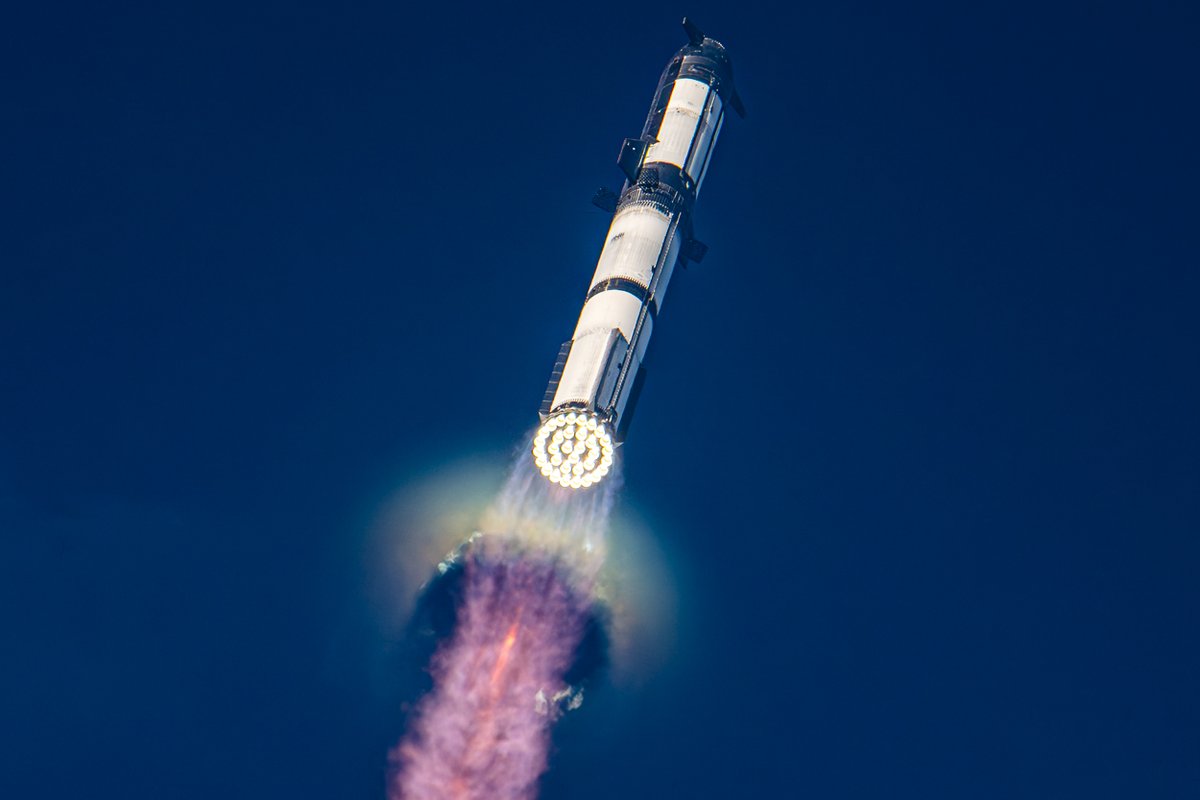
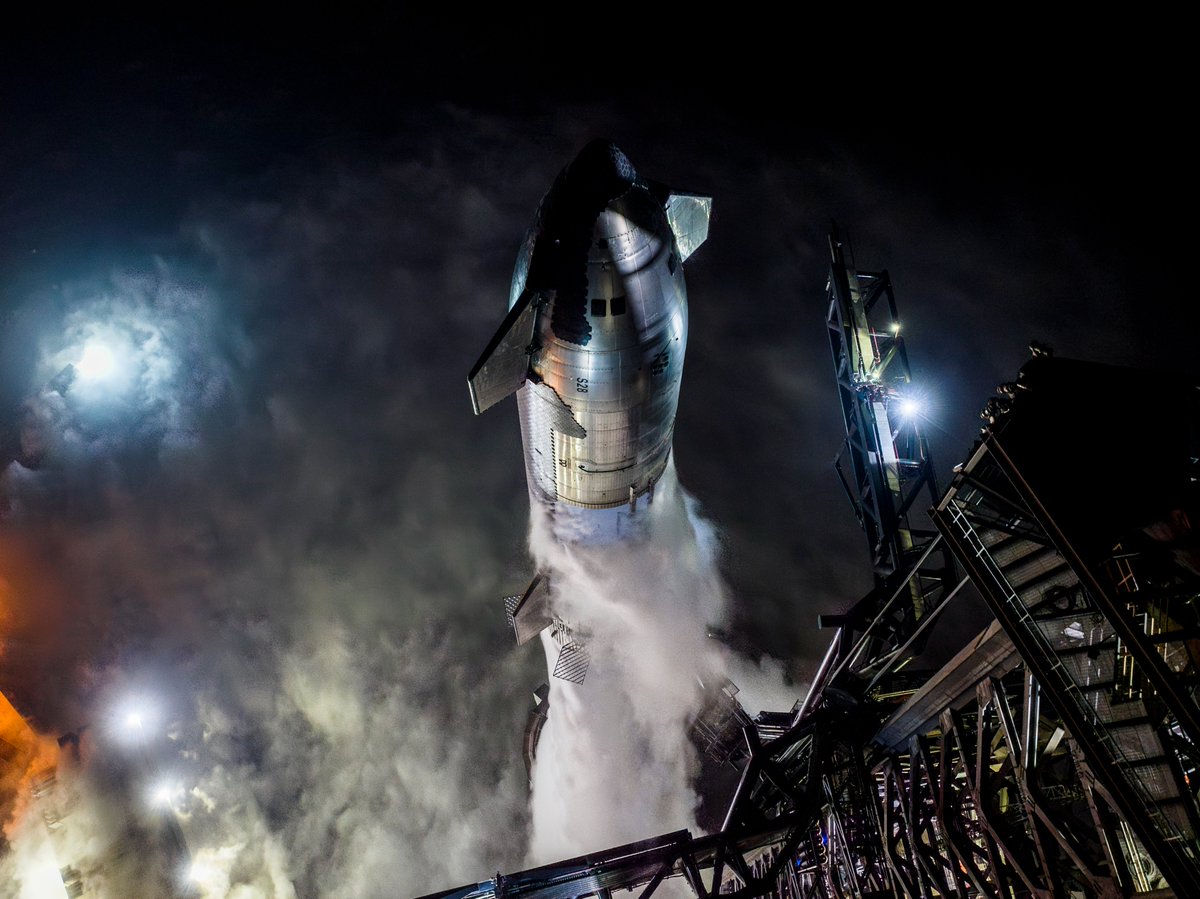
Turns out I was absolutely spamming the shutter out of excitement so here's a landing collage. Cool to see how much the TVC gimbles to pitch the booster back to vertical before lowering onto the tower.
HARMONY OF RESILIENCE: Recorded in space and sent to Earth via @SpaceX’s @Starlink constellation, Polaris Dawn crewmember and violinist @Gillis_SarahE invites you to enjoy this music moment in support of @StJude & @ElSistemaUSA → https://t.co/My8cUwAWzg
Polaris Dawn Flight Day 3 Update
Early Thursday morning at 7:58 a.m. ET, the Polaris Dawn crew successfully completed the world’s first spacewalk – also known as an extravehicular activity (EVA) – from Dragon at 732.2 km above Earth.
Shortly after arriving in space on Tuesday, the crew began a two-day pre-breathe process, designed to prevent decompression sickness while also preparing the crew for the environment inside the EVA suits by gradually lowering Dragon’s cabin pressure and increasing the oxygen concentration.
Then on Thursday, the crew donned their suits and initiated Dragon seat rotation, suit tare, and the heads-up display and helmet camera checkouts. The 106-minute spacewalk officially began at 6:12 a.m. ET when suit pressurization started, the nitrogen purge was initiated, and pure oxygen (O2) was flowing into the suits. A secondary flow of oxygen primarily helped provide cooling to the suits, which would come in handy during the spacewalk.
Once suit leak checks were complete, the crew and ground teams gave the go for Dragon to initiate venting, which took the cabin’s pressure down from ~8 psi to below 1 psi – nearly to the vacuum of space. Simultaneously, Dragon repositioned its trunk to face the sun ahead of the hatch opening.
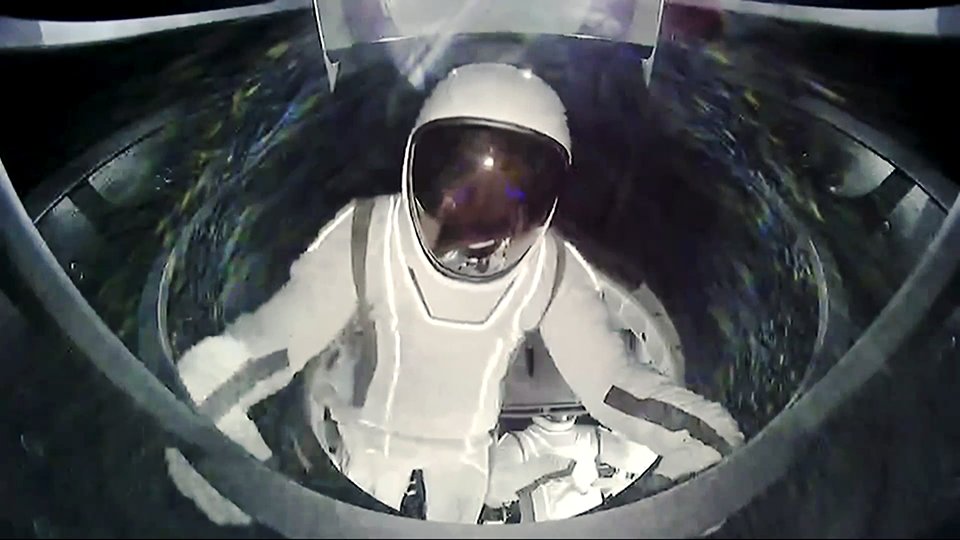
Mission Commander Jared Isaacman opened the hatch and for the first time, four astronauts were simultaneously exposed to the vacuum of space. Jared and Mission Specialist Sarah Gillis separately exited the spacecraft and individually performed a series of suit mobility demonstrations to test the performance of the spacesuit in the vacuum environment of space. Mission Pilot Kidd Poteet and Mission Specialist Anna Menon remained seated, managing suit umbilicals and monitoring vital support systems and telemetry on Dragon’s displays.
Upon completion of their individual EVAs, the hatch was closed, Dragon re-pressurized to 14 psi, cabin oxygen and pressure levels confirmed, officially completing the suit testing alongside the first commercial spacewalk and the first EVA from a Dragon spacecraft.
Throughout the EVA, stunning visuals were afforded by Dragon’s cameras and the spacesuits helmet cameras as the crew orbited between 184.9 x 732.2 km above Earth.
Following the spacewalk, the crew took time to rest and recuperate, enjoying a well-deserved meal before posting from space for the first time on X using Starlink high-speed internet. The crew concluded the day by connecting with their families and settling in for their sleep period ahead of Flight Day 4.
Commander @rookisaacman has egressed Dragon and is going through the first of three suit mobility tests that will test overall hand body control, vertical movement with Skywalker, and foot restraint
Weather is 70% favorable for today’s third integrated flight test of Starship.
The live webcast will begin ~30 minutes before liftoff, which is currently targeted for 7:30 a.m. CT → https://t.co/G1H8uoTxWD