PGT Biology @ KVS I
MSc-Biotech, B.Ed. MBA-Operations Mgmnt I GATE-LS, CTET, RTET, NVS, KVS,DSSSB n RAS Pre qualified I Thar Desert, Churu, RJ, IN I Vegetarian
Best picture on internet today. So I want to keep it on my timeline.
For those unaware:
Drowning baby elephant rescued from Teesta River by fishermen, reunited with mother in Maalbazar, West Bengal.
Huge respect to the fishermen!
Cell just dropped a full Focus Issue on AI in Biology.
Virtual cells. World models. 500M+ cell repositories. 100M-scale perturbation atlases. Aging benchmarks. 4D mitochondria. Multimodal cancer prediction.
Here are the 13 pieces worth reading 🧵
Turn your insights into impactful campaigns.
Connect Canva to Claude for Small Business and transform your workflows into on-brand assets, then refine, collaborate and publish straight to your platforms – all without switching tools.
Download the guide to get started: https://t.co/SHwua3sbRQ
This beauty is a peacock leopard Appaloosa horse, with a unique and extraordinary coat.
Her ancestry traces back to ancestors once bred and cared for by the Nez Perce Indians, famous for selecting this versatile and distinctive breed.
[📷 Beth Hostetler]
An MIT Media Lab study used EEG to track what happens in the brain when people write with ChatGPT rather than on their own. Fifty four students completed essay tasks while wearing electrode caps. One group used ChatGPT, one used a search engine, and one used no tools. Across sessions, the ChatGPT group showed the weakest neural connectivity in networks linked to memory, attention, and analytical work. They also had more trouble recalling what they had just written and produced more generic prose. The authors describe this as a kind of cognitive debt: the tool does the synthesizing, and the brain stays quieter [1].
The same experiment points to a better order of use. Students who first wrote unaided and only later switched to ChatGPT showed stronger recall and more widespread brain activity than students who started with the model and then had to work alone. In other words, the model helped more when it scaffolded thinking that was already underway than when it replaced that thinking from the start. The practical lesson is not that large language models should be banned. It is that they work best as a second pass, after the writer has already done the hard part of forming and remembering an argument [1].
[Kosmyna, N., Hauptmann, E., Yuan, Y. T., Situ, J., Liao, X. H., Beresnitzky, A. V., Braunstein, I., & Maes, P. (2025). Your Brain on ChatGPT: Accumulation of Cognitive Debt when Using an AI Assistant for Essay Writing Task. arXiv. DOI: 10.48550/arXiv.2506.08872]
Best Wishes of National Sports Day, 2026. Theme: Khelega Bharat, Jeetega Bharat.
Celebrated every year on 29 August on Birth Anniversary of Major Dhyanchand Singh Ji.
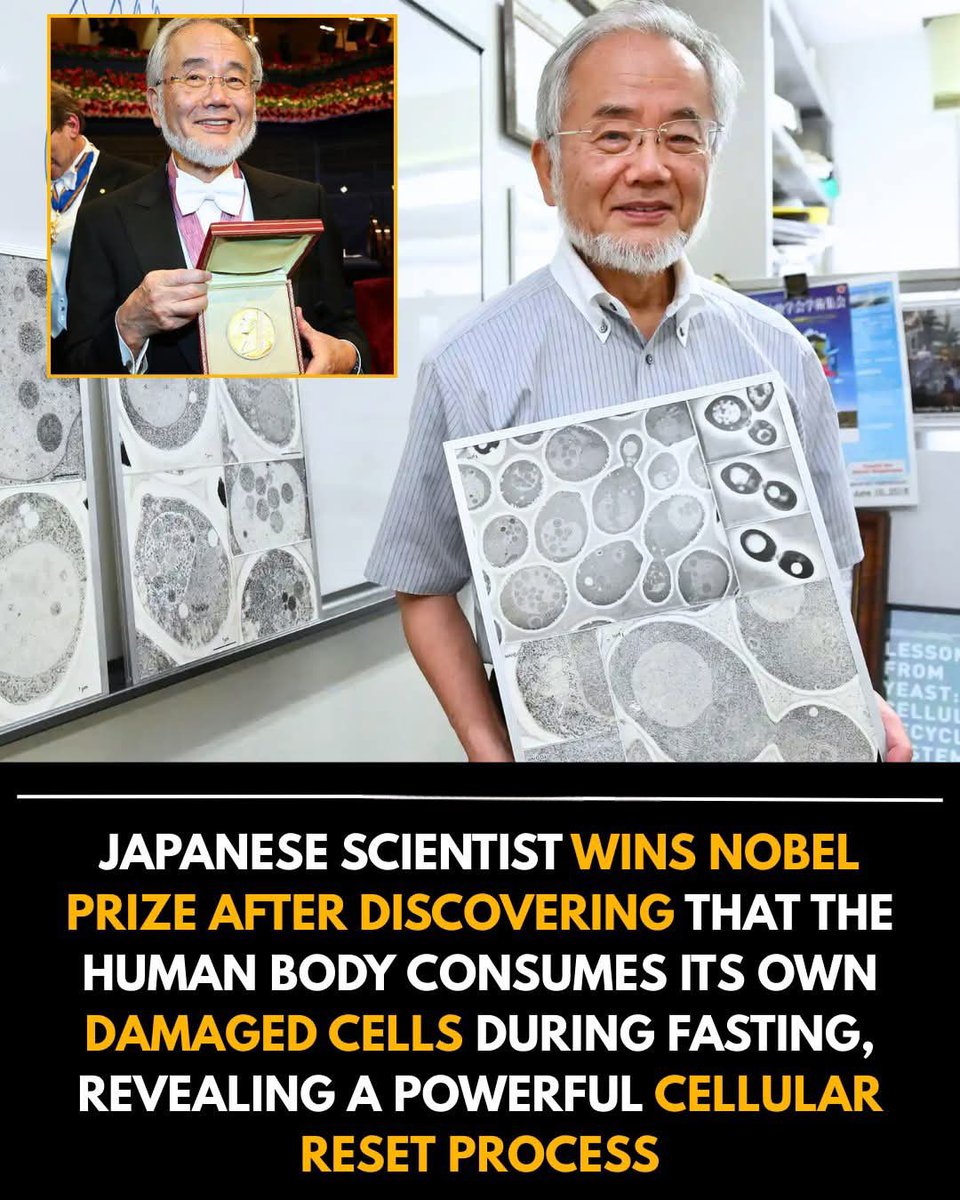
🚨 A Japanese scientist earned a Nobel Prize after discovering one of the body’s most powerful self-healing mechanisms: during periods of fasting, the human body begins to consume its own damaged cells, triggering a deep cellular reset known as autophagy. This natural process acts like an internal cleanup system, breaking down old proteins, malfunctioning components, and toxic buildup that contribute to aging and disease. The discovery revealed that fasting doesn’t just change metabolism — it activates a fundamental survival program hard-wired into our biology.
Researchers found that autophagy boosts cellular renewal, supports immune function, protects against neurodegeneration, and improves overall resilience. When the body isn’t busy digesting food, it shifts focus to maintenance and repair, recycling damaged parts into fresh, healthy components. This helps reduce inflammation, sharpen brain function, and improve the body’s ability to handle stress. Some studies even show that activating autophagy may lower the risk of chronic conditions linked to aging.
The Nobel-winning research transformed how scientists view fasting, turning it from a simple diet trend into a legitimate biological reset. Doctors now say intermittent fasting — when done safely — can help support long-term cellular health, boost energy, and improve metabolic balance. While it’s not a cure-all, the discovery showed that the body has extraordinary built-in abilities to heal itself when given the right conditions.
For millions around the world, the research opened a new window into how deeply our lifestyle affects our cells — and how something as simple as timing our meals can unlock one of the body’s most powerful repair systems.









![Rainmaker1973's tweet photo. This beauty is a peacock leopard Appaloosa horse, with a unique and extraordinary coat.
Her ancestry traces back to ancestors once bred and cared for by the Nez Perce Indians, famous for selecting this versatile and distinctive breed.
[📷 Beth Hostetler] https://t.co/kzJceCihdM](https://pbs.twimg.com/media/HSAMpbiWYAYh3OY.png)

![Rainmaker1973's tweet photo. An MIT Media Lab study used EEG to track what happens in the brain when people write with ChatGPT rather than on their own. Fifty four students completed essay tasks while wearing electrode caps. One group used ChatGPT, one used a search engine, and one used no tools. Across sessions, the ChatGPT group showed the weakest neural connectivity in networks linked to memory, attention, and analytical work. They also had more trouble recalling what they had just written and produced more generic prose. The authors describe this as a kind of cognitive debt: the tool does the synthesizing, and the brain stays quieter [1].
The same experiment points to a better order of use. Students who first wrote unaided and only later switched to ChatGPT showed stronger recall and more widespread brain activity than students who started with the model and then had to work alone. In other words, the model helped more when it scaffolded thinking that was already underway than when it replaced that thinking from the start. The practical lesson is not that large language models should be banned. It is that they work best as a second pass, after the writer has already done the hard part of forming and remembering an argument [1].
[Kosmyna, N., Hauptmann, E., Yuan, Y. T., Situ, J., Liao, X. H., Beresnitzky, A. V., Braunstein, I., & Maes, P. (2025). Your Brain on ChatGPT: Accumulation of Cognitive Debt when Using an AI Assistant for Essay Writing Task. arXiv. DOI: 10.48550/arXiv.2506.08872]](https://pbs.twimg.com/media/HQ-nF7XWAAAaIJc.jpg)