I don’t like to work with brokers who I can’t be fully transparent with on what my bottom line is.
Sadly, far too often you need to negotiate with your broker in the same way you’d negotiate with the other side.
A few months ago I dropped a deal I'd been under contract on for over a month
Initially I'd thought I’d be stabilizing at a 12% yield, my equity multiple would be almost 3x & my profit would be $2.6MM+ in just 3 years
During my DD process, I realized I was wrong
So what went wrong?
A few things but first let’s talk about the deal itself and why I got it under contract initially (in the pictures below, you can see my initial underwriting on the left and my final underwriting on the right)
The property was a 70-unit value-add multifamily deal. In-place rents were ~$600 and market rents were just over $1,200. Idea was to buy for ~$4MM ($60k/key), spend $10k/key to lightly renovate the units, get the NOI up from $150k to $600k and then sell for $7.6MM for a 7.5% cap rate
Here’s what I liked about the deal initially
- 3-bedroom units for a very low basis (under $60k/key)
- A 2-bedroom property in the market had just sold for $85k/key
- High stabilized yield (~12%)
- Low level of renovations needed to hit underwritten rents
What I didn’t like about the deal initially
- Crappy market with bad tenant base
- Low in-place income meant a bank wouldn’t finance the deal and I’d need to buy with risky bridge debt
Overall though I initially liked the deal, liked the risk/reward and got it under contract
So why did I end up dropping the deal?
Two major reasons
The first major thing that changed was the renovation budget. When I’d first looked at the property I’d asked the broker the condition of the units. He’d said that they were in good shape, only needed $10k/unit
I asked him to tour before submitting an offer and he said seller wasn’t allowing any tours until a contract was signed. So I underwrote $10k/unit ($700k) initially for the capex
After I got the deal under contract and toured, it immediately became apparent that the seller had lied about the condition of the units and $10k/unit was going to be needed just to turn the units - $20k would be needed for a full renovation
That added $10k/unit to my budget across the property which is $700k
The next major item was the insurance. Seller had told us the insurance was $45k. Once we got the actual insurance policy, we realized it was actually $60k. $15k difference, which is worth $200k at a 7.5% cap rate
So between these two items alone, that was a $900k price reduction I’d need to make the deal work at my previous numbers
Additionally, the difficulty and risk of the deal had changed. Why’s that?
Well initially, I thought the renovation scope would be light. But afterward, given the condition of the units, I’d need to do a full renovation scope of $20k – which is a lot more work. So the difficulty increased
The risk increased as well because now instead of my basis being $5MM, it had ballooned to $5.7MM. In addition, my debt load had increased by $500k, which not only increased my yearly debt service, but made my stabilized DSCR 1.1x, which would mean that I’d likely have to come out of pocket for a refinance (need a 1.25x DSCR to refinance)
The deal had become significantly more difficult and significantly more risky
So in addition to that $900k price reduction, I’d need another couple hundred thousand (let’s call it $300k) off the purchase price to compensate for the increase in risk otherwise the deal wouldn’t be worth it for me
Needless to say, in the new underwriting, the deal no longer made any sense and I was forced to drop it
A few takeaways
1. Do your due diligence, a seemingly great looking deal can turn bad relatively quickly
2. If you’re a seller, let buyers tour the interior beforehand, especially if you know it’s bad. Otherwise you’re just wasting everyone’s time since it’s going to get re-traded anyway
If you’d like to learn how to underwrite & buy deals (even smaller deals, my first deal was $200k & I only used $2,500 of my own capital) apply in the next tweet for the Acquisitions Bootcamp to work 1-on-1 with me
It happened by accident.
But last week I witnessed an absolute branding master class.
Every single company in America with a marketing budget needs to take notice of what just happened:
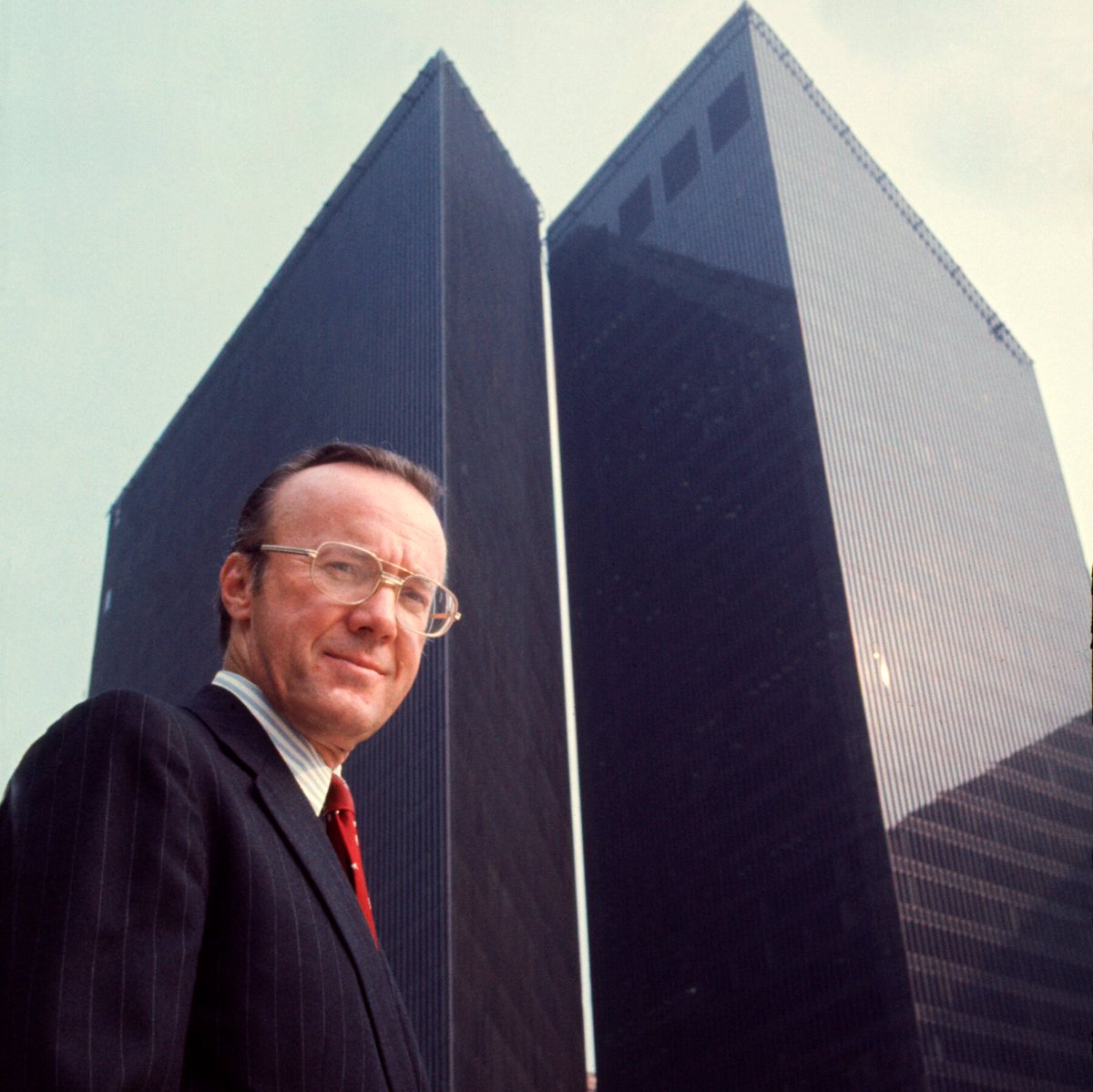
Gerry Hines started with $0
Today, Hines is a $94.6 Billion AUM firm
After 60+ years of work, he is known as a pioneer of real estate development
Here are 9 lessons he shared in books and interviews:
Kindness isn’t weakness.
If you’re doing business with somebody who’s nice and you think their kindness is a sign of weakness, you’re mistaken.
They didn’t get this far by being a pushover.
People often want to hop on a quick call or meet for coffee in order to learn the strip mall business and go out and buy properties.
The meeting would have to be quite long.
Agenda?
-Site valuation using price per foot instead of cap rate
-Interest rate impact on real estate
-Favorable vs unfavorable parking ratios
-Impact of elbow spaces of value
-Impact of Traffic counts
-Running an acquisitions team
-Leasing spaces in house vs via brokers
-Choosing the right subcontractors
-Characteristics of a successful signage program
-Quarterly investor updates
-Securities and Exchange Commission (SEC) regulations
-Value-add via mark-to-market
-Big box retail vs neighborhood strips
-Verifying accredited investor status via third parties
-Obtaining the right loan for each property
-Buying all-cash and financing later
-Using a line of credit secured by subscription agreements
-CRM software use
-Allowing brokers to double-end deals in order to win
-Buying in abundance mindset markets
-Obtaining estoppel certificates
-Reviewing land surveys
-Investor capital call timing and process
-Understanding environmental reports
-Impact of co-tenancy clauses
-Negotiating with mom-and-pop tenants vs nationals
-How to use TI allowance/free rent to maximize value
-Exclusive-use clauses
-Modeling with excel
-Carried interest
-Hurdle rates
-Renewal options
-CPI increases vs fixed increases
- Reviewing title reports
-Broker networking
-Pro-rata share
-CAM reconciliation
-In house property management vs outsourced
-Fund administration
-Investor portals
-Triple net leases
-ADA laws
-Personal guarantees and when to require them
-Giving your architect direction
-Grease trap installation and maintenance
-AMP requirements
-Frontage requirements
-Working with municipalities
-Operating agreements
-Investor distributions
-Tax implications
-Waterfalls
-Choosing a buyer who will actually close
-Natural hazard disclosure reports
-Asset management
-Insurance requirements
-Implications of property tax increase upon purchase-
-Gathering rental data from local tenants
-Reviewing tax returns from CPA
-Bookkeeping
-Cross-easements
-CC&Rs
-Title exceptions
-Market brokerage commissions
-Waiver of subrogation
-Assignment and subletting clauses
-Eviction process
-Recapture clauses
-Impact of each tenant on the rest of the property
-Monument signage
-HVAC maintenance
-Deprecation
-Down gradient vs up gradient
-Private placement memorandum
-Pitch deck
-Proper use of costar, loopnet, crexi
- Subscription documents
- Audits
-Investor quarterly account statements
-PCE
-Vapor extractions systems
-REG D 506c
-Blue sky filings
-Accrued vs cash accounting
-Legal disclosures
-IRRs
-MOIC
-Investment period and extensions
-Optimal loan to value
-Putting together an investment thesis
-Market fees
-Institutional capital
-Minimum commitments
-Analyzing comps efficiently
-Putting together effective leasing brochures
-Reaching national tenant brokers
-Value-add through lease-up
-Value-add through mispricing
-Redevelopment
-1031 exchange
-Identifying operational inefficiencies
-Understanding when to sell
-Ability to analyze a property via an aerial
-Identifying the most critical cosmetic updates
-Analyzing spread between in-place rents/market rent
-Interpreting demographic data
-Managing the appraisal process
-Understanding every single word and clause in a lease
-And that you have a ton of control over the value of your property
We'd have to block off a few years, for sure.