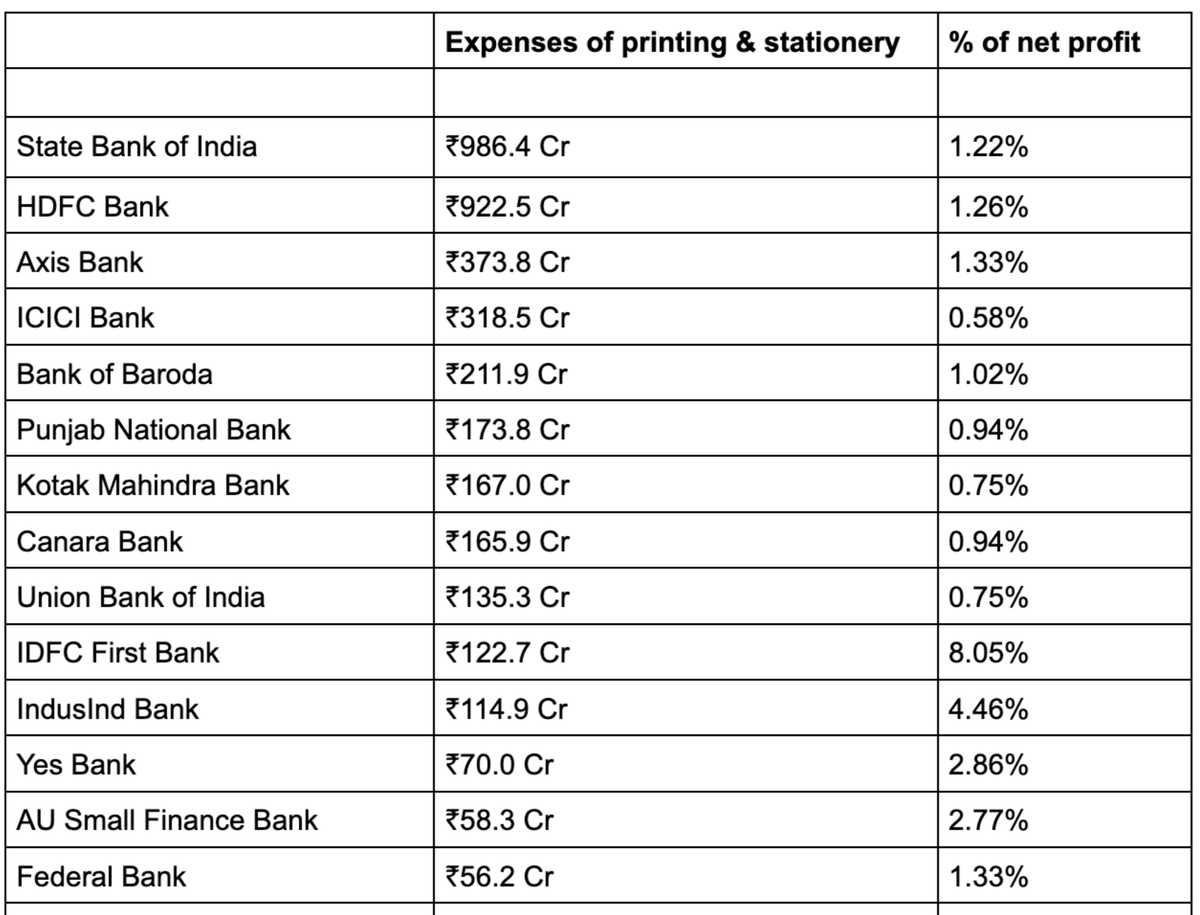
The funny part about industry is finance professional cuts out marketing budgets and since there are lot finance certifications in the market these guys get paid more that marketing professionals contrary to popular believe that marketers get paid more.
We flagged the corruption during the UPA years & ran an anti corruption campaign which helped the BJP to come to power. But I can safely assert that the corruption in the Modi govt exceeds the UPA corruption by leaps & bounds. Every govt scheme is riddled with corruption
Modi’s vacation packed summer ⛱️🕶️✈️
📍 UAE: 15–16 May
📍 Netherlands: 17 May
📍 Sweden: 18 May
📍 Norway: 19 May
📍 Italy: 20 May
📍 France: 13–16 June
📍 Slovakia: 17–18 June
📍 Seychelles: 27–29 June
📍 Indonesia: 6–7 July
📍 Australia: 8–9 July
📍 New Zealand: 10–11 July
After telling Indians not to travel overseas - he has himself travelled to 11 countries in the last 57 days.✈️✈️
Narendra Modi was born on 17 September
7+1 =8
26 people were killed in the Pahalgam terrorist attack
2+6=8
India's worst passport ranking is 125
1+2+5=8
NEET paper was held on 3 May which was leaked
3+5=8
The date when demonetization happened was 8 November
Modi ji also appears on TV at 8 PM
Came as a WhatsApp forward - don’t know the author.
In 2017, Mauria Udyog Limited made steel gas cylinders and traded at roughly ₹10 a share. No new factories, no earnings jump, no corporate announcements. And yet the stock kept climbing, past ₹50, past ₹100, past ₹200, until it touched ₹255. Nobody could explain why🧵👇
Mumbai rains have washed away the government's claims. #9YearsOfGST delivered higher taxes, political horse trading, and Modi's award getting foreign tours..
not the infrastructure people deserve.
This Iran national football is defending Egyptian strikes and shots with all their heart and might. Whatever they are as a country due to their current regime , their players with all their difficulties in USA have turned up to the best of their abilities.
#fifaworldcup2026
FIIs have pulled over ₹2,87,000 Cr from Indian equities in 2026 so far.
Nearly half of that selling has come from a single sector.
At the same time, foreign investors have steadily increased exposure to a handful of others.
Here's what the data reveals. 🧵
@nvidia This might be applicable in US and other massively developed nations but countries like India and other AI adopting nations will still be dependent on water and development of cooling systems will take much time and investments, ultimately the burden will fall on general citizens
dot-com bubble vs. a possible AI bubble.
From the famous "Dean of Valuation", Professor Aswath Damodaran, of NYU Stern School of Business,
“And that’s the real big difference between the dot-com boom and bust and the AI boom. We don’t know whether there’ll be a bust. History suggests there will be a bust.
The dot-com boom and bust had no huge capital expenditure in that cycle. In fact, there was very little traditional CapEx, or even R&D, driving it. People started apps. They basically started going on it.
This has been the biggest infrastructure run-up I think I’ve ever seen in business. You can go back and compare it to the automobile business 100 years ago. The amount of money that’s being put into AI CapEx is immense, which means that when the correction comes, the pain will be more intense.
And herein lies the second problem. The dot-com boom and bust was almost entirely equity-funded. You think, so what? Well, when the bust came, those shareholders lost 60%, 70%, 80%, or 90% of their money. You felt sorry for them, but the loss was restricted to the shareholders.
The problem with the AI CapEx boom is that not only is it immense, but a big chunk of it is funded with debt, and the debt is coming from private capital rather than banks. There’s a very real chance that if there’s a correction and companies start having problems, that problem is going to show up as distress and default, and that really doesn’t stay restricted. It spills over into the rest of society.
I’m not saying it’s going to be 2008, but 2008 is an example of what happens when lenders overreach, when they lend money at too low a rate, and the correction comes. The pain spills over.
So that is my concern with this big market illusion: the potential societal cost of having to deal with debt coming due that you’re unable to pay. It’s much more painful than your share price dropping 90% and you feeling the pain."
----
From "Excess Returns" YouTube channel, (link in comment)
You have noticed it. ChatGPT feels dumber than it used to. Your prompts that worked six months ago produce worse results now. The writing sounds flatter. The ideas sound safer. The internet itself feels like it is shrinking. Every article reads the same. Every email sounds the same. Every answer sounds like it was written by the same voice.
You thought it was you. It is not you.
Researchers at Oxford and Cambridge published a paper in Nature proving what is happening. They call it Model Collapse.
Here is the mechanism in one sentence. AI trained on AI-generated data gets dumber every generation until it forgets what real human data looked like.
The internet is filling with AI-generated content. Blog posts. Articles. Reviews. Comments. Social media. AI companies scrape the internet to train the next generation of models. Which means the next generation of AI is being trained on the output of the current generation.
Each cycle loses information. Not randomly. It loses the rarest, most unusual, most creative parts first. The researchers call these the "tails of the distribution." The weird ideas. The unexpected perspectives. The things that made the internet feel human. Those disappear first.
What remains is the average. The safe. The expected. The bland.
Then the next generation trains on that. And loses more. And the next generation trains on that. And loses more. The researchers proved this is not a slow decline. Major degradation happens within just a few iterations. Even when some of the original human data is preserved.
They tested it on large language models. On image generators. On statistical models. The pattern was the same every time. The output converges toward a narrow, flattened version of reality that looks nothing like the original data.
The lead researcher put it plainly. "Large language models are like fire. A useful tool. But one that pollutes the environment."
The pollution is invisible. You cannot see which sentence on the internet was written by a human and which was written by AI. Neither can the AI that is about to train on it. And once the tails are gone, they do not come back. The damage is irreversible.
This is not a prediction anymore. It is a diagnosis.
The internet you grew up on was built by humans writing things no algorithm would have written. Strange, personal, imperfect, alive. That internet is being diluted. One generation of AI at a time. And the models trained on what remains are learning a smaller and smaller version of the world.
Model Collapse is not a technical problem. It is a cultural one. The thing that made the internet worth reading is the thing that disappears first.
Zepto calls itself the fastest growing quick commerce platform in India in its DRHP, but if you pay attention to the numbers in their filing, you will realise that their user base is actually shrinking and the cost of getting each new user has more than tripled in a year
So Zepto reports something called Annual Transacting Users (ATU), basically the total number of unique people who have placed at least one order on Zepto in the last 12 months
This number has been climbing up ever since the company started reporting it, but for the first time it has actually started falling. In December 2025, this number was 49.54 million. By March 2026 it dropped to 47.97 million
So Zepto's user base shrunk by 1.57 million in just three months
And why this is worse is because Zepto has actually been spending more on advertising, but adding fewer new users. In FY25, the company spent Rs 1,187 cr on ads and added 27.81 million new users for the year. In FY26, they spent Rs 1,389 cr on ads but added only 9.59 million new users
If you do the math, the cost of getting each new user has gone from Rs 427 in FY25 to Rs 1,448 in FY26. So Zepto's customer acquisition cost has more than tripled in a single year
Now here's where it gets interesting. Zepto's DRHP does not directly acknowledge any of this. Instead, they have come up with a different metric called "Digital Marketing Cost per Order" which they have used to suggest that their marketing is getting cheaper.
As per this metric, Zepto's marketing cost has dropped from Rs 33.75 per order in FY25 to Rs 4.31 per order in FY26 to just Rs 1.01 per order in the March 2026 quarter
But this metric is structured in a way that it isnt measuring marketing cost by number of new users added, but is measuring it by total orders on the platform, which is kind of odd
Because other quick comm platforms also dont use this. Blinkit and Instamart report its customer acquisition cost and lifetime value, which is the standard framework used across consumer internet companies
Zepto, on contrast, has chosen a metric the rest of the industry does not use, and it just happens to make their numbers look better (I wonder why)
Nicolai Tangen, CEO of Norges Bank Investment Management pressed IBM CEO Arvind Krishna directly on whether AI is a bubble (Save this).
And Krishna responded with what has become known inside financial circles as the $8 trillion math problem.
A single gigawatt of AI data center capacity filled with accelerators, liquid cooling, and power infrastructure costs roughly $60 to $80 billion to build and populate.
The industry has committed to more than 100 gigawatts of buildout globally.
That is $6 to $8 trillion in capital expenditure and because AI grade hardware depreciates on a five-year cycle, that entire sum must be effectively replaced and refreshed every five years.
To service the interest on $8 trillion in capital at a conservative 10% borrowing rate, the AI ecosystem would need to generate approximately $800 billion in annual profit, a number that currently exceeds the combined net income of every large technology company in the world.
Goldman Sachs estimates $7.6 trillion in aggregate AI CapEx between 2026 and 2031 alone, and Reuters Breakingviews has flagged that even if the capital is available, physical bottlenecks power permits, land, cooling infrastructure, and electrical grid connections mean that half of the planned data center projects are being cancelled or delayed before they ever go live.
Krishna also raised a second, structurally distinct concern that markets have largely ignored.
He argued that the largest foundation models, GPT, Gemini, Claude, Llama are converging toward commodity status.
When a product is a commodity, switching costs collapse.
When switching costs collapse, pricing power evaporates and margins compress regardless of how much capital was spent building the capability.
Morningstar's equity research team conducted a review of 132 technology companies in 2026 and found that AI had caused moat rating downgrades across roughly 40 major stocks concentrated in enterprise software, IT services, and SaaS with Adobe, Salesforce, Workday, and ADP among the companies whose competitive moats have materially weakened.
The implication is that the companies spending the most on AI model development may be building an asset that is simultaneously the most expensive to produce and the most difficult to monetize with durable margins.
This bear case is serious but it is also incomplete and that is what makes Krishna's framing so important to understand precisely.
When pressed further, Krishna explicitly said he does not believe there is an AI bubble in the technology itself only in a subset of the infrastructure capital that is being deployed against speculative assumptions rather than proven demand.
He draws the same analogy, the fiber optic overbuild of the late 1990s. Dozens of companies went bankrupt laying cable that nobody was using.
And yet that exact "wasted" infrastructure became the physical backbone of every cloud company, every streaming service, every mobile network, and every modern AI training cluster that followed.
The builders lost, the infrastructure won.
And the companies that were built on top of it, Amazon, Google, Netflix, Salesforce compounded for two decades.
The question, as Krishna framed it, is not whether AI is real.
It is which capital deployment earns a return versus which gets stranded and crucially, whether you own the stranded assets or the companies built on top of them.
On winners, Krishna was direct that distribution is the moat on the consumer side, and enterprise is wide open.
The data supports this, Meta with 3.3 billion daily active users across Facebook, Instagram, and WhatsApp is building AI into a distribution network that no startup can replicate at any cost.
Meanwhile, the productivity evidence arriving in real time is beginning to challenge the bear case's revenue projections.
Jensen Huang just showed on stage at Computex that GitHub commits, the universal measure of global software output nearly tripled in the first months of 2026, effectively converting $3 trillion in developer salaries into $9 trillion in productive output.
That is measurable, real time economic value already flowing through the system and it feeds directly back into token demand in a compounding loop that Krishna's static CapEx math does not fully capture.