Now Alphabet/Google is super pissed with these guys.. They even say "Social media scrutiny" are not acceptable explanations. They owe an explanation to *billions* of relying parties its mistake exposed.
funny thing about the zeldovich paper referenced (and also in the Ant post) is
the slop-specs for xv6 come out to 6000 lines. (xv6 itself is 6000 LOC C)
The theorem size is EQUAL to the the entire OS. no-one read it.
We're heading to a future of slop specs like never before.
Specification was always (and is especially now) the hard part of verification.
This is a creative use of fuzz tests: proving (at the binary level!) that a fuzz test w/ asserts capturing functional correctness never crashes is a neat way to squeeze a lot out of an existing spec!
India can't even make websites anymore. Make in India campaign going very strong.
The only remaining Indian HTTPS certificate authority is dead.
All Indian websites are now dependent on foreign certificate issuers which can facilitate foreign spying and MITM attacks.
The online crisis involving @eMudhra is just the tip of the iceberg for the Indians.
Our entire #DigitalCircus based governance architecture can be upended by any AI model made for fun.
This is NOT fear-mongering!
This is a result of outsourcing governance!
Read more - https://t.co/ZkhzfQ6uSZ
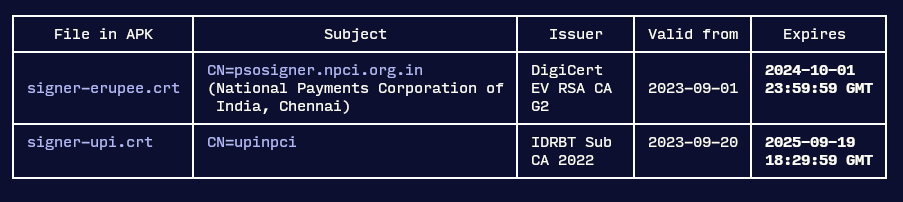
Since the entire internet cares about critical certificates today, a reminder @UPI_NPCI has been running on an expired cert since Sep 2025.
Issued by IDRBT, which is now managing all of *.bank.in.
crazy how everyone is losing their minds that they chose to directly verify the binary
this will continue and become the most scalable way to prove programs
the actual insanity is the proof size, it’s impossible for a human expert to ready/verify
the hardest last mile is reliable specification
New on our Frontier Red Team blog: using Claude to formally verify software at large scale.
Formal verification can prove that code is free of certain bugs, but historically it has only been feasible for small codebases (or required a lot of expert time).
With AI models, however, this is beginning to change. In collaboration with @theoremlabs, we used Claude to prove security properties in over one hundred real-world open-source libraries over the span of a few weeks.
Read our research in full here: https://t.co/zUyx8CjBEk
Why do I think this? It will be the most cost effective way to underwrite all future unknown software exploits
None else has as severe incentive to be bullet proof against all sorts of attack.