One of the 25 tactics of a narcissist/psychopath is copying.
Dark personalities have a bizarre insight into the world of emulating others that is profoundly deeper than other human beings. They copy others for the following reasons:
1. When pretending to be victims, they do not have their own stories of abuse or vulnerability, so they steal the stories of others.
2. They sometimes copy to intimidate, destabilise and cause pain to their victims. For example they may dress like someone who was loved by the target but who is now deceased. Or they might wear an outfit on an occasion they know they might be seeing their ex that was worn during a fight.
3. They have no moral code and so they might steal others ideas and property and other items.
4. They sometimes mirror and copy the emotional responses, behavioural mannerisms and words of others to influence them more effectively.
5. They have a limited emotional world so while some are creative, many struggle with creativity so they take ideas from others.
6. Dark personalities do not experience emotions in the same way other people do. In fact, they have an almost non-existent emotional life. They therefore have to act out emotional responses and they watch and copy other people to learn how to do this.
7. Some dark personalities who are not as smart and have not achieved as much experience what I refer to as predatorial envy. They are pathologically jealous of someone who has what they want and feel they are entitled to. In these cases they will emulate and copy the envy target while at the same time trying to destroy that target so as they can become them.
The whole copying tactic is used frequently by dark personalities. I use a technical term to describe human predator copying – creepy!
I finally understand what Machiavelli meant when he said, “Never play fair in a game where others cheat.” It doesn’t mean become evil. It means stop being naive. Stop bringing honesty to people who study manipulation, stop giving access to people who weaponize closeness, and stop expecting clean hands from people who already showed you they’ll throw dirt. Sometimes wisdom is not revenge. Sometimes wisdom is learning the rules of the room before the room uses your goodness against you.
France has made planned obsolescence a criminal offense, becoming one of the first countries in the world to treat deliberate product shortening as a serious crime.
Manufacturers caught intentionally designing electronics, appliances, or other goods to fail prematurely or become unusable—whether through hardware flaws, software updates that slow performance, or other engineered limitations—now face steep penalties: up to 2 years in prison and fines reaching €300,000, or as high as 5% of their average annual turnover in the most serious cases.
This landmark law, building on France’s earlier consumer-protection framework and reinforced by high-profile scandals (such as the 2017–2018 investigations into smartphone “battery-gate” slowdowns), explicitly targets both physical and digital tactics used to push consumers toward frequent replacements.
The legislation is more than just punishment—it’s a cornerstone of France’s broader “right to repair” agenda. By criminalizing practices that drive premature disposal, the government aims to:
- Slash the massive environmental footprint of electronic waste,
- Protect consumers from hidden “forced upgrades,”
- Encourage manufacturers to prioritize durability, repairability, and longer-lasting support.
France’s tough stance sends a clear message to global tech and appliance companies: the era of disposable-by-design products is ending. By leading the charge on sustainability and consumer rights, the country is helping shift the world toward a more circular economy—one where goods are built to last, repaired when needed, and discarded only when truly necessary.
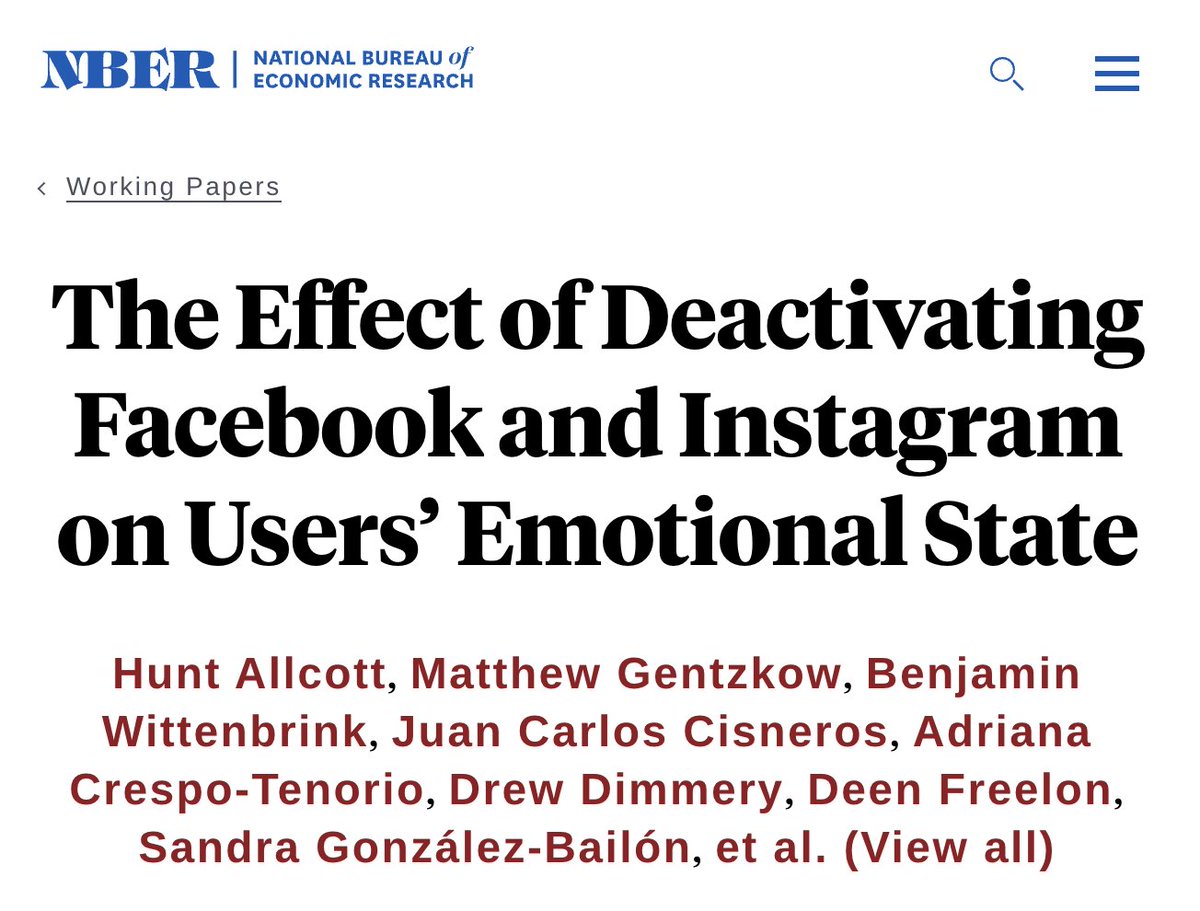
Stanford paid 35,000 people to quit Facebook and Instagram for 6 weeks
Depression dropped. Anxiety dropped. Happiness went up. Women under 25 on Instagram saw the biggest gains
That was 6 weeks. I'm going a full year.
Marcus Aurelius was the most powerful man on earth.
He could have had any woman he desired. Been drunk and partying for the rest of his life. No one would have stopped him.
He chose none of it.
Instead, he spent his nights writing privately about his daily struggle to live better. Those notes, never meant to be published became Meditations. The foundational text of a 2,000-year-old philosophy called Stoicism.
Here's what it actually teaches.
At its core, Stoicism begins with a single, uncomfortable truth: most things are not up to you.
Your relationships, your finances, your reputation, your body. You can influence these, but never fully control them. Even if you do everything right, misfortune can still find you. The economy collapses. Partners leave. Bodies fail.
But here's where Stoicism flips the script.
While you can't control what happens to you, you can always control how you respond. Your opinions, your actions, the position you take toward the world. These belong entirely to you. And according to the Stoics, that's where all your energy should go.
This doesn't mean becoming cold or emotionless, a common misconception about Stoicism.
The Stoics saw emotion as a deeply human characteristic. What they understood, though, is that it's not the emotion itself that determines your mood. It's the position you take toward it. When you learn to observe your feelings rather than be consumed by them, they lose their power over you. Emotions become like waves: they rise, they pass, and you remain standing.
That shift in perspective changes everything.
Marcus Aurelius lived this philosophy every single day. He had every reason not to.
Each morning, before facing the demands of running the world's most powerful empire, he practiced what the Stoics called praemeditatio malorum, negative visualisation. He would mentally prepare himself for the difficulty ahead:
"Today I shall be meeting with interference, ingratitude, insolence, disloyalty, ill-will, and selfishness."
This wasn't pessimism. It was readiness. A mind that has already confronted difficulty isn't rattled when it arrives.
He also carried memento mori, the constant reminder that life is temporary. Not as a morbid obsession, but as a tool to stay focused on what truly matters and let everything trivial fall away.
And that, ultimately, is what Stoicism is about.
We live in an age of endless distraction: notifications, opinions, noise competing for our attention at every turn. It's easy to scatter your energy across things you can't change and exhaust yourself in the process.
Stoicism offers a quiet, clear alternative: point your energy toward what's essential, and release everything else.
Marcus Aurelius had unlimited power, unlimited pleasure, and unlimited distraction available to him. He chose none of it and spent his nights writing about how to be better.
That alone might be the most Stoic lesson of all.
i do not take jealousy lightly and i never will. every jealous person i have encountered has done something with that jealousy. it does not just sit there. it moves. i have had jealous people set me up to get jumped, cost me jobs, and destroy other friendships. jealousy is not a harmless emotion. it is a dangerous one that people with low character act on and call it human nature.
BREAKING: Two Iranian jets flew just 80 feet above the Persian Gulf in an attempt to evade radar detection.
They were reportedly only minutes away from reaching Al-Udeid Air Base when Qatari forces shot them down.
Al-Udeid is the largest U.S. air base in the Middle East, hosting around 10,000 American personnel and serving as the central command hub for Operation Epic Fury.
Iran had dispatched two Soviet-era Su-24 bombers, flying extremely low over the water as they headed directly toward the base.
A Qatari F-15 intercepted the aircraft and destroyed both marking Qatar’s first aerial combat engagement in its history. ✈️
BREAKING: Saudi Crown Prince Mohammed bin Salman made multiple private phone calls to President Trump over the past month advocating for US action in Iran, per WaPo.