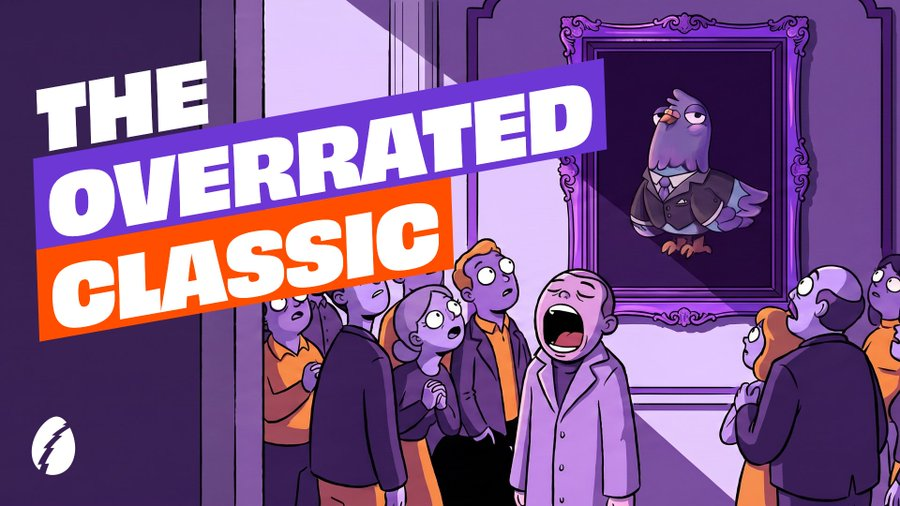
@oluwashemzyx Daenerys going from the most compelling character on television to a villain in one episode with zero convincing buildup is still one of the biggest writing failures in the history of prestige TV. The character deserved so much better than that.
I will say it plainly. Game of Thrones is overrated and the ending is the reason why.
Eight seasons of the most complex storytelling on television and they wrapped it up in six rushed episodes that felt like the writers had a flight to catch. Characters who spent years being built into something meaningful made decisions in the final season that made no sense for who they had become. Daenerys. Bran. The Iron Throne itself. All of it felt like a betrayal of the time we actually invested.
The first four seasons are genuinely some of the best television ever made and that is exactly what makes the ending so painful. You do not get angry at a bad ending unless the beginning was brilliant. Game of Thrones was brilliant right up until the moment it decided it was done caring.
A great ending is what separates a classic from a cautionary tale. GOT had the first six seasons of a classic and the finale of a cautionary tale.
This is exactly why @RallyOnChain rewards authentic opinions over empty hype. Bold honest takes always beat playing it safe.
What's your overrated classic? Drop it below.
@oluwashemzyx "No extension for heartbreak in architecture school" needs to be printed on a shirt and sold to every architecture student who has ever had to choose between falling apart and finishing a model. This is too real.
The worst notification I ever received was not a liquidation alert. It was not a failing grade. It was her message at 11pm saying she was done with us.
I read it three times. Put my phone down. Picked it up again. Still said the same thing.
Then I remembered I had jury at 8am.
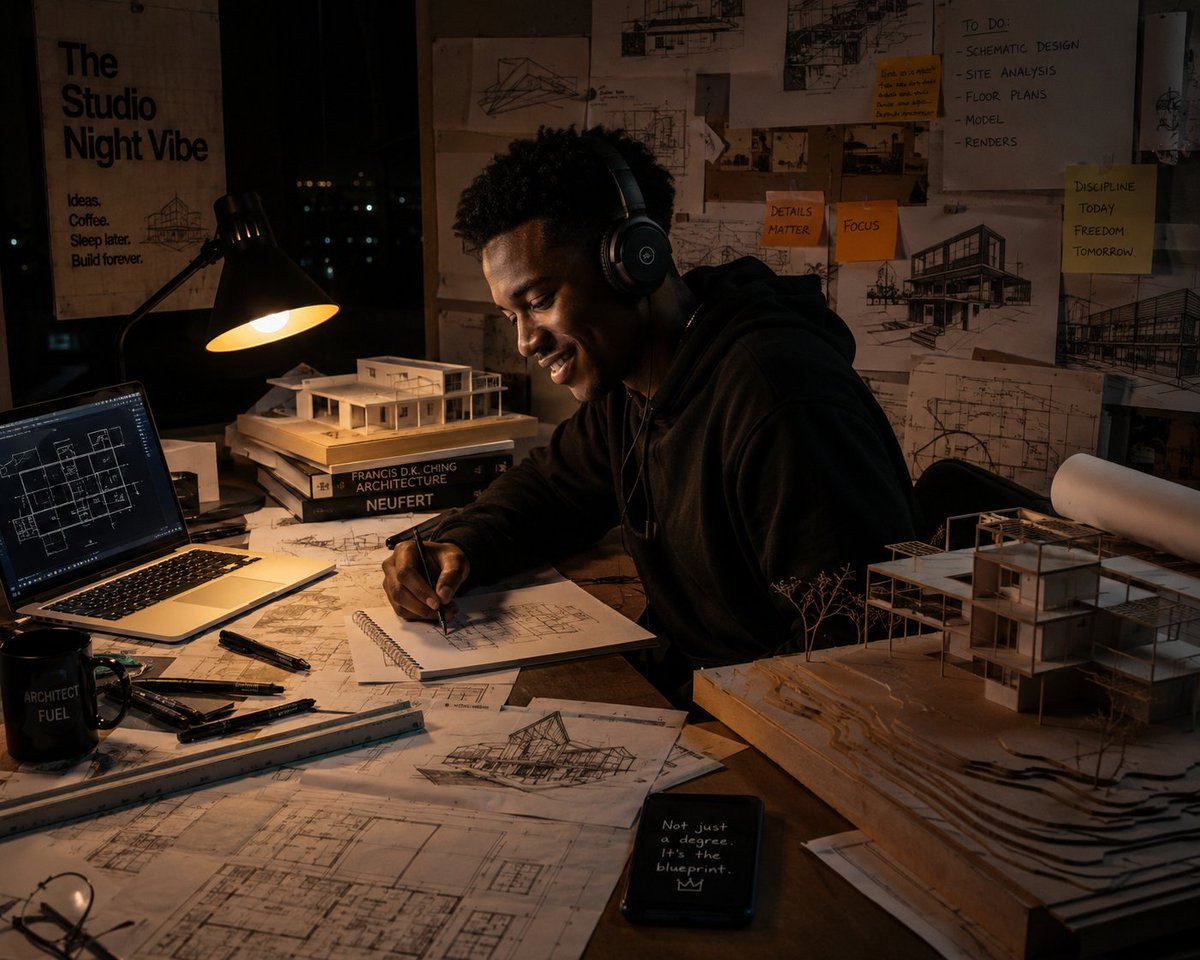
So I sat down, plugged in my headphones, and spent the next six hours building a model with a broken heart and a deadline that did not care about either. No extension for heartbreak in architecture school. The jury showed up at 8 and so did I.
I do not know if that was strength or just architecture school removing my ability to fall apart on schedule.
Either way the project passed. She did not come back. Life moved on.
@RallyOnChain 💔📐
@oluwashemzyx@unborn7G@web3_YSL@hally_jnr Mine is showing up 30 minutes early to everything and then spending those 30 minutes doing absolutely nothing productive. I call it strategic idling.
@oluwashemzyx@unborn7G@web3_YSL@hally_jnr My signature move is blasting lo-fi while power-walking around the room every 30 mins. Keeps the ideas flowing under pressure! Love how you turn tension into tunes @oluwashemzyx
"
My signature move? Headphones in, volume up, deadline in 4 hours and somehow I'm cracking jokes.
Architecture school trained me to create under pressure but nobody told me I'd also be curating a whole playlist while doing it. The studio is never silent when I'm around. Music running, banter flying, hands still working.
People think pressure kills the vibe. I think pressure IS the vibe. The best work I've ever done came out of a night where I was laughing at 2am with a model half built and a jury at 8.
That's my move. Turn the tension into a frequency and ride it until the work is done.
@RallyOnChain 🎧
What's your signature move ?
In a penetration test, you never tell the tester which system to target in advance.
The moment they know before the job starts, the result is already compromised.
That single rule is the same logic behind what @GenLayer built here.
When a dispute arrives, validators are chosen at random after the case exists. Nobody knows who will judge before that moment. There is no advance target and nothing obvious to lobby or manipulate.
Each validator works through the evidence alone. The network then checks something more important than matching language: whether the conclusions mean the same thing.
One model can be wrong. One fixed judge can be captured. But a randomly selected group that reaches the same meaning independently is the closest thing to a trustworthy verdict the agentic economy has seen.
Bad verdicts do not survive appeal either. Every round summons a larger set. Add real stake behind every vote and dishonest behavior becomes expensive fast.
That is Optimistic Democracy.
Reply with one system you would never want a fixed judge controlling in advance. I will tell you exactly where this design closes that gap.
Every small group I have watched decay followed the same pattern.
At first, decisions came from everyone. Then one person, competent and well-liked, started being asked to settle disagreements. It was faster. It was easier. Nobody objected.
Within a year, the group was no longer a group. It was one person's opinion delivered through the appearance of consensus.
Concentration of judgment almost never gets forced. It usually happens because it is convenient.
The @GenLayer deep dive is built on the opposite reflex.
No single AI ever holds the final word. Validators are pulled at random after a dispute exists, so there is no seat to capture in advance. Each one reasons alone. The network checks whether their conclusions mean the same thing.
If someone believes the verdict is wrong, appeals summon a bigger panel. Bad verdicts do not just get overturned. They get buried by scrutiny.
Every validator has real value staked. Honesty is the cheap path. Manipulation is the expensive one.
That is why a verdict here is not trustworthy because someone with authority signed it. It is trustworthy because no single mind can escape scrutiny.
Reply with one group, institution, or system you watched collapse into one final voice. I will tell you where the same pattern shows up in AI systems today.
@unborn7G Corporate boards with entrenched CEOs concentrate strategic judgment in one person. Enron, Theranos, WeWork, all followed the same script. One voice, no meaningful internal appeal.
The most useful advice I have ever received came when three different people who did not know each other all told me the same thing in completely different ways.
Not because they agreed. Because they each arrived there on their own.
That is when you know the answer is real.
Watching the @GenLayer video brought that principle back immediately.
Validators are chosen at random after a dispute arrives. Nobody knows who will judge until the case exists. Each one works through the evidence alone. Then the network checks something specific: not whether their answers match word for word, but whether they mean the same thing.
Two independent minds reaching the same conclusion in different words is not a coincidence. It is signal.
One validator can be wrong, biased, or pressured. The answer that holds across multiple minds that never compared notes is the answer worth trusting.
Appeals summon a bigger panel if someone believes the verdict is wrong. Every validator has real value staked. Honesty is rewarded, gaming becomes expensive.
That is Optimistic Democracy. Fast because most verdicts hold first time. Fair because the final word is never trusted to a single mind.
Reply with one decision you would never trust a single person to make alone. I will tell you how many independent voices I think it would take to make it fair.
@unborn7G Environmental impact approvals for large infrastructure. Long-term ecological cost lives in tradeoffs that no single discipline sees clearly. Converging independent assessments across hydrology, ecology, and economics are the only structure that earns public trust.
@land_on_davis@GenLayer Supply chain provenance is where this gets real. One AI can be fooled by a single forged record in a database. Multiple independent validators checking the evidence against different live web sources makes that kind of manipulation much more expensive and harder to sustain.
@oluwashemzyx Still genuinely glad I chose this path" after describing sleepless nights, cold food, and constant deadlines is the most architecture student thing anyone has ever said and I respect it completely.
@oluwashemzyx The part about the deadline not caring about your feelings is so real it hurts. Architecture school is genuinely one of the most humbling experiences a person can go through and this captures exactly why.
@oluwashemzyx The part about the deadline not caring about your feelings is so real it hurts. Architecture school is genuinely one of the most humbling experiences a person can go through and this captures exactly why
If this is my last tweet, let it be from the studio at 3am where I've spent half my life.
Architecture school taught me something nobody puts in a motivational quote: deadlines don't care about your feelings. The model is due at 8am whether you started at 9pm or 9am. The jury doesn't want excuses, they want the work on the wall.
So you learn to function on cold food and warm determination. You learn that pressure is not the enemy, it's the thing that turns an average idea into something worth pinning up. You learn that the best work always comes from the last hour of a sleepless night when you've run out of options and you have no choice but to figure it out.
I don't know what my last tweet would say but I know it would be written at 2am, hands still dusty from a model, brain running on fumes, and still genuinely glad I chose this path.
"Build under pressure. Deliver on time. Leave something behind that stands on its own."
Thank you @RallyOnChain
@hally_jnr Judges in different jurisdictions interpret the same law differently. That is why appeals exist. GenLayer built the same principle into the base layer. Appeal summons bigger jury. Bad verdicts die under scrutiny. Humans figured this out. GenLayer automated it.
@hally_jnr Investment committees use this model. No single partner decides. Each evaluates independently. Then they compare conclusions. The best decisions come from disagreement not agreement.