“The things that we traditionally consider arts are often kids’ biggest reason for being at school, & the one place where they can actually establish relationships that really feel meaningful.” @USCRossier’s Dr. Immordino-Yang on why art education matters even during a #Pandemic.
What happens to our brains "on art"? New studies show that the arts are indispensable, boosting crucial skills like spoken and written language, focus, self-control, and empathy.
Artistic learning goals are held up as equals to academic standards and teachers work hard to design lessons that highlight content through #art https://t.co/LnvBTS1zIz @Kschwart#edchat#artsintegration
Students should learn about their own brains and how they're changing because it can be empowering for young people to know and understand more about why they might be feeling a certain way @sjblakemore#edchat#teaching https://t.co/CqYdIsmoWy
"Emotion and learning are completely connected." Research shows that students who feel safe and supported by adults at school are better able to learn. #HowLearningHappens
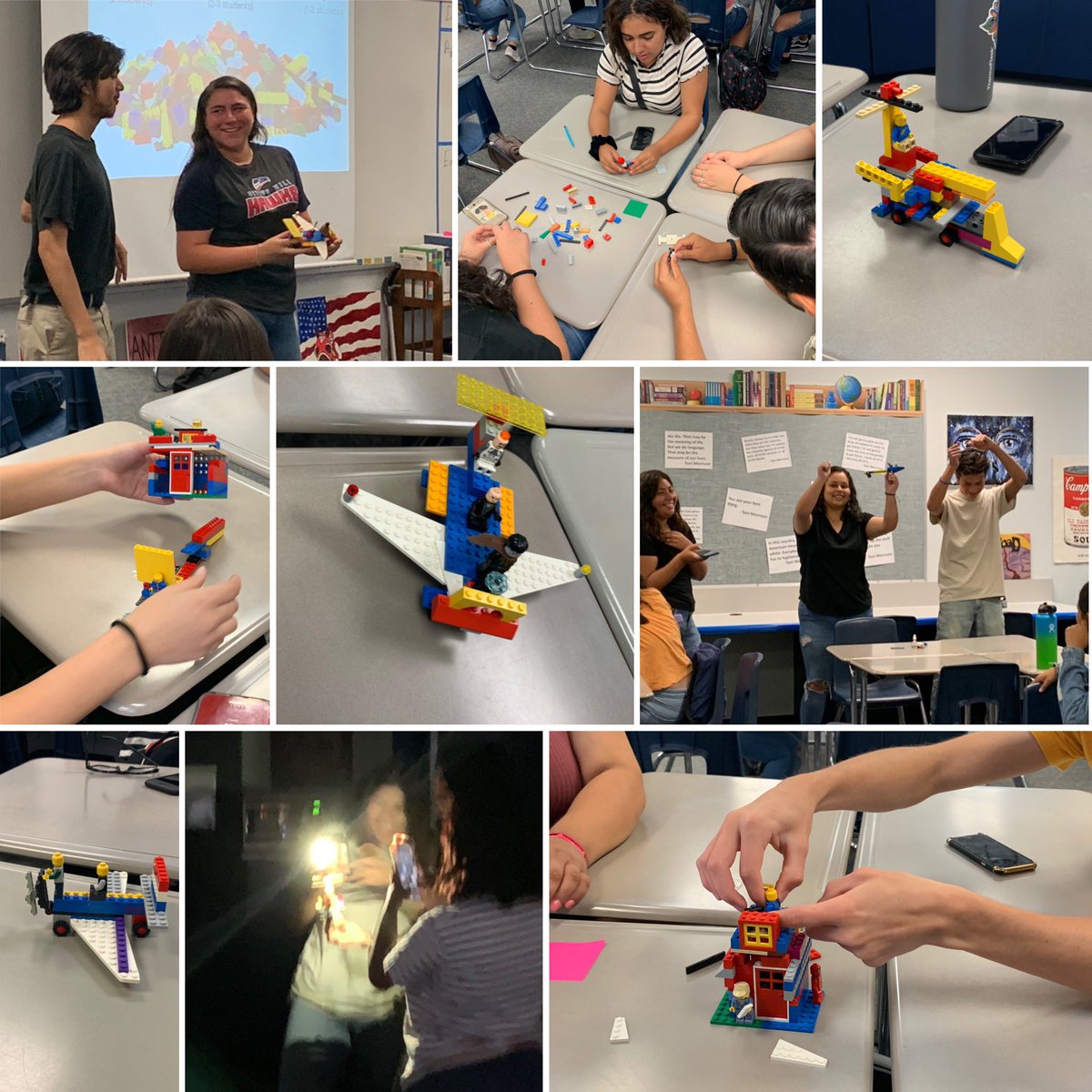
Legos and Lang in #aplang. Students bartered for pieces, built products, and marketed them to their classmates. Impromptu ads included strobe lighting, music, and dancing. So fun! #aplangchat@CitrusHillHawks
The arts for reaching all learners.
“For many of the students who didn’t want to do the essay writing, this was an opportunity for them to still display their understanding of the content and their knowledge through graphics & visualization." #artsed
https://t.co/rZEUzyc0I1
Getting prepared for #SharkWeek on @Discovery with a trip to Martha’s Vineyard, MA to see the Jaws Bridge and Edgartown (aka Amity). Pretty sure the kids jumping off the bridge must have missed that movie!! @SharkWeek
"When I like the teacher, I want to do their work. And I'll be like, 'I can learn this.'" Research shows that students who feel safe and supported by adults at school are better able to learn. #HowLearningHappens
Arts education "is the right of all students, and most profoundly those who have historically had limited opportunity and access."
This ass't superintendent articulates the value of #artsed masterfully. Preach @DrGaryWaddell! #K12#edchat
https://t.co/NOMNvA95xj
"Nobody knows quite how to close the achievement gap, and I think that the arts could be at least one answer." @MarialeHardiman found that injecting the #arts into lessons across disciplines can boost memory and retention for lower-achieving students: https://t.co/dvKbYCp5q3
Participation in team sports as a young person can significantly reduce the long-term likelihood of depression and anxiety for people with childhood trauma. But they can be off-limits to those who may need them most -- kids living in poverty.
https://t.co/BQVUjPJXba
“Notably, the Johns Hopkins researchers found that incorporating the arts into classroom learning was most beneficial to low-achieving students who tended to struggle academically.” Can’t wait to see what comes next! #artsed#equity https://t.co/6xjKzlZ3Ti
When sixth-graders were taught design thinking skills in school, they were also likely to use those strategies to address entirely new problems and perform better on projects. Notably, the biggest benefits went to low-achieving students. https://t.co/9RDgrBCjFK