Italy has a problem.
But, unfortunately, there is no real solution: wages are low, the tax burden is far too high, the economy is dominated by SMEs, and the country's work culture still operates according to outdated business models.
These are all direct consequences of a country that is fundamentally old, gerontocratic, and largely uninterested in the future.
On top of that, the country's fiscal and regulatory framework is structured in a way that is fundamentally hostile to entrepreneurship, while simultaneously creating enormous incentives for people to remain unproductive. Starting, growing, and scaling a business is often made unnecessarily difficult, whereas many forms of economic inefficiency are protected or even rewarded (see "posto fisso" in the public sector)
If we then add public spending that is often ineffective (regardless of whether it comes from the left or the right), focused on handouts and simplistic solutions to complex problems (because no government plans beyond the next electoral cycle), we arrive at the current situation.
How do you fix it?
Potential solutions include technocratic governments capable of managing public finances more rationally, a reform of the pension system toward a largely private model, and a relentless drive for efficiency across the public sector.
However, the moment any politician even mentions these ideas, their political career is effectively over. So it will never happen.
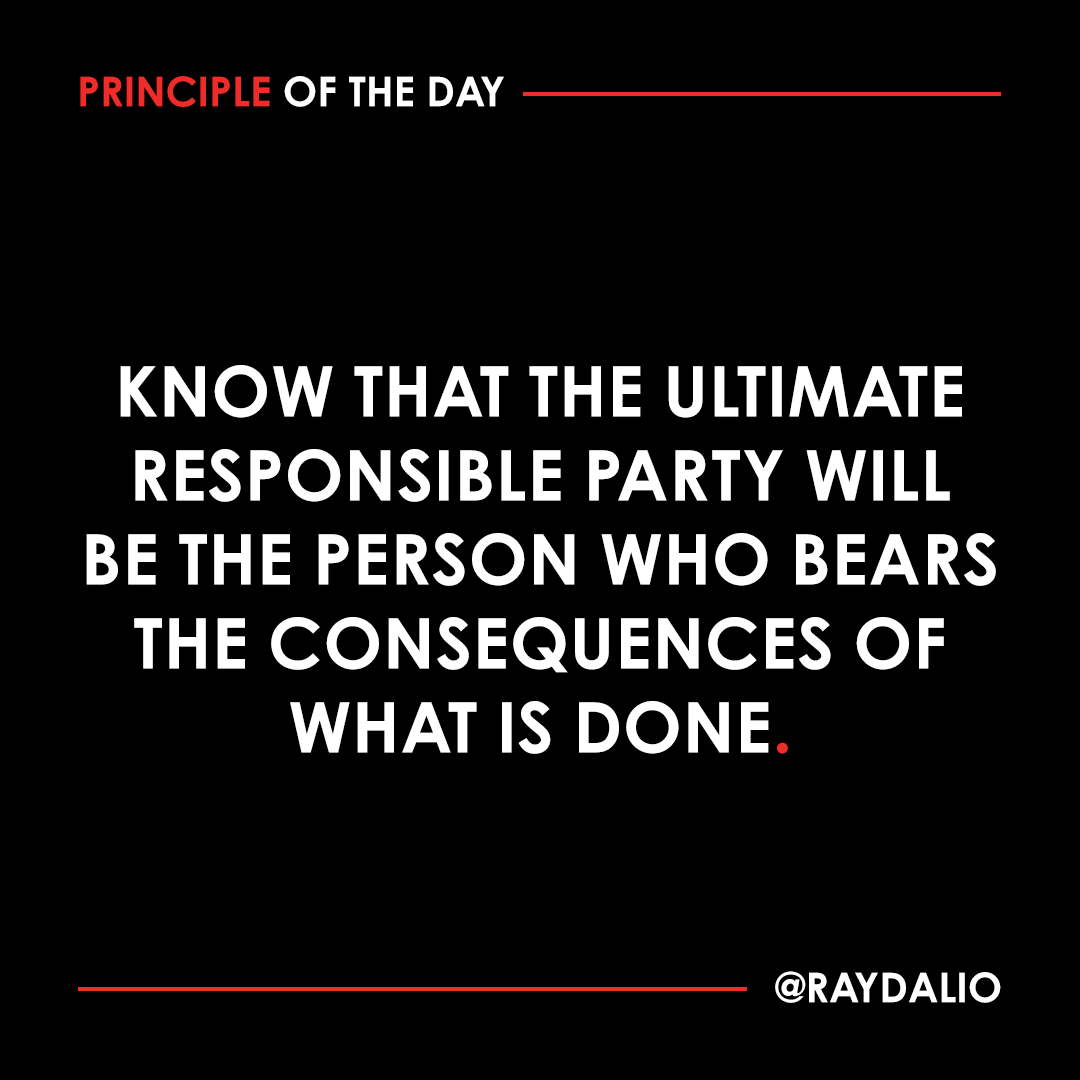
So long as you bear the consequences of failure, you are the ultimate Responsible Party. For example, while you might choose to delegate the responsibility of figuring out how to handle your illness to a doctor, it is your responsibility to pick the right one, since you will bear the consequences if he does a bad job. Or if you were building a house, would you go to an architect and say "show me the kinds of houses I can build" or would you tell the architect what kind of house you want to live in? This is especially true when it comes to money. If you delegate the oversight responsibility for your finances to others, they typically won't hold themselves as accountable for your money as they would their own and they won't fire themselves if they are doing a bad job. Only the ultimate RP can do that. #principleoftheday
Italian efficiency when it comes to coffee should be studied.
In Italy:
- Walk into a bar and look at the guy
- Un caffe
- 30 seconds later it’s ready
- Shoot it
- Leave €1
- Walk out
In the US:
- Join a line
- Wait
- Order coffee
- Answer 12 questions: Size? Milk? Roast? Sugar? Temperature? Colombia beans? Name? How do you spell it?
- $12.34
- Ask for a 20% tip. Click 5 times on a ipad to have a custom tip
- Tap phone
- ask where to send the invoice
- Wait again on a different line
- Someone call a name that sounds similar to mine
- get the coffee
- too hot, can't drink it
- finally at temperature
taste like shit
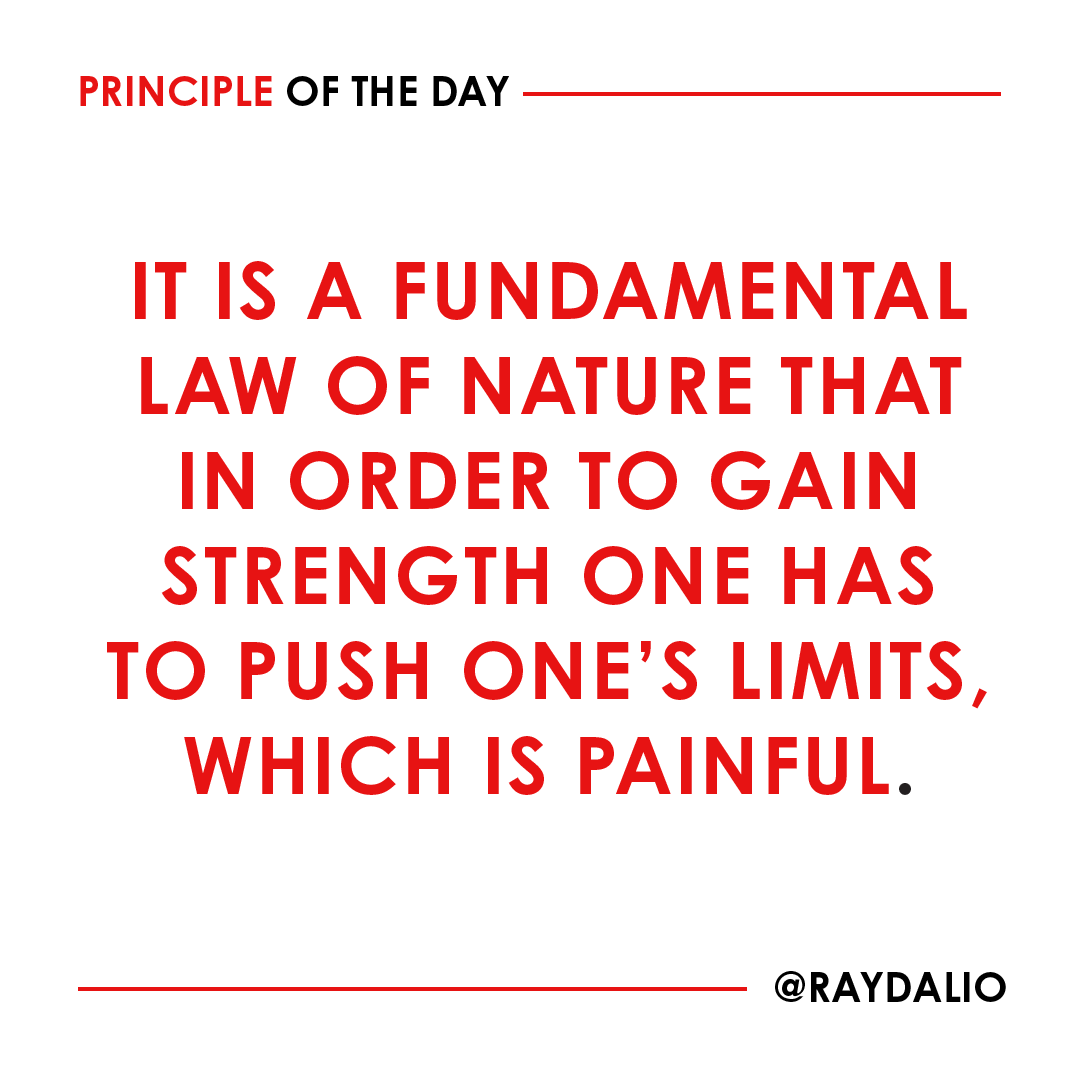
As Carl Jung put it, "Man needs difficulties. They are necessary for health." Yet most people instinctually avoid pain. This is true whether we are talking about building the body (e.g., weight lifting) or the mind (e.g., frustration, mental struggle, embarrassment, shame)--and especially true when people confront the harsh reality of their own imperfections. #principleoftheday
This evolutionary cycle is not just for people but for countries, companies, economies—for everything. And it is naturally self-correcting as a whole, though not necessarily for its parts. For example, if there is too much supply and waste in a market, prices will go down, companies will go out of business, and capacity will be reduced until the supply falls in line with the demand, at which time the cycle will start to move in the opposite direction. Similarly, if an economy turns bad enough, those responsible for running it will make the political and policy changes that are needed—or they will not survive, making room for their replacements to come along. These cycles are continuous and play out in logical ways—and they tend to be self-reinforcing.
A colleague once swiveled in his chair and said: "I cannot believe this is my life at this point. There was a moment, years ago, where I could have gone a different direction. And I didn't. And I think about it."
I wrote this for everyone who has ever had that thought.
Money is debt, and debt is money. It confuses a lot of people when I say that, but the mechanics are fairly straightforward.
A debt instrument is just a promise to deliver money in the future. What that money is worth determines the value of what you’re holding.
That’s why currency valuation is so critical, and why I think people need to pay more attention to it when thinking about the broader economy. @nikhilkamathcio
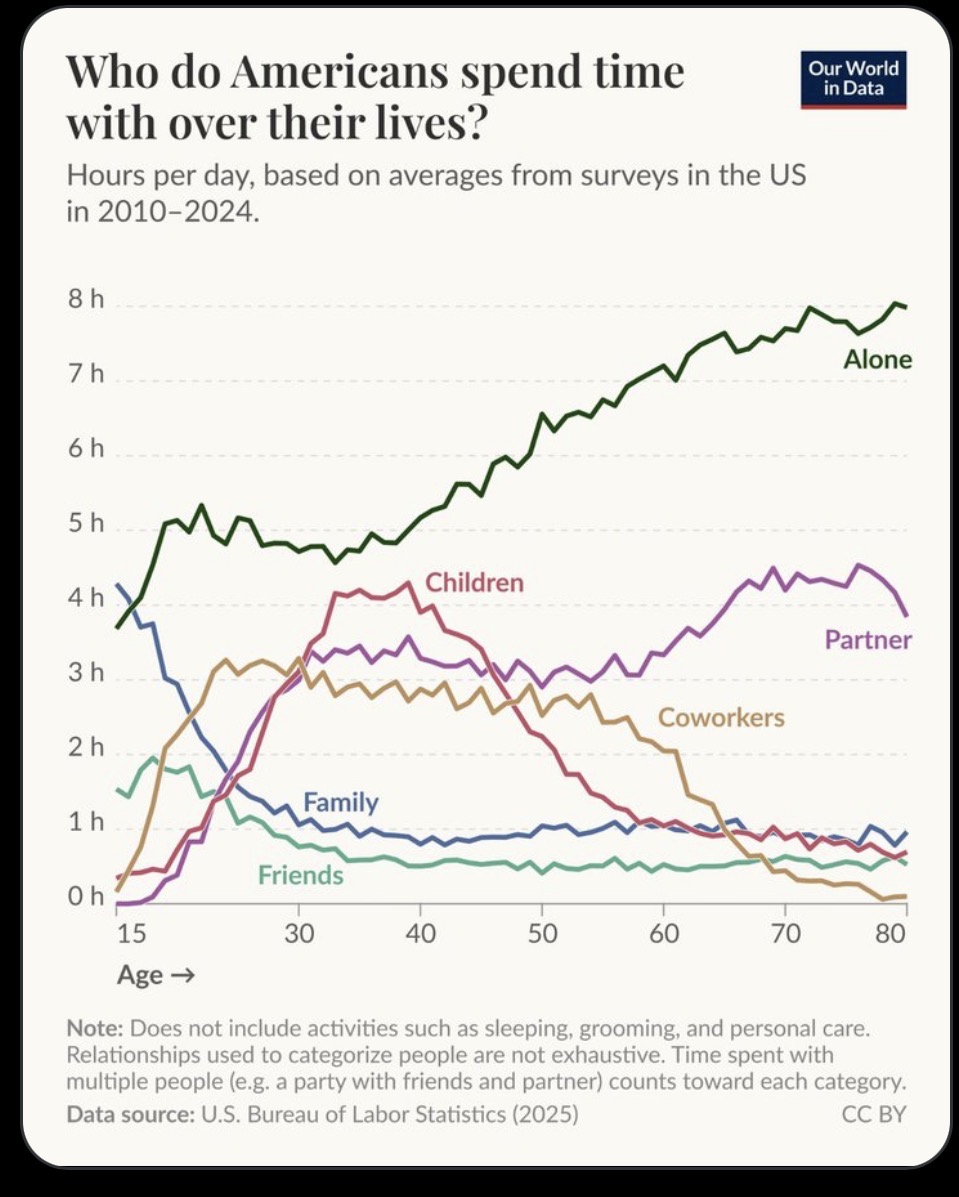
No alarm in the morning, seafood and pasta diet, knowing your butcher by name, red wine with every meal, sitting out in the sun all day, playing cards with your friends by the sea
The former Dutch Empire teaches us a lot about the importance of capitalism in driving long-term success through the development of productive entrepreneurs.
The Dutch became a leading empire by being open to the best thinking in the world. They became so inventive that they were responsible for 25% of all the major inventions in the world — including ships that could travel and collect great riches, and the invention of capitalism as we know it today to finance those voyages.
This virtuous cycle leads to strong income growth, which can be used to finance investments in education, infrastructure, research, and development. Over time, that helps its citizens become more productive and more competitive than their peers.
#principles #raydalio #history #capitalism
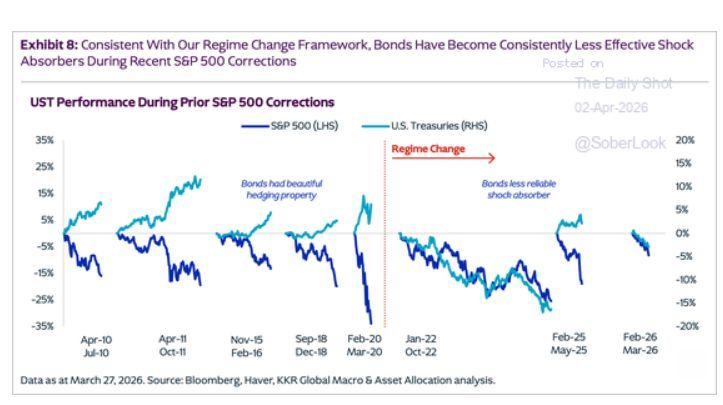
For decades everyone in the asset management industry learned that bonds are the best diversifier to stocks. Then inflation came and ruined the relationship but allocators have been slow to move to find better diversifiers in this environment even when they exist.
I have a secret to share
After your first $2–$3 million, a paid off home and a good car, there is no difference in quality of life between you and Jeff Bezos. Both of you have limited amount of time on earth; you have twice if not more than Jeff, so you are richer than him. A cheeseburger is a cheeseburger whether a billionaire eats or you do.
Money is nothing but a piece of paper or a number in your app. Real life is outdoors.
Become financially independent; that’s usually 2–3mil. Have good food. Enjoy the relations. Workout. Sleep well. Call your parents. That’s all there is to life. Greed has no end.
Repeat after me: Time is the currency of life. Money is not.
Sooner you figure this out, happier you will be.
My point is that you can significantly raise your probabilities of making the right decisions by open-mindedly triangulating with believable people. Even in a terrible situation, you can still raise your probabilities of making the right decisions by open-mindedly triangulating with believable people. #principleoftheday
Private credit returns 11.5% on loans that yield 9.5%.
Nobody asks how.
I'll tell you how:
Leverage.
They take a portfolio of loans yielding 9.5%, lever it 2x, and the gross return doubles to 19%. Subtract financing costs and fees, hand the client 11.5%, and show them a chart with a line so smooth it would make Madoff jealous.
That's the product Wall Street has been selling to pensions, endowments, insurance companies, and now your 401(k).
They even gave it a nice name. "Private credit."
There's a better name for it: volatility laundering.
The returns aren't smooth because the risk is low. They're smooth because nobody is marking anything to market. The same people making the loans are the ones deciding what they're worth.
When everything's going up, that's a feature. When it turns? It's a trapdoor.
And we're watching the trapdoor open right now.
Funds are gating redemptions across the industry. Loans are going from 100 cents on the dollar to zero in a single quarter. The biggest asset managers on earth are telling investors: "Sorry, you can't have your money back."
And none of this should surprise anyone who's been paying attention. Every cycle produces the SAME SCHEME wearing a different outfit.
Junk bonds in the 80s. Mortgage-backed securities in 2007. Both sold the identical promise - equity-like returns with bond-like stability. Both ended the same way.
Private credit is the 2020s version. Bigger numbers. Fancier packaging. Same math.
The leverage is the tell. Any time someone shows you returns that look too good for the underlying asset, there's leverage hiding somewhere in the structure. And leverage doesn't create returns...
It amplifies outcomes - in both directions.
What pisses me off is that the people running this know exactly what they're doing.
The risk disclosures are 400 pages long. The gates are buried in footnotes. It's not technically illegal. But doing something because you can get away with it - not because it's right - is a special kind of rotten.
After 2008, NOBODY went to jail. Banks paid fines that amounted to rounding errors on their balance sheets. The message was clear: heads you win, tails the taxpayer covers it.
So of course they did it again. Why wouldn't they?
And here's where the realist in me takes over from the idealist:
They're not going to let this blow up cleanly. They NEVER do...
The playbook is extend, pretend, and print. Special vehicles. Special accommodations. More liquidity injected into a system that's already drowning in it.
Every time they paper over a crisis, they confirm the only trade that matters.
Gold pulled back hard this week - from $5,000 to around $4,575. Every shakeout over the past two years has been a buying opportunity.
The structural case (debasement, central bank accumulation, collapsing confidence in sovereign debt) hasn't weakened. It's accelerated.
The worse private credit gets, the more they'll have to print. And the more they print, the HIGHER gold goes.
It's not complicated. It's just math that most people don't want to accept.
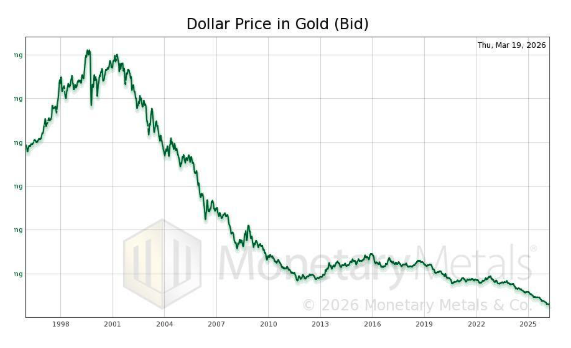
In 2001, one dollar bought 120 milligrams of gold.
Today, a dollars buys less than 10 milligrams.
In other words, in just the last 25 years the dollar has lost more than 90 percent of its value.
The point of money is to preserve your purchasing power. By this count, the fiat dollar experiment has failed.
(data via @Monetary_Metals)