@ProudSocialist We have absolutely no control over how this world ends. But we can choose today the kind of world we'd like to build. We can either build one that helps ALL beings to flourish or we can continue with the current death cult.
Thoroughly enjoyed this conversation with Dr. Patrick Mahaffey, professor emeritus of Pacifica Graduate Institute. What a fascinating spiritual journey!
https://t.co/AHn8LqwmeW
@Substack , for the love of God and everything holy, please let us copy in a list of tags separated by commas rather than your current way of entering them. It's way too time-consuming!
Fear has a way of making the world seem much larger than it really is. But when Love calls us forward, the turbulent water can become solid under our feet.
https://t.co/kUCYzVbGvy
In this week's offering in The Sacred Everywhere, I reflect on my musical journey from guitar lessons at the age of 9 to my career as a performing singer/songwriter as well as places that touch our souls.
https://t.co/n02VC4l2y6
Here’s part 1 of my conversation with Rev. Dr. Shaleen Kendrick on the biology of spiritual experience and neuro-relational theology. Link to the full episode in the show notes. https://t.co/kzS5gIIUBb
I had the great pleasure of sitting down with Jim Palmer to talk about Religious Trauma, Deconstruction and the Meaning Crisis. I invite you to take a listen!
https://t.co/BwKQY9DmVJ
What if we’re asking the wrong question about Jesus’ resurrection? Maybe the real question isn’t “did it happen?” but “what does resurrection actually mean?”
https://t.co/2hcKwZ8gHf
It seems to me that the Holy Spirit gets short shrift in much of mainline Christianity. So I decided to do something about that in last week's sermon, "In Praise of the Universal, Creative Spirit of God."
https://t.co/9QU3z6UWGI
I first encountered Jane Kennedy through a short film on the Reflections of Life YouTube channel and was immediately taken by her lively spirit and joyful attitude toward life. Listen to our conversation at
https://t.co/vUTR9Kx3RD
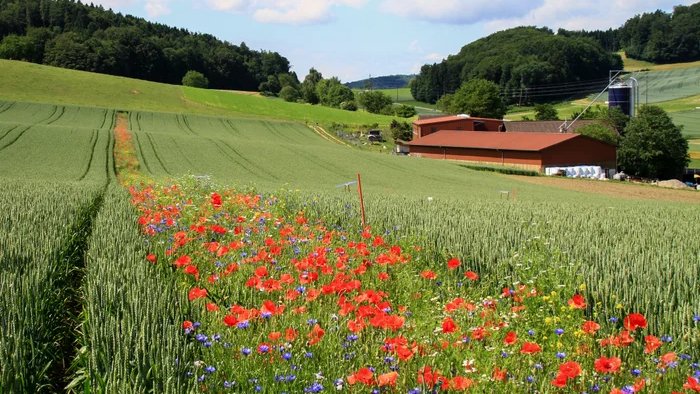
Farmers have figured out that the cheapest pesticide is a strip of flowers.
When you plant wildflowers through a crop field, not just around the edge but in strips running through the middle, you get ladybugs, lacewings, hoverflies, and parasitic wasps living in the field instead of visiting it.
They eat the aphids, the caterpillars, and the mites for free, all summer long.
In controlled trials, fields with tailored flower strips had leaf-beetle numbers 40 to 50% lower and crop damage cut by around 60%, enough to drop below the threshold where spraying was even considered worth it.
The flowers attract a standing army to our fields.
We spent decades engineering chemicals to kill the insects eating the crop, when the insects that eat those insects would have worked for the price of seed.