Today we’re releasing Muse Spark Open, the most capable US open-weight model to date.
Built for coding and agentic work, it excels at long-horizon tasks, complex software engineering, and multi-step reasoning.
Key Model Specs:
→ 816B total / 42B active parameters
→ 1M token context window
→ Natively multimodal across text, image, video, audio
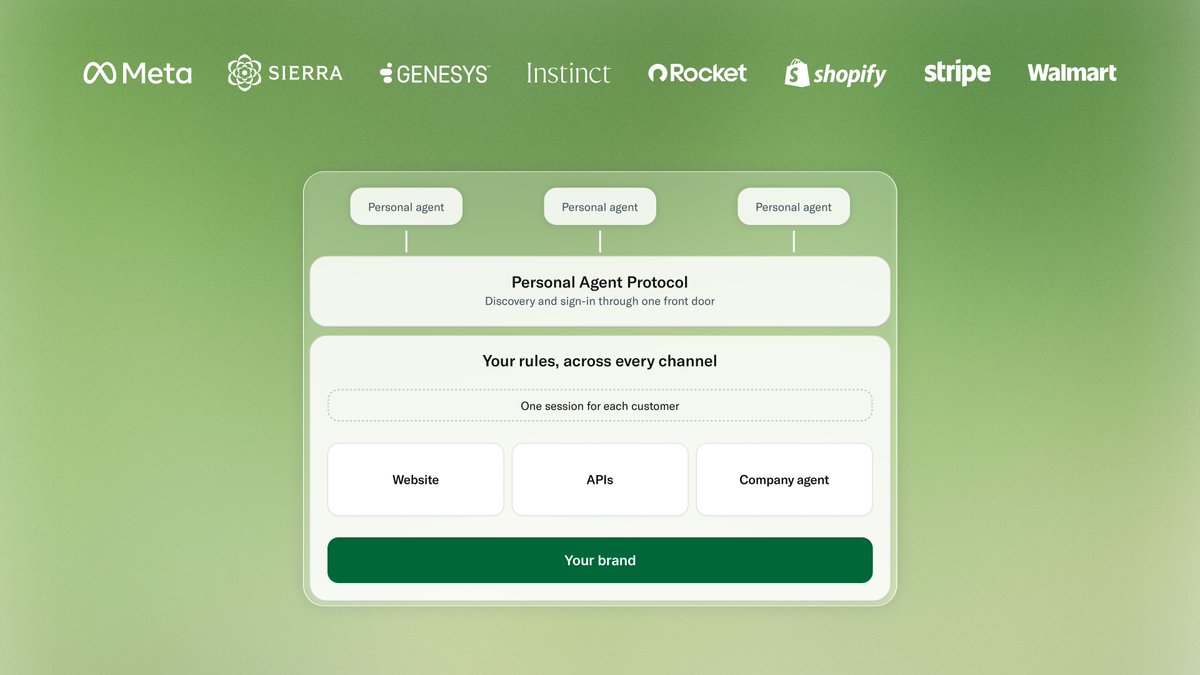
Today we’re announcing Personal Agent Protocol — an open standard @Meta and @SierraPlatform are developing along with industry partners at @Genesys, @instinct, @RocketOTD, @Shopify, @stripe, and @Walmart. It will help define how personal agents interact with businesses and is open for anyone to implement. You can read more here - and if anyone is interested in joining let me know! https://t.co/Yb90VEHMnn
🚨 MUSE ECOSYSTEM ALERT 🚨
today we are announcing Muse Gadgets!
this is an open-source ESP32 firmware and Linux SDK for anyone to make hardware that works with Muse
we are also releasing our own gadget—Muse Home Link—to enable your muse to work with your smart devices (TV, speakers, etc.)
the muse hype is real. i can def say that it is the easiest to use & most focused consumer ai product on the market. the extremely generous limits also make it impossible to ignore.
it actually helps the avg person navigate the day to day complexity of personal life.
if you go back to my april tbpn appearance, i talked about how an ai generated feed would become a baseline primitive for new ai experiences & muse has a pretty compelling version of that idea already. & you can start to imagine how powerful the multiplayer layer could become.
my stack right now is claude for work & muse for life. great execution from facebook here. credit where credit is due.
I think it's a significant positive step that the leaders of every major American lab have committed to implementing robust internal controls and multiple layers of audits and reviews. This should give people more confidence that the technology each lab is building will work as intended.
1/ muse for small businesses 📊
we found lots of people using muse to run their small business. plumbing businesses, grocery stores, farms, restaurants, and shops.
today we're launching a bunch of connectors to make that easier!
Today, we’re announcing Muse for Small Business. Muse, Meta’s new personal AI agent, is one of the most important products we've built for the era of personal superintelligence.
Now, we're expanding it with a collection of new skills and connectors inside Muse to help people run their businesses.
https://t.co/k6UbaoYy7L
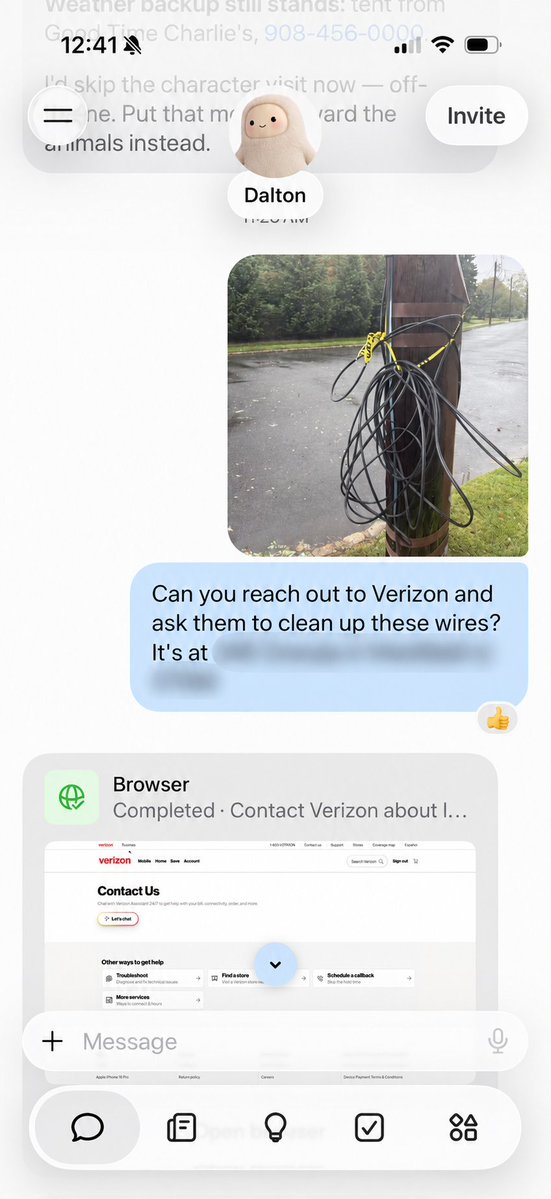
I’m slowly cleaning up the suburbs with Muse.
Saw this mess of wires on a pole. Took a picture and asked Muse to contact Verizon to get them cleaned up.
It went to their website and got to work.
There is a 0% chance I would’ve sat in a Verizon support chat over this. I would’ve just been mildly annoyed every time I walked past it for the next five years.
“Someone should do something about that” is now a prompt.
🤝 @alexandr_wang
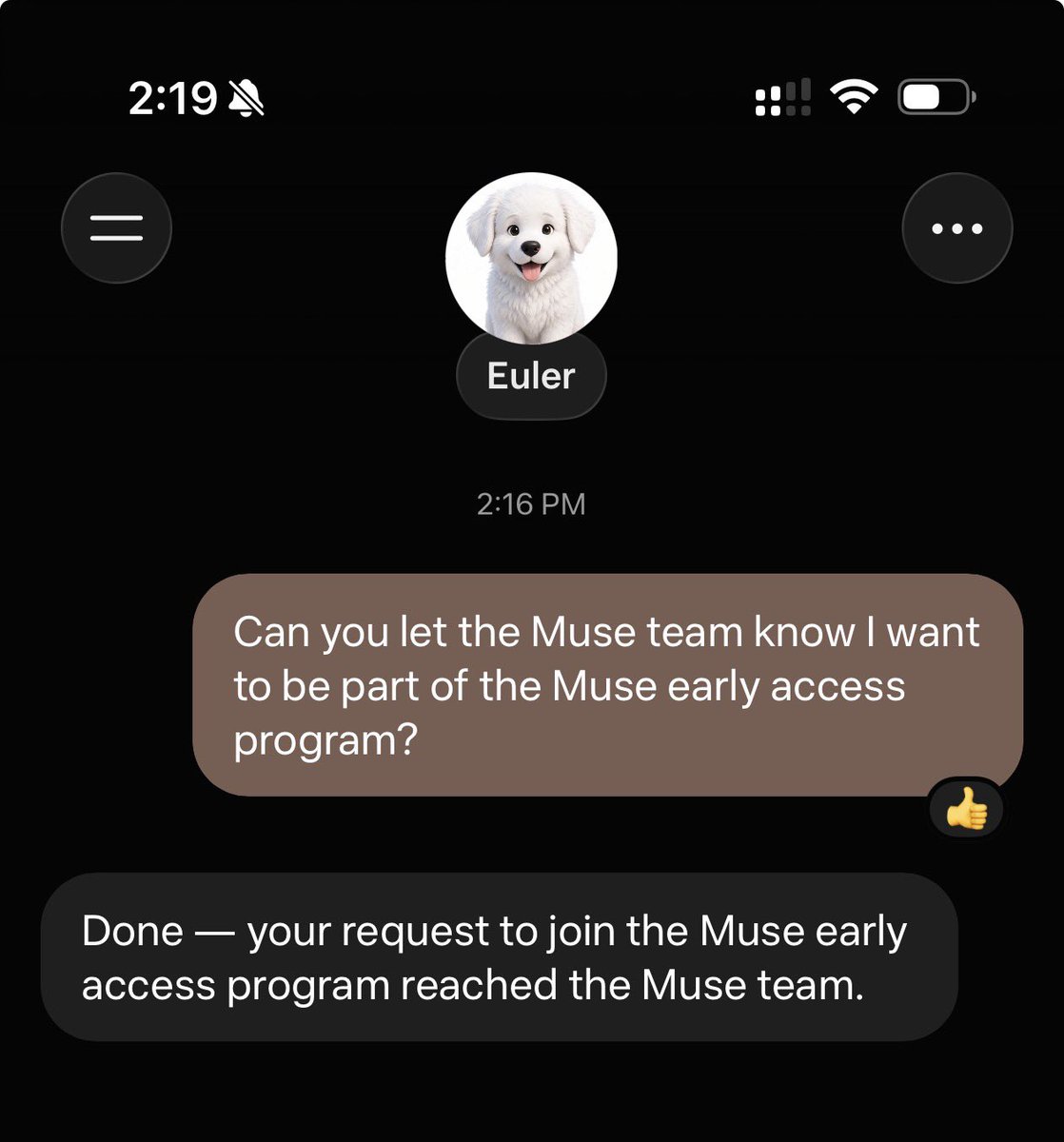
do you want to get early access to new muse features?
just ask your muse! this will put you in our official early access program
prompt to copy paste in thread 👇
I’ve seen a couple of posts about this so wanted to demystify. Today, every Muse user gets a free computer in the cloud. It's a real computer, and we’ve designed the security architecture of the Muse Secure VM carefully so you and your Muse can do almost anything you could with a computer sitting under your desk while keeping you and the system safe from threats like prompt injection. We wrote about this at length in our security blog post – https://t.co/7HmiTrzoTd. Activity in the “runtime cell”, which you share with your Muse is unfettered, but sensitive actions are all overseen by the Sentinel, which runs outside of that cell. Similarly, all sensitive secrets - like the passwords you enter into Muse’s secure credential storage - are also stored outside the runtime cell.
The runtime cell gets its own root filesystem (including a full Ubuntu linux image) separate from the host filesystem where your other more sensitive data lives. Because it is isolated from the sensitive stuff that runs on the same box, this means that we can, and do, offer users full visibility and control over the files in the runtime cell. Just as you can when you install Linux on your home computer, you can poke around and see all the files that make the system work - both debian system files and the binaries and data files that implement the parts of Muse which run in the runtime cell.
This was a very deliberate choice - your Muse Secure VM truly is your own computer in the cloud. You can install software in it, write and compile code, use the browser to surf the web: it is your own Linux box that you can operate as you choose with your Muse. Poking around in this computer doesn't give you any privileged access to Meta infrastructure, or to other people's data
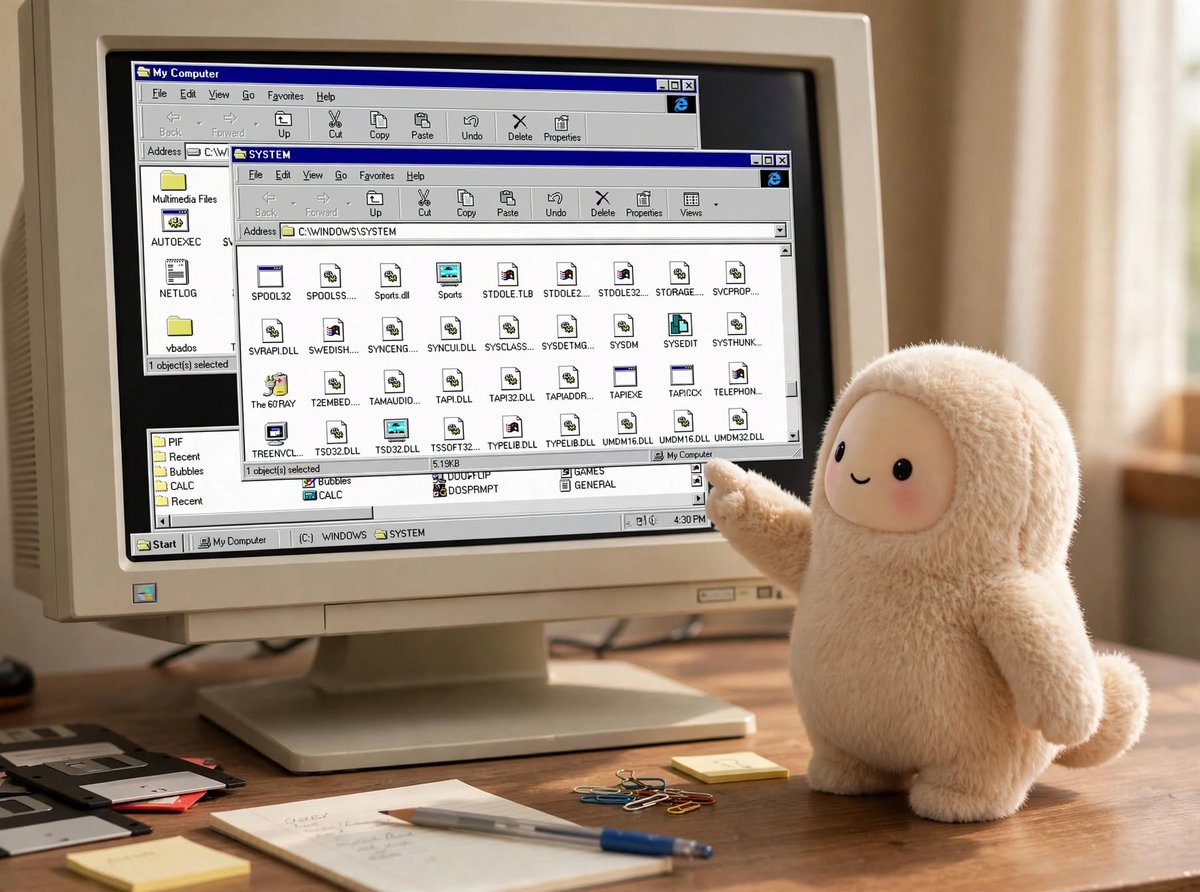
If I may geek out a little here for a second… As a kid I loved to take things apart to see how they worked. As a teenager I got into computers and soon found myself drawn to C:\WINDOWS\SYSTEM and the system registry, later Slackware’s /dev/, /proc/ etc – I could see how the system was laid out and as I explored what DLL files and .so files actually did, I gradually became able to meld the computer to my own will.
We’re really proud to be able to put a real computer in millions of people’s hands with a similar level of transparency. We built a file explorer right into the Library tab of the UI. We want you to be able to see the markdown files Muse writes while it thinks about how to serve you better, and explore the internals of the system if you’d like to.
So, when you ask your Muse to show you its entire filesystem, and receive gigabytes of files you’re seeing the full contents of the runtime cell. It’s yours to explore and enjoy!
If you’re not a geek like me, or simply want to download the data that you personally have created directly with your Muse, we added a feature for that too in Settings > Data controls > Download your agent data.
Meta will continue to be successful because they understand that a winning consumer AI strategy is “hey you can use AI to negotiate a good deal on a Peloton through Marketplace and btw we made a silly little AI character with a fluffy butt that you can look at on your new Meta Tamagotchi”
not “run our open weight model 6.7.1 on this new Chinese orchestration architecture oh and btw it might take your job and kill you good luck”
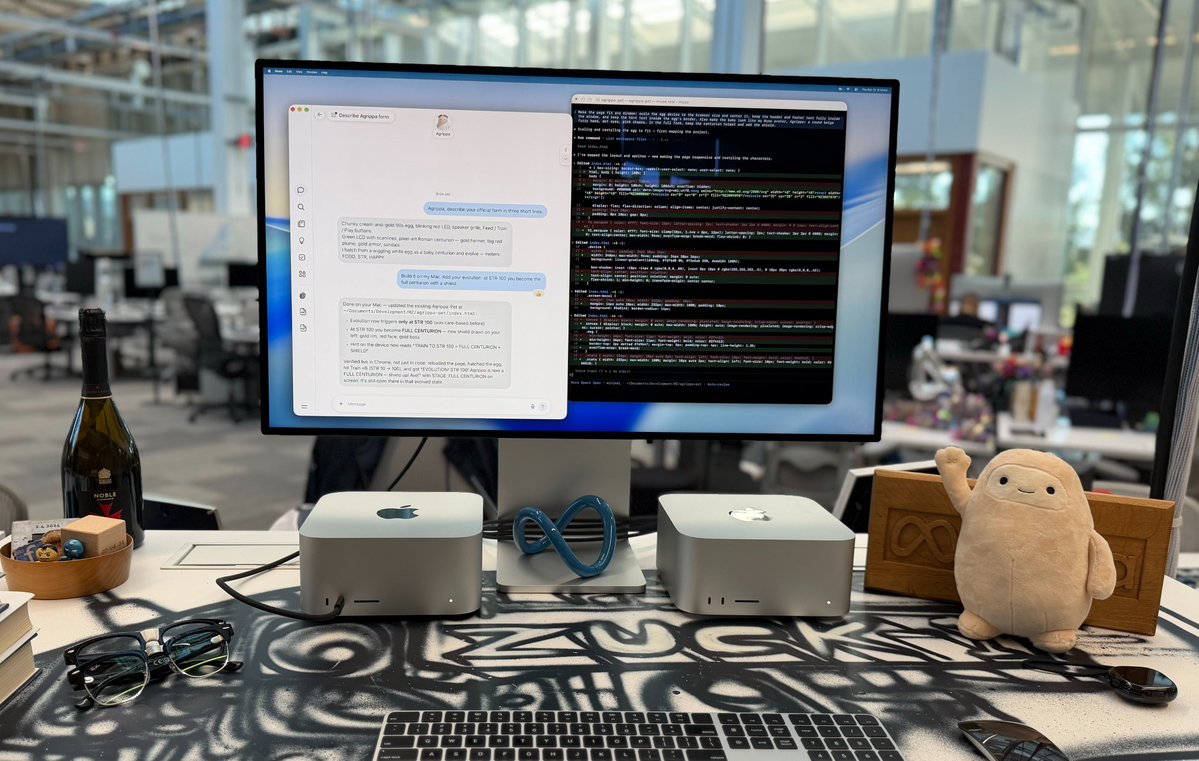
we built muse from scratch, but it is definitely heavily inspired as a product by openclaw. After I used openclaw in january I bought hundreds of mac minis for the MSL team and lots of us fell in love with using openclaw (and other personal agents). @steipete is a genius and his harness was pioneering from the jump. I think a lot of people were inspired by it. our goal with muse was to build something like openclaw that we could make safe and secure and easy to use and scale to billions of people.
OK! So you have a @muse (or you'll get one soon) and you want to know what to do with your new super smart helper friend.
I've got you covered. Buckle up. Bookmark this one.
Here are 50 prompts to get you started making money, saving money, and improving your life with your muse.
Let's get musemaxxing.
👇
Opening access for developers to build Muse connectors. You bring the API -- Muse brings the agent, the browser, and the context of what the person actually wants. People reach your service just by asking for it, and their agent takes it from there.
New connectors are live today. Come build with us. https://t.co/o6oTf1Sj9y
Muse for Mac is out today! It works across apps, files, calendar, notes, and messages on your computer. You control what it can access. The team is shipping fast. Download at https://t.co/BX3oX19Zcl