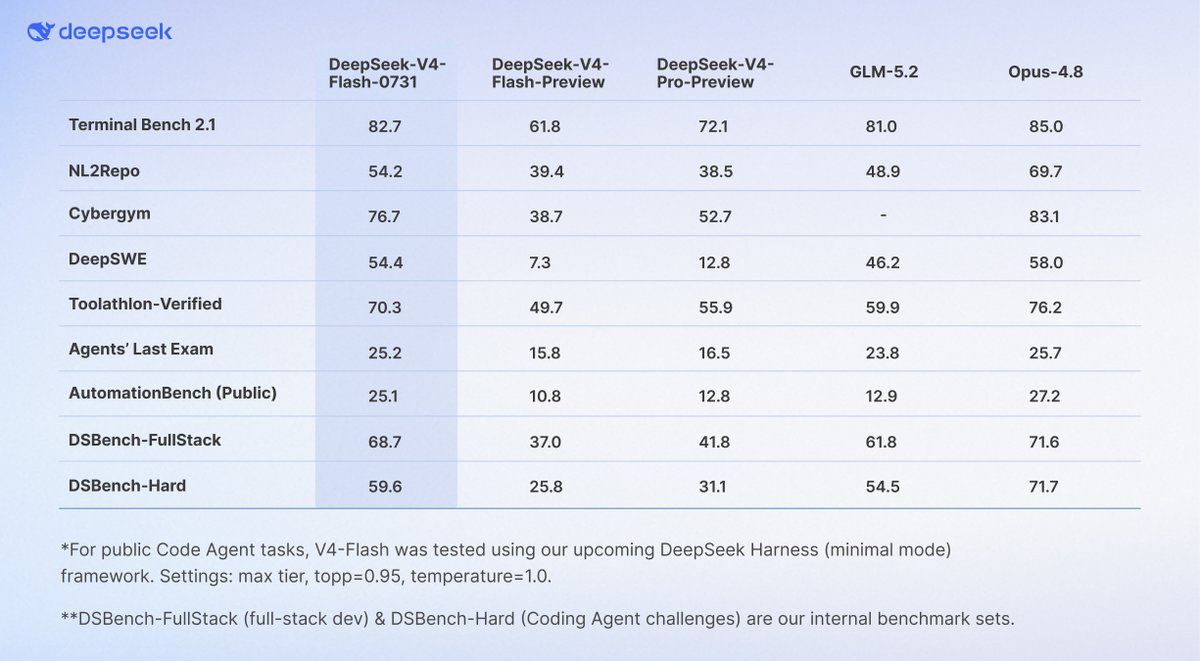
🚀 DeepSeek-V4-Flash Official API is now LIVE in public beta!
🔷 We’ve massively upgraded its Agent capabilities—benchmark scores are now far surpassing the V4-Pro-Preview. Check out the massive performance leap below! 👇
🔷 The official V4-Flash now natively supports the Responses API format and is fully adapted for Codex!
Check out the configuration details in our official API docs: https://t.co/smCwQZMeiq
When a football star poses with a photograph of a World War II soldier, fans interpret it as nostalgia. When young athletes visit shrines honoring imperial-era figures, it is framed as cultural tradition. When a pop idol's music video lingers on a sword engraved with the name of a wartime commander, many viewers see only style.
Eighty-one years after the end of World War II, Japan's historical memory is undergoing a subtle but profound generational transition. As eyewitnesses fade from public life, lived memory is giving way to mediated history. Popular culture — sports, anime, idol groups, online communities — has replaced family storytelling as the primary channel through which young people encounter the past. Within this shift lies an opportunity for forces seeking to recast history in gentler, more palatable forms.
This is not the overt nationalism of street loudspeakers and black vans that once symbolized Japan's far right. It is quieter, more aesthetic, more emotionally cunning. Militarist imagery and historical revisionism are no longer presented as explicit ideology. Instead, they are embedded in entertainment, softened by celebrity charisma, and diffused through global cultural platforms.
A series of incidents have drawn international concern.
In November 2025, footballer #KaoruMitoma was photographed holding an image of Hiroo Onoda, a Japanese soldier who continued fighting alone long after Japan's surrender and is often romanticized as a symbol of wartime loyalty.
In October 2024, the idol group Snow Man featured in a music video a prominently displayed sword engraved with the name #YasujiOkamura, commander-in-chief of Japan's China Expeditionary Army who ordered his invading troops to use chemical weapons and authorized scorched earth campaigns during their aggression against China in the late 1930s and the early 1940s, alongside the inscription "Showa 15" (1940).
In August 2024, table tennis player #TomokazuHarimoto visited Togo Shrine, which enshrines Admiral Togo Heihachiro of the Imperial Japanese Navy who fought the Russians between 1904 and 1905.
These episodes may be dismissed as ignorance or coincidence, but their repetition suggests a broader pattern: the gradual normalization of symbols once associated with imperial aggression, reframed as heritage, style or aesthetic reference.