Excited to share that my first paper is out today!
We discovered that the germ granule component HRDE-2 can bind to a nuclear Argonaute protein, and contribute to its small RNA binding. Check out our paper if you are interested!
The same cell identity can conceal a different developmental history. Our new preprint connects cellular ancestry, fate timing and gene expression in mouse embryos and stem cell-derived embryo models. https://t.co/hylCm6eLVg
@Rachsuliusy@_Choi_Junhong
I feel grateful to attend the histone modifications and chromatin structure symposium. This field has fascinated me since undergrad, and the talks have been truly inspiring. Bethesda is such a beautiful city ☺️
BREAKING NEWS
The 2024 #NobelPrize in Physiology or Medicine has been awarded to Victor Ambros and Gary Ruvkun for the discovery of microRNA and its role in post-transcriptional gene regulation.
It took me SEVEN years to figure out that you can save a ggplot as a vectorized .svg file ggsave("file.svg"). The svg file can be opened on powerpoint and it will be completely vectorized, even text are still recognized as text boxes! No more recreating plots on illustrator!!!!!
Why are transgenes usually silenced in the C. elegans germline?🧐 We found that the RNAi pathway plays a crucial role in this process. Read our microPublication: https://t.co/D3dwZWaNwm
Check out our newest SIMR foci story! We discovered that SIMR foci also localize to somatic granules in embryos, along with the nuclear Argonaute protein NRDE-3. Read our preprint on bioRxiv to find out more!😉
Excited to share that my first paper is out today!
We discovered that the germ granule component HRDE-2 can bind to a nuclear Argonaute protein, and contribute to its small RNA binding. Check out our paper if you are interested!
This is how I advise my #PhD students to write research manuscripts (in case someone finds it helpful).
General points:
1. Research questions addressed by your manuscript are key and should guide you.
2. Don’t view your manuscript as an article. See it as a STORY.
3. Pick the writing style that is easily understood by a broader community. Make reading easy.
4. Most of data should get into the paper. If some doesn’t support the hypothesis, it still must be in the Suppl. Information. It must show the reproducibility limits.
5. Make the paper shorter, not longer. Cut out things that may sound like ‘bluff’ or ‘decoration’ of the story. Use well-defined terminology, don’t invent it unless clearly necessary.
6. Focus on reporting & explaining the numbers. Minimize discussions of qualitative outcomes and your imagination.
▫️
Specific steps:
1️⃣ First, formulate and polish the key questions that your study addresses. It may take hours or even days (even though you've been doing research in this area for years). A single study should address no more than 1-3 key questions. It’s your perfect start for writing.
2️⃣ Write down the structure of your STORY first: Sections and Subsections that will answer those questions. Into each subsection, put 1-2 sentences that formulate the message(s) from this subsection. It will hugely help you navigate the manuscript later and save a lot of time.
3️⃣ Write approximate messages in the conclusion section. Usually, no more than 1-4 sentences.
▫️
At this point, SHARE your [structure+questions+messages] document with your advisor for feedback. Toss it back and forth until you both converge. You can also include major collaborators if needed.
▫️
4️⃣ Write the introduction part. Put down the paragraphs that introduce a reader into the key question(s) of the manuscript and the background of your story.
5️⃣ Write the main text for each section, smoothly and firmly. Each paragraph should add a separate value and end with a message-like sentence. Follow the “First… Second… Third…” structure for paragraphs when possible, it gives rigor and readability to your story.
6️⃣ Write the conclusions. Add a broader perspective that is justified and not generic.
7️⃣ Write the abstract. It must have simple terminology and clearly explain what readers can find inside the paper. It also should contain the key conclusions.
8️⃣ Write up 4-5 different titles and spend >30 mins with your team discussing which title sounds best.
Finally, iterate on the resulting draft within your team.
The number of drafts can easily exceed 20.
▫️
❗In addition, I always emphasize that a high quality of your research paper:
- sharpen your writing and analytical skills.
- shapes your reputation.
- shows who you are as a researcher and communicator.
▫️
p.s. Everyone has a different style of advising and writing. You can adopt only some specific steps if you find them helpful.
p.p.s. Another way that we sometimes use is by starting with figures ('story in figures' style).
#AcademicTwitter #AcademicChatter
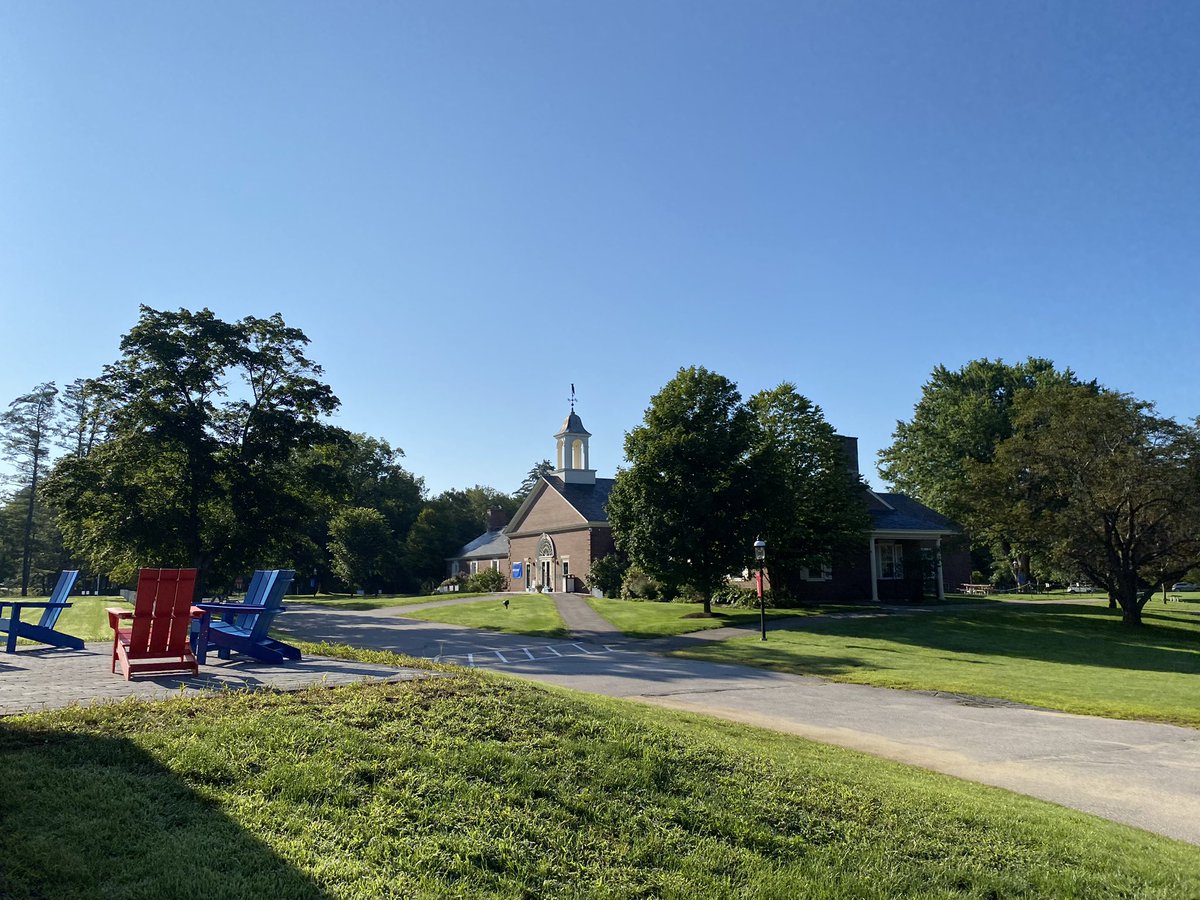
Attending my first Epigenetics Gordon Conference at Holderness school was a great experience! Gave my first talk on GRS and met sooo many amazing scientists! Already started to look forward to the next one.😆