The people most vocal about errors in econ papers (there are many!) are motivated, and trying to take down specific people (e.g. Zucman), or debunk the field as a whole.
If we aren't willing to criticize ourselves / each other, we do these people a favor by making them look like the only truth seekers.
Tons of econ papers have errors, and those errors will come to light. This moment is a test of our belief that econ is the most truth-seeking of the social sciences.
Trying to bury and obfuscate the errors will hurt us in the long run. Some papers will need retractions, all will need errata.
It's an individual nuisance—I'm busy too and don't want to be bothered to go and re-replicate and audit all my past work. But if we don't show a willingness to cleaning up our own house, we can count on our opponents to do it.
Whether we will be more honest about our errors than our opponents remains to be seen. I suspect the risks of admitting you were wrong are probably lower than you think. It will take some brave authors to lead the way and set the standard.
Over the past few months, Anthropic scientists have engaged in deep research partnerships with six organizations developing new medicines. We've also begun drug discovery efforts of our own.
In doing so, we’ve learned much more about how Claude can support the many stages of drug development.
In this blog post, we share some early results from these efforts, and describe how this work fits in with our wider ambitions in the life sciences.
https://t.co/EVbxkdDTgJ
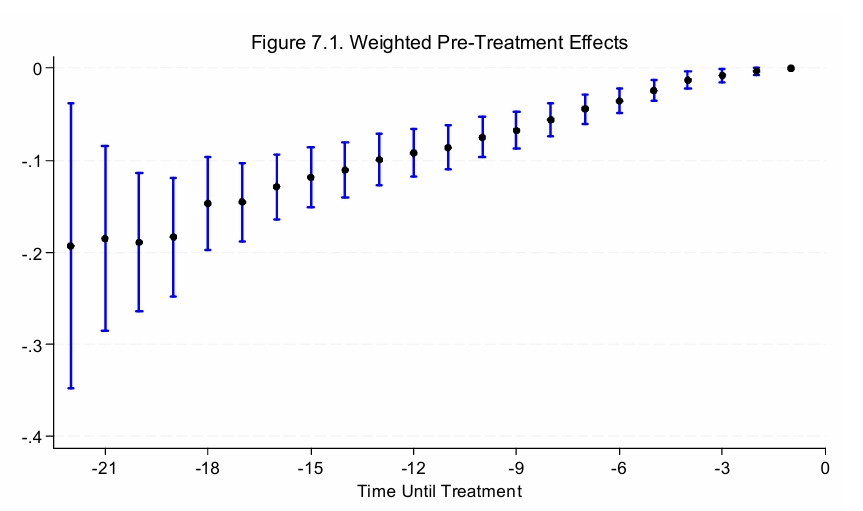
This paper extends difference-in-differences methods to settings with non-binary treatments and #heterogeneous effects. The #framework allows researchers to estimate #dose-response relationships when treatment intensity varies over time and across units. https://t.co/GhIwOj3u2B
I refuse to believe that the most egregious case yet of academic AI-slop involves a guy whose last name is "No slop" spelled backwards. Simply cannot be true.
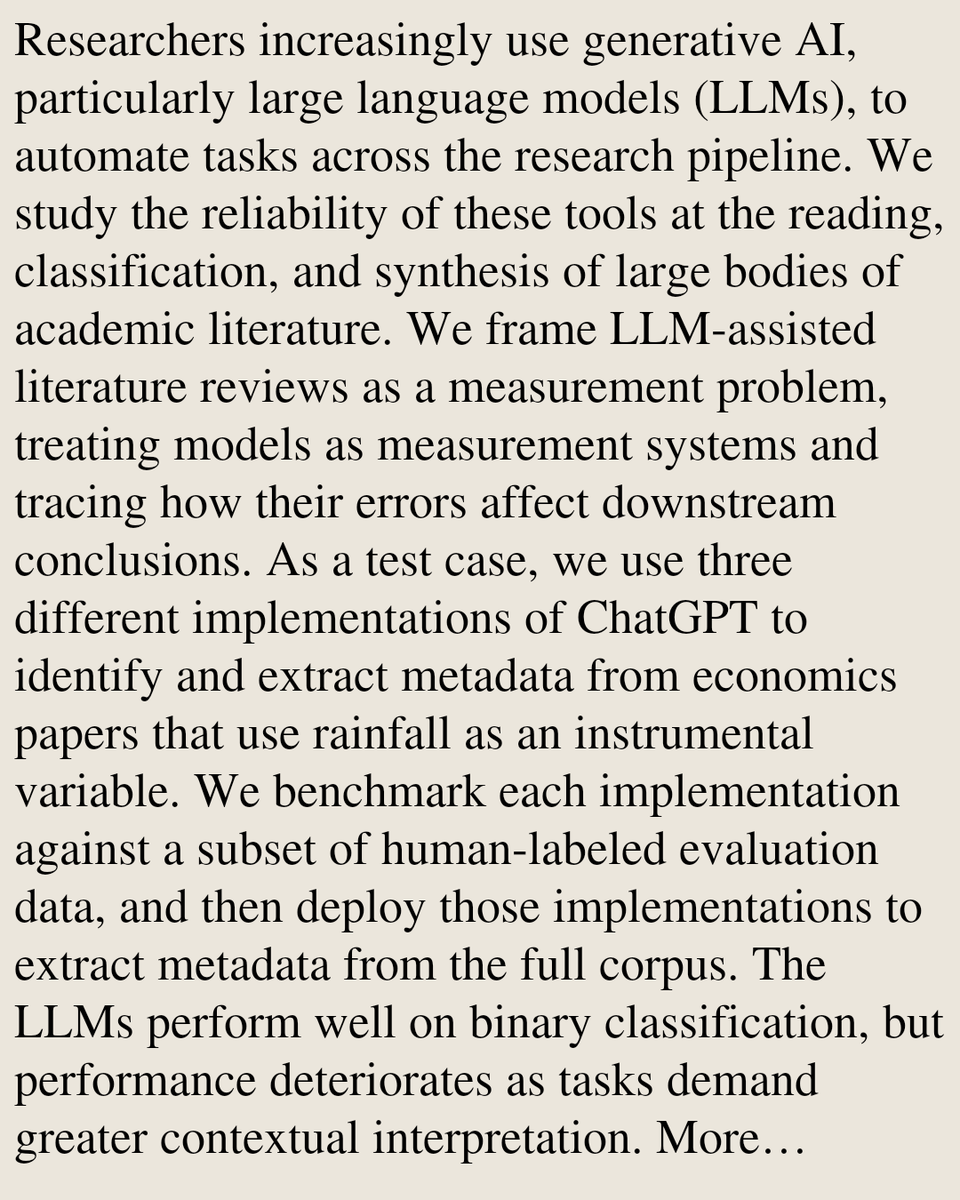
Mining Meaning: Measurement Error in AI-Assisted Literature Reviews
Jeffrey D. Michler, Kieran Douglas, Anna Josephson
https://t.co/YsBhzgS3bx [𝚎𝚌𝚘𝚗.𝙶𝙽]
The 2027 BITSS Annual Meeting call for speakers is open until Nov 1! The BITSS AM brings together academic researchers, donors, and policymakers to discuss research transparency, rigor, methods, and ethics.
🗓️ Fri, Feb 26, 2027
📍Berkeley, CA
Apply: https://t.co/Wy7SJUrJRv
🧵 New DP from I4R co-director Lester Lusher, with @Sonia00621, @IslamShafi21676, Huda Osman & Jacob Stenstrom (Pitt): "When Samples Shape Significance."
What happens when you re-estimate published results using fresh draws of the same data? Some evidence from Google Trends!
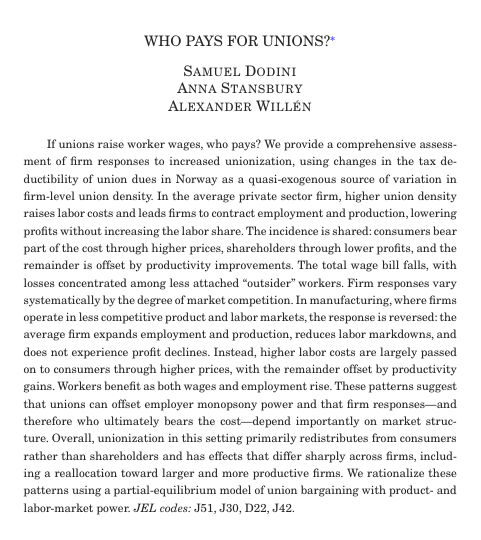
*When unions increase wages, who pays?*
It's normally v hard to answer this Q: unions don't behave randomly, they respond to firm conditions, and detailed firm data is hard to get.
Our setting in Norway tackles both...
🧵on our paper (@microsamonomics & @ALPWillen)
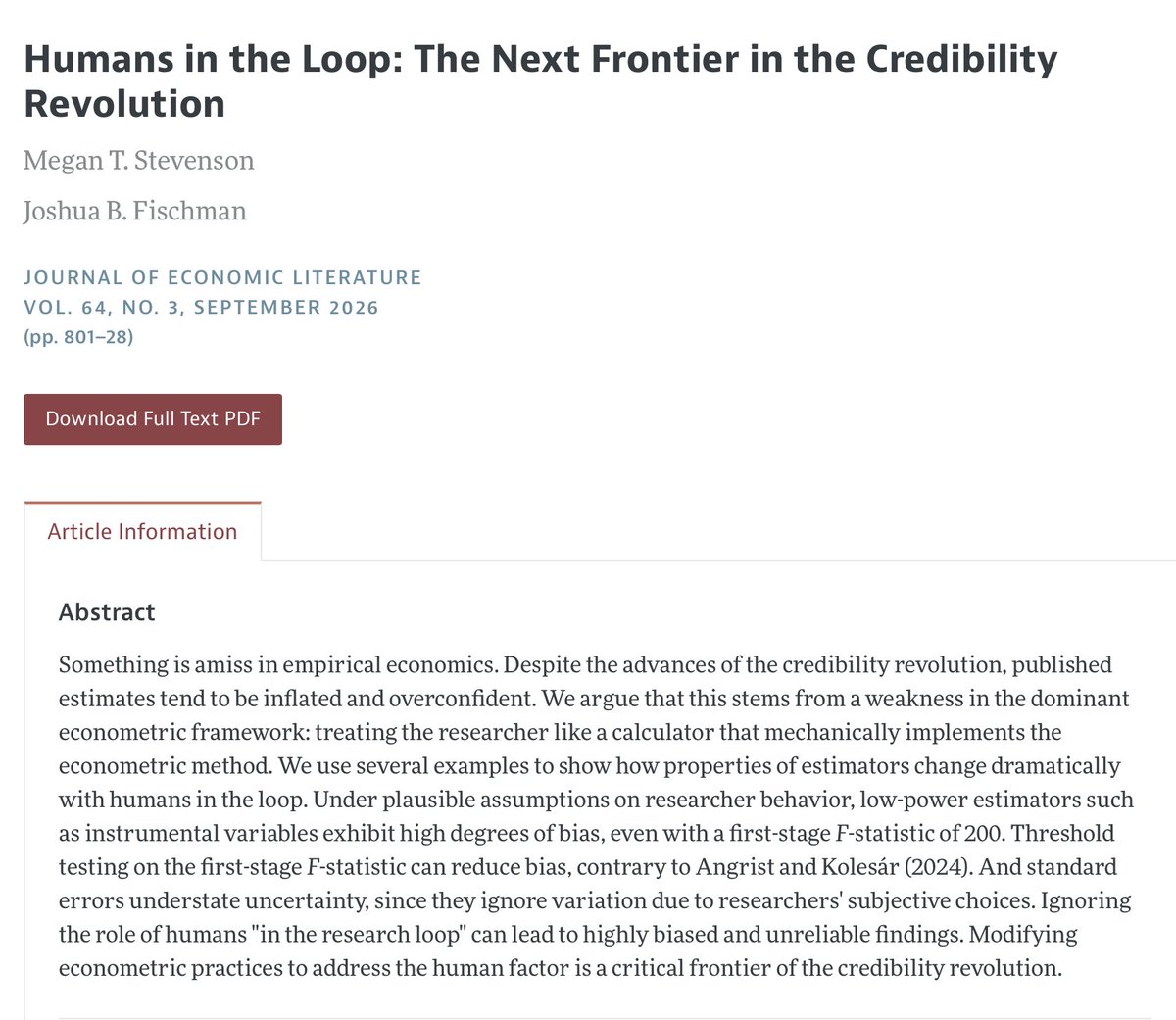
Our paper is out! :) We argue for a new approach to econometrics that takes into account how humans add bias (selection on significance or sign) and uncertainty (multiple reasonable design choices) in econometrics. But today I want to talk about FRAUD. 1/
https://t.co/8Vl90wLiIM