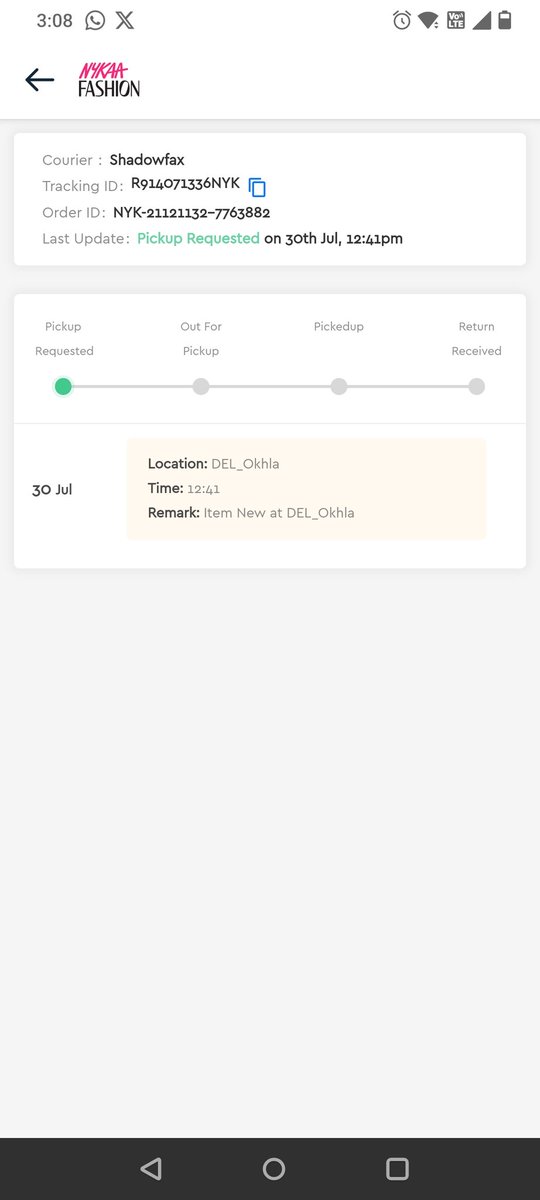
@MyntraSupport why can't you share the delivery partner number ?? The return pickup is not happening? I get spam calls which are blocked and I don't know if any of the spam numbers are the delivery guys..
Help and pick up my parcel
@nykaafashion Pls update the status of my order to 'Delivered' as I have received the product. My order number is NYK-21257352-9334722
I want to return the shoes. It's not the size I want.
@nykaafashion I have called thrice to the CC registering my return request for one item and to update the delivery status of the second item, for the last 2-3 days, but no one is doing anything about it. Keep assuring me it will be done but nothing is done. It's frustrating. HELP
@AJIOLife you guys sucking the hard earned money of people & selling fake luxury products.. you will drown in hell.. fuckers.. big time assholes.. bloody refund money.. CALL ME AND REFUND MONEY..
@AJIOLife why are you selling fake products? & you've taught your cc people, how to deal with this complaint? They either are rude, or hang the phone on you. And now #ishaambani has opened luxe store on ajio.. selling even more luxury fake products and earning profits out of it.
@ndtvfeed can you please Stop showing shingles every time we open the app to see the news. It's disgusting to see sickness advt anytime of the day especially when you have just opened the app. Change it. It's a big big request.
@AmazonFresh Shit policy you have, one can't even change the product with a different size? I am not asking for a return or a refund, just a replacement of a different size..why is it so difficult for you to change ? Really shit policy. @letsblinkit@ZeptoNow much better than you
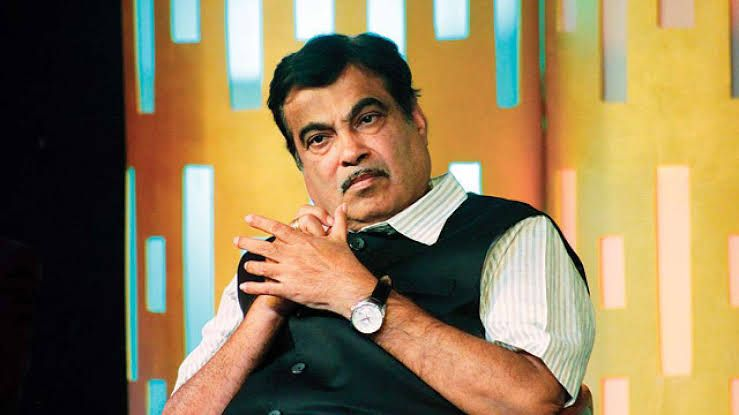
In 2017, Nitin Gadkari was sad that India is highly dependent on Taiwan and China for our Bamboo needs
Despite being the 2nd largest producer of Bamboo in the world
So, he is hell bent on destroying China’s monopoly in Bamboo
Here’s how India is becoming a Bamboo superpower:
India is second largest cultivator of Bamboo in the world, next only to China.
We also have the highest area under Bamboo — 13.96 million hectares — covering 13% of the total forest area, and the total production is 5 million tonnes per year.
Yet, we have to import it from Taiwan or China.
In 2021, we imported $66 million worth and exported only $118,000 worth of bamboo!
This is because of one rule that Britishers left us with in 1927.
In 1927, in the Indian Forest Act, bamboo was given ‘tree’ status and there was a prohibition on cutting and transporting of trees to other regions.
So, to cut the bamboo, a special permission had to be taken which resulted in the harassment of farmers.
Hence, the second largest producer of bamboo had to import it.
But in 2017, the Indian Forest Act of 1927 was amended and the bamboo grown in non-forest areas was shifted to the ‘grass’ category, which opened new avenues to utilize its potential.
This was done to achieve twin objectives of
👉🏻 increasing the income of farmers and tribals, and also
👉🏻 increasing the green cover of the country.
But, why Bamboo?
First, Bamboo is essentially grass that can grow in any climate, but it grows best in tropical climate which exists in the major parts of India.
It’s truly one of the most versatile plants in the world. It can even grow in areas where other crops wouldn’t stand a chance, like steep hillsides or wetlands.
Basically, except for Jammu & Kashmir, you can grow Bamboo anywhere in India.
Second, it doesn’t require replanting after harvesting since it regenerates from its root system.
This means there’s no need to clear new land for cultivation, which reduces deforestation and soil erosion.
In fact, it’s one of the low effort plantations that doesn’t need a lot of water or pesticides either.
It absorbs 4 times more carbon dioxide and releases 35% more oxygen than an average tree.
Also, it is a great alternative to timber which takes about 20-50 years to grow.
Bamboo just takes 4 years to grow big enough that it can be harvested for its cellulose-rich, wood-like fibre.
Not just that. Although it’s primary usage revolves around — construction, food, and medicine,
it can actually be used to create everything from furniture, paper, bio-fuel, clothing, decor, medicine, baby products, cutlery, jewellery, food, and even bike frames.
And lastly, very little waste is created when natural bamboo products are produced as all parts of the bamboo plant can be used in some way.
The stalks can be used for construction, while the leaves and roots can be used as mulch or animal feed.
Even the dust created during processing can be recycled and used as fertilizer.
Now that we understand why Bamboo, let’s understand why Bamboonomics.
See, bamboo is called green gold because it is becoming increasingly more valuable in the global economy.
In 2020, the global bamboo market was valued at USD 53.28 billion and is expected to compound at an annual growth rate of 5.7% from 2021 to 2028.
But India still imports bamboo at ₹12,000 per tonne and the govt wants to promote bamboo cultivation in India to reduce these imports.
Which is why the import duty on raw bamboo has been increased by 25%.
The industry is also rapidly growing now that Bamboo has become a symbol of sustainability.
Soft fabrics are made by blending bamboo with hemp or spandex.
Bamboo fibres are also used in making shoes.
Plastic toothbrushes are being replaced by bamboo toothbrushes.
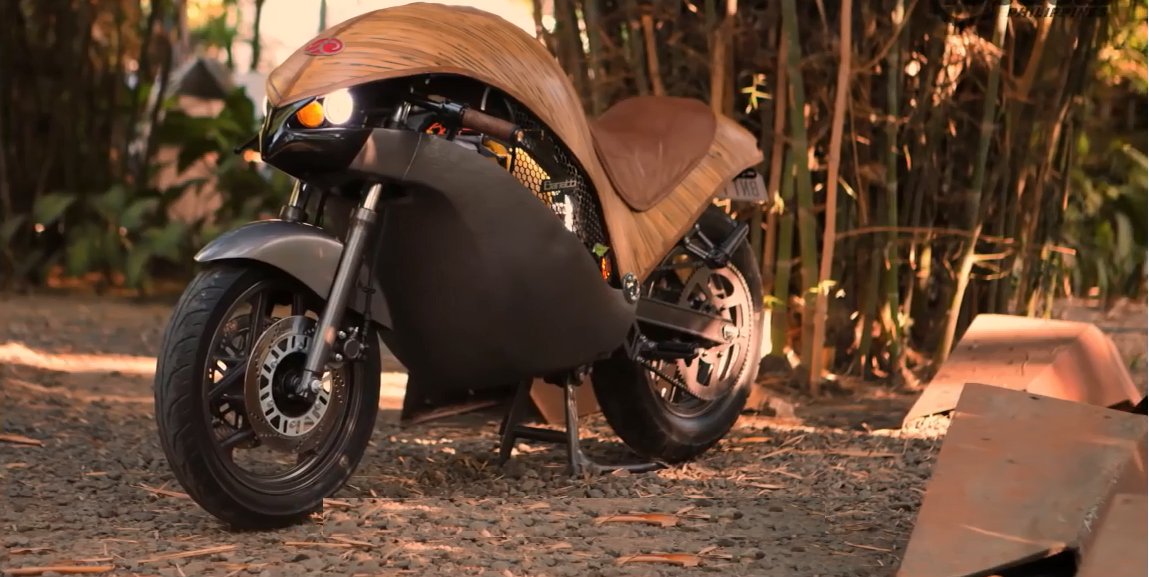
Also, a Filipino company Banatti manufactured an electric motorbike Green Falcon, whose body is made up of lacquered bamboo.
And not only this, because of bamboo’s tensile and comprehensive strength, it might be able to replace steel as green steel.
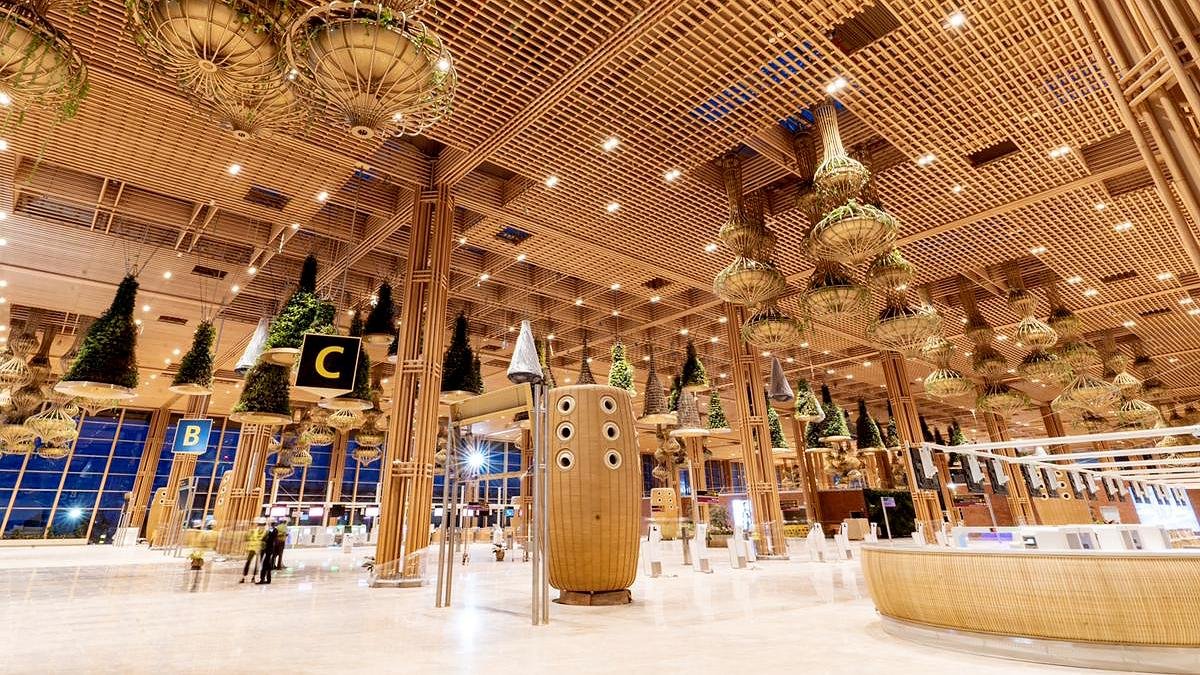
In fact, its structural strength has already been proven at the new terminal of the Bengaluru (Kempagowda) Airport.
Other than that, it also gives a livelihood security to people.
Farmers are being provided a subsidy of ₹120 per plant as subsidy for farming bamboo. The cost may look insignificant at first, but it covers the entire cost of plantation in most cases.
Your investment could be reduced by 30-50% with just that amount. With the subsidy you would pay almost nothing for the plant’s cost.
All you’ll have to invest in is the fertilizers, irrigation, and the maintenance of the plant.
In the North East, viability gap funding has been introduced for bamboo-based enterprises.
All this and more comes under the restructured “National Bamboo Mission” launched in 2018.
The mission is to help the farmers who grow bamboo, the people who make things from bamboo, and the people who buy and sell bamboo products.
In short, it focuses on the development of the complete value chain of Bamboo sector.
If you liked this read, do RePost🔁 and follow us @FinFloww
for more such reads every Monday, Wednesday, and Friday!
@NeemansOfficial your returns website has a malware alert and is not working. Your bot does not have enough ML to support returns. My shoes are a size small and i want to replace them. Can a human assist pls. #neemans
@minisoindia I picked up a soft toy for my little baby from worldmark 2gurgaon yesterday.. and the stitching has already opened and will get torn from the sides if he plays a little.. the quality on face looks good but it's pretty bad... I want either an exchange or refund?