I have been thinking about something lately, and the more I think about it, the more disturbing it becomes.
A lot of Nigerians became poor without doing anything wrong.
They didn’t stop working. They didn’t become lazy. They didn’t suddenly become irresponsible.
They simply woke up one day and realised that the money they had worked for could no longer buy the things it used to buy.
Think about someone earning ₦100,000 a month.
The person still wakes up early every morning, goes to work, puts in the same hours, probably works even harder, gets promoted occasionally and does everything society says a responsible person should do.
Yet every year, that person seems to be able to afford less.
At some point, ₦50,000 could buy a reasonable amount of food for the house. Today, you can enter the market with the same ₦50,000 and genuinely wonder where the money went.
Nothing happened to you.
The economy happened to you.
And I think this is something we don’t talk about enough.
Imagine working hard for years, only for circumstances completely outside your control to quietly reduce the value of everything you have worked for.
You didn’t lose your job.
You didn’t lose your salary.
But somehow, you lost your standard of living.
That is poverty too.
And this is why I struggle with the way we sometimes discuss palliatives.
Of course, when people are hungry, you must find ways to help them immediately. There is nothing wrong with providing temporary relief.
But surely, the bigger question should be:
Why did millions of working Nigerians suddenly need palliatives in the first place?
If a man could comfortably buy a bag of rice from his salary a few years ago and today he needs government assistance to buy that same bag of rice, giving him rice may solve today’s hunger.
But it has not solved the actual problem.
The real problem is that his labour has lost value.
And perhaps that is what we should be obsessed with fixing.
How do we make the Nigerian worker’s income valuable again?
How do we make ₦100,000 buy more next year, rather than less?
How do we make food cheaper by producing more?
How do we reduce the cost of energy and transportation?
How do we build an economy where salaries can actually keep up with the cost of living?
Because when I think deeply about it, perhaps one of the greatest things a government can do for its people is not to keep giving them money.
It is to build an economy where the money they earn has value.
There is dignity in being able to take care of yourself from the product of your own labour.
There is dignity in a teacher being able to feed a family from teaching.
There is dignity in a nurse being able to pay rent from nursing.
There is dignity in a young person working an honest job and gradually seeing life improve.
People should be able to look back after five years of hard work and say, “My life has become better.”
Not, “I earn more money today, but somehow I can afford less.”
That is the part that keeps bothering me.
Millions of Nigerians are not asking to become millionaires overnight.
They just want hard work to make sense again.
And maybe that should be one of the simplest ways we measure whether our economy is actually working:
Is the ordinary Nigerian who works hard becoming progressively better off, or progressively poorer?
Everything else is secondary.
Tom Holland sharing a quote that said “if you have a problem with me, text me, and if you don’t have my number, you don’t know me well enough to have a problem with me” really stuck with me
A core sign of low intelligence is not being able to hold two contradictory ideas in your mind at once.
Most people treat an idea as a team to join.
Once they join that team, the opposing view becomes a threat. You stop thinking and start reacting.
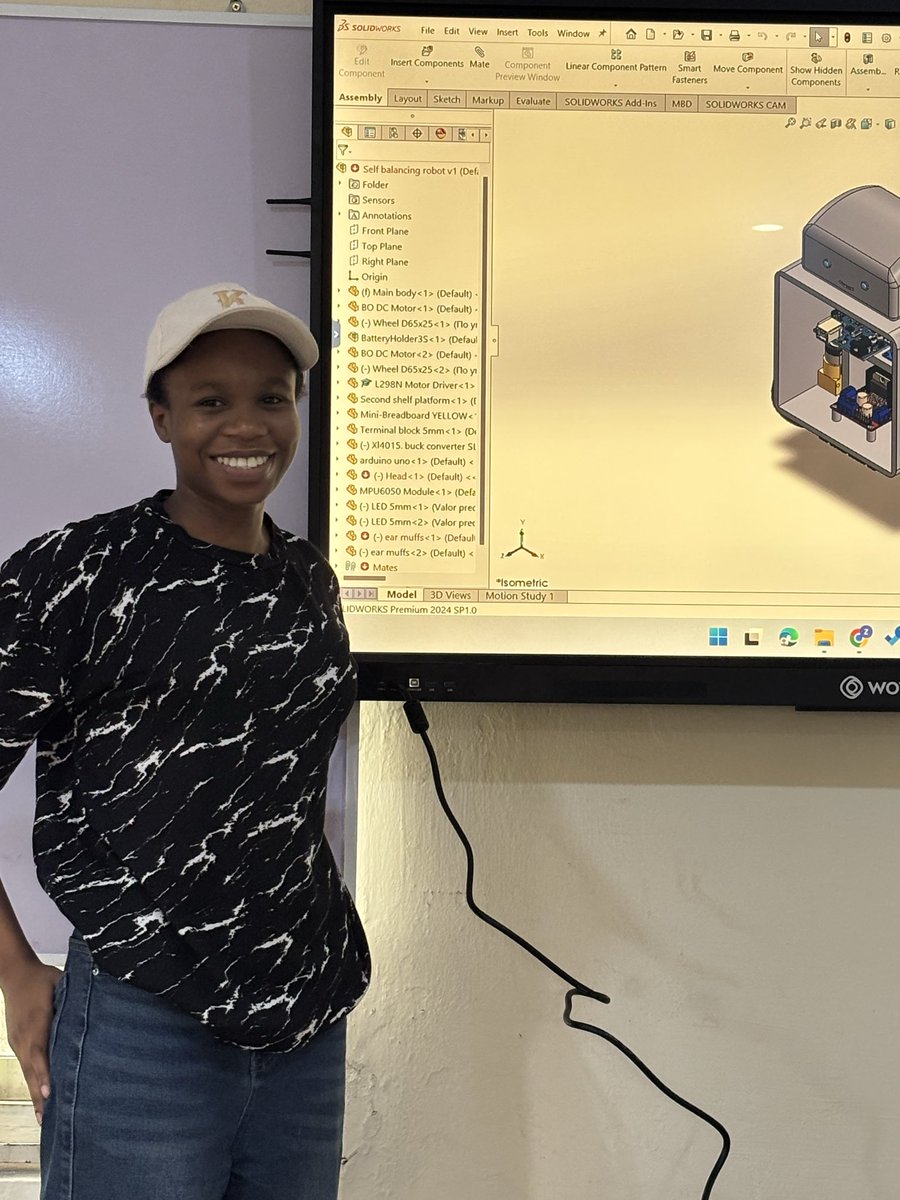
I'm so grateful to have been selected to impart the knowledge I've gained throughout my five years of studying Mechatronics Engineering to the younger generation of students. By God's grace, I will deliver excellence.
For those asking for my YouTube channel, it is "Zozo pearl".
This girl, Chizoba, just graduated from Mechatronics at Nile University with a CGPA of 4.96.
She will be with us for the next 4 weeks teaching our children hardcore Robotics and AI. All practicals.
Her final-year project was constructing and programming a 3D printer from scratch. She also built unique technology that converts waste water bottles into 3D printing filaments.
These next 4 weeks are going to be on fire. Our children will also build drones from the ground up.
We selected the top 40 South East Maths Olympiad Winners from Enugu to participate in this program.
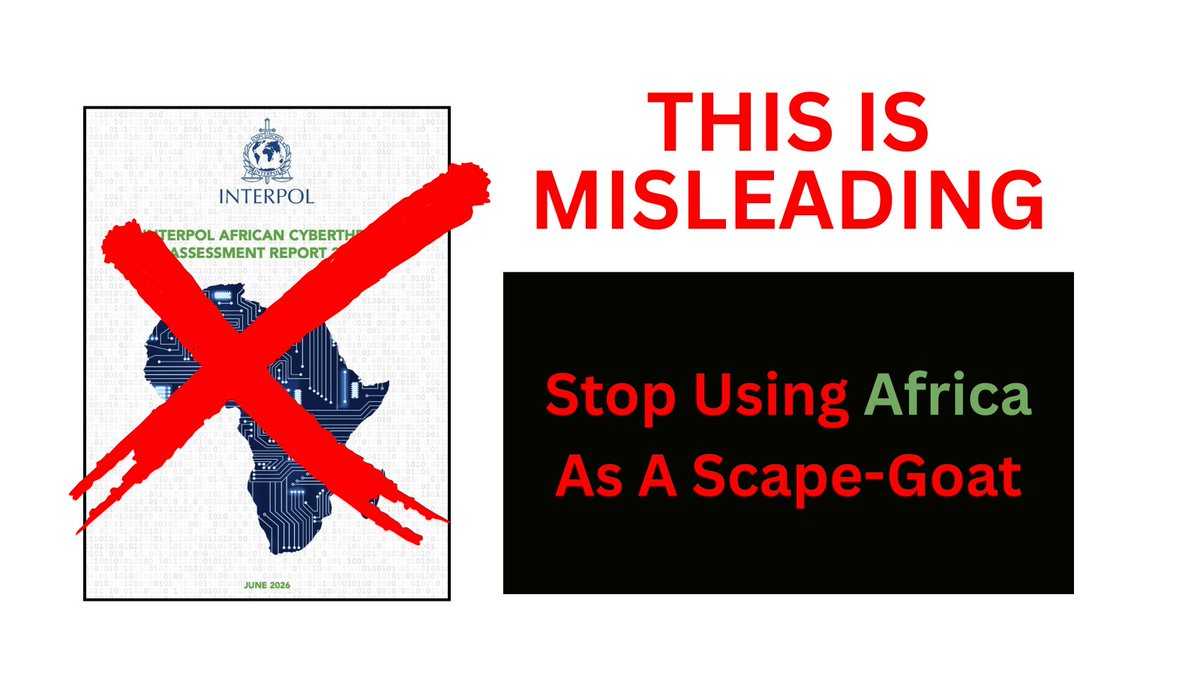
STOP THIS NONSENSE NARRATIVE.
I speak for Africa when I say THIS IS MISLEADING, and it misrepresents where the real crime and AI abuse is happening in the world today.
If you genuinely want to talk about cybercrime, or AI being used for crime, Africa should not be anywhere near the center of that picture.
Start with AI itself. The top countries in AI adoption globally are the UAE, Singapore, China, India, and the USA. Even South Africa, sits around 21 to 23% adoption, while the UAE is above 70%. We are not even in the top 3 users of this technology, so how does Africa become the poster child for AI-driven crime.
Add the infrastructure gap. Large parts of Africa still doesn't have reliable banking rails, card penetration, or digital payment systems mature enough to run large-scale, automated fraud at the level a "55% AI-enabled" statistic implies. You need infrastructure to commit crime at scale. Africa is still building that infrastructure for legitimate commerce.
Now read the actual INTERPOL report closely, because it undercuts its own headline.
South Africa alone accounts for 92% of every ransomware detection and 70% of every BEC detection cited in the report. Add Nigeria and two countries explain almost the entire "African" story. The other 50-plus nations on this continent barely register. That is not a continental crisis. That is two data points wearing a continent's name.
The 55% AI figure everyone is running with is not a measurement. It comes from a survey asking police officers if they had "occasionally" or "frequently" seen AI show up in a case. That is a perception poll of 36 self-selected countries, not a forensic count of anything.
The report itself admits 89% of respondents said underreporting is a serious problem, with no formal reporting systems and no forensic capacity in many countries. So the data is being driven by whoever has the infrastructure to detect and report, which is exactly the two countries carrying the whole statistic.
The entire assessment is funded by the UK Foreign, Commonwealth and Development Office, and built on data from Fortinet, Mastercard, Shadowserver, and other Western firms. Africa is the subject of this report. Africa did not write it.
Now look at scale. Total reported cybercrime losses across the whole continent in 2025: $484 million. INTERPOL's four biggest cross-border enforcement operations in Africa, spanning nearly 20 countries each, recovered a combined total of about $100 million.
Meanwhile the US alone reported $16.6 billion in cybercrime losses in 2024, and global ransomware payments hit $820 million in 2025 with a median payment of over $800,000 per incident, overwhelmingly from US, European, and Asian targets.
Africa's entire continent-wide total doesn't outpace what a single ransomware crew pulls from a handful of Western companies in one year.
Global cybercrime damage is projected at over $10 trillion for 2025 and 2026 combined. If cybercrime were a national economy, it would rank third in the world, behind only the US and China. Africa's entire reported total barely registers against that number.
So ask yourself why a 55% figure out of Africa's much smaller crime base gets a headline, while the actual centers of AI-driven fraud, the US, China, and the scam compounds of Southeast Asia generating close to $40 billion a year according to the UN, don't get the same "linked to over half" framing. That is not analysis. That is a choice of headline.
Then look at how INTERPOL illustrates its own stories. For Operation Sentinel, they used real, captioned photos of the actual arrests in Benin and Ghana. Actual African officers, actual African suspects, actual African raids. They had the real images and they used them.
But the article headlined "African authorities dismantle massive cybercrime and fraud networks, recover millions" runs a header image of handcuffed men whose appearance is not African.
If African authorities did the work, why illustrate Africa's own success story with a stock photo of people who aren't African? You don't reach for a generic photo when you have the real one, unless no one thought it mattered what image ran under Africa's name.
So ask who benefits from a headline that says "AI linked to more than half of cybercrime in Africa," built on a survey, funded by a foreign government office, driven by two countries' data, and illustrated with photos that don't even match the story.
International bodies need to stop using Africa as a scapegoat because it's convenient. It is easier to point at the continent with the least power to push back than to look honestly at where the money, the AI, and the crime actually are.
Every time this happens, it costs credibility. Not ours. Theirs.
STOP THIS.
turning 30 today
the biggest lesson from my twenties is to never mistake your current trajectory for your destination
no matter how fucked you think you are, a few years can rewrite everything
keep going
get addicted to neuroplasticity, subconscious reprogramming, delusional optimism, game theory, and quantum physics. i promise it will change your life.
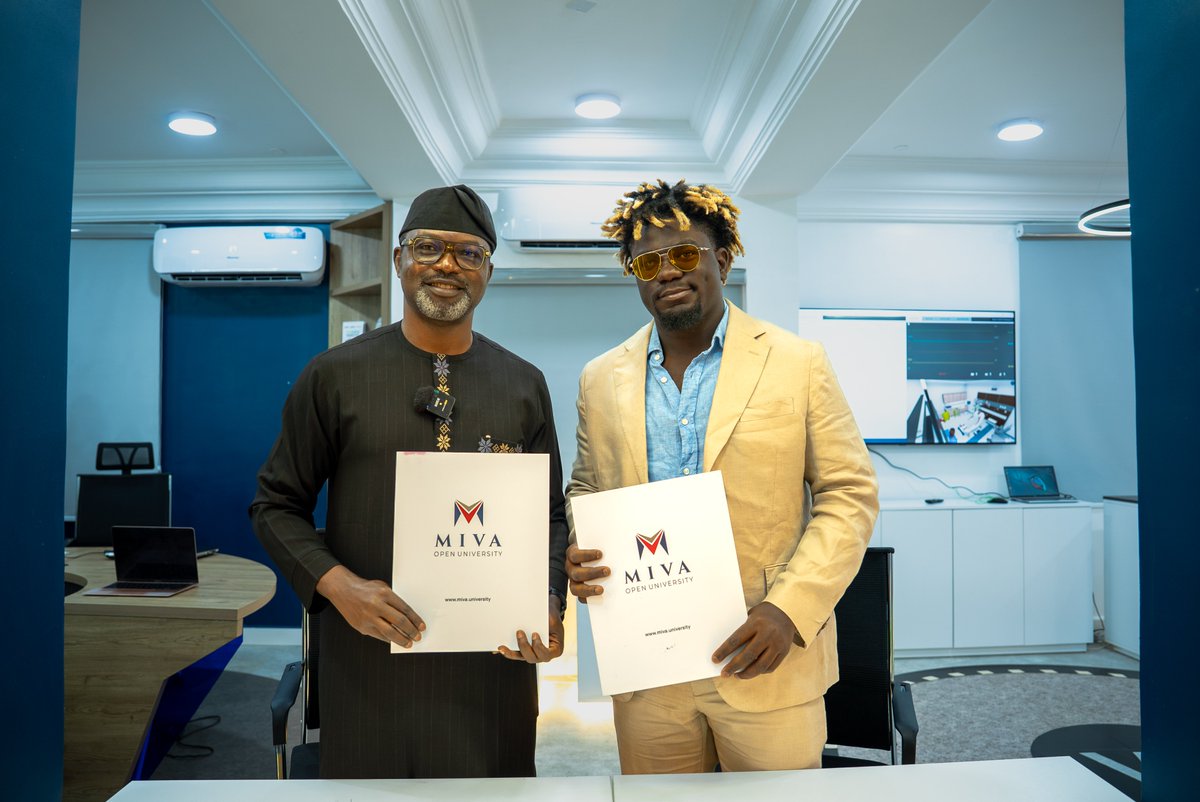
Terra Industries is partnering with @mivauniversity to build integrated robotics and drone labs across Miva learning centers, starting with a pilot in Abuja.
Students will learn to design, assemble, test, and fly drones as part of their academic programs. Terra will run hands-on workshops, train faculty, and offer internships and jobs to top performers.
Africa's next generation of engineers should learn by building. This is how we develop the talent that will build the continent's industrial base.
We must build the academia-industrial pipeline needed to sustain Africa's drone industrial base
With Nigeria's Parliament recent motion on the need for a National Drone Industrial Policy, Terra-Miva partnership will fill the talent gap