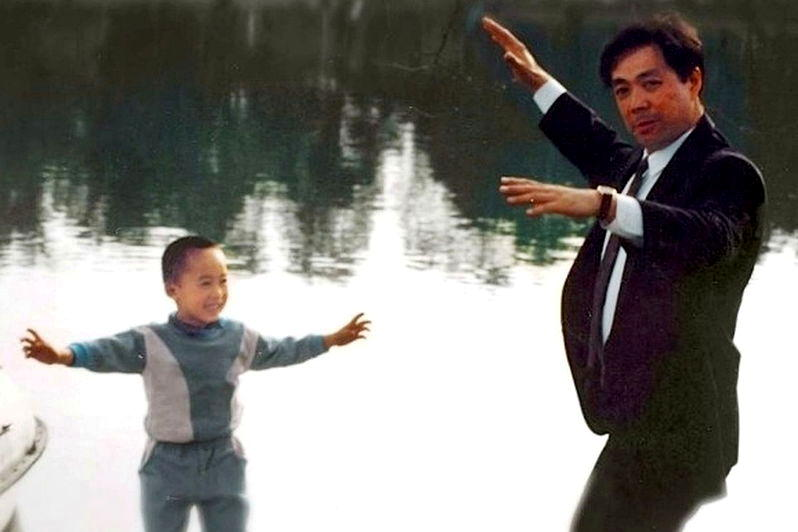
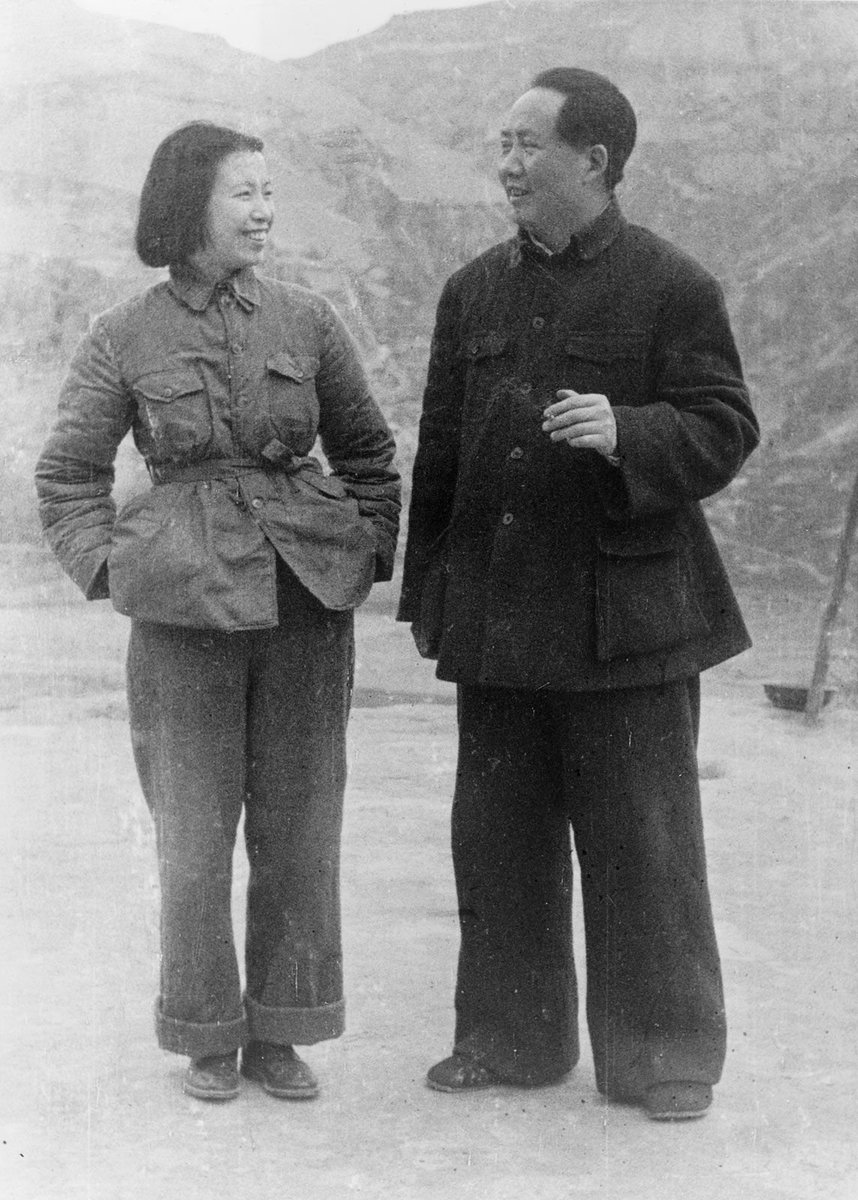
Jiang Qing, widow of Mao Zedong, was sentenced to death in January 1981 for counterrevolutionary crimes committed during Cultural Revolution, but her sentence was later commuted to life imprisonment...
“I was Chairman Mao’s dog. Whomever he told me to bite, I bit.”
The statement attributed to Jiang Qing during her trial was not an apology. It was a defense with an explosive implication: if she had committed crimes by carrying out Mao’s wishes, responsibility did not stop with the woman in the dock.
In November 1980, Jiang Qing stood trial in Beijing alongside nine other former political and military leaders. Among them were her three allies in the group known as the Gang of Four: Zhang Chunqiao, Yao Wenyuan, and Wang Hongwen.
Their prosecution was supposed to establish responsibility for crimes committed during the Cultural Revolution—the decade of upheaval Mao had launched in 1966. But Jiang’s defense kept returning to the man whose authority had made that upheaval possible.
Before her rise, she had been an actress in Shanghai. Marriage to Mao brought her close to the center of power. During the Cultural Revolution, she became a formidable political figure in her own right, helping direct campaigns against opponents and imposing revolutionary controls on Chinese cultural life.
She was not simply a wife watching events unfold.
Across China, people were publicly humiliated, beaten, imprisoned, and killed. Officials who had helped build the Communist state became targets of the revolution proclaimed by its own leader.
Jiang and her allies wielded enormous influence within that system. Mao’s support helped sustain their power.
Then he died on September 9, 1976.
Less than a month later, on October 6, Jiang and the other members of the Gang of Four were arrested. The protection of her husband’s name had not survived his death.
Four years passed before the trial began.
The prosecution accused the ten defendants of counterrevolutionary crimes, including persecution and attempts to seize power. Its allegations covered the persecution of hundreds of thousands of people and tens of thousands of deaths. These were the prosecution’s figures—not a complete accounting of the Cultural Revolution’s victims.
Excerpts from the proceedings were broadcast on Chinese television. A woman who had helped decide what others could perform and say was now being publicly judged.
She refused to give the court a confession of remorse.
Contemporary reporting described her denouncing her judges, insisting that she had acted according to Mao’s wishes, and daring the authorities to execute her. She was removed from the courtroom during the proceedings.
The famous “dog” statement compressed her argument into two sentences.
She portrayed herself as the instrument. Mao, she said, had supplied the orders.
That did not prove that every action she took had been commanded by him. Nor did obedience erase her own responsibility. But her argument exposed a problem no verdict against the Gang of Four could resolve by itself: the Cultural Revolution had not been created by four people acting independently of China’s supreme leader.
Mao was not a defendant. His widow’s defense nevertheless forced his responsibility into the story.
On January 25, 1981, Jiang Qing received a death sentence with a two-year reprieve. Zhang Chunqiao received same punishment. It was a death sentence, but it was not an execution.
In January 1983, both sentences were commuted to life imprisonment. Meanwhile, Communist Party had issued its own judgment on Mao’s legacy. Its June 1981 historical resolution acknowledged that he had initiated and led the Cultural Revolution and bore chief responsibility for its grave errors. It also insisted that his achievements outweighed his mistakes.
The distinction was deliberate: condemn the catastrophe without discarding the founder.
Jiang’s courtroom argument did not acquit her. It did not put Mao legally on trial.
#archaeohistories
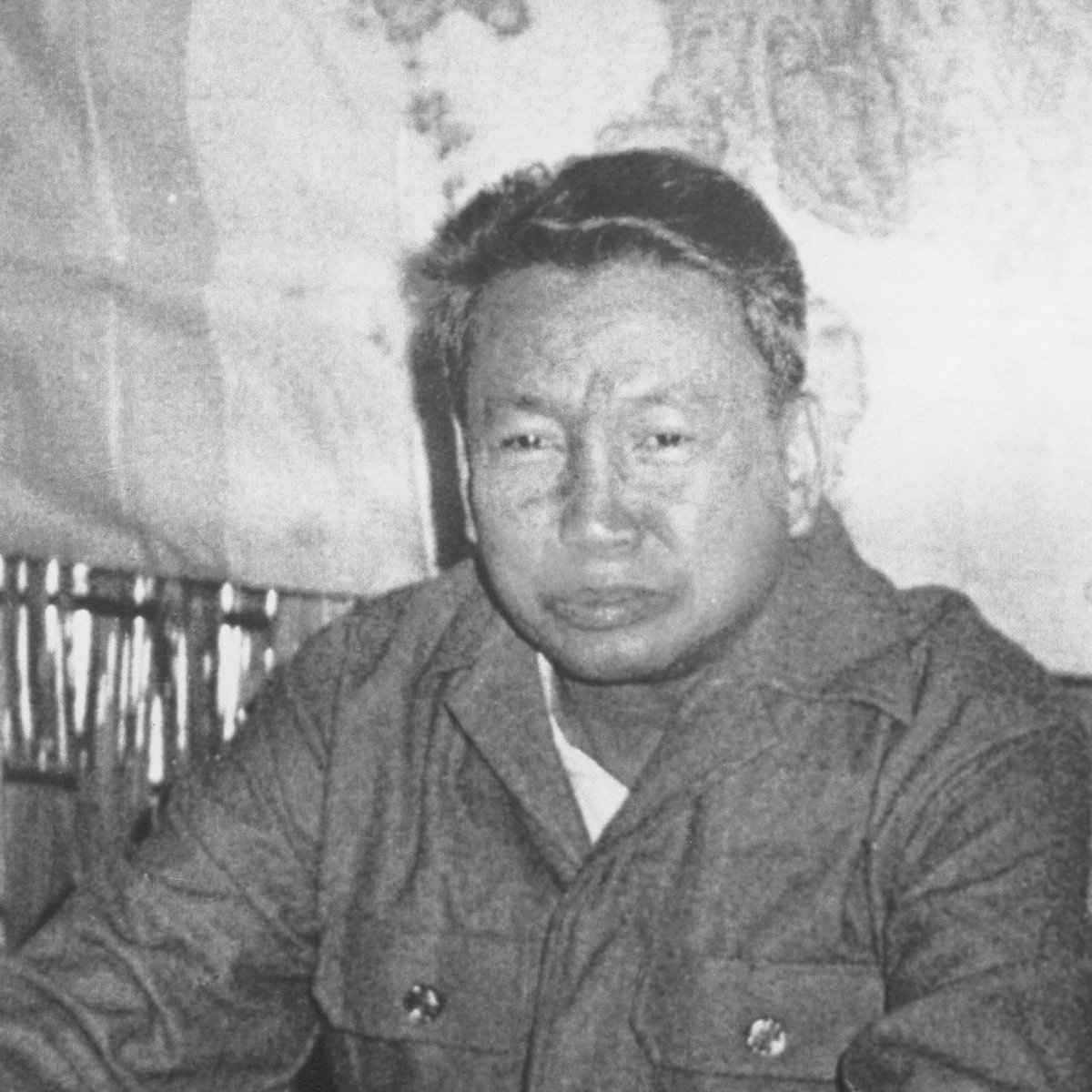
Pol Pot was a Cambodian dictator and revolutionary leader of the Khmer Rouge who led a brutal regime responsible for the deaths of up to two million people. He declared "Year Zero" to reset society to an agrarian utopia. Banned money, private property, religion, free speech, and foreign contact. Closed schools, hospitals, and factories. Targeted intellectuals, monks, religious minorities (like Cham Muslims), former government workers, and anyone suspected of disloyalty. Between 1.5 million and 2 million people died from execution, starvation, and overwork (roughly 25% of the country's population)...
Pol Pot was sentenced to life imprisonment by his own Khmer Rouge. But the movement that had helped him devastate Cambodia was not putting him on trial for the killing fields. It was settling accounts with its former leader.
On July 25, 1997, in the northern Cambodian stronghold of Anlong Veng, Pol Pot sat before a gathering of Khmer Rouge soldiers and villagers while former comrades denounced him. Journalist Nate Thayer and cameraman David McKaige recorded the proceedings.
Footage showed the crowd raising fists and chanting: “Crush, crush, crush Pol Pot and his clique!”
The man known as Brother Number One had become a prisoner of the organization he once commanded.
His captors announced a life sentence. They were not representatives of his millions of victims. They belonged to the same movement responsible for those victims’ suffering.
Between April 1975 and January 1979, the Khmer Rouge emptied Cambodia’s cities, forced people into agricultural labor, persecuted minorities, and carried out mass executions. Nearly two million people died under its rule—from killing, starvation, disease, and the conditions the regime imposed.
Pol Pot stood at the center of its leadership, alongside other senior figures who designed and enforced its policies.
Vietnam’s invasion overthrew that government in January 1979. It did not end the Khmer Rouge. The movement continued its guerrilla war, and Pol Pot remained an influential figure long after his supposed retirement from leadership in 1985.
By 1997, however, defections and factional struggles were tearing the organization apart.
His final downfall began with another killing inside his own ranks.
In June 1997, Pol Pot ordered the murder of Son Sen, his former defense minister, and members of Son Sen’s family, including children. The killings occurred amid negotiations between Khmer Rouge figures and Cambodia’s royalist political faction—negotiations that threatened Pol Pot’s place in the movement.
Accounts differ over the precise number murdered, but the killing of Son Sen and his family was the decisive rupture.
Other commanders had reason to fear they would be next.
Ta Mok, a senior Khmer Rouge military leader who was himself implicated in the movement’s atrocities, escaped into the jungle. He and other threatened commanders organized a counterattack.
Pol Pot was captured and placed under house arrest.
The purge had turned against its author.
Weeks later, Ta Mok’s faction staged the public proceedings at Anlong Veng. The accusations concerned Son Sen’s murder, attacks on fellow leaders, and Pol Pot’s obstruction of reconciliation.
They did not amount to a prosecution of the Khmer Rouge’s crimes against Cambodia between 1975 and 1979. Trying those crimes would also have raised questions about the men now condemning him.
That distinction changes the entire story.
This was not Cambodia’s survivors finally confronting their persecutor in an independent courtroom. It was a defeated leader being publicly stripped of authority by rivals from within his own organization.
The spectacle resembled a trial. Its central function was a transfer of power.
Nor was it Pol Pot’s first conviction.
#archaeohistories
A nada de cumplirse 3 años del 7 de octubre de 2023, y ante el intento de la narrativa de los pro terrorismo palestino de robarse la historia, es indispensable visibilizar una vez más lo sucedido.
Genocidio fue el 7 de octubre de 2023.
El resto fue una guerra.
Que no te tomen por boludo.
Remember this video when you hear Hamas activists and propagandists falsely claim that Hamas was attacking only soldiers or military bases on October 7.
Palestinism is such a depraved ideology that you can parade dead Jewish teens in the back of a pickup truck in broad daylight and have men and women, young and old, run after it in ecstasy.
🚨🇮🇱 ÚLTIMA HORA: O chefe da Inteligência Militar de Israel revelou ontem à noite, diante do Gabinete:
Dos 6.000 terroristas que cruzaram a fronteira e invadiram Israel no 7 de outubro, 4.000 já foram eliminados.
Restam 2.000. Não há esconderijo, não há túnel, não há prazo. “Chegaremos até o último deles.” 🇮🇱
Um por um não é um slogan é uma promessa!