Owns QUILL AND CANVAS, Bookshop Art Gallery, South Point Mall, Ggn. Tarot reader, publisher, beta reader, art restorer,framer, HaryanachairG100 @quillandcanvas
Delighted to be the 2026 recipient of the Best of Brooklyn (Bobi) award, which is presented 'each year to an author whose work best exemplifies or speaks to the spirit of Brooklyn'. In the 28 years I've lived in Brooklyn - within a stone's throw of the house where Richard Wright wrote 'Native Son' - I've learned more from my neighbors and community then I could ever properly account for!
https://t.co/cO492Nl0WH
Exemplary civil&military coordination in 1971. My father DK Sengupta, as Station Director AIR Calcutta,worked in tandem with Fort William to mount a propaganda offensive & support Bangladesh radio.He was awarded the Padma Shri for "yeoman's service to the nation". @SanjoyRoyTWA
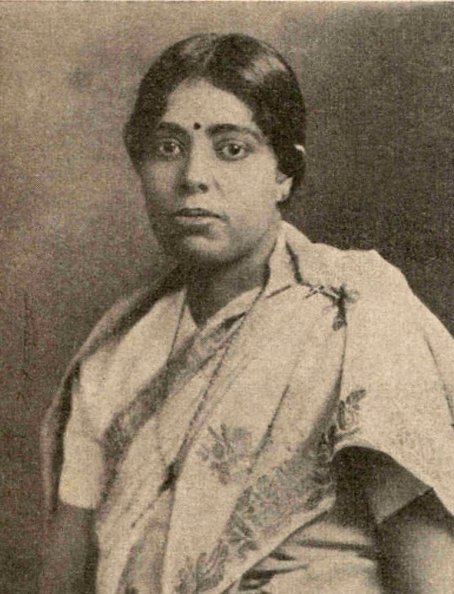
Why is Indian sugarcane so sweet? If you’ve ever enjoyed a glass of fresh cane juice, you have Janaki Ammal to thank!
🔹️ In the 1930s, India had to import sweeter cane from Java. Janaki Ammal, a brilliant scientist at a time, used her knowledge of plant cells to create a made-in-India hybrid that was both sweet and hardy enough to grow in our climate.
🔹️The Cytogenetic Pioneer: She was the first Indian woman to earn a PhD in Botany (University of Michigan, 1931). She literally mapped the genetic DNA of thousands of Indian plants.
🔹️Economic Independence: Her work at the Sugarcane Breeding Institute in Coimbatore helped India become self-sufficient in sugar production, a massive boost for the post-independence economy.
🔹️The Guardian of the Rainforest: Later in life, she turned to conservation. Her scientific authority was the backbone of the Save Silent Valley movement, protecting one of India’s most ancient rainforests from being submerged by a dam.
🔹️Janaki Ammal lived a life of pure scientific devotion. There is a beautiful white flower bred in London named after her: the Magnolia kobus Janaki Ammal.
This summer, when you drink a cold, sweet, satisfying glass of sugarcane juice, remember the name: Edavalath Kakkat Janaki Ammal.
Small bookworm, big reader!
Today one of our younger patrons, Sarah, walked into our store to pick up a few books to read during her summer holidays. And walked out with 66 books! Happy reading Sarah!!
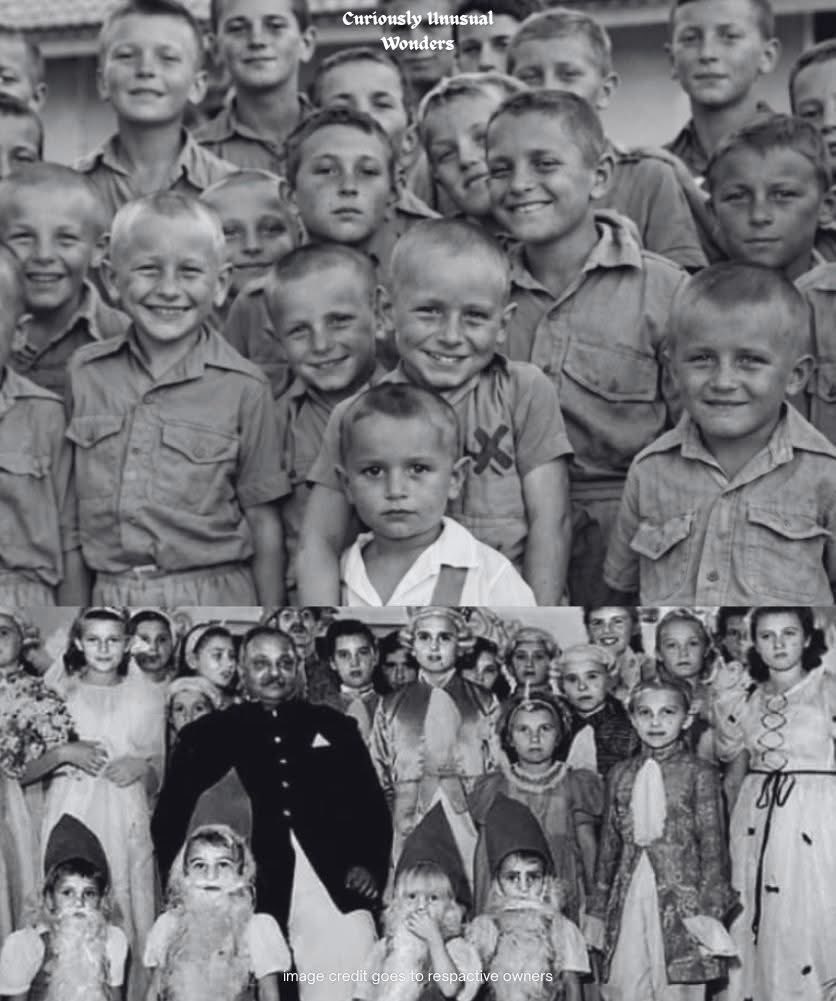
When 740 children were condemned to the sea and the world said no, one man said yes.
The world was on fire in 1942, and 740 exhausted children were trapped on a ship in the middle of the Arabian Sea with nowhere to go. These Polish orphans had already survived the horrors of Soviet labor camps, where they watched their parents perish from hunger and disease.
They had traveled through Iran to reach the coast of India, praying for safety, but every British-controlled port turned them away. One by one, the doors of the world slammed shut, leaving hundreds of hungry, terrified children drifting toward a certain death.
Among them was twelve-year-old Maria. She held her six-year-old brother’s hand tightly, remembering the last promise she made to their dying mother:
“Keep him safe.”
But as the ship’s food ran low and the medicine disappeared, Maria looked at the horizon and saw only rejection. The British authorities, who ruled India at the time, insisted the children were not their responsibility.
It seemed as though these 740 souls were invisible to a world consumed by war.
However, news of the wandering ship reached the ears of Jam Sahib Digvijay Singhji, the Maharaja of Nawanagar. He ruled a small princely state in Gujarat. He wasn’t a world leader with a massive army, and he certainly wasn’t required to help. In fact, by welcoming the children, he would be directly defying the British Empire, which had already said “no.”
When his advisors told him the tragic story, the Maharaja didn’t ask about the cost or the political risks. He simply asked how many children there were. When they told him “seven hundred and forty,” he made a decision that would echo through history.
He declared that while the British might control the ports, they did not control his conscience.
In August 1942, the ship finally docked at Nawanagar. The children who walked off that gangplank were skeletal, weak, and too traumatized to even cry. They expected to see soldiers or barbed wire. Instead, they saw a man dressed in white waiting for them on the pier.
The Maharaja knelt down so he could look the smallest children in the eye. Through an interpreter, he spoke words that changed their lives forever: “Do not consider yourselves orphans. From this moment on, I am your father, and you are my children.”
He didn’t just give them a place to sleep; he gave them a home. In the village of Balachadi, he built a sanctuary. He didn’t try to force Indian culture on them. Instead, he hired Polish teachers so they wouldn’t forget their language. He made sure they had Polish food and allowed them to practice their religion and sing their traditional songs.
Under the hot Indian sun, these children celebrated Polish Christmas and felt the warmth of a family they thought they had lost forever. For four years, while the rest of the planet was tearing itself apart, the Maharaja funded every doctor’s visit, every meal, and every schoolbook from his own personal fortune.
When the war finally ended and it was time for the “children of the Maharaja” to leave, many wept. They were leaving the only place that had treated them with dignity when the rest of the world looked away.
Those survivors have become doctors, engineers, and grandparents. In Poland, there are squares and schools named after Jam Sahib Digvijay Singhji, and he is remembered as a national hero.
Power is not measured by the lands you conquer, but by the lives you protect. When the world closes its heart, your greatest act of rebellion is to open yours. True immortality is found in the kindness that outlasts the king.
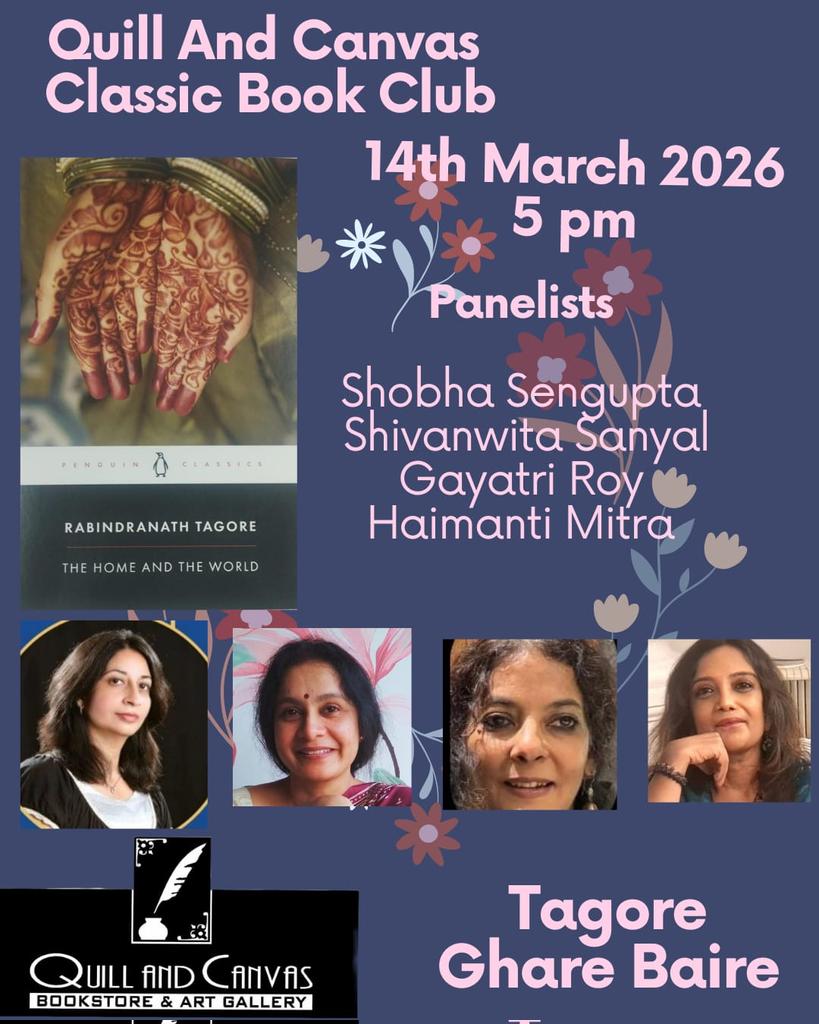
About to discuss Ghare Baire a startlingly relevant book written in 1915 by the great Rabindranath Tagore at @quillandcanvas. The partition of Bengal in 1905 and the Swadeshi movement meant to oust the British seems to rebound with a divisiveness from which we never recovered
An honour to be hosting the very versatile and amazing @ShobhaTharoor at Quill And Canvas. Please register asap, and remember you don't have to be a child to attend this. Just tap the child within! But do remember to bring your kids! @ShobhaSengupta