Total bird nerd. Doing a PhD in reintroduction science at ANU. Advocate for evidence based conservation, field-based teaching, and conservation detection dogs.
I can't believe it!! My camera trap caught the exact moment a baby curlew started to hatch!! AND her first wobbly steps. My heart is so full! Welcome to the world little one, in your safe haven home at @MulligansFlat@MFGO_Exp [cultural warning: curlew footage]
Shoshana Rapley’s dog Koda has a nose for finding lost tech equipment – even in overgrown bush. It has proved very handy for Shoshana’s ecology research.
@ANUFennerSchool @shobird
https://t.co/mlNcUhvcYP
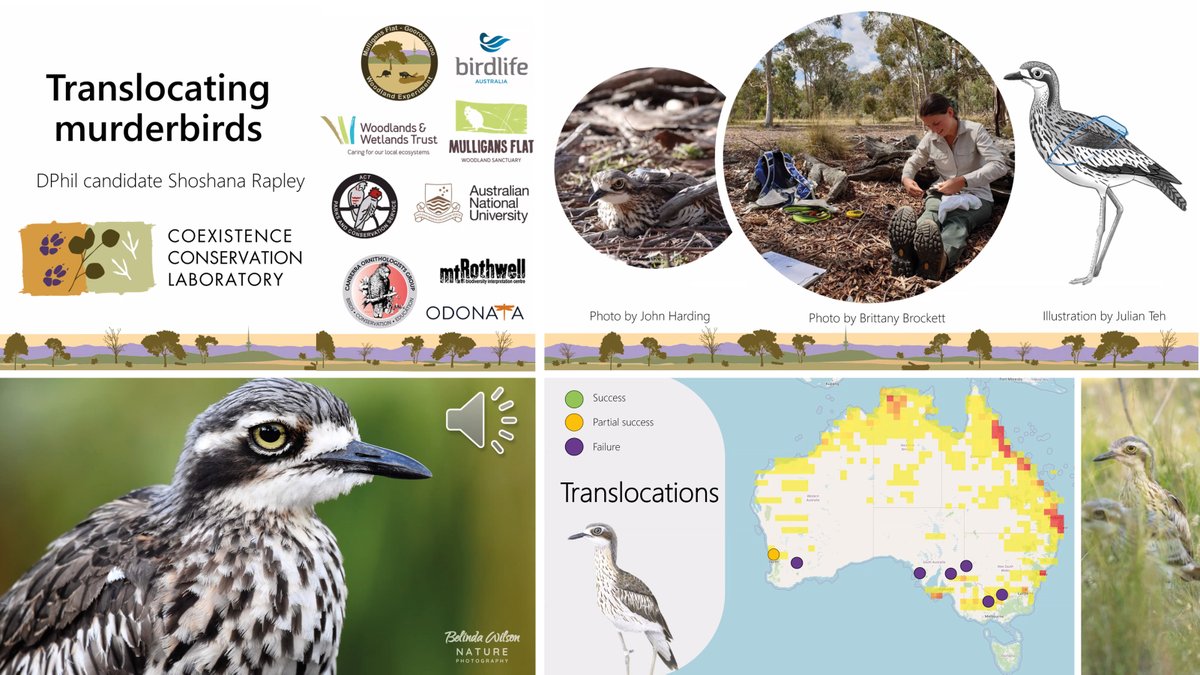
Bird nerd & visiting PhD student @shobird gave a fascinating talk at WildCRU today on #reintroduction of Bush Stone-curlews in parts of S. Australia where the #birds’ populations have plummeted. From site selection to behaviour studies, head-starting, use of detector dogs & more.
"Conditions deteriorated in 2023 but were stlil relatively good for ecosystems and agriculture. Unfortunately, the alarming decline of threatened species continued."
📖https://t.co/yqQP5NHwA8 by Albert Van Dijk, @shobird@ourANU & @tayla_lawrie@UQ_News via @ConversationEDU.
Short note from @shobird@BrittBrockers and I on White Shark - seabird interactions at a fresh fur seal carcass. A really cool thing to see and document, especially with friends!
@unswbees@CES_UNSW@UNSWScience
Larrakia Danggalaba Traditional Custodians have won an extended temporary halt to land clearing at Lee Point/Binybara!
Lawyers from @EJ_Aus, acting on behalf of Larrakia TO Tibby Quall, have temporarily stopped bulldozers until August 11.
Your daily reminder: everything that's 'locked in' for climate change, as bad as it is, is basically tiny compared to what we have the collective power, the strength and the knowledge to avoid
Breathtaking woodland is under threat, but you can help. Make your morning count and sign the petition to protect Lee Point, it takes less than a minute https://t.co/lSpsCxXuhg
Only a 15 minute drive from Darwin CBD laid this AMAZING woodland full of incredible animals (some ENDANGERED!). All to be destroyed next week.
Here is a collage of some of the finch species that were found in this little woodland oasis! 🐦
"2022 was a bumper year for our rivers and vegetation – but it wasn’t enough to reverse the long-term decline in plant and animal species."
#AUResearch https://t.co/EdoCUBxlRn by @shobird & Albert Van Dijk @ANUFennerSchool and @marktg00 & Geoff Heard @UQ_News@ConversationEDU.
🌿🌧️ The Australia's Environment 2022 Report is coming soon! The joint @ANUFennerSchool & TERN annual review of the condition of Australia’s natural #resources & #ecosystems will be launched imminently. Watch our FB/Insta #livestream of the event March 29, 10am AEDT!
#NCRISimpact
Hello hello 👋 #IWD2023 is nearly here, and so are companies' cut-and-paste platitudes. And once again we're bringing you the data to see whose support for #InternationalWomensDay is genuine, and who's still got work to do.
Here's a reminder of how it works ⬇️ (1/8)
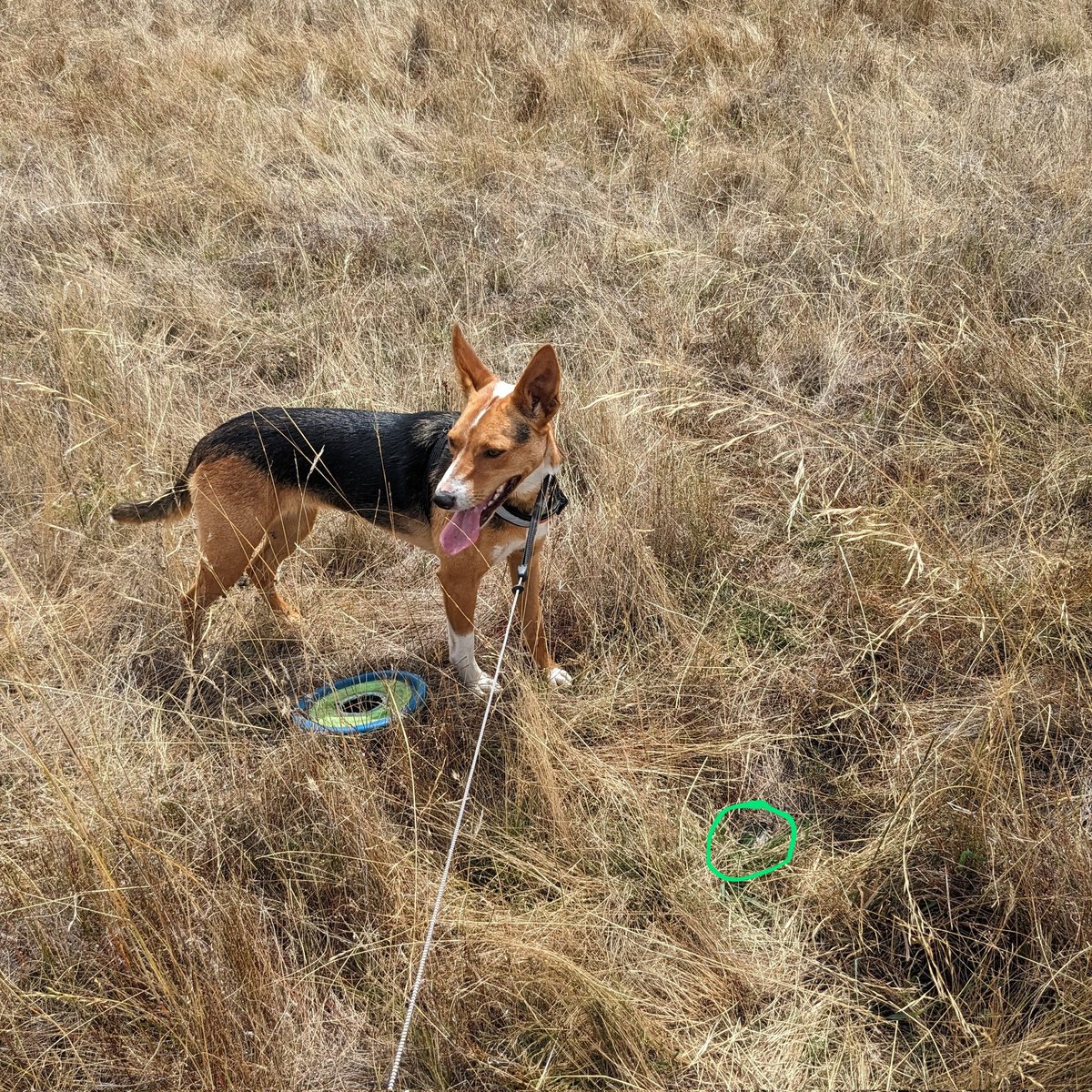
@SkylosEcology Amazing! Here is Koda with our transmitter retrieval from today. I couldn't do it without her and even then it's more obvious than a dessicated bat!
Are you curious about #detectiondogs? I'm a wildlife biologist who 'accidentally' started working with dogs. Find out how frisbees, GPS units and locally extinct birds are connected in the latest episode of the https://t.co/fz5HCnHRT5 podcast hosted by the incredible @kaylafratt
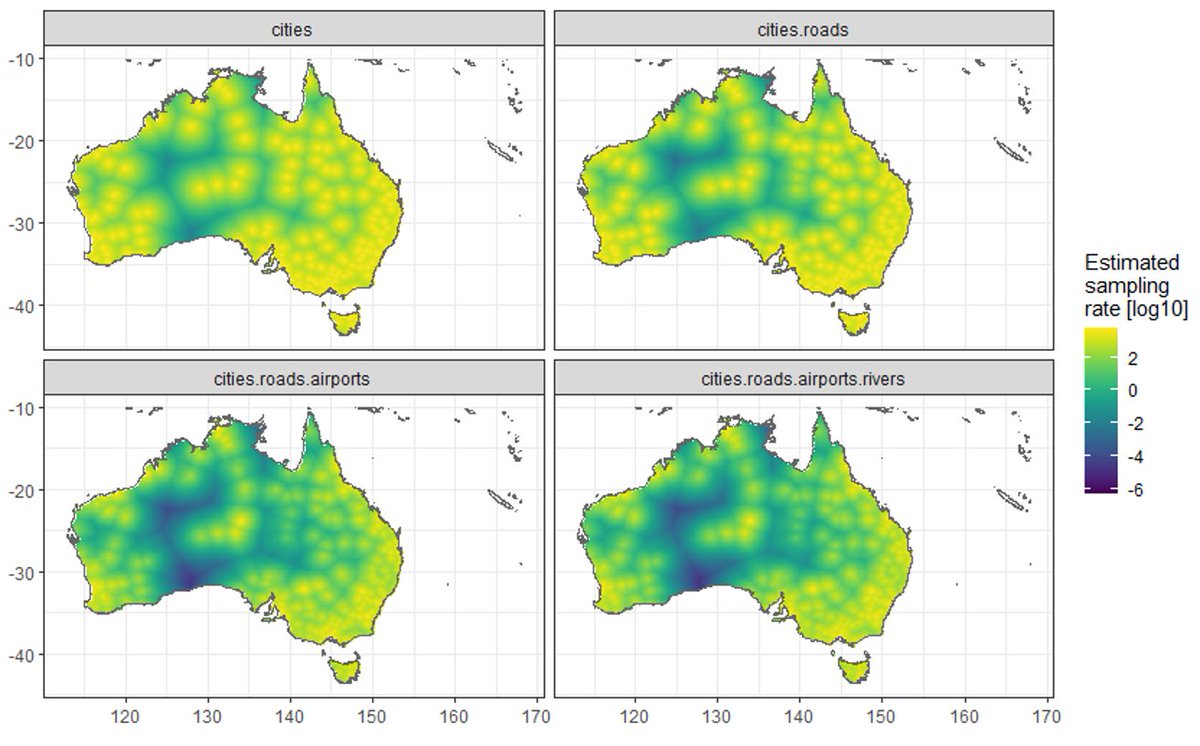
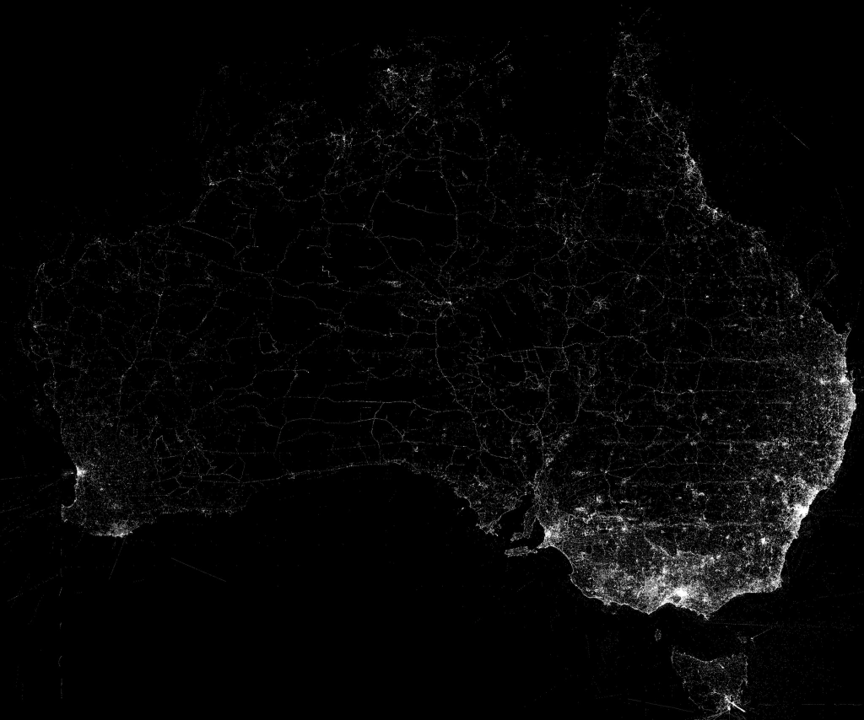
And using these features we can predict where sampling bias might occur. This is important for modelling such as maxent where we want to bias the pseudo-absence data in the same way that the collected presence data would have been
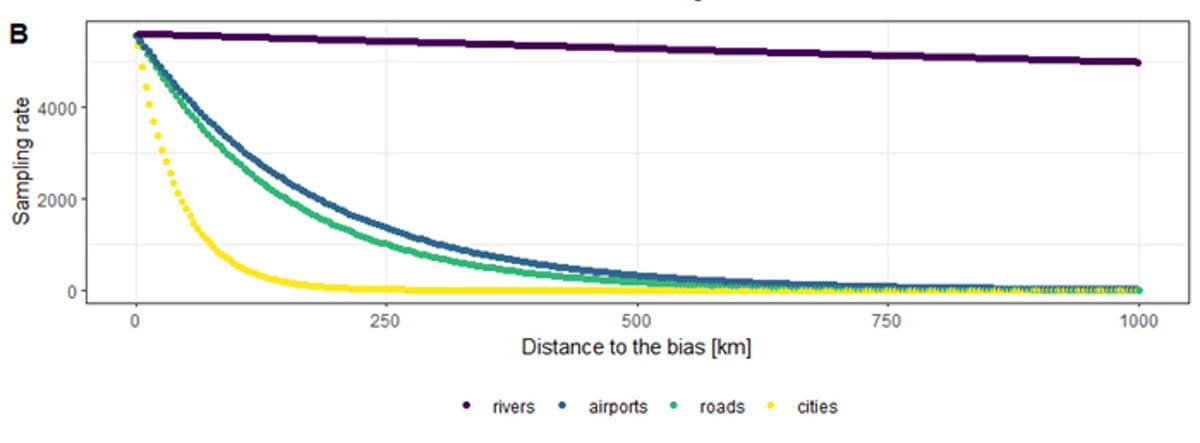
We can actually detect the impact that features like roads have on the chance of a location being visited. Using the sampbias package in R we can see cities are the best predictor, followed by roads and airports, but rivers aren't very important