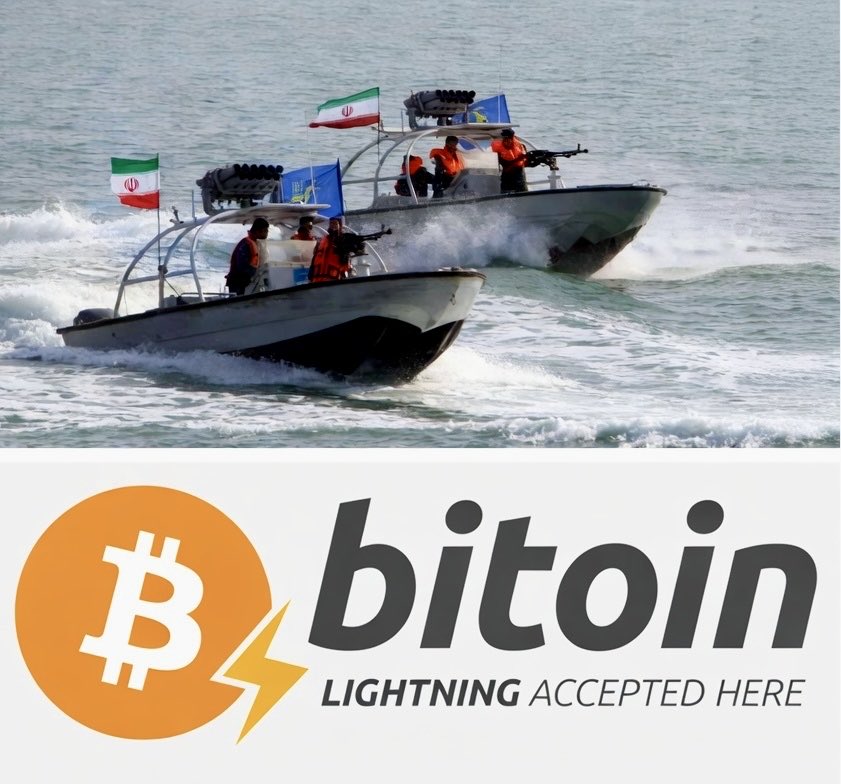
The largest Lightning Network transaction in history was one million dollars. A single supertanker crossing the Strait of Hormuz now needs two million dollars in insurance. The math does not work yet.
Per the Bitcoin Policy Institute, the Lightning Network’s largest historical settlement is $1 million. Per Voltage, the transaction took place on January 28, 2026. Secure Digital Markets sent 11.3 BTC to Kraken. Settlement completed in 0.43 seconds. Per the Bitcoin Policy Institute, a single fully laden supertanker toll runs $2 million. Per Iran’s Ministry of Economic Affairs and Finance, Hormuz Safe began accepting Bitcoin-settled maritime insurance on May 16. Per Fars News Agency, the platform projects $10 billion in annual revenue.
Iran has set a price. The Lightning developers did not anticipate the buyer.
Public Lightning capacity sits at approximately 5,637 BTC across more than 14,000 active nodes. Monthly volume exceeds $1.1 billion. Typical single-transaction capacity ranges 0.01 to 5 BTC. Multi-hop routing requires pre-positioned liquidity along the entire path. Channels are fixed at open until splicing upgrades allow dynamic resizing. The Gini coefficient of liquidity concentration is approximately 0.97.
The network was designed for retail micropayments. Iran is testing it as sovereign-scale settlement infrastructure.
A 20 million dollar daily toll volume requires roughly ten supertanker-equivalent payments per day. Per the Bitcoin Policy Institute, daily IRGC revenue from Hormuz tolls is estimated at $20 million. Independent estimates from TRM Labs match the figure. No on-chain ledger proof has been published.
The Lightning Network can theoretically process millions of transactions per second. The Lightning Network has never settled a single payment above $1 million. Both statements are true. The bottleneck is liquidity along routing paths, not throughput.
Iran’s state Bitcoin mining cost was approximately $1,300 per coin before strikes. The arbitrage between production cost and market price is the sovereign coupon. Freshly mined coins carry no prior transaction history.
Per OFAC, “U.S. persons are generally prohibited from engaging with Iranian digital asset exchanges.” OFAC’s May 1 alert specifically includes Bitcoin as a sanctioned-risk payment vehicle for Hormuz transit. Secondary sanctions apply under CAATSA and Executive Order 13846.
The Bitcoin protocol does not distinguish between sanctioned and unsanctioned counterparties. The Lightning Network does not distinguish between retail and sovereign payments. The infrastructure does not know it is at war.
Lightning Service Providers control most public liquidity. Voltage. Amboss. Magma. River. Splicing is in progress. Channel factories are theoretical. Multi-path payments fragment large settlements. Watchtowers monitor for fraud. Operational burden is high.
A two million dollar toll requires either a coordinated multi-path split across multiple high-liquidity hubs, or a private sovereign-scale channel. Private channels are unobservable by design. No public Lightning settlement above $1 million has been reported since January.
The math requires Lightning to double in single-transaction capacity. Bitcoin developers did not anticipate the timeline.
The Strait of Hormuz handles 20% of global oil. The Lightning Network handles approximately one supertanker toll per attempt. The infrastructure gap is the strategic surface.
Whoever ships a $5 million Lightning transaction first wins Hormuz pricing.
The clock is ticking on the chokepoint. The clock is ticking on the network. The clock is the same clock.
https://t.co/FRwSI1w8WU
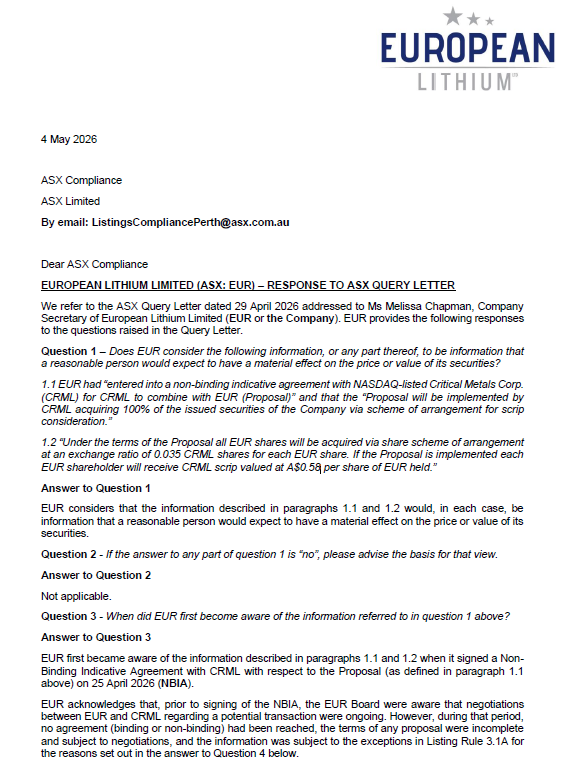
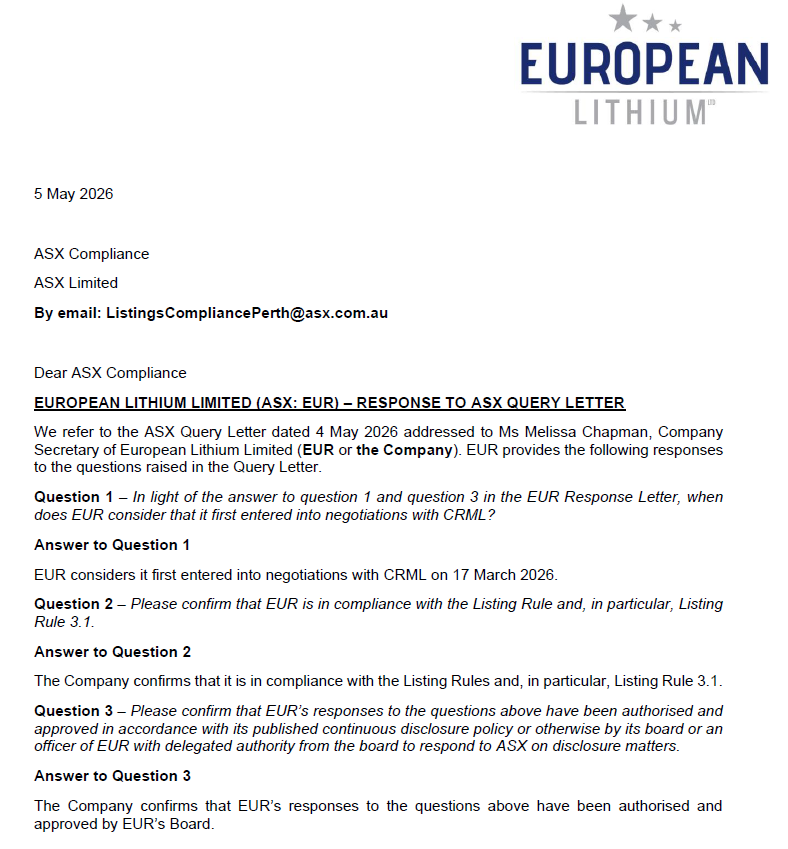
Before reading $EUR's responses to the ASX, you should be aware that the board of $CRML comprises:
- Tony Sage
- Malcolm Day
- Mykhailo Zhernov
- Michael Hanson
- Michael C. Ryan
...and the board of $EUR comprises:
- Tony Sage
- Malcolm Day
- Mykhailo Zhernov
- Michael Carter
@TwinTurboCe1ica that NZ is not accurate. Diesel for instance is now double. I was buying for 1.70 a litre plus road user charges.
Now it’s 3.60 a litre plus road user charges
Australian Special Forces are not the only ones
The Australian press is reporting that around 90 members of the Special Air Service Regiment (SAS), Australia’s main special forces unit, were quietly sent to the Middle East about two weeks ago.
It is believed the contingent is operating out of Al Minhad Air Base in the United Arab Emirates, on standby in case the war between the US/Israel and Iran escalates further.
The government of Anthony Albanese insists that the mission is purely defensive, focused on protecting the approximately 115,000 Australians still in the region. Nobody buys that 90 elite operators were sent just to protect 115,000 civilians.
And the story doesn’t stop there. In addition to the special forces, Australia also sent an E-7A Wedgetail surveillance aircraft and AIM-120 AMRAAM air-to-air missiles to the Emirates. When you start sending air-to-air missiles and an early-warning aircraft that shares data via Link 16 with American forces in the region, it becomes very hard to swallow the “purely defensive” narrative. This is an unofficial entry into the war, no matter how much they deny it.
But the Australians are not alone in this. The United Kingdom, despite denying any plans for a ground invasion of Iran, has increased its total contingent in the region to around 1,000 troops. Reports indicate that Royal Marines commandos are being used in several Gulf countries. It’s the same old pattern: official denial followed by discreet action.
This is nothing new. A 2023 report already showed that British special forces (SAS and SBS) have secretly operated in at least 19 countries over the past 12 years, including Syria (supporting rebels since 2012), Yemen, Libya, and even Ukraine.
Join my Substack to read the Full article:
https://t.co/yz8QrP8B0t
An extremist group in Washington, DC has claimed credit for the terrorist attack on the Iranian bridge, promising further attacks on civilian infrastructure if its demands aren't met