Fun fact: Every #TEKKEN8 character has an animal codename that is used internally by the game. Below are the codenames along with my best guess on what they mean:
AML = Armadillo = Jun
ANT = Ant = Jin
BEE = Bee = Heihachi
BBN = Baboon = Raven
BSN = Bison = Steve
CAT = Cat = Azucena
CBR = Cobra = Lidia
CCN = Chicken = Jack-8
CHT = Cheetah = Bryan
CML = Chameleon = Yoshimitsu
CRW = Crow = Zafina
CTR = Caterpillar = Claudio
DER = Deer = Asuka
DOG = Dog = Eddy
GHP = Grasshopper = Leo
GRF = Giraffe = Paul
GRL = Gorilla = Kazuya
HMS = Hamster = Lili
HRS = Horse = Shaheen
JLY = Jellyfish = Leroy
KAL = Koala = Nina
KLW = Killer Whale = Feng
KMD = Komodo Dragon = Dragunov
LON = Lion = Victor
LZD = Lizard = Lars
MNT = Manatee = Alisa
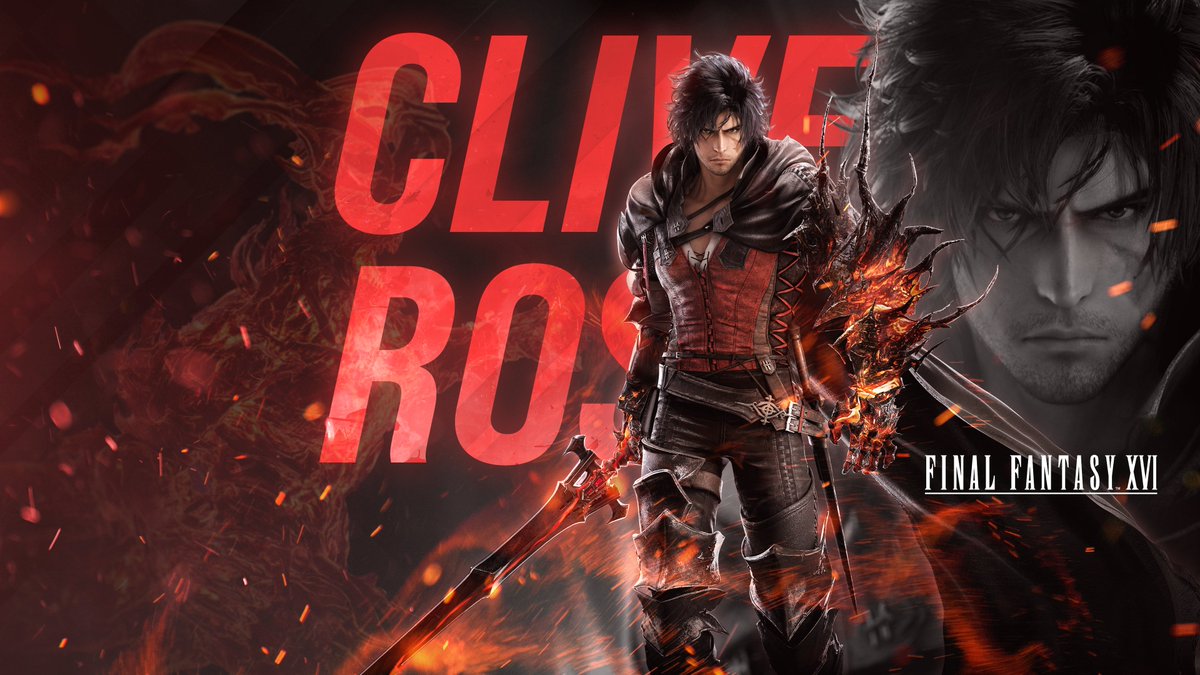
OKM = Okami (Japanese Wolf) = Clive
PGN = Pigeon = King
PIG = Pig = Law
RAT = Rat = Xiaoyu
RBT = Rabbit = Kuma
SNK = Snake = Hwoarang
SWL = Swallow = Devil Jin
TTR = Tortoise? Tarantula? = Panda
WLF = Wolf = Lee
ZBR = Zebra = Reina
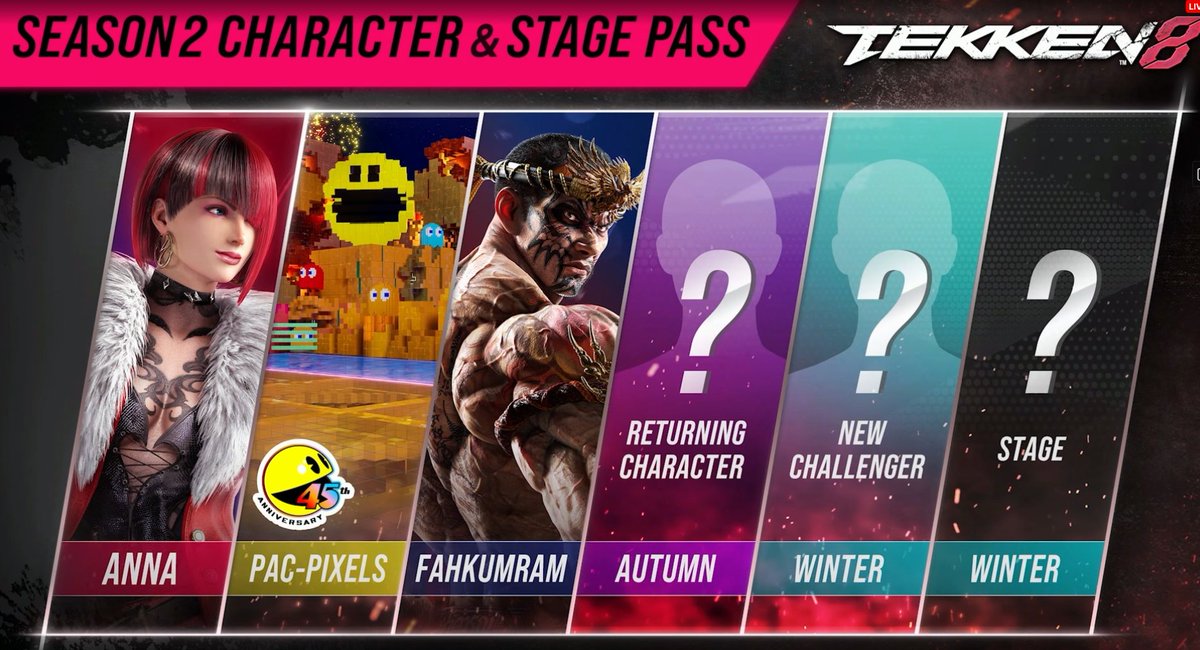
(Updated with Heihachi and Clive. List will be updated when new characters release.)
I asked Google Gemini to summarize the original video (https://t.co/AstRwkENoK) for a non-Japanese audience:
This video is a technical presentation from CEDEC 2025 by Ryota Kinoshita, a Visual Effects Engineer at Bandai Namco Studios. It details how the development team for Tekken 8 utilized Unreal Engine 5's Niagara system to create high-quality visual effects while strictly maintaining a stable 60 FPS—a critical requirement for competitive fighting games.
Here is a summary of the key topics covered in the presentation:
1. Real-Time Destruction Using Niagara
Instead of using standard physics plugins like Apex or Chaos (which were found to be too heavy or unstable during early development), the team used Niagara to handle ground destruction and debris [03:04].
- Why Niagara? Since the destruction mostly involved debris rather than complex structural fracturing, Niagara provided a lightweight alternative that minimized CPU load [03:29].
- Workflow: They used Houdini to fracture models and export data (position, size, and ID) via CSV/JSON, which was then read by Niagara to reconstruct and animate the fragments in real-time [05:03].
- Interaction: This system allows thousands of particles (like falling leaves or debris) to react dynamically to character movements and attacks without the high cost of a full physics simulation [08:14].
2. Specialized Niagara Implementation Cases
The speaker showcases several custom modules designed to solve specific visual challenges in Tekken 8:
- Game Speed Adaptation: Raindrops automatically change shape from long streaks to round droplets when the game enters slow-motion (e.g., during a "Slow-Mo" finish), preventing the effect from looking unnatural [09:48].
- Occlusion-Capable Lens Flares: Custom modules check the G-Buffer depth at multiple points to ensure lens flares are properly hidden when an object or character passes in front of the light source [14:28].
- Space Switching: They developed a way to "detach" particles from a character's bone and move them into world space seamlessly, giving artists more control over how effects like trails behave [16:01].
- Mesh Billboards: To recreate the feel of classic effects (specifically for the Final Fantasy XVI collaboration), they modified the engine to allow mesh particles to lock to a specific axis while facing the camera, providing better volume than flat sprites [17:35].
3. Optimization Techniques for 60 FPS
Maintaining performance is the core of the talk. The team had a strict "budget" of only 4ms for all transparent effects and lighting [20:40].
- Emitter Reduction: By merging multiple identical systems into a single system using arrays and "Particle Partitioning," they significantly reduced CPU overhead [21:47].
- Instance Reusing: Instead of spawning a new Niagara system for every hit effect, they "recycle" active instances by updating their position, which avoids the heavy cost of component initialization [24:51].
- Frame Distribution: They staggered the spawning of heavy effects over several frames to prevent "hiccups" (hitching) when multiple effects are triggered at once [26:08].
- Distance Culling: For heavy semi-transparent effects like smoke, they implemented distance-based culling to stop rendering particles entirely when they are too far from the camera [30:57].
4. Effect Verification Environment
- To streamline the workflow, the team built a dedicated internal tool (using UMG) for artists and engineers to test effects in isolation [34:55].
- This tool allows them to immediately check vertex counts, texture sizes, and GPU/CPU load for a single effect.
- By catching "heavy" assets before they are integrated into the main game, they drastically reduced the time spent on manual optimization and bug fixing [35:51].
Conclusion
The presentation concludes that while Niagara is incredibly flexible, developers must set strict regulations and build supporting tools to balance visual quality with the rigid performance demands of a 60 FPS title [37:06].
@HMFanatic4Life I've said before that I believe we will get a Jun vs. Devil Reina episode set immediately after the main story, and that Devil Reina will have much of Kazumi's moveset
New with #TEKKEN8 March update:
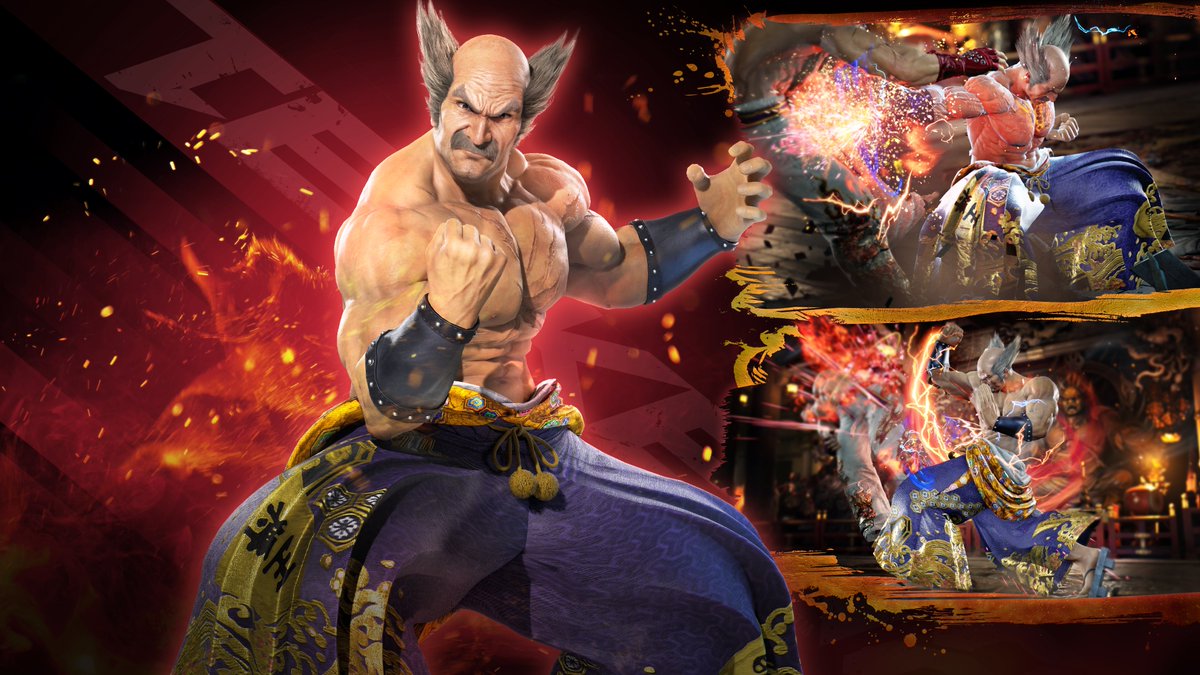
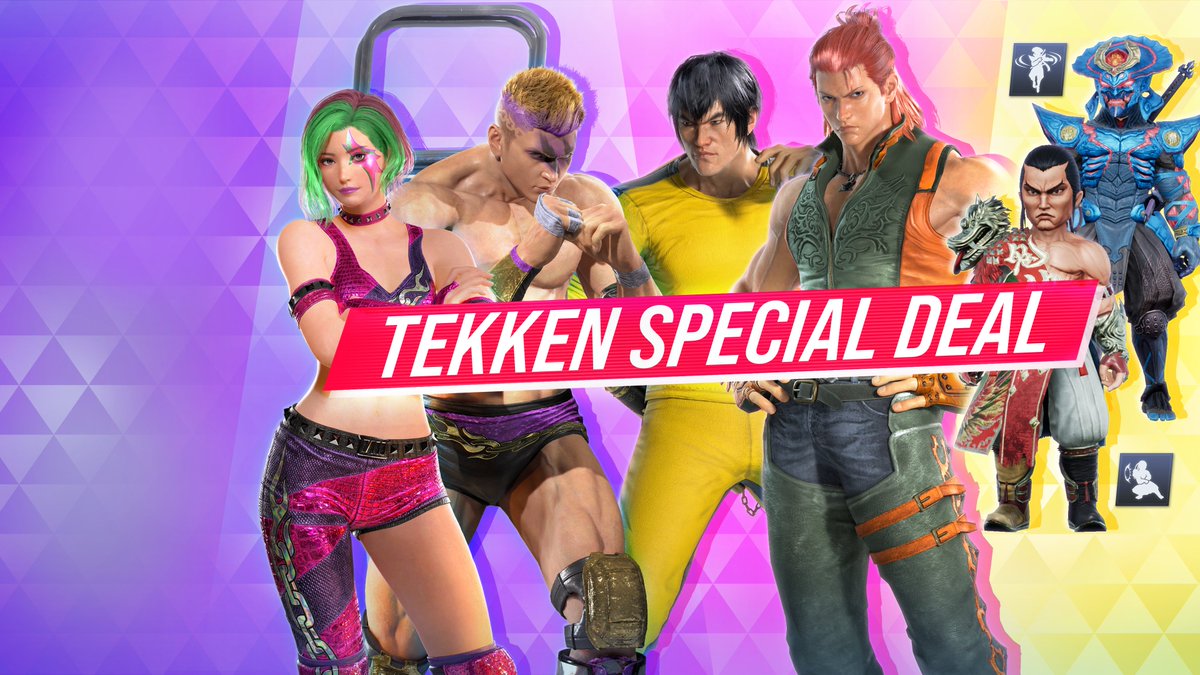
- Classic Heihachi skin in the shop
- New ghosts to fight for art panels (Ling, Paul, Reina, Lee, Alisa)
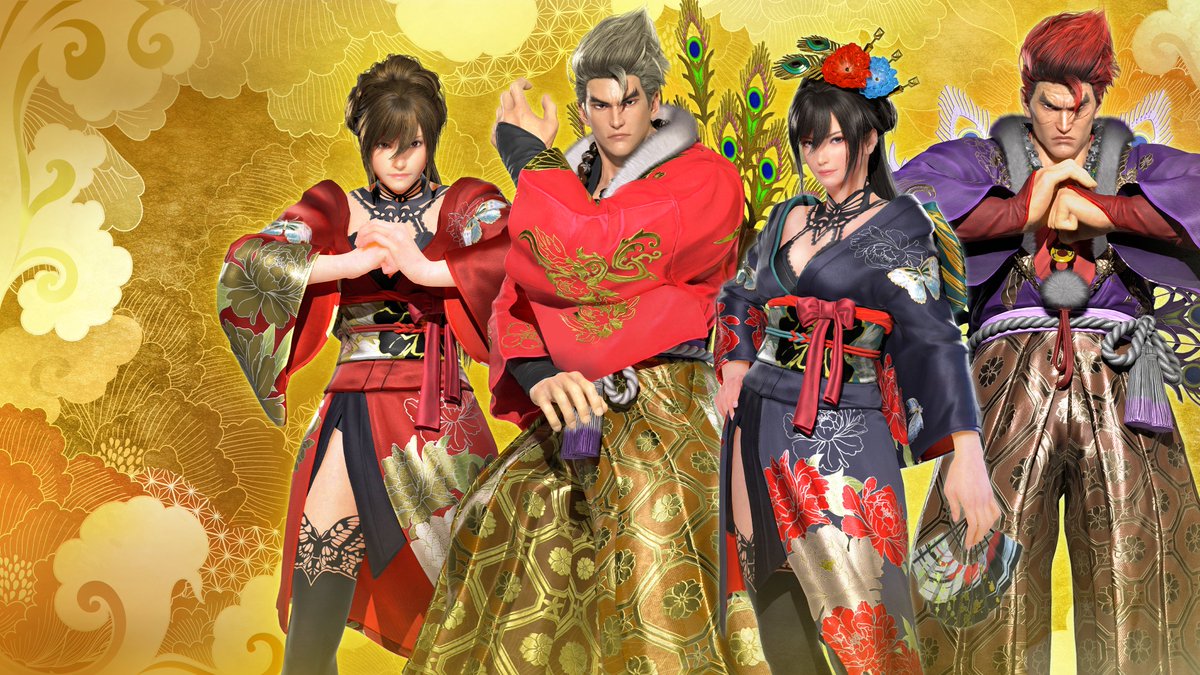
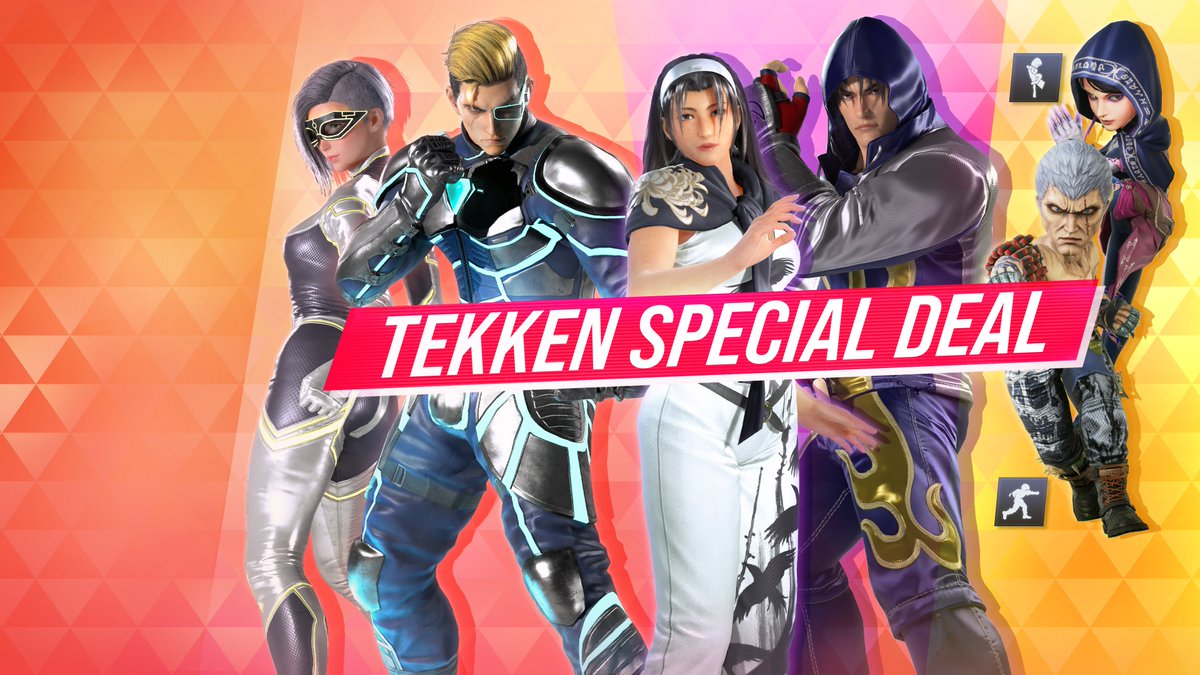
- Wrestler + Classic Law + Classic Hwoarang skins on sale
I just saw someone who knows nothing about reverse engineering scroll through the song list that's just available in training mode and it has text references for all the unreleased characters, story points, stages, hidden game modes etc.
All of that just because they didn't implement any sort of check to be like "Hm, this player is in a game mode they shouldn't be in, that's kind of odd, let's make it so that they shouldn't be able to do that"
Or at the very least, remove the text entries that are present there.
But none of that was done, and it's upsetting because we're now going to hear the same conversation that always happens when a fighting game gets cracked due to non-existent countermeasures.
I hate how people will look at CoTW Crack and be like "This is why we can't have PC Betas"
But no matter how you slice and dice it, you shouldn't be able to leak boatloads of content and get access to blocked game modes by changing 1 byte with cheat engine
That's a dev issue 🧵
Fun fact: Every #TEKKEN8 character has an animal codename that is used internally by the game. Below are the codenames along with my best guess on what they mean:
AML = Armadillo = Jun
ANT = Ant = Jin
BEE = Bee = Heihachi
BBN = Baboon = Raven
BSN = Bison = Steve
CAT = Cat = Azucena
CBR = Cobra = Lidia
CCN = Chicken = Jack-8
CHT = Cheetah = Bryan
CML = Chameleon = Yoshimitsu
CRW = Crow = Zafina
CTR = Caterpillar = Claudio
DER = Deer = Asuka
DOG = Dog = Eddy
GHP = Grasshopper = Leo
GRF = Giraffe = Paul
GRL = Gorilla = Kazuya
HMS = Hamster = Lili
HRS = Horse = Shaheen
JLY = Jellyfish = Leroy
KAL = Koala = Nina
KLW = Killer Whale = Feng
KMD = Komodo Dragon = Dragunov
LON = Lion = Victor
LZD = Lizard = Lars
MNT = Manatee = Alisa
OKM = Okami (Japanese Wolf) = Clive
PGN = Pigeon = King
PIG = Pig = Law
RAT = Rat = Xiaoyu
RBT = Rabbit = Kuma
SNK = Snake = Hwoarang
SWL = Swallow = Devil Jin
TTR = Tortoise? Tarantula? = Panda
WLF = Wolf = Lee
ZBR = Zebra = Reina
(Updated with Heihachi and Clive. List will be updated when new characters release.)