With the way everywhere is upside down.. With the way unions are crashing, kids are falling ill, adults are failing, immoral acts being the new norm and all..
It had me thinking..
Didn’t they do ikomo for everyone ? Didn’t a priest/pastor/an imam come to pray when they gave birth to everyone ?
What did it change ?
For the unions, didn’t they do marriage rights/counseling ? Didn’t a Pastor bless the union ?
All our praying mothers, didn’t they pray for us/took us for baptism and all ?
Why is utmost dysfunction still the order of the day ?
I swear to God, none of those things work and we all know it..
If you give birth to a Child now and just name them yourself and raise them normally however you can, there’s no difference with someone that did Ikomo/baptism
If you get married now and do normal traditional P.. No difference with the person that did counseling for 16 weeks and swear “Till death do us part” with one fufu book.
None of those things work… YOU KNOW.. I KNOW.. EVERYBODY KNOWS.
But we’re just too scared to challenge it mentally let alone physically..
What really works is humanity, what works is a functioning society, what works is when there are consequences for actions and everyone is being help accountable, what works is when we have love for each other.
All that made-up programming is just bullsh!t.
We need to start focusing on WHAT IS FUNCTIONAL.. As against what we’re being told is the way to do things.
SmartBallot : Towards credible and Transparent Ballot
I have consistently believed that technology, combined with the creativity and resourcefulness of young Nigerians, can help reinforce our democracy and advance free, fair, and credible elections.
I am pleased to endorse SmartBallot (https://t.co/YgbAq2cLxE), a platform developed to facilitate grassroots mobilization, civic engagement, and election monitoring.
I urge our supporters and NDC candidates to register on SmartBallot and examine how its tools can assist them in organizing their communities, coordinating voters and polling unit agents, expanding grassroots engagement, and supporting transparent election monitoring.
Through the effective use of technology and collective action, we can reinforce our democratic institutions and help ensure that every vote is counted.
Credible elections require preparation, active participation, and peaceful vigilance. Let us make full use of every available resource to create a more organized, engaged, and empowered electorate.
A New Nigeria is Possible. -PO
NIGERIANS, GO AND VERIFY (7)
LIFTING THE VULNERABLE : ANAMBRA’S BLUEPRINT FOR POVERTY ALLEVIATION AND SUSTAINABLE EMPOWERMENT (2006–2014)
Economic growth that does not translate into improved living conditions for ordinary citizens is incomplete. This is one of our fundamental concerns with President Bola Ahmed Tinubu's government. Development must ultimately be measured by its impact on human lives, particularly those of the poor and vulnerable. This was underpinned by the Anambra Integrated Development Strategy (ANIDS). We believed that infrastructure, education, healthcare, agriculture, and social protection must reinforce one another. Poverty was not merely a shortage of money; it was also a lack of access to opportunities, productive resources, and the basic conditions necessary for a decent life.
Our poverty alleviation strategy, therefore, went beyond temporary handouts. It focused on restoring dignity, creating economic opportunities, and equipping vulnerable citizens with the means to become self-reliant.
Our approach attracted recognition beyond Anambra. In May 2010, Magnus Kpakol, then National Coordinator of the National Poverty Eradication Programme (NAPEP), commended our commitment to poverty reduction, declaring: “We are prepared to support you in the excellent work you are doing in Anambra State.”
1. POVERTY MAPPING: KNOWING WHERE POVERTY LIVES
We recognised that poverty could not be effectively addressed without knowing where it was concentrated and what caused it. We, therefore, undertook a poverty-mapping exercise to identify the most deprived local government areas and communities.
The exercise revealed that some of our poorest communities were also important food-producing areas. Their challenges included poor access to markets, agricultural inputs, electricity, water, and other economic opportunities.
Areas including Anambra West, Orumba South, Awka North, and Ogbaru required particular attention. The findings informed our development priorities, enabling us to direct roads, agricultural support, and social interventions toward neglected communities.
2. EMPOWERING WOMEN, WIDOWS, AND COOPERATIVES
We recognised that rural women, widows, and indigent households bore a disproportionate burden of poverty. Across the 21 local government areas, we provided financial assistance and productive support to thousands of beneficiaries.
Our administration provided financial assistance to support the establishment and expansion of small businesses and farming activities. We also introduced revolving loan schemes to promote enterprise development, economic self-reliance, and improved livelihoods.
We distributed productive equipment, including sewing machines, generators, ovens, cookers, hair dryers, shoe-making machines, and welding equipment. The objective was to help beneficiaries establish sustainable livelihoods rather than remain dependent on government assistance.
We also promoted access to microcredit and cooperative financing to enable small entrepreneurs to expand their businesses, improve their incomes, and create employment.
Our philosophy was simple: rather than merely giving people money to survive today, the government should help them acquire the means to earn a living tomorrow.
3. AGRICULTURE AND FADAMA: MAKING RURAL COMMUNITIES PRODUCTIVE
Agriculture was central to our poverty-reduction strategy because many rural households depended on farming.
Through partnerships with the Federal Government, the World Bank, and other development partners, particularly under the FADAMA programme, we supported farmers with finance and productive assets.
In November 2009, our administration disbursed millions to FADAMA Community Associations across the state. By October 2010, the National FADAMA office was commending Anambra’s commitment. Its National Project Coordinator, Buka Tijjani, represented by Charles Ugwuona, described Anambra as the leading state in the programme.
Institutional rigging deserves much more public attention. How can we prevent this from happening? If voting takes place between 8:30 am and 4pm and the polling officer arrives at 12 pm, every lost time should be accounted for and Bvas machine must work too @PeterObi@ARISEtv
Tactical voters’ suppression.
This is why states in the SE didn’t give PO up to a Million votes each in 2023 (especially Anambra). Most people ran outta patience and left.
This time, the people have been informed. They will wait!! Even if the material comes by 11pm.
6 states from SOUTH
8 states from NORTH
That’s 14 States. Run off thereafter
Dubai, Obi & Makinde must get that done by all means.
Don’t collabo for now, wait till first ballot is done. Coalition will finish from there
@atiku@PeterObi@seyimakinde
NIGERIANS, GO AND VERIFY (3)
Building the Future Through Education
Peter Obi
In the first two instalments of this series, I explained how we approached the task of building strong institutions and laying a solid foundation for the development of Anambra State. One of the most important institutions we invested in was education.
For me, education was not a political game or a convenient political promise. Even before I ventured into politics, I had always regarded it as the foundation of meaningful development and the most enduring investment any government can make in its people. I believe that the future of any society depends largely on the quality of its educational institutions, teachers, learning environment, and opportunities available to its young people.
This conviction informed our decision to invest across the entire educational spectrum, from primary schools to universities, technical institutions, and adult education.
Basic and Secondary Education
One of our first major decisions was to return mission and privately owned primary and secondary schools to their original proprietors while retaining government support. We also provided billions of naira to assist in rehabilitating the returned schools, restoring the partnership between government and religious institutions that had historically contributed to educational excellence.
This policy attracted international attention. Professor Paul Collier, the Oxford economist and World Bank consultant, led a World Bank-commissioned study of Anambra’s educational transformation. His team examined our decision to return schools to their original missionary owners while retaining government responsibility for funding teachers’ salaries and supporting infrastructure. The team described the partnership model as a revolution in public service delivery and recommended it as a model that could be replicated by other Nigerian states and developing countries. We believed then, as we do now, that government does not necessarily have to own every institution to discharge its responsibility effectively. What matters is ensuring that every child has access to quality education.
For those who claim that we built no schools, I invite them to verify our records. We constructed five-classroom blocks in virtually all of the 177 communities in Anambra State, one of the most extensive community-based school infrastructure programmes undertaken by any state government. The town union chairmen and community leaders of that period can attest to this.
We also renovated hundreds of dilapidated schools, including some where trees had literally grown through abandoned buildings. Comprehensive Secondary School, Onitsha, and Oraukwu Grammar School are examples.
Beyond infrastructure, we distributed approximately 40,000 computers to schools, including more than 22,500 HP laptops. We equipped secondary schools with Microsoft Academies and connected schools across the state to the internet. We supplied generators, established and stocked libraries, revived school sporting activities, and installed boreholes in over 300 schools, including all girls’ schools. We also provided funding to support sporting activities in all our secondary schools.
These technology investments attracted remarkable international recognition. Mr Fabrice Campoy, Managing Director of the Personal Systems Group at HP Inc., described our procurement and distribution of over 22,500 HP laptops as the biggest project of its kind in the Middle East and Africa. Similarly, Mr Ken Spann, then Country Manager and Head of Microsoft Nigeria, described the establishment of Microsoft Academies in more than 500 Anambra secondary schools as the most extensive deployment of its kind in Africa at the time.
NIGERIANS, GO AND VERIFY (2)
Building the Institutions of the State
Peter Obi
In Series 1, I explained the philosophy that guided our administration in Anambra State: governance as a public trust, anchored on character, competence, capacity, and compassion. I also introduced the Anambra Integrated Development Strategy (ANIDS), our comprehensive framework for achieving balanced and sustainable development across all sectors.
But a development vision, however noble, cannot succeed without strong institutions to drive it. Before the government could effectively deliver on its promises in education, healthcare, infrastructure, security, and other sectors, we had to first restore the machinery of government itself. We could not build a prosperous state on a cracked and unstable foundation.
This was why one of our foremost priorities under ANIDS was to rebuild, strengthen, and reposition the institutions of government. When I assumed office, the physical and administrative architecture of governance was in a deplorable condition. Our task was not simply to construct buildings but to restore the institutions, systems, and structures through which government could function effectively.
We therefore began systematically rebuilding the infrastructure of governance across the executive, legislature, judiciary, civil service, and local government system.
Restoring the Seat of Government
The Government House in Awka, the state capital, had been vandalised and burnt by reactionary forces in 2004. We therefore had to rebuild, re-equip, and furnish it, restoring its dignity and functionality as the seat of executive government.
In the same vein, we rehabilitated the Governor’s Lodge in Amawbia and constructed a new Governor’s Lodge in Onitsha. These investments were intended not merely to provide accommodation but to strengthen executive presence and facilitate effective governance across the state’s major administrative and commercial centres.
Strengthening the Legislature and Judiciary
We rehabilitated the Anambra State House of Assembly Complex in Awka, providing our lawmakers with a more conducive and decorous environment in which to discharge their constitutional responsibilities. We also provided legislators with vehicles to facilitate the effective performance of their legislative duties.
We recognised that a functioning democracy requires strong institutions, including an effective legislature and an independent judiciary, each operating within its constitutional mandate.
In strengthening the judiciary, we provided brand-new vehicles to High Court judges. This was the first time such provision had been made for them in the history of the state. We also provided vehicles to magistrates for the first time since the creation of Anambra State.
These interventions were intended to strengthen the administration of justice, improve mobility, and enable judicial officers to discharge their responsibilities more effectively.
Rebuilding the Civil Service: The Chief Jerome Udoji State Secretariat Complex
Before our administration, many Ministries, Departments, and Agencies (MDAs) operated from scattered rented apartments, while civil servants lacked a centralised and decent working environment. This untidy arrangement undermined coordination, efficiency, and the dignity of public service.
We addressed this situation by constructing the two-phase, ultra-modern Chief Jerome Udoji State Secretariat Complex, comprising Blocks 1 and 2. The project brought the MDAs together under one roof, improved administrative coordination, and provided civil servants with a more suitable environment in which to serve the people.
The complex was named after Chief Jerome Udoji, the first indigenous Chief Secretary (the equivalent of today’s Secretary to the State Government) of the Eastern Region during the First Republic. This was also a recognition of his contribution to public administration and the civil service tradition.
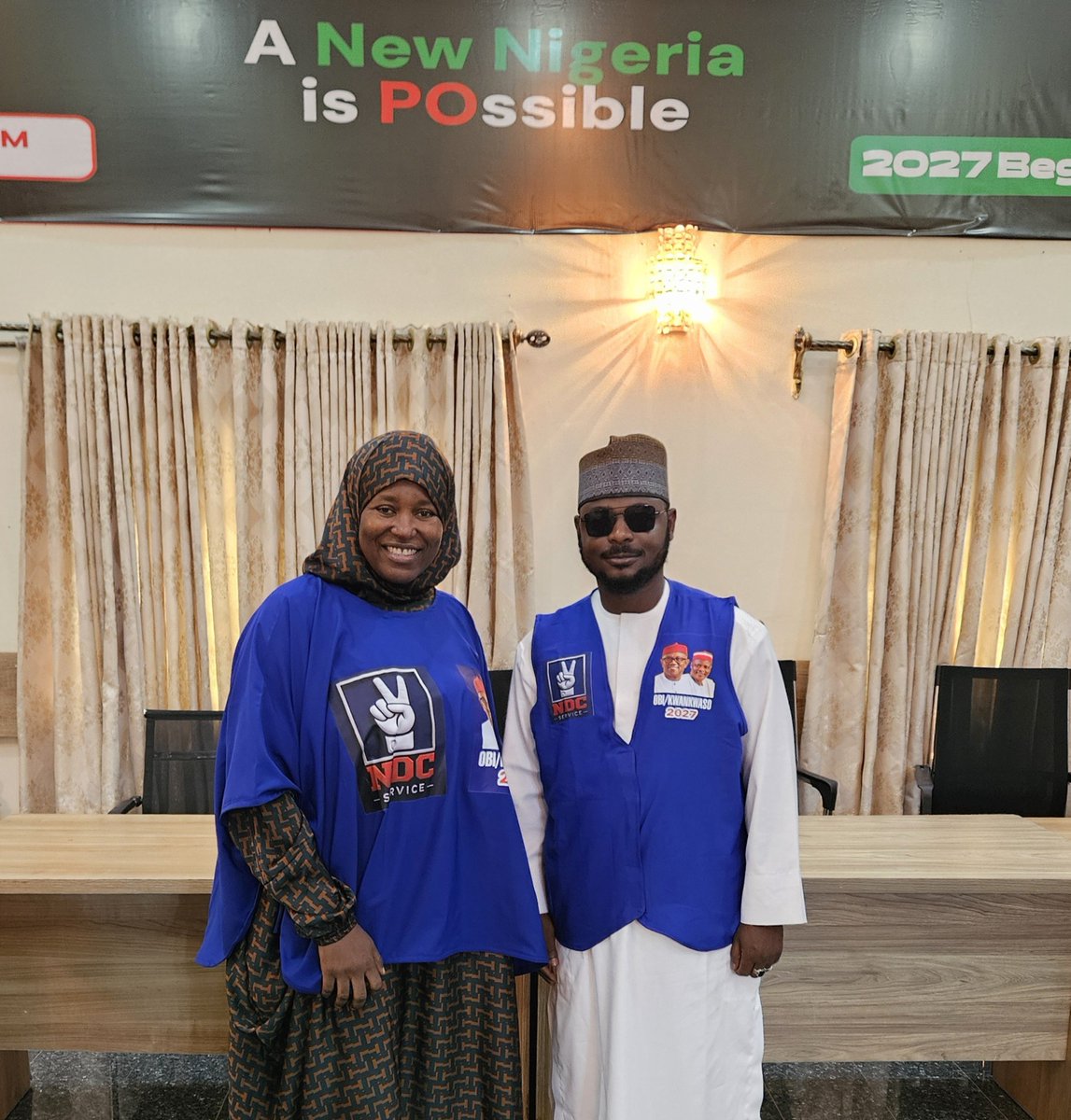
This jacket we are wearing is what we call the SERVICE JACKET.
Henceforth, it is our national identity.
If you have the opportunity, produce it in your own community and share it with your people.
Let it become our signature everywhere we go, let it be our billboard, let it be our poster and our everything. The jacket easily and rapidly spread the message of HOPE to Nigerians.
Nigeria MUST be okay with OK In Shaa Allah.
One thing people don’t realize is that this man is not in anyway perfect and has never pretended to be. He is deeply human and that is actually his winning edge. He just wants a better life for people even though he is what you may call elite. The ordinary man or woman can relate with him.
There’s something different driving him which a lot of people cannot stand. You can also tell he is highly disciplined and firm when it comes to work. One thing I know is this, Nigeria may not be Eldorado if he becomes President but I am sure he will set the country on the right path and It’s citizens will be the biggest beneficiaries of his presidency.
You can take that to the bank.
Late arrival of election materials at polling units in 2027 is rigging.
BVAS malfunction is rigging.
IREV having network issue is rigging.
Over voting and cancellation on result sheets is rigging.
Missing collation sheet is rigging.
Attempting to snatch ballot box is rigging
Vote buying is rigging.
Parents warn your children, children warn your parents.
If you rig, your life is at risk. Election rigging is a treasonable offense.
As a young man, it is very important for your character development that you make money and lose everything very early in life.
That period where you’ve had modest financial success and then you’re back to square one will help you understand life better, especially how people who you went over and beyond for start treating you when you’re broke.
It will also help you to live differently when you make money again.