Research. Refined. 🧬 Peptide research & education for an international community that demands verified sourcing and zero scams. Join the conversation 👇
🧪 RETATRUTIDE SIDE EFFECTS
INTERNET LIST vs MY ACTUAL EXPERIENCE
7 months into a Phase 3 trial.
✅ = happened to me
❌ = hasn’t happened to me
✅ Fatigue early on
✅ Constipation
✅ Rough sleep early on
✅ Thirst cues changed
✅ Strong appetite suppression
✅ Food noise reduction
❌ Nausea
❌ Vomiting
❌ Diarrhea
❌ Major RHR increase
❌ Racing heart
❌ Libido issues
❌ Food disgust
❌ Ongoing insomnia
❌ Serious GI issues
By month 7, sides are basically a non-factor for me.
n=1 obviously.
Sunday night question 🌙🧬
If you could ask a peptide researcher ONE question, what would it be? 👇
Best questions get answered in a deep-dive this week 🔬
cartalax already seems to be solving A LOT of different problem for people, but it NEEDS more anecdotes and experiments from people with;
- arthritis, osteoarthritis
- joint pain
- morning stiffness
- poor range of motion
- poor flexibility and mobility
- people with clicking, popping and creaking limbs
- meniscus and ACL surgery recovery
- spinal disc and herniation pain
- severe post-workout joint soreness
- runner's knee
- pain in back, neck, hand, finger, ankle; all pain like this
- osteoporosis
this is going to be another defining peptide, but literally everyone seems to be ignoring it
it's the missing key for people using KPV and BPC-157 for injury recovery
Saturday morning quiz ☕🧬
Which peptide comes from a protein found in human GASTRIC JUICE? 🤔
A) GHK-Cu
B) BPC-157
C) TB-500
D) Epitalon
Answer below 👇 no Googling 😂
cartalax does what BPC-157 and KPV JUST CAN'T DO - and there's actual human evidence behind it
BPC-157 works by building blood vessels into injured tissue. that's why it's so good for tendons, ligaments and joints.
BUT deep cartilage barely has any blood supply to build into. that's the unbridgable gap.
cartalax is three amino acids (AED), made in russia as a bioregulator for cartilage and connective tissue
in cell work it pushes chondrocytes, your cartilage cells, to grow, and lowers p53 so they stay alive instead of dying off.
and the "no human data" on cartalax was wrong.
it was just in russian.
slugina et al., 2015: elderly patients, jaw surgery, cartalax used around the operation. the authors followed bone regeneration clinically and on x-ray, and concluded it worked in older age groups.
so there's the human BONE data.
now let’s think about what it could actually do;
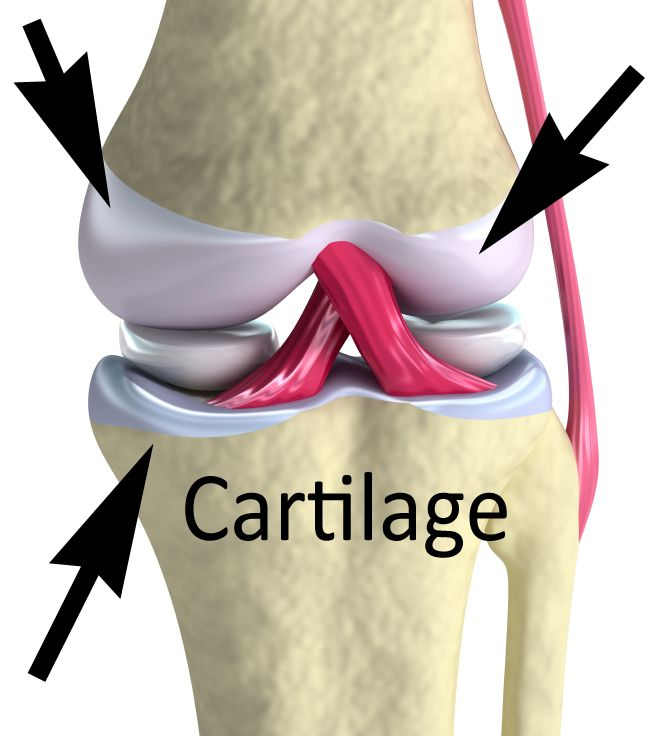
cartilage is the most annoying tissue of the body. no blood vessels, no nerves, and chondrocytes that barely divide.
that’s why a worn knee can't just heal itself with time. there’s no blood supply to bring in the right repairing agents.
BPC-157 leans hard on angiogenesis. it builds vessels into damaged tissue... but again, deep cartilage has nothing to build into.
KPV can’t fill that gap either. it shuts off NF-κB and calms the cytokines that chew through cartilage matrix (IL-1β, TNF-α), but it never tells a chondrocyte to live or make new matrix.
cartalax goes after the cell itself. in cell studies it pushes chondrocytes to grow and lowers p53, the signal that sends them toward dying off.
the theory is simple: keep the few cartilage cells you have alive and dividing.
where that could matter:
worn knees and early osteoarthritis, where chondrocyte loss is the whole story.
spinal discs, which are also avascular and degrade with age. spinal osteochondrosis is one of the things the russian institute positions it for.
aging bone, since the jaw data shows regeneration moving in old patients.
recovery around joint surgery, which is another use they position it for.
& this is where the stack clicks together.
KPV puts out the inflammation. BPC rebuilds the soft tissue around the joint. cartalax tells the cartilage cells to stay alive.
three layers of the same joint, zero overlap.
is it proven for cartilage in humans? no... these days, fucking NOTHING good is.
but the mechanism is aimed at exactly the tissue the other two can’t reach, and that’s what makes it worth watching.
not medical advice.
Slugina et al. 2015, Kubanskii Nauchnyi Meditsinskii Vestnik (DOAJ)
Did you know? 🧬🤯
GHK-Cu isn't synthetic in origin. It was first found in HUMAN plasma in 1973.
📉 Age 20: ~200 ng/mL
📉 Age 60: ~80 ng/mL
Your natural levels drop by more than half as you age.
That's why researchers got interested 👀
Which peptide fact blew your mind first? 👇