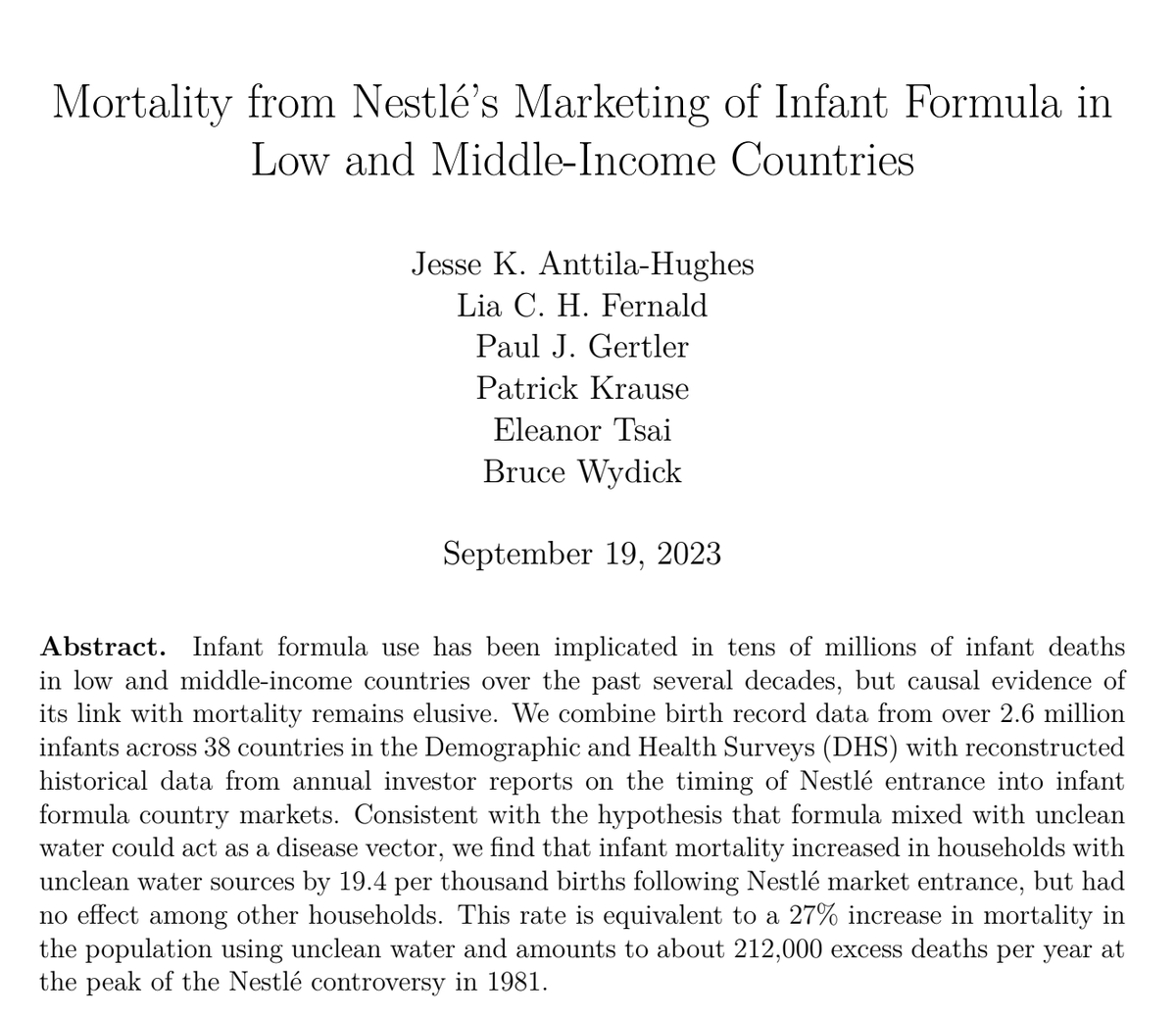
In the 1980s, Nestlé was moving into infant formula markets in low-income countries.
With each new market entry, moms switched from breastfeeding to unclean water, and infant mortality increased substantially; 200,000 excess deaths per year. 1/n
Hosting the second edition of WERISE 2025 was an immense privilege - kudos to all the presenters and attendees for contributing to a fantastic conference!
Reminder: Registrations for WERISE are open until Sept 20! Be part of a day of research, discussion, and community building on broadening participation in economics. Register now: https://t.co/VU07hXlRGV
Join us Oct 3, 2025 for WeRise 2025, hosted by @BU_WEorg
Spotlighting early-career economists:
1. Gender, labor, health & development
2. Barriers facing gender & sexual minorities in Econ
Register: https://t.co/wod883QDPT
Program: https://t.co/sJmECaQljM
Gender norms are extremely persistent and constrain women's life opportunities, especially so in poor countries. In my Job Market Paper, I show that grassroots media are an effective policy instrument to address gender norms at scale. #EconJMP#econtwitter
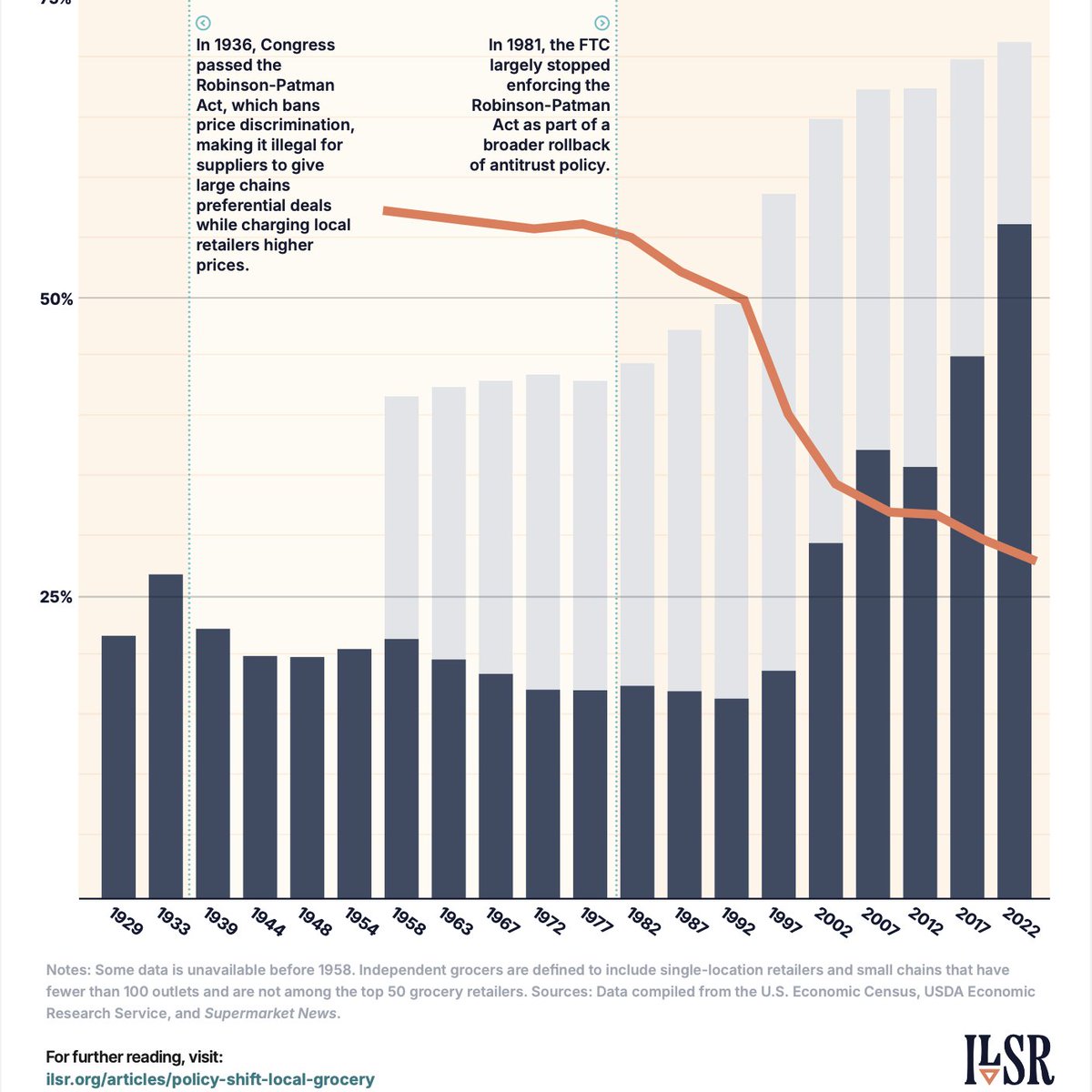
1. For decades, local grocery stores thrived. Then in the 1980s, the government stopped enforcing a key antitrust law. Rapid consolidation followed, giving rise to food deserts & a price spike. Our new graph shows the dramatic impact of this policy shift. https://t.co/Oautc1F8Tk
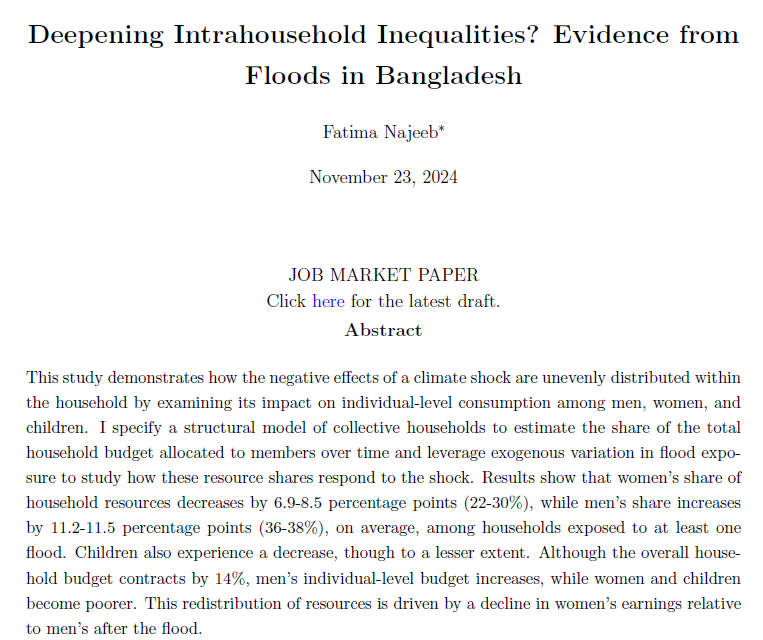
1/ How do climate shocks reshape lives inside households? 🏠🌍
My #JMP explores how climate shocks can change the way household members share resources, deepening intrahousehold inequalities. This has important implications for climate resilience and policy design.
Full paper: https://t.co/8SjDyfXOjX
#EconTwitter #EconJobMarket
📢New WP!📢 The Class Gap in Career Progression: Evidence from US Academia, w/ Kyra Rodriguez
Class is rarely a focus of research or DEI in elite US occupations.
Evidence suggests it should be: we find a large class gap in at least one occupation - tenure-track academia...🧵
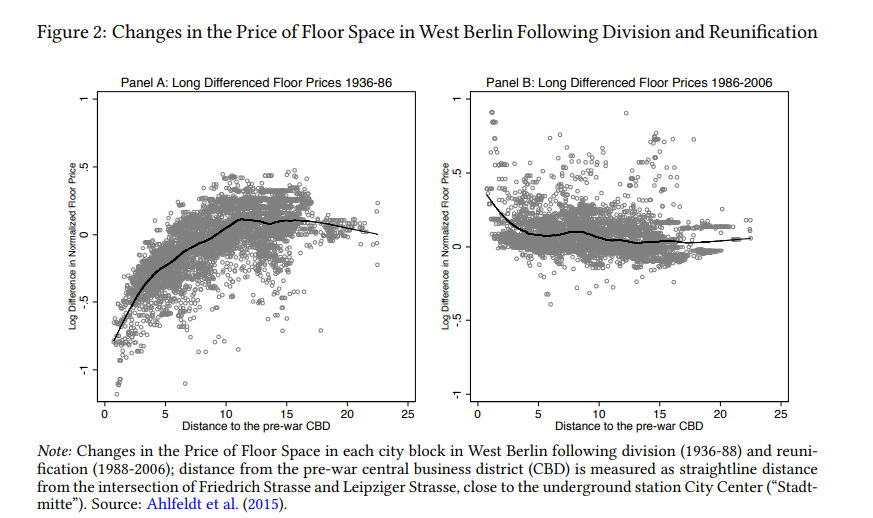
Spatial economics is about the causes and effects of the location of economic activity in geographic space. How location shapes the activities of people, their interactions, welfare, and the effects of interventions. Don't miss out--read this review: https://t.co/cJj4MNwOcV
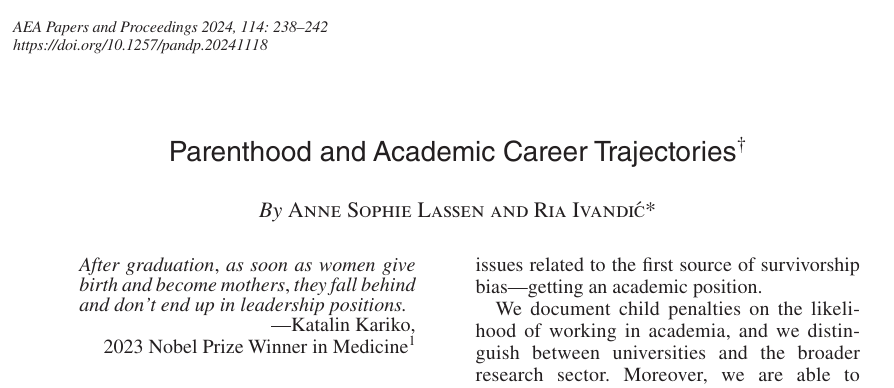
What happens to women in economics after having a child? They are are more likely to leave research careers and less likely to get tenure in the first 5 years after childbirth. Summary of the paper is in @CEP_LSE Centrepiece and paper in AEA P&P w/ @AnSoLassen
Econs using Overleaf: If you learn few basic Git commands you won’t need to manually upload figures &tables every time there are updates. Git can sync everything automatically. Use git push to update Overleaf & track changes with a commit message. #EconResearch#Overleaf#git
Killer heat’s shadow: The new normal of extreme heat is impacting outdoor workers who run our cities but are directly exposed to intense heat. @shagun__k and Joel Michael investigate how India’s labourers are on the frontlines, facing boiling temperatures
https://t.co/wjpcRQwrYn
Another interesting looking paper dropped at NBER by Alexander Mas and coauthors on unionization and its effect on the distribution and compression of faculty salaries and employment. (My favorite example of monopsonist employers is the university.)
https://t.co/fhO1FA9Q6A
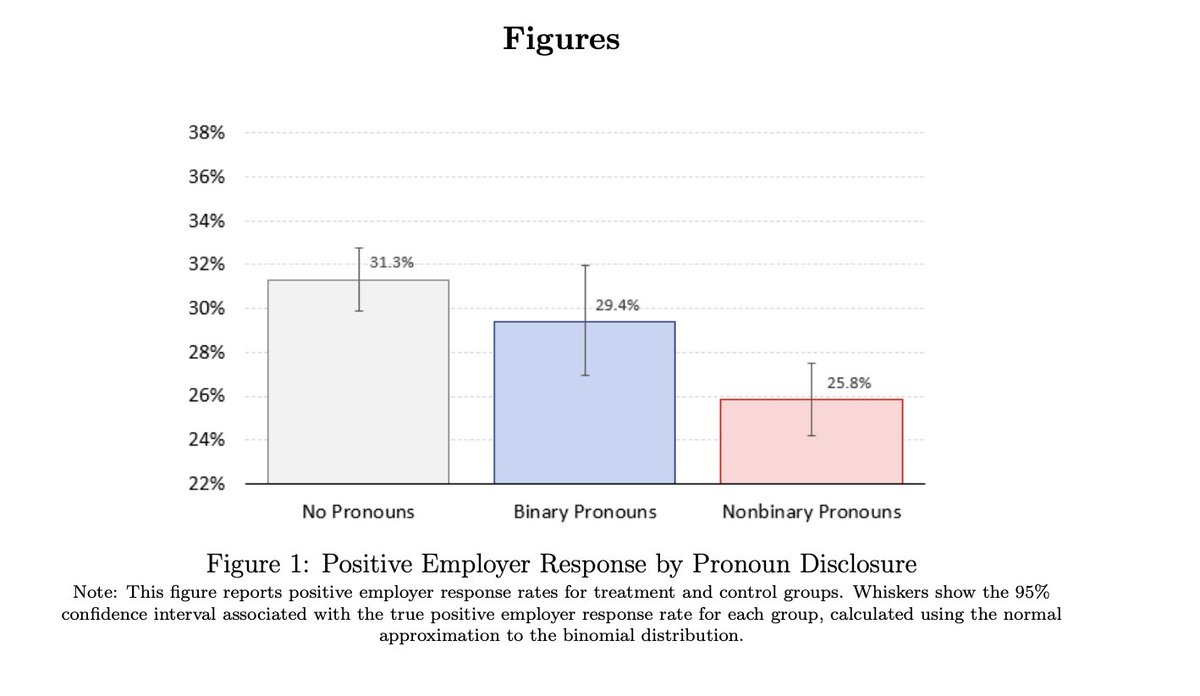
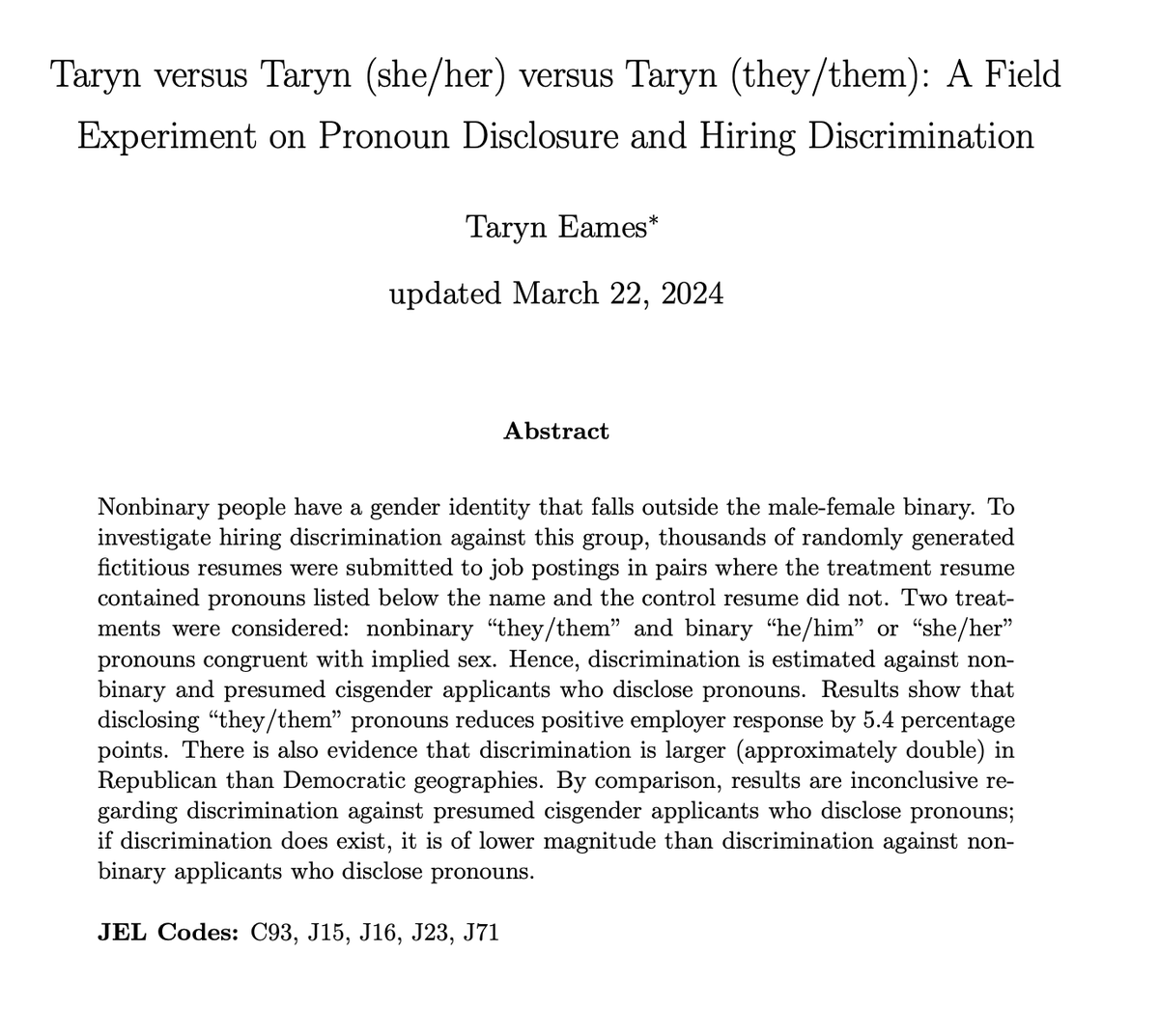
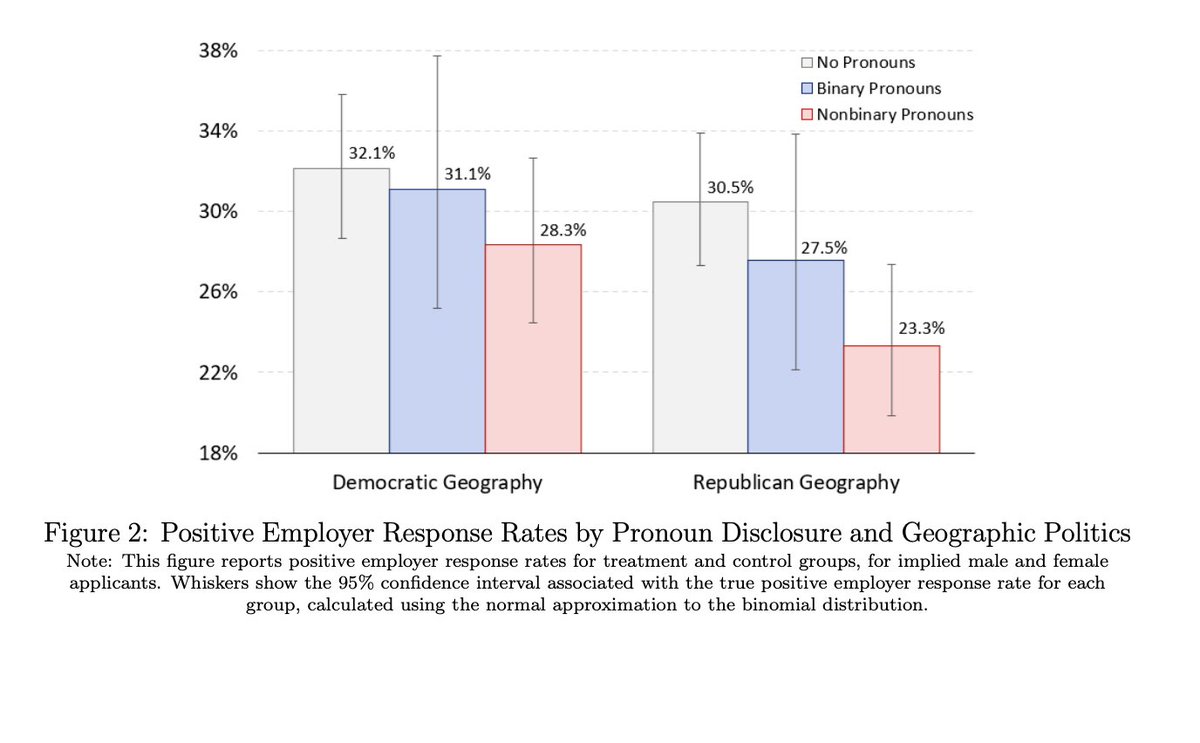
Clear evidence that employers discriminate against nonbinary individuals.
All-else-equal, disclosing that one uses "they/them” pronouns substantially lowers the chances of getting a job interview.
https://t.co/VJ8LlQR77H