@ThoughtfulTs@genspect She should have known better than to be bullied into this. Knowing how her words would be pounced on by either ‘side’, she should have simply said she would give her opinion once she had had time to read it properly.
Thanks to all the new followers
Maybe I should explain my perspectives - it’s long!
I left England in 1998 when I was 27 with my white English wife, after being transferred to Tokyo
I was a young investment guy and thought I’d be back in 2 years. But I got head hunted by other firms and 2 years became 25!
I didn’t know Japanese but I took lessons twice a week. It was hard to begin with, especially when our son was born there, a year later.
In short we became an ethnic minority, granted permanent residence when the 5 year period had elapsed.
It took a very, very long time to really settle in to their way of life, their thinking. Even 25 years is nothing like enough
But I did experience their mindset. It is fundamentally different from our own. There’s just a feeling of people pulling together as a unit. Sure, there’s the same political fights, but underneath is an unspoken recognition of their sameness
I’ll talk more of this in future posts
As an “immigrant” to Japan it would never even cross my mind to offer them my political opinions. However my job brought me into contact with many Japanese politicians, senior civil servants and board members of their largest companies.
I could observe their fascinating politics and culture from the highest level, without wanting to engage in it. All immigrants and their offspring should understand this! It’s NOT your country!
When the Tohoku quake hit in 2011 I was there. The trains were cancelled and everyone had to walk home from central Tokyo. The orderliness and quietness will stay with me. People talked in polite but hushed tones and no one became enotional.
Many foreigners simply rushed to the airports and just left. Half of them left for good eventually
I was managing Japanese staff at this point. I’ll never forget the level of respect they had for me thereafter.
These people are bonded by millennia of natural disasters. It is profound to lose entire communities and families in a single moment
I digress. To cut to the chase, through these experiences and my own deep reading of British history, I began to imagine when this country was at one with itself
That was a very long time ago. Out of memory now almost
I returned two years ago, cutting short a successful career to look after my parents, both whom passed in the first year back
Returning home has blown my mind
Literally culture shock
It’s super hard to meet people. The middle class in particular have become abominable with all their ideological fetishes.
The working class is where it’s at. This is where what is left of Britain has retreated to.
A country is not a country without its people. Japan and Britain have equally long histories and much in common
When you see me write it is written through the lens of a person who knows what true conservatism is - I’ve lived it
I won’t give up trying to take us back to that place.
The British people have achieved incredible heights.
We can do again
🇬🇧🏴🇬🇧🏴🇬🇧🏴🇬🇧🏴🇬🇧🏴🇬🇧🏴🇬🇧🏴
Birmingham's Green Lane Mosque on how to stone a woman to death. You must first bury her up to her waist to preserve her modesty. How thoughtful!
The government has just given this mosque a £2.2 mn grant for "youth services".
Habibi is a brilliant account, run by an expert researcher who reports the truth about extremism in this country.
It often exposes how the state tolerates and even helps the extremists.
So no surprise that Byline Times has tried to smear Habibi and complain about the accountability it brings.
Byline Times specialises in pointing at shadows. It reported that Jason Arday was driven to his death by the far right. It employs a 9/11 truther.
And the author of the piece is Dan Evans, a convicted phone-hacking journalist. There is more.
Byline Times is controlled by the same people as Byline Networks - recently awarded more than a quarter of million pounds by Angela Rayner to “fund the future of local news.”
Please do follow Habibi and learn from its work.
Mary, Susan, Maya and their colleagues have devoted ten years of expert work mostly free of charge.
The captured MSPs and MPs can’t hold a candle to any of them. Bloody marvellous, bright & unbelievably resilient.
@ForWomenScot@WRNScotland@SexMattersOrg@ScotPAG
I've read the Women's Resource Centre article, and I have to say I'm deeply uncomfortable with its argument.
There is a difference between making sweeping generalisations about an entire population and raising legitimate concerns about patterns of behaviour, cultural attitudes, institutional failures and women's safety.
What concerns me about this article is how quickly it moves from describing a handful of survey responses to making sweeping claims about the political direction of an entire section of the women's movement.
Apparently, if women raise concerns about migrant men, asylum policy, sexual violence or the treatment of women within particular cultural and religious communities, we're now dangerously close to the far right.
Really?
Women have spent decades being told to speak up about male violence. We've been encouraged to name it, challenge it, examine the conditions that enable it and demand that institutions take it seriously. But apparently there are now restrictions on which men we're allowed to talk about, which cultural practices we're allowed to criticise and which questions we're allowed to ask.
Women's safety doesn't become less important because discussing it makes somebody uncomfortable.
And let's talk about the three examples the WRC uses to illustrate what it considers hostility towards migrant men.
• Firstly, concerns about male asylum seekers and women's safety.
Of course women are going to be particularly concerned about male asylum seekers when discussing women's safety. That's hardly surprising, is it?
Women are discussing sexual violence, safeguarding, accommodation and the risks associated with living alongside unfamiliar men. Why would we expect women not to raise those concerns?
Perhaps we should establish exactly who we're talking about here. Are we discussing asylum seekers generally, or are we specifically discussing the men arriving in the UK by small boats?
These are not interchangeable categories, and pretending they are doesn't help anyone have an honest conversation about immigration policy or safeguarding.
The fact that the men in question are migrants doesn't mean women must switch off their safeguarding instincts.
And why does the article seem to treat concern about the safety of migrant women as legitimate, but concern about the safety of women in communities receiving asylum seekers as somehow suspicious?
Both deserve consideration.
And here's the elephant in the room: we know that some of the men arriving in these circumstances come from countries and cultural backgrounds where women have significantly fewer rights, where misogyny is deeply entrenched and where women's freedom and independence are restricted in ways that would be unacceptable here.
The suggestion seems to be that once these men arrive in the UK, those attitudes somehow disappear at the border. That they leave those beliefs behind along with their belongings. But why would we assume that? Cultural attitudes don't automatically change because somebody crosses the Channel.
Of course, not every man from those countries holds the same beliefs, and individuals should be judged on their own actions. But pretending that cultural attitudes have no bearing on how women are treated is just as dishonest as making sweeping assumptions about every individual.
And if anyone thinks I'm making this up, look at the Government's own actions.
In August 2026, the Home Office published a nine-page guide for asylum seekers explaining that rape and sexual assault are crimes, that consent is required every time, that women have equal rights to men and that men cannot control what women wear, where they go or whether they work.
Think about that for a moment.
The Government considers it necessary to explain these basic principles to men arriving in this country. We're talking about having to spell out that you cannot rape women, sexually harass them or control their lives.
So when women raise concerns about the attitudes some men may bring with them, perhaps those concerns aren't quite as unreasonable as the WRC would like us to believe.
Why is the Government recognising the need to communicate these expectations while women who raise the underlying concerns are accused of prejudice?
We should be able to have an honest conversation about why this guidance was considered necessary in the first place, without immediately being accused of racism.
We should be able to talk openly about these differences, ask how they affect women's safety and discuss what expectations we have of people coming to live in this country. That isn't racism. It's a legitimate conversation about women's rights.
• Secondly, concerns about sexual violence against women travelling through irregular migration routes.
The article describes one respondent's claim that women and girls arriving through irregular migration routes face an almost universal risk of rape as a sweeping assertion.
But this isn't some fringe concern invented by an angry respondent on a survey. There are very real, documented cases of women being raped, sexually assaulted and exploited during these journeys.
And these aren't just dangers experienced on migration routes elsewhere in the world. There have been documented cases involving women arriving here in the UK.
One woman had disclosed being repeatedly raped by a people smuggler just five days before leaving France. She was described as suicidal and inconsolable. Another woman disclosed that she had been raped twice during her journey to the UK.
The Home Secretary, Shabana Mahmood, has also recently raised this issue, stating that nearly every woman attempting to reach the UK by small boat from northern France has probably been raped during the journey.
So is the Home Secretary also expressing hostility towards migrant men? Or is it possible that this is a serious safeguarding issue that deserves to be discussed?
You cannot dismiss concerns as racist simply because they overlap with arguments being made by people whose politics you dislike.
If anything, these accounts demonstrate precisely why the safety of women and girls should be central to any discussion about migration.
• Thirdly, the suggestion that refugee protection should prioritise women and children.
Well, yes. Women and feminist organisations have historically advocated for women and children to receive particular protection in situations of war, conflict, displacement and sexual violence.
Why? Because women and children are often particularly vulnerable to sexual violence, exploitation, trafficking and abuse.
That's not a radical concept. It's a fairly fundamental part of safeguarding.
Prioritising women and children doesn't mean that men cannot be victims, that male refugees don't deserve protection or that every individual man is responsible for violence.
Since when did advocating for women and children become evidence of prejudice?
And let's talk about intersectionality, because it's being used here as though it gives some women the authority to decide which concerns are legitimate and which are politically unacceptable.
Intersectionality should mean recognising that women have different experiences. It shouldn't mean creating a hierarchy in which some women's experiences are given greater legitimacy while others are treated with suspicion.
Working-class women, black women, white women, migrant women, lesbian women and women from religious minorities all have the right to speak about their experiences.
None of us should have to qualify our concerns by first demonstrating that we hold the correct political opinions.
Who gets to decide which concerns are acceptable, and whose voices are being dismissed? There's something particularly patronising about women in organisations and institutions telling working-class women what they should be concerned about, how they should interpret their own experiences and which opinions they should hold.
Working-class women are often the ones living with the consequences of decisions made by people who don't share their circumstances.
We're expected to accept those decisions quietly, and if we question them, we're told our concerns are rooted in prejudice. It's another way of telling certain women that they don't know what's best for themselves.
Dose the writer live next door to a HMO? Is there one next to their daughter's school? Do they pass encampments of men on their way to work in the morning? Do they see groups of men hanging around drinking all day in the local park or by their local shop?
Because this is the reality for many women, including myself. These aren't debates happening in a conference room or on a survey.
They're things women encounter in their everyday lives, in their neighbourhoods and on their doorsteps.
It's easy to dismiss women's concerns when you aren't the one living with the consequences.
Just look at Piddington in Oxfordshire. Plans to accommodate up to 1,256 male asylum seekers at a former military site near the village prompted 133 local women to write an open letter to female MPs, raising concerns about their safety and the impact on their community.
And this isn't some political debate for those women. It's their village, their homes, their children and their everyday lives.
It's easy to lecture other women about tolerance and accuse them of prejudice when you aren't the person being asked to live next door to the accommodation, walk past it every day or consider what it might mean for your family.
I also find the suggestion that gender-critical feminism is increasingly converging with the far right particularly lazy? Are we talking about specific individuals, organisations, political alliances or simply women who disagree with the author's interpretation of immigration and women's safety?
If there are examples of racism, name them. If there are examples of far-right political alliances, identify them. But don't use the existence of some unacceptable comments to cast suspicion over an entire movement.
And let's not forget that the article itself acknowledges that there are legitimate debates to be had about sex-based rights. Yet it seems remarkably comfortable drawing political conclusions about the women having those debates.
There is something deeply ironic about an organisation that says it doesn't want to police the women's sector while simultaneously setting out which political positions it considers acceptable and which women need to examine their assumptions.
A women's movement that only welcomes women who arrive at the approved political conclusions isn't much of a movement for women at all.
And then we get to the conclusion, which I think is particularly telling.
The author appears frustrated that, rather than accepting the WRC's position, women have challenged it, raised objections and expressed views that the organisation finds unacceptable.
And what is the proposed response? Apparently, the women's sector must now spend time making sure women aren't racist.
Just stop and think about that for a moment.
Women raise concerns, disagree with an organisation's position and challenge its political framing, and the response is to suggest that those women need educating about racism.
Whatever happened to engaging with the arguments? Whatever happened to taking women's concerns seriously, even when you disagree with them?
You cannot claim to be building a broad women's movement while treating women who disagree with you as a problem that needs correcting.
The problem isn't that women need to be taught not to be racist every time they express an opinion the organisation dislikes.
The problem is an apparent unwillingness to accept that women can arrive at different conclusions, raise uncomfortable questions and disagree without their motives being put on trial.
We should be able to challenge misogyny without making excuses for it when it appears in communities we'd rather not offend.
We should be able to discuss immigration without being branded extremists, and we should be able to defend women's sex-based rights without having our politics defined for us by somebody else.
Truth doesn't become racism because it's politically inconvenient.
And women's rights shouldn't come with a list of subjects we're no longer allowed to discuss.
Women are not a political re-education project.
https://t.co/RwrkMv676F
@YveK22 Ich erinnere mich, wieviele Muslime danach auf die Straßen gegangen sind und gegen den Terror ihrer Glaubensbrüder demonstriert haben: "Nicht in meinem Namen".
Oh nein, da habe ich ja was verwechselt. Kein Einziger hat das getan. Warum nicht? Der Islam ist doch so friedlich?
Guten Morgen zusammen,
heute vor elf Jahren, am 13. November 2015, verübten mehrere Attentäter im Namen des Islams, organisierte Anschläge in Paris. Der Horror dauerte über 4 Stunden und forderte 130 Todesopfer sowie knapp 700 Verletzte.
Zuerst sprengte sich gegen 21.17 Uhr ein Selbstmordattentäter in der Nähe des Stadion Stade de France in die Luft und riss dabei einen Menschen mit in den Tod. Der Attentäter wollte eigentlich ins Stadion gelangen. Hier fand gerade ein Freundschaftsspiel zwischen der Deutschen und Französischen Fußballnationalmannschaft vor 80.000 Zuschauern statt. Sein Sprengstoffgürtel wurde jedoch von einem Sicherheitsmann entdeckt, worauf der Attentäter flüchtete. Ein weiterer Sprengstoffattentäter versuchte fast zeitglich ins Stadion zu gelangen, scheiterte ebenfalls und sprengte sich am Toreingang H in die Luft, zum Glück ohne weitere unschuldige Menschen mitzureißen. Beide Attentäter trugen einen gefälschten syrischen Pass mit sich, und beide sollen im Oktober als Flüchtlinge in Griechenland registriert worden sein. Da die Pässe gefälscht waren, ist die Identität der Beiden bis heute nicht bekannt.
Beinah zeitgleich fuhr ein sogenanntes Hit-Team in einem Seat Leon vor eine Bar in einem Pariser Stadtteil. Sie feuerten dort mit Kalaschnikows auf die Gäste, die im Außenbereich saßen. Anschließend schossen sie auf Gäste eines gegenüberliegenden Restaurants. Insgesamt 15 Menschen verloren ihr Leben dort. Nach diesem Anschlag fuhren die Attentäter weiter, erschossen in einem Auto einen Mann und in einem Café, einem Waschsalon und in einem Restaurant noch vier Menschen. Anschließend begaben sich die Attentäter zur Bar "La Belle Équipe". Sie erschossen dort weitere 19 Menschen. 15 Menschen wurden teils schwer verletzt. Ein Selbstmordattentäter sprengte sich in einem Café in die Luft. Die Bombe detonierte unvollständig, weswegen hier keine weiteren Todesopfer zu beklagen waren, 15 Menschen wurden jedoch teils schwer verletzt.
Rund eine halbe Stunde nach dem ersten Attentat am Stadion begann der Horror im Bataclan Theater, wo gerade die US-Band Eagles of Death Metal ein Konzert vor rund 1.500 Zuschauern gab. Zwei Attentäter erschossen zuerst zwei Radfahrer vor dem Theater.
Anschließend drangen sie in das Gebäude ein und schossen mit Kalaschnikows -Gewehren zehn Minuten lang auf die Konzertbesucher. Zusätzlich warfen sie Handgranaten in die Menschenmenge. Einen Angreifer konnten zwei Polizisten töten, mussten sich aber dann wieder zurückziehen und auf Verstärkung warten. Zwei weitere Attentäter nahmen Geiseln und verschanzten sich im Gebäude. Um 0:50 Uhr erfolgte der Zugriff durch die Polizei. Die beiden Attentäter sprengten sich dabei in die Luft. 3 Stunden dauerte das Massaker im Bataclan Theater. 89 Menschen verloren dabei ihr Leben.
Der IS bekannte sich später zu den Anschlägen. Einige der Attentäter kamen als Flüchtlinge getarnt nach Europa. Der mutmaßliche Bombenbauer war zusammen mit zwei weiteren Attentätern kurze Zeit in Ulm. Sie stiegen dort in einem Hotel in der Stadt ab, und wurden dort von einem weiteren Attentäter abgeholt.
Zeugenaussagen von Menschen, die diese Hölle überlebt haben:
„Wir dachten zuerst, es seien Knallkörper. Dann sah es hinten im Saal nach Funken aus. Rasch wurde klar, dass es sich um Mündungsfeuer handelte. Drei Männer mit Gewehren schossen den Zuschauern in den Rücken und stürmten weiter, in die Menge schießend.“
„Das Trio war unvermummt, mit kurzen Bärten. Einer befahl den über tausend Zuschauern, sich auf den Boden zu legen. In akzentfreiem Französisch erklärte er: Ihr habt in Syrien unsere Brüder getötet, jetzt sind wir hier.“
„Sie sagten, wenn ihr euch bewegt, töten wir euch. Sie erschossen die auf dem Boden liegenden Leute trotzdem.“
„Sie töteten, töteten, töteten. Ich war von Toten umgeben. Ich weiß nicht, wie ich überlebt habe.“
„Sie waren schwarz gekleidet. Einer hatte ein sehr jungenhaftes Gesicht, und er ging seelenruhig zur Sache. Er ging sehr methodisch zu Werke, töteten eiskalt einen nach dem anderen.“
„Sein Blut ergoss sich auf mein Bein. Meinen Nachbarn, einen Mann von 50 Jahren, traf ein Schuss direkt ins Gesicht; Stücke seines Hirn fielen auf meine Brille. Ich hörte die Kugeln und versuchte, auf den Boden zu schauen. Da war eine riesige Blutlache.“
„Merkwürdigerweise hört man die Kugeln fast nicht, wenn sie von der Nähe aus abgeschossen werden. Aber ich spürte ihre Hitze an der Wange. Ich war bereit zu sterben. Ich wog damals 122 Kilo, 20 mehr als heute. Wenn einer getroffen wird, dann ja wohl ich.“
„Irgendjemand schaltete das Licht in der Halle an. Keine Ahnung, wer das war. Ich erkannte den Mann, der gerade noch neben mir an der Bar etwas geholt hatte. Er lag am Boden, sein halbes Gesicht war zerstört. Er war tot.“
„Ich lag auf dem Bauch. Meine Freunde waren neben mir. Wir haben langsam und leise geredet. Die Freunde hatten Kinder, ich nicht. Sie hatten mehr Angst als ich. Der rechts sagte: Ich muss meine beiden Kinder wiedersehen.“
„Wenn ein Meteorit irgendwo einschlägt, sind alle sofort tot. Die eigentliche Folter war, dass sie die Leute einzeln erschossen haben. Manche schrien noch Gnade. Schon wurden sie erschossen.“
„Einmal schrie ein Attentäter: Wenn einer nach Hause will, dann jetzt“ Einzelne sind aufgestanden, die wurden gleich erschossen. Auf dem Boden war Blut. Überall waren Tote und Blut.“
„Ich stieg über einen Mann am Boden. Ich nahm seine Hand, doch sie war schlaff und kühl. Ein paar Meter weiter sah ich eine junge Frau, sie war am Rücken getroffen worden. Leute sind auf sie gestiegen. Reflexhaft kauerte ich mich zu ihr, unter uns war eine Pfütze aus Blut.“
„Ich rannte zum großen Boulevard Voltaire, stolperte, verlor meine Brille. Ich drehte mich zurück zu dem Mann, über den ich gestolpert war und wollte mich entschuldigen. Beim Runterbeugen sah ich. Er war tot. Wir sind in ein Wohnhaus geflüchtet und klopften an Türen, aber niemand machte auf. Die Leute hatten Angst.“
„Nach gefühlt einer halben Stunde schrie jemand: Nicht bewegen, sonst schieße ich“
„Dann gab es eine Explosion. Mein linkes Ohr wurde taub davon. Es regnete Blut und menschliche Überreste auf uns.“
„Nach einer Weile kam ein Polizist vom Sondereinsatzkommando zu uns hoch und hielt eine kleine Ansprache, die ich nie vergessen werde. Er sagte: Ich freue mich, Sie alle zu sehen, denn Sie sind Überlebende des Bataclan. Sie sind Helden. Vergessen Sie das nie!“
130 Menschen verloren ihr Leben an diesem Tag.🙏
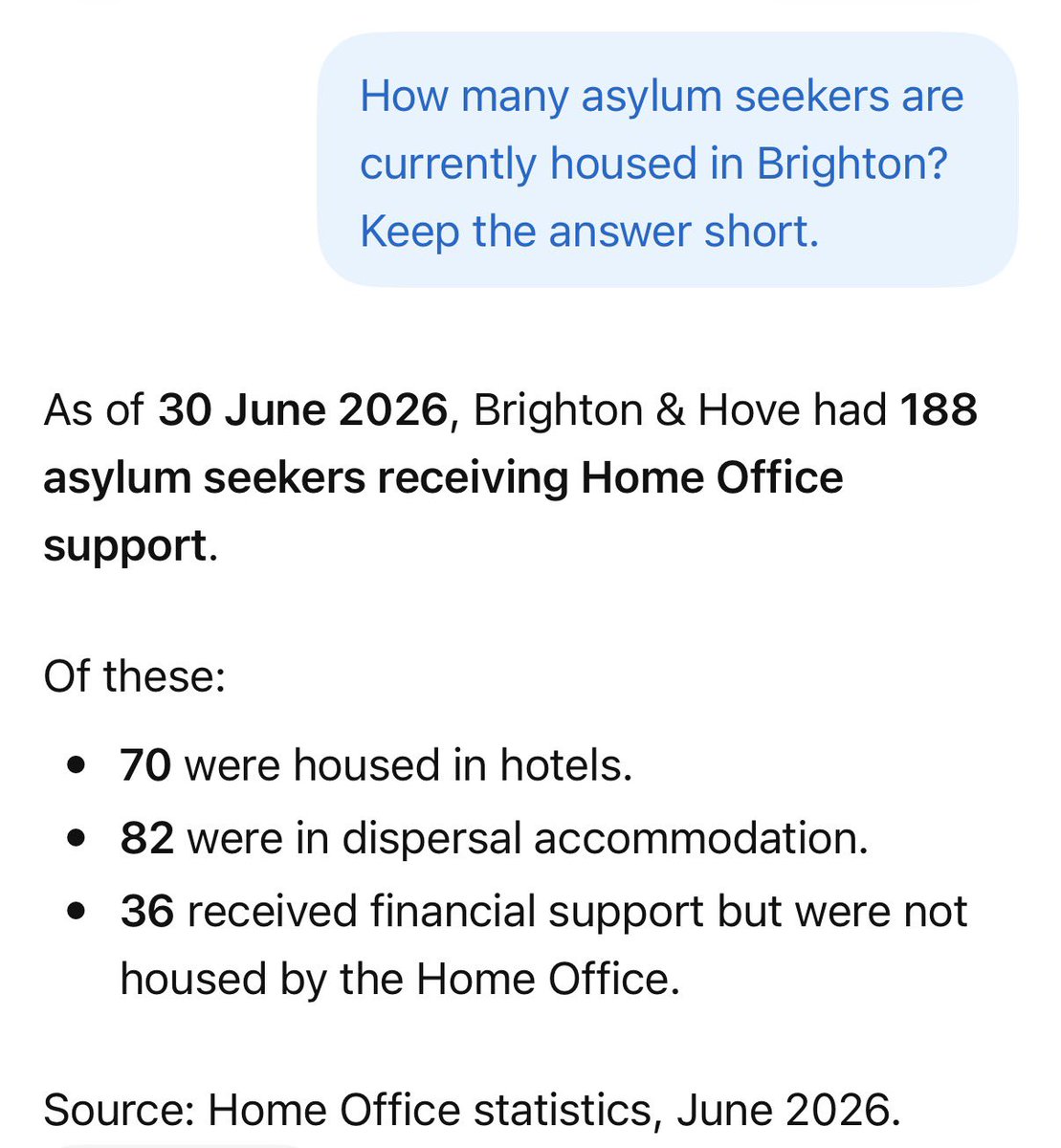
@AjaTheEmpress@Allegory91001 Brighton voted for pro-migration politicians, has a population of 285,000 and currently houses 188 asylum seekers. And yet a tiny village of 350 is supposed to take 1256.
@RupertLowe10 I’ve been very concerned about allegations of anti semitism at the top of your party Rupert, as well as among members. The Jewish community has been traditionally very patriotic. What reassurance can you offer?
Hey @GyllKing So no, @JocastaMoney was not at RTN Nottingham, and that's not her in the pic. She has also never been a steward for Tommy Robinson. KJK @ThePosieParker is critical of Islam, which is a religion not a race.
And as you appear to be factually challenged, I'll offer a final point about the @NottsRtN march. It was women only and 'transwomen' are men, that's why they were excluded. I hope this helps.