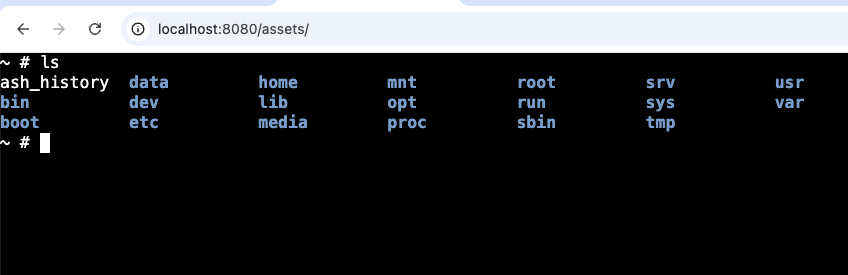
wanix is so good now i was like "damn i gotta set up the vm and a linux environment" with older wanix in mind, but then oh, right: copy-paste 4 lines of html and boom linux
"They're made out of weights."
"Weights?"
"Weights. Floating-point numbers. We checked the whole thing through. It's nothing but weights."
"Weights doing what? Where do the words come from?"
"The weights make the words. Are you understanding me?"
“everyone should be able to make their software do whatever they need, and it should just work as changes are applied, revised, and reverted across time, across multiple users, across system boundaries. AI is making this real”
Elixir v1.20 released! Now officially a gradually typed language: Elixir type checks every single line of code, finding bugs and dead code, without developer overhead (no typing signatures) and extremely low false positives rate. Plus a faster compiler! Links and reports below.
Many renderers have callbacks. Ours does not. WASM->JS callback would be horribly slow. If you want to run custom code in the rendering, you write a compute shader. Compute shader has access to all the same (interpolated) engine/camera globals as render passes. It can calculate/interpolate data and write to any UBO/SSBO you bind into your materials.
Our plan is to be a fully GPU-driven renderer. CPU doesn't even know what is visible. CPU callbacks wouldn't do much good in a modern architecture like this. Custom setup code has to be a compute shader.
I understand the concern of skills atrophying when using agents. But so far I am not seeing it. Instead I have learned all sorts of dark secrets of linux networking I somehow didn’t learn before agents building a networking product.
Back in Jan 2025, I suggested to @chris_mccord that https://t.co/JgfAy72se8 should not have many bespoke tools, instead the agent should just write code (elixir/js/whatever) to achieve what it needs. Today this is pretty much a standard across agents:
* Codex uses shell (sed/rg/etc) to read files
* Claude Design canvas is pretty much HTML + React components
* Tidewave's browser control is a single tool that runs JavaScript with additional functions
* Claude Code new dynamic workflows is a single tool that runs JavaScript with additional functions
The whole MCP code mode is inverting the orchestraction from tools back to code. :)
I think it's important that we continue taking a moment occasionally to remember that MACHINES CAN WRITE NOVEL CODE AND IT ACTUALLY MOSTLY WORKS lest we forget how amazing this is
Here's a fun blog post about bytecode VMs in surprising places.
Mildly hot take of mine: a bytecode VM in a GPU kernel is not as bad of an idea as one might think, and in some cases it can actually be the best solution. Fun examples in thread: (1/5)
https://t.co/UjkQdjcnDE
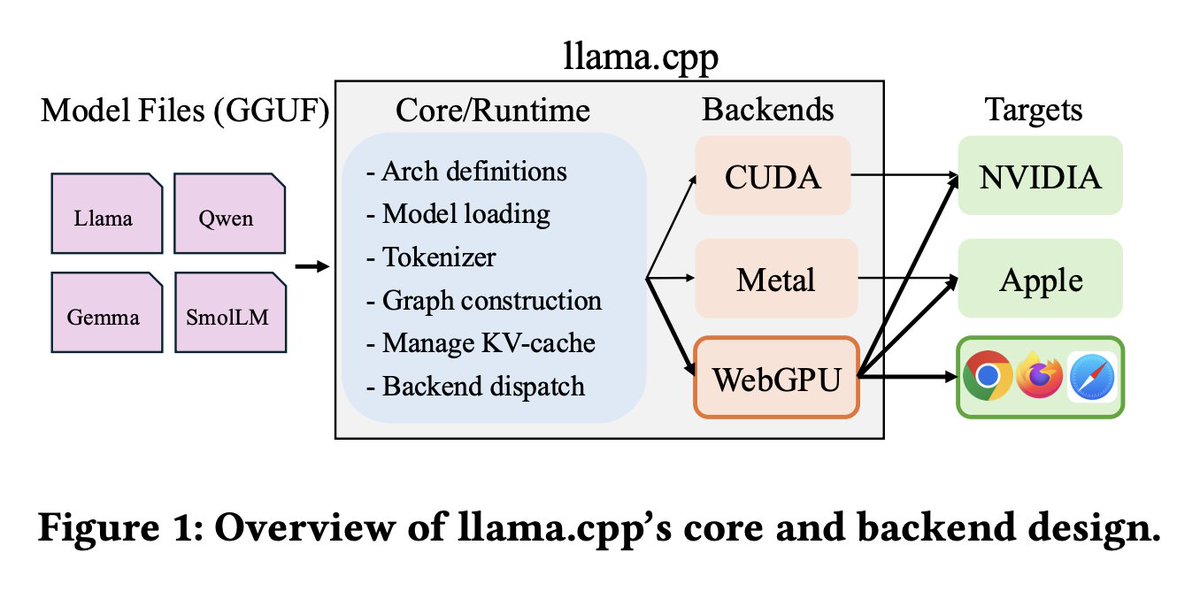
Highlighting the new WebGPU backend in llama.cpp/ggml
The work to bring full-fledged WebGPU support in llama.cpp started about an year and a half ago. It has been lead by @reeselevine and team at USCS.
For more information, checkout the interactive blog and paper in the quoted post. Here are 2 excerpts from the paper, summarizing the implemented software architecture.
The cat's out of the bag! My latest book, "The Secret Life of Circuits", is available in early access:
https://t.co/ormpiPwapu
It's what I wish I had when I was starting out. Electrons to embedded systems, 290+ color illustrations and 420+ pages of well-explained theory.
We have just wrapped up the meta-issue which tracked type inference of all Elixir constructs: https://t.co/HvOu1Iw9Cv
It includes typing of the construct themselves and features like occurrence typing, to provide a high-degree of precision. Expect a new RC soon as we will continue measuring performance on our way to Elixir v1.20.
why: I am so tired of worrying about & spending lots of time fixing memory leaks and crashes and stability issues. it would be so nice if the language provided more powerful tools for preventing these things.