The next step after Karpathy's wiki idea:
Karpathy's LLM Wiki compiles raw sources into a persistent md wiki with backlinks and cross-references.
The LLM reads papers, extracts concepts, writes encyclopedia-style articles, and maintains an index. The knowledge is compiled once and kept current, so the LLM never re-derives context from scratch at query time.
This works because research is mostly about concepts and their relationships, which are relatively stable.
But this pattern breaks when you apply it to actual work, where context evolves across conversations constantly, like deadlines, plans, meetings, etc.
A compiled wiki would have a page about the project but it wouldn't track ground truth effectively.
Tracking this requires a different data structure altogether, which is not a wiki of summaries, but a knowledge graph of typed entities where people, decisions, commitments, and deadlines are separate nodes linked across conversations.
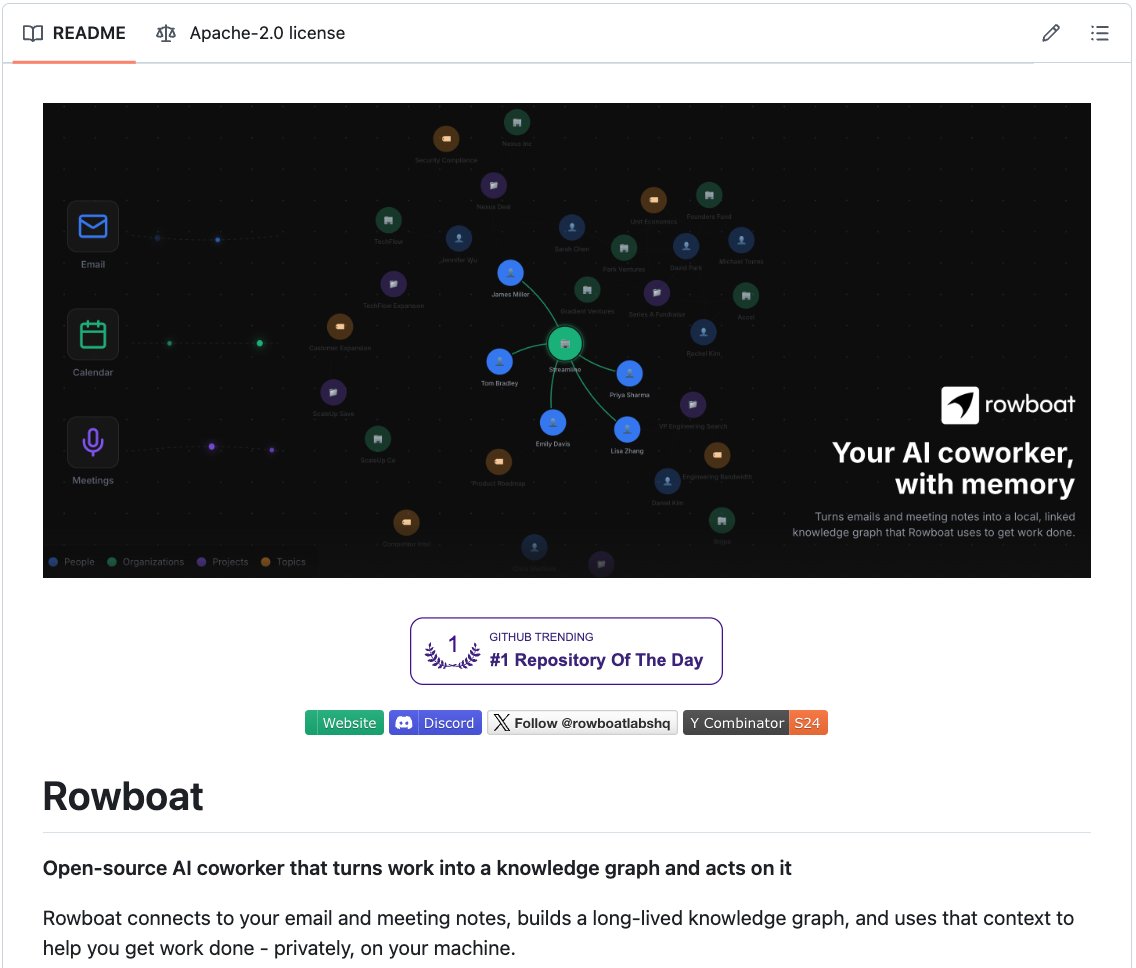
Rowboat is an open-source implementation of exactly this, built on top of the same Markdown-and-Obsidian foundation that Karpathy uses, but extended into work context.
The way it works is that it ingests conversations from Gmail, Granola, and Fireflies, and instead of writing a summary page per topic, it extracts each decision, commitment, and deadline as its own md file with backlinks to the people and projects involved.
That's structurally different from a wiki, because a wiki page about "Project X" gives you a summary of what was discussed.
A knowledge graph gives you every decision made, who made it, what was promised, when it was promised, and whether anything has shifted since.
It also runs background agents on a schedule, so something like a daily briefing gets assembled automatically from whatever shifted in your graph overnight. You control what runs and what gets written back into the vault.
You bring your own model through Ollama, LM Studio, or any hosted API, and everything is stored as plain Markdown you can open in Obsidian, edit, or delete.
Repo: https://t.co/tiNTv2NhUF
TL;DR: Karpathy's LLM Wiki compiles research into a persistent Markdown wiki. It works well for concepts and their relationships but breaks down for real work where the context evolves over time. Rowboat builds a knowledge graph instead of a wiki, extracts typed entities with backlinks, and runs background agents that act on that accumulated context. Open-source, local-first, bring your own model.Karpathy nailed the foundation. The next layer is here.
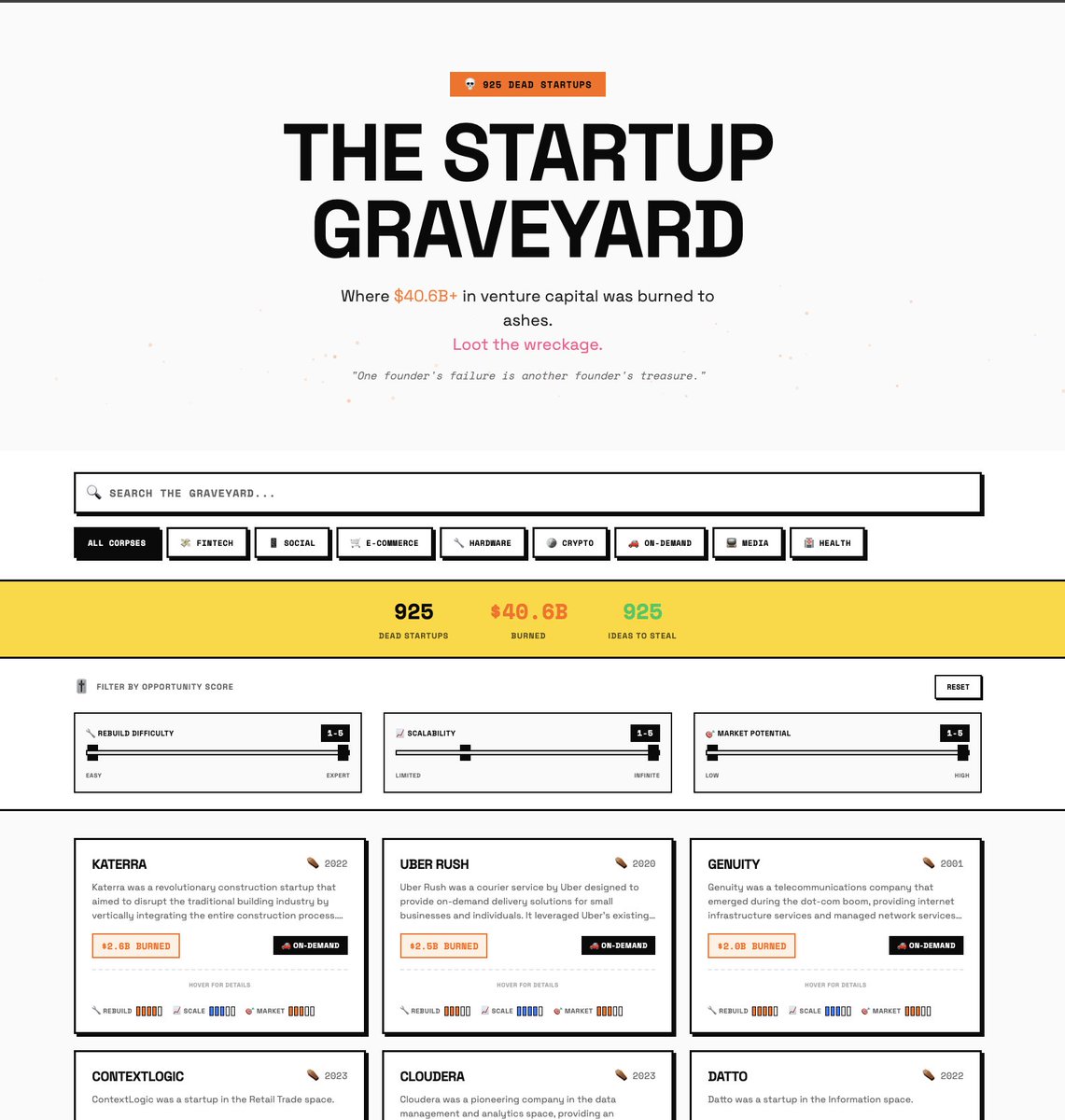
Someone curated 925 failed VC-backed startups, broke down why they failed, and how to make it work with today’s tech -
https://t.co/NFUhrhe7P2
Cool fr🙌
Day 15 #BuildInPublic
Gearing up for a hackathon in BLR.
PS: AI-native job board idea.
Also continuing research on personalized education, working on a heterogeneous graph convolutional network to model students, tests, and skills.
Gotta make this setup aesthetic for X posts 😮💨
We will make the new 𝕏 algorithm, including all code used to determine what organic and advertising posts are recommended to users, open source in 7 days.
This will be repeated every 4 weeks, with comprehensive developer notes, to help you understand what changed.
We will make the new 𝕏 algorithm, including all code used to determine what organic and advertising posts are recommended to users, open source in 7 days.
This will be repeated every 4 weeks, with comprehensive developer notes, to help you understand what changed.
Day 14 of #BuildInPublic
Missed 3 days. Oops.
Startup’s in a quiet phase—MVP done, now in the “talking stage” with pilot users :p
Meanwhile, researching personalized education for another product.
Found a 🔥 2023 paper using GCNs to model student knowledge states.
Day 13
Hosting is hard.
Grateful for Render & Vercel as a vibe coder, but free tiers don’t scale and paid plans feel overkill.
Moved to Digital Ocean.
Already nuked the container twice (DDOS + other self-inflicted damage).
Learning the hard way 😮💨
Shit’s demotivating tbh.
Decided to shift hosting to Digital Ocean as render’s free tier limitations sucked. Spent the night figuring out how to host on droplets. 9hours in, finally hosted and then I check this mail from 3h earlier about the container getting DDOS’d. How even 😭
Had to delete the drop 😩
Day 12 of #BuildInPublic
Moving off Render onto Digital Ocean—free-tier cold starts were killing the experience.
Choosing control over convenience.
More control, fewer surprises, and saving a good chunk on costs.
Day 11 #BuildingInPublicSolving a core problem for news editors: fact-checking before publishing. Being in the domain would've been nice, sigh. Waiting for pilot users to tell me if this is BS. Onward to the first round of iterations.
Day 11 of building a vertical fact-checking agent in public.
Holidays slowed things down, so I used the quiet time to ship and over-prepare for the pilot.
Light on execution today → planned the entire next week instead.
Coming week’s main focus: networking to line up pilot users
Building a #Startup
Heads-down on product, still juggling infra bills that should be paid by a company account (don’t have one yet).
Been thinking about Steve Jobs’ “Signal to Noise Ratio”.
Grateful for a co-founder—filters the noise so I can keep shipping signal.
Day 10 of #BuildInPublic
Render free tier memory is tight → added timeouts, latency suffers. Paid plans feel overkill for the current usage 😮💨
Thinking containers: if I’m paying anyway, might as well trade ease for lower costs. (wish it was as easy as vibe coding 😩)