The govt is advertising ethanol policy as ways to enable farmers earn more, taking pride on that.
The same Govt is totally ignoring how it's affecting working middle class who has to spend more on fuel because of low mileage and high maintenance on incompatible vehicles.
Framers don't even pay income tax still their interest is taken care, working class pay income tax still their complaints are ignored and labelled as anti national.
A country that doesn't reward its productive class and punish them instead, will never become a develop nation even by 3047.
A responsible citizen praises the government when it does the right thing and criticizes it when it fails. Why is that so hard to understand?
Only people driven by blind hatred, blind devotion, or vested interests stick to the same opinion regardless of the facts.
Despite corruption and poor governance in many areas, the Modi government continues to win elections and get appreciation by masses. That says as much about the opposition's failures as it does about the government's strengths.
Ten years is enough time for people to grow. Some don't.
👉India’s healthcare has improved, but quality public healthcare is still a lottery depending on where you live.
👉India’s airports are world-class, but stepping outside many airports feels like entering a different country.
👉India’s highways have transformed, but city roads are still full of potholes, poor planning, and endless congestion.
👉India’s IT ecosystem is world-class, but government offices still make people run from one counter to another for basic services.
👉India’s metro networks are expanding rapidly, but last-mile connectivity remains painfully inadequate.
👉Indian Railways is improving, but overcrowding, delays, and poor passenger experience are still common.
Indian roads don't fail only because of poor-quality materials or corruption. They also fail because of poor workmanship and a lack of attention to engineering details. Road edges are often left unfinished, manholes are placed without proper alignment, drainage slopes are poorly designed, and transitions between road sections are abrupt. Many of these issues are not caused by a lack of intent alone, they reflect inadequate skills, weak quality control, a lack of seriousness toward execution, and most importantly pride in doing work the right way.
This problem extends far beyond roads. It is visible in building construction, factories, public infrastructure, restaurants, and countless other sectors. Projects are frequently completed without adherence to standards, resulting in products and infrastructure that are functional only on the surface but are fundamentally compromised.
A major reason is the widespread acceptance of jugaad or the "band-aid approach" to problem-solving. Instead of building robust systems that prevent problems, people at every level often focus on somehow getting the job done. The objective becomes "kaise bhi karke khatam karo" rather than "sahi tareeke se banao."
Until craftsmanship, engineering discipline, and accountability are valued as much as speed and cost, these failures will continue to repeat themselves. Infrastructure quality is ultimately not just a reflection of budgets or materials. It is also a reflection of the culture with which a society chooses to build.
> India's Healthcare is Sorted
> India's airports are sorted
> India's highways are 80% sorted
> India's IT is sorted
> India's Metro trains are getting sorted
> India's Railway is also getting sorted
Only thing which pains common citizens the most is Municipalities, if India can sort this out we can become one of the best places to live and for travel.
> Privatise the Municipalities
Problems with Ethanol policy can easily be solved within hours by just making few changes.
1. Sell pure petrol at current price for non compatible vehicles.
2. Sell E20 at 10% lower price for compatible vehicles.
3. Don't increase the ethanol percentage for next 10 years.
But this Govt won't do it because continuous power have made them arrogant and success in state elections given them a false illusion that public are with them anyway.
Genuine question:
Why can't Indian highways be smooth? They always feel uneven, bumpy, undulating. Even on flyovers along NHs, you can feel every expansion joint under your car. Many times, the car hits a sudden vertical bump out of nowhere, usually at the beginning of a flyover, and the impact is so hard that the wipers come on.
Is it due to soil conditions, lack of technology, engineering constraints, or simply corruption?
No. Nitin Gadkari Ethanol policy won't be reason why many people may vote against BJP, reason will be Modi ji himself for remaining silent.
Always remember, Manmohan Singh didn't do anything wrong himself, public punished him because he didn't speak anything against those who were doing wrong in his Govt.
All these govt appeals of asking people to stay back in India, build in India and for India, ease of business, contribute to our growth etc etc is very nice.
But it all falls flat when the people who come back or stay back, read stuff about random RTO inspectors, low level municipal Clerks, Village officers amassing crores of Rs in wealth and having more Gold in their homes than some African Countries have as reserves, while you are stuck in a traffic jam becsuse a road that was laid yesterday has been redug today
It becomes seriously demoralizing when you realize that no matter how hard you work or how innovative you are, you will be out earned by a low level clerk whose only skill is to sign.
Yes, Britain famously transferred wealth to India. When British arrived in India its share of the world economy was 4%. When they left in 1947, they had taken it to 23%, roughly equal to all of Europe combined.
On a serious note.
The Indian railways were financed entirely by bonds sold on the London Stock Exchange. British investors were guaranteed a return of 5% per annum by the colonial government. A guaranteed return, in an era when no other safe investment in Britain offered anything close. And who guaranteed those returns? Indian taxpayers. Indians paid for the construction. Indians paid the guaranteed profits to British shareholders. Indians paid for the equipment, which was manufactured exclusively in Britain and shipped to India at inflated prices. One mile of Indian railway cost twice what the same mile cost to build in Canada or Australia, because the guaranteed return meant there was no incentive to control costs. The more it cost, the more British investors and suppliers earned.
And what were these railways designed to do? Move raw materials from India’s interior to ports. Cotton from the Deccan to Bombay. Jute from Bengal to Calcutta. Coal from Bihar to wherever the Empire needed it. Tea from Assam to London’s drawing rooms. The routes connected mines and plantations to harbors. Not cities to cities. Not people to opportunities. Raw materials to ships. The Indian public’s transportation needs were, as Shashi Tharoor put it, entirely incidental.
Oh, and the railways also moved troops. Very efficiently. So that when Indians protested being looted, the British could deploy soldiers to shoot them. That was the other “infrastructure investment.”
But wait, there is more. Before the railways, India had the world’s finest textile industry. The British smashed the looms, broke the weavers’ thumbs (this is not metaphor, this is documented history), imposed tariffs on Indian cloth, and shipped raw cotton to Manchester to be manufactured into garments that were then sold back to Indians. India went from being the world’s largest textile exporter to an importer of British cloth within a generation.
The Bengal Famine of 1943 killed an estimated 3 million people. Churchill diverted food supplies from Bengal to already well-supplied British troops and European stockpiles. When informed of the famine, his response, on the record, was to ask why Gandhi had not died yet. This is the “infrastructure investor” Musk is defending.
India contributed 2.5 million soldiers to fight in two World Wars on Britain’s behalf.
So let us summarize the colonial “investment” in India. They took a 23% global economy and left it at 4%. They destroyed the world’s finest textile industry. They built railways with Indian money, for Indian resources, generating British profits. They engineered famines that killed millions. They drained an estimated $45 trillion in today’s value over 200 years.
That’s some unprofitable adventure.
Landed from Sri Lanka, Thailand, Vietnam & Dubai — clean roads, working drains, walkable streets, zero chaos. Back in India: open gutters, garbage mountains, killer potholes, sewage rivers. The brutal truth? We've been scammed for decades. Our MLAs, MPs & municipalities loot our taxes while delivering filth and neglect. This isn't poverty or population — it's engineered betrayal and criminal governance.
Wake up !!
> There are 7-8% car owners in India and if they believe that it has caused issues for them the way Ethanol policy is implemented.
> There are around 2% income tax payers in India, if they believe that Govt is taxing them very high and not giving them any returns.
> There are 8-9% stock market investors in India and if they believe that stock market returns are affected due to increased Capital gains taxes.
> NEET, CBSE issues and UGC guidelines might have affected atleast 20% population.
If we remove the common among all of them, still it will come around 12-15% population. These are the people whose votes can't be bought using freebies. 2029 will be decided based on who this population think, whether these policy blunders are enough to vote against or not.
Mother tongue of the top three constitutional post holders of India:
-President of India : Odia
-Vice President of India : Tamil
-Prime Minister of India : Gujarati
None of them are native Hindi speakers.
None of them are from North India.
Yet Congressis, who worship an Italian and want her son to become PM, claim that BJP is imposing North Indians on South Indians.
Met an old friend who works in corporate. We met in the afternoon when the temperature outside was 45°C. He arrived in a full formal suit and coat.
Asked him, “Aren’t you feeling hot?”
He said, “It’s for a client meeting. This appearance is important for the deal.”
Crazy how much of this old British mindset still exists in India even today.
Most investors and clients I have met, or deals I have mediated, involved people showing up in casual clothes without giving it a second thought. Meanwhile, we Indians are still willing to suffocate in extreme heat just to look professional.
CONGRATULATIONS ON MAINSTREAM POVERTY.
Earning ₹30 LPA used to mean you had made it, but in 2026, it just means you are highly qualified to act as a clearing bank for your local real estate developer and a premium pre school.
After the tax department politely shaves off over 30% of your gross income, you get to spend the remainder servicing a massive EMI on a ₹2.5 crore apartment just to tell your relatives you live in a gated community with a clubhouse you never have time to visit.
You are structurally obligated to hand over ₹4 lakh a year to a school so your toddler can learn ABC from an iPad, while funding a luxury car loan to sit in standard metro traffic for two hours every single day.
The modern corporate grind has pulled off the ultimate trick: convincing you that you are rich just because your cash flow passes through seven different luxury subscription models before hitting zero every single month.
#UrbanMiddleClass #LifestyleInflation #CorporateTrap
A student once explained how wild pigs are trapped:
First, they are given free corn in the forest.
They return every day for the easy food.
Then slowly, fences are built around them, one side at a time.
At first they resist. Then they adapt.
Finally the gate shuts and the pigs, now dependent on the free corn, have lost their freedom without even realizing it.
That is how freedom often disappears in societies too. Not suddenly through force, but gradually through dependence.
Free rations. Free electricity. Free cash transfers. Endless subsidies. Political promises of “something for nothing.”
Each may appear harmless in isolation. But over time, citizens begin depending more on the State than on their own enterprise, effort and initiative.
And when dependence grows, freedom quietly shrinks.
A nation becomes truly strong not when more people vote for benefits, but when more people create, build, innovate and contribute.
There is no free lunch.
Someone always pays the bill.
And sometimes, the hidden cost is freedom itself.
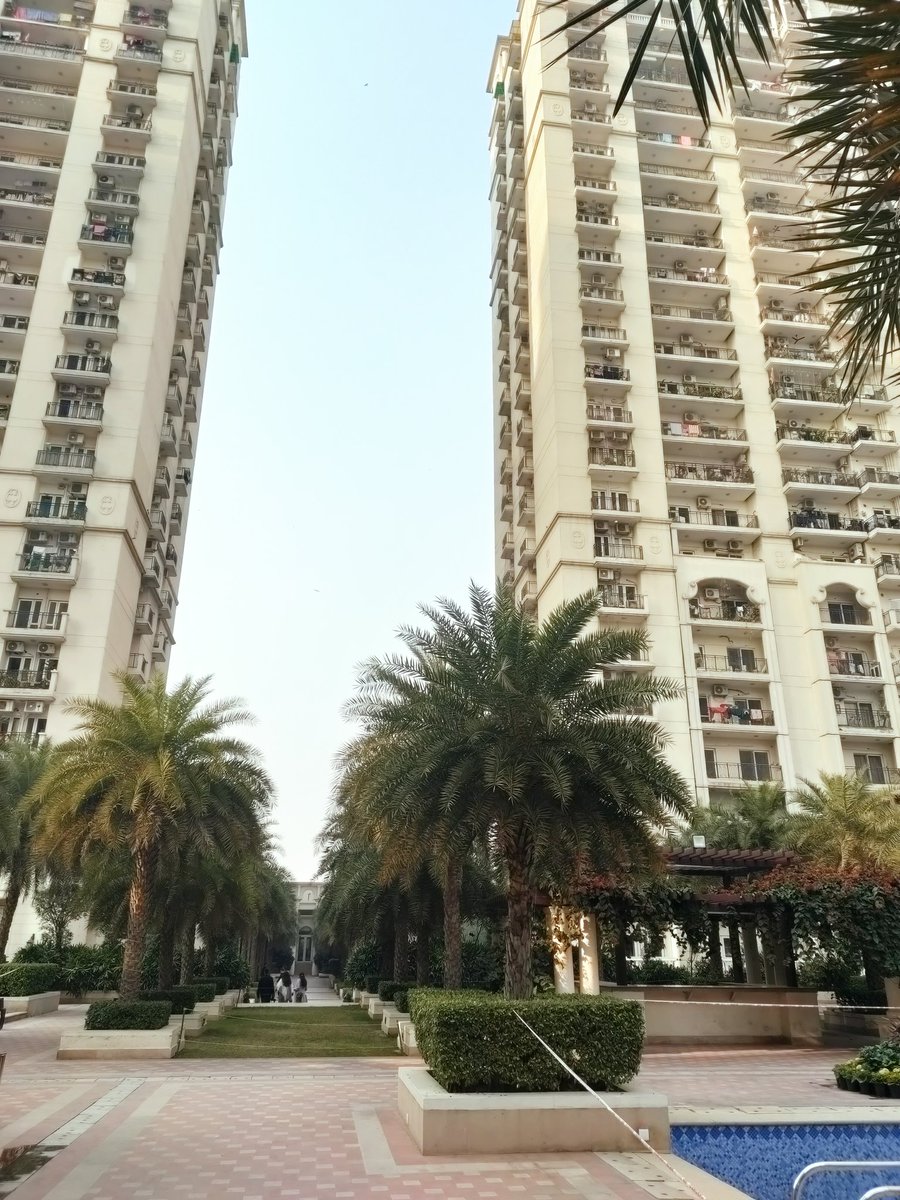
When will urban developers' obsession with palm trees stop?
Residential societies, shopping malls, and along highways, wherever you go, you see this "Dubaification", rows of mostly non-native palm trees.
Compared to traditional Indian trees like neem and banyan, they offer little value: minimal shade, poor support for local biodiversity, limited particulate trapping, higher maintenance. Yet they are everywhere just because they are perceived as elite, and "global."
In a poor country like ours, we definitely need subsidies and welfare schemes for poor. But anything done in excess is harmful. Now it's a race to bottom between political parties as to who is offering freebies more.
At some point, every political party would try to give maximum freebies. There would be no differentiation between all the parties. So no party would have an edge.
By that time we would not have made any long term investments for the country because all the revenue of governments would simply have been used only for freebies.
Every successful country has always invested for long term.