Protein kinase ATR inhibits E3 ubiquitin ligase CRL4PRL1 to stabilize ribonucleotide reductase in response to replication stress https://t.co/o7yFArnSPY
The multi‐BRCT domain protein DDRM2 promotes the recruitment of RAD51 to DNA damage sites to facilitate homologous recombination https://t.co/TeL0z0X9LX
It suggests that tRNA modification is a general mechanism for control the translation of long proteins and highlights the importance of mRNA length in shaping proteome.
An evolutionarily conserved mechanism for control the translation of long proteins https://t.co/ByJak9IHTe
While these phytohormones are often antagonistic in function, a new study explores the coordination of salicylic acid (SA) and ethylene during #Arabidopsis leaf senescence. #hormones#LeafSenescence#JIPB
https://t.co/Rg4qjeFFtM
@LBijsterveldt @CaronPierre13 Thank you for tweetering! We have a related paper published in NAR (https://t.co/ympHfmKES4). In this work, we showed that WEE1 indirectly regulate CDK by inhibiting the MAC complex (PSO4 complex in animal), which regualtes RNA splicing.
@LBijsterveldt Thank you for tweetering! We have a related paper published in NAR (https://t.co/ympHfmKES4). In this work, we showed that WEE1 indirectly regulate CDK by inhibiting the MAC complex (PSO4 complex in animal), which regualtes RNA splicing.
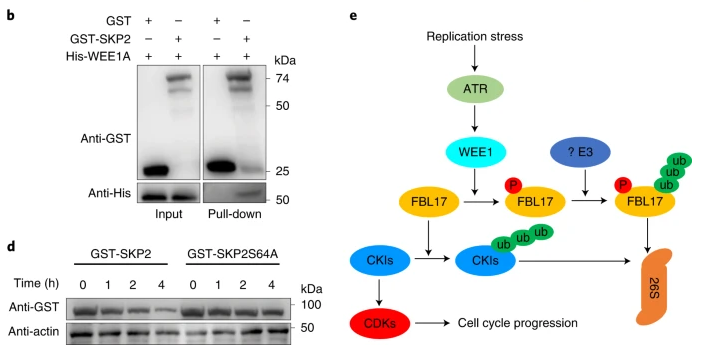
New Article: "A novel WEE1 pathway for replication stress responses" https://t.co/KEDdL4jwPF
WEE1 is found to regulate CDKs via an indirect pathway involving the E3 ligase FBL17 and CDK inhibitors, a mechanism probably shared between plants and humans.