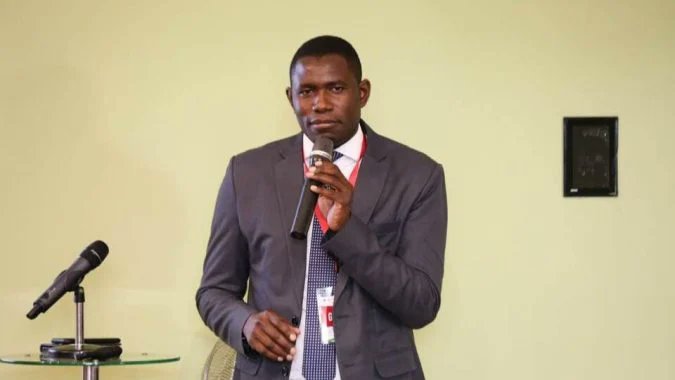
@SpiceFMKE@nduokoh@dennisaseto@EverlyneMungai This was such a sad interview. No policies, a lot of talking... I'd dare say he's potentially taken my vote away from Matiangi... Such a sad expression of a leadership team
That Ruto is cornered is no longer something to dismiss, because the political mood, the anger on the ground and the fractures around him are becoming harder to ignore.
“Ruto Must Go” can win an election, but it cannot run a country, and the opposition must now start telling Kenyans what happens after the celebrations are over.
Start with the national debt. Which loans will they honour, which ones will they audit, what happens to odious or questionable debt, and how exactly will they stop Kenya from borrowing simply to repay previous borrowing?
Then tell us what happens to this bloated government structure where almost every problem has somehow produced an authority, agency, board, council, commission, fund, secretariat, director general, board chairman, CEO, offices, vehicles and allowances.
Why, for example, does Kenya need a whole Kenya Water Towers Agency with its own board and administration to coordinate conservation of water towers instead of placing that work directly inside the responsible ministry alongside the existing forestry, water and environmental departments?
The government itself has admitted that some State corporations have overlapping or duplicated mandates and has been trying to merge or restructure them, which tells you the problem is not imaginary.
How many water agencies does one country need before water actually reaches people's taps, when we already have the Ministry of Water, Water Works Development Agencies, the National Water Harvesting and Storage Authority, Water Resources Authority and other institutions funded from the same taxpayer?
How many agricultural boards, authorities and corporations do we need before farmers receive affordable fertiliser, functioning markets and reasonable prices for what they produce?
How many youth funds, women funds, enterprise funds and empowerment programmes must exist separately, each carrying administrators and operational costs, instead of creating one properly managed financing institution with measurable results?
Why do functions that could comfortably sit as departments inside ministries repeatedly become standalone State corporations requiring CEOs, boards, procurement departments, HR departments, finance departments, legal departments and expensive headquarters?
The opposition must tell us which State corporations it will abolish, which ones it will merge, which boards disappear on day one and how much money those changes will actually save taxpayers.
Tell us what happens to SHA and whether healthcare will continue being built around deductions, unexplained private technology companies and layers of agencies before money finally reaches the hospital treating the patient.
Tell us what happens to the housing levy, and whether government should really be collecting money from every worker, building houses, identifying beneficiaries, financing mortgages and competing with private developers at the same time.
Tell us what happens to university funding, HELB, school capitation and the endless experiments that leave parents discovering new education policies after schools have already opened.
Tell us what happens to county financing and whether governors will continue travelling to Nairobi every few months begging Treasury to release money that Parliament already allocated to counties.
Tell us what happens to corruption cases, because Kenyans do not need another government that arrives with its own thieves, protects them for five years and suddenly discovers corruption when somebody falls out politically.
Tell us what happens to procurement. Will every tender, beneficial owner, contract variation and final payment become publicly searchable, or will we continue pretending transparency exists when more than half of government contractors can remain hidden behind companies?
Tell us what happens to the police. Will the next president still call commanders when he wants opponents arrested, or will Kenya finally build a police service where an officer fears the law more than he fears State House?
Tell us what happens to the DCI, ODPP, EACC, intelligence services and other institutions that become extremely energetic when powerful people have private problems but suddenly develop weak knees when politically connected goons, killers and thieves are involved.
Tell us what happens to State House spending, advisers, presidential delivery units, special envoys, taskforces and endless committees created whenever somebody in government wants another office.
Tell us what happens to Cabinet size, principal secretaries, CAS style positions if they return under another name, government advisers and political appointees scattered through State corporations.
Tell us whether government vehicles will still consume billions transporting officials to meetings where they discuss why government has no money.
Tell us whether every new president will continue creating offices for election losers and coalition partners instead of forcing political parties to carry the cost of their own political settlements.
Tell us what happens to taxes, because promising to reduce taxation is easy until the same politicians enter Treasury and discover they inherited a government whose recurrent expenditure they are unwilling to cut.
Tell us what happens to pending bills, because thousands of businesses have supplied government, paid VAT, borrowed money to perform contracts and then waited years for the State to pay them.
Tell us what happens to electricity costs, fuel taxes, manufacturing, agriculture and small businesses, because Kenya cannot tax itself into prosperity and then wonder why investors move production elsewhere.
And most importantly, tell us what happens to the structure of political power itself.
If all the opposition is offering is another president controlling Parliament, influencing prosecutors, intimidating independent institutions, appointing friends everywhere and borrowing billions with no consequences, then we are simply preparing the next “Must Go” movement.
Ruto going is now a reality.
But Kenya cannot spend the next year discussing who takes the cake without asking why the cake is this expensive, why so many people are eating from it and why ordinary Kenyans are always the ones paying for it.
Let’s address the elephant in the room because I feel like many people don’t want to have this conversation😳
So the plan is to vote for Sifuna simply because he can help get Ruto out? As long as Ruto is gone, then we’re good? Haven’t we been here before? Isn’t that exactly how Ruto benefited from the anger against Uhuru&Raila ?
And before that, wasn’t Uhuru’s victory also driven in part by a wave of sympathy over the ICC cases and the feeling among many supporters that it was time to stand with him and push back against those they believed were targeting him? Look at how Uhuru’s administration left this country? Haven’t we already seen where voting out of anger or emotion, instead of demanding better leadership, leaves this country?
The next election cannot just be about who is most likely to defeat Ruto. It has to be about who has a clear plan to deal with corruption, protect the Constitution, end abductions and extrajudicial killings, fix our broken healthcare system, reform education, create jobs, reduce the cost of living, tackle public debt, restore independent institutions and ensure there is real accountability in government.
I understand the thinking. The common enemy is Ruto, and the enemy of my enemy quickly becomes a friend. But I refuse to believe that after everything this country has been through, Kenyans are ready to settle for people with serious questions hanging over them simply because they are the fastest route to removing one man from power. A perfect example, Aisha Jumwa😂
We cannot keep voting against someone. At some point, we have to start voting for something. Otherwise, we’ll keep changing faces while the system that keeps failing Kenyans remains exactly the same.
@NdindiNyoro I would say the ease of doing business. It's become difficult to start a business and the purchasing power of customers has drastically reduced. Investing in industry (mass employer) and spurring entrepreneurship would be key for me.
Breaking: PS Oluga says 37 Kenyans are currently under Ebola quarantine and that Kenya is working with the US to strengthen Ebola response capacity.
PS Oluga, Kenyans are not fools.
For those wondering what is happening, this looks like a classic case of narrative-building. The government knows many Kenyans have rejected plans to bring Ebola patients into Kenya, so now the public is being conditioned to believe Ebola is already a local problem that requires expanded facilities and foreign-backed operations.
Don't be surprised if more stories emerge aimed at normalising this arrangement.
The truth is that Kenya does not need an Ebola base in Laikipia, nor does it need imported Ebola cases to build quarantine and response capacity. We have always had the ability to prepare for outbreaks without turning the country into a destination for Ebola patients.
These are mind games, and Kenyans should pay close attention.
@WilliamsRuto You need to follow court orders.
It's disappointing that you said you would emulate justice... As Christ commands... Here you are... Return to Christian values.