@Chinaview0022 You all are wrong. Japanese think they are the true heir of China, unfortunately China never let them be Chinese and treat them like everyone else. They adapt Chinese culture, use Kanji, follow the Tang style, etc. That deep hatred is because they have never been accepted.
The accusation that I am antisemitic is appalling and fundamentally dishonest. Criticizing the actions of the Israeli prime minister, a military technology contract, or the executives who supply it is not the same as criticizing Jewish people. This critical and necessary dialogue is then dishonestly framed as being anti-Israel. To be clear, my views come from my own political convictions and should never be interpreted as hostility toward Jewish people, for whom I have deep love and respect. Everything I know about acting, activism, and humanism has been profoundly shaped by the Jewish friends, colleagues, and loved ones who have been integral and family throughout every point of my life.
This merger has real consequences for real people, and for the entire country. Scrutinizing the Ellisons, including Oracle’s business built on data, surveillance technology and government contracts, and the serious threat to editorial freedom and the loss of a livelihood for thousands of families, is fair and necessary. The $111 billion deal would hand one family control over CNN, HBO and Warner Bros., backed in part by foreign money whose influence on editorial decisions has never been fully explained to the public.
Lawmakers on both sides of the aisle have called for serious national security review, and regulators still haven’t given the public a real answer. Until they do, the merger shouldn’t move forward. Now is the time to dive boldly into all these issues, not step back or concede.
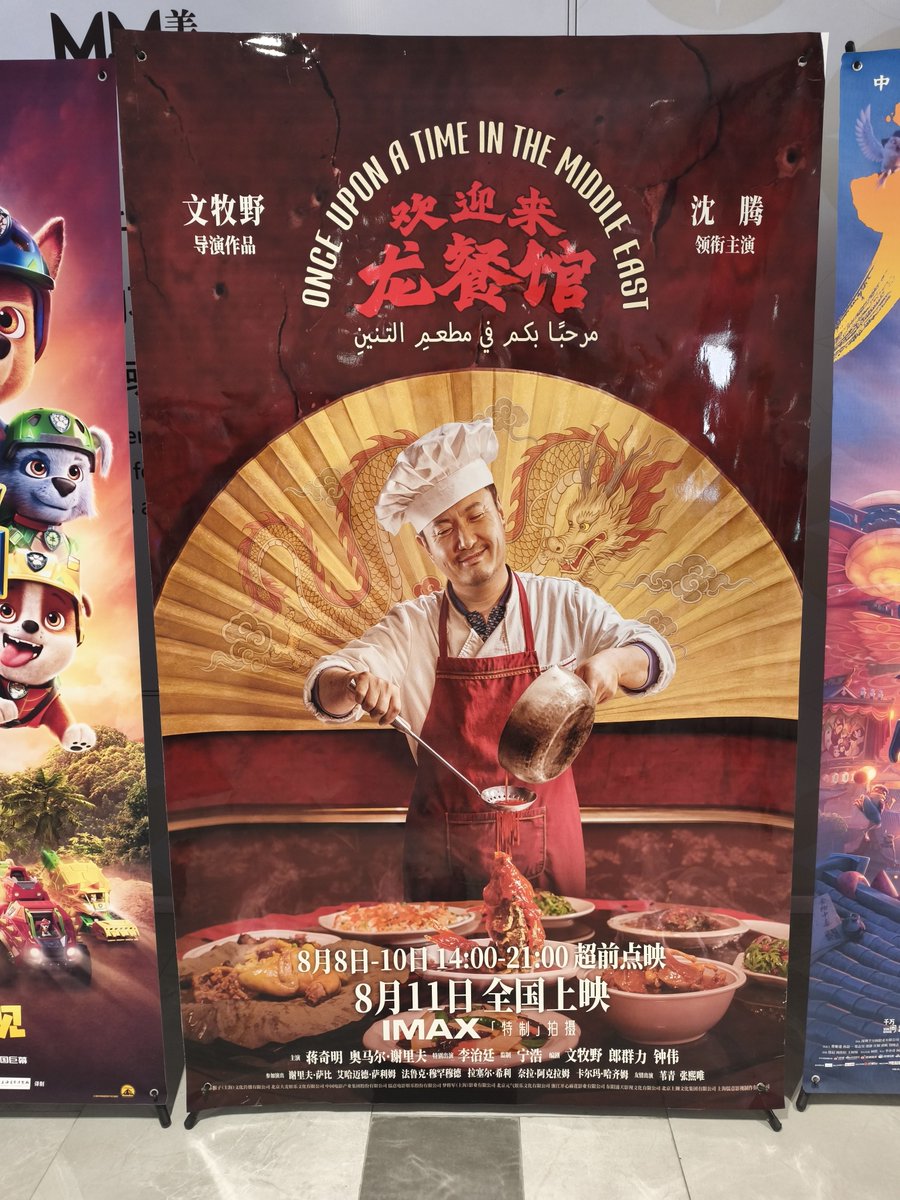
This is a genuinely exceptional movie: probably the single best movie ever made on the Iraq war.
It's called "Once upon a time in the Middle East" (欢迎来龙餐馆) and I just watched it in a Chinese movie theater, but I'm sure it will be available abroad at some point (if not the case already).
It follows the story of a Chinese chef, Xu Fu, who travels to Iraq pre-war to cook at a Chinese restaurant in Baghdad. When the war breaks out, he initially wants nothing to do with it - he's already bought his ticket home. But his boss Zaid, an official at the water and electricity ministry, convinces him to stay and keep supplying meals to the safe zone for high pay.
As the occupation descends into chaos, Xu Fu gets pulled deeper into the conflict: he's detained and interrogated by the Americans for his ties to Zaid (who has become an insurgent after his family died in the war), then he gets detained by the insurgency when they attack the US prison where he was held, and he eventually end up trying to protect a group of orphans from being recruited as child bombers.
It's the contrary of pro-war propaganda, as war movies too often are: it's a film about how war swallows everyone who thinks they can stand apart from it. There are no glorious causes in it, no "good" or "bad" side, only people caught in the madness.
It's not even anti-American, at least not in a crude way: the film clearly blames the US for starting the war - which they did - but Xu Fu ends up befriending a group of American soldiers who become patrons of his restaurant and are themselves clearly portrayed as victims of the war, as are Iraqis.
As such there is no hatred in this movie - the only hatred is against hate itself, against the dynamic of war and maybe against rulers who decide to trigger it.
Which makes it a very subtle and profound film: it never lectures, never simplifies, and lets the tragedy play out quietly until it overwhelms you.
People weary of Hollywood's black-and-white framing, where wars are always morality plays with designated good guys, will find it deeply refreshing: here there are just human beings, which is precisely what makes it so devastating.
Many of my most accomplished China practitioner-strategist friends have immediately understood the significance of Premier Zhu Rongji’s passing. His death marks the passing not merely of a remarkable Chinese leader, but of an era. I find myself overcome with nostalgia for that bygone era.
I saw Zhu in person only a handful of times—most memorably at the Great Hall of the People around Peking University’s centennial in 1998, and during Clinton’s visit that same year, both shortly after he became premier, and during the consequential years of China’s negotiations to enter the WTO, which overlapped with my tenure as Vice Chairman of AmCham China.
I was always captivated by the man: the prodigious clarity of purpose, the acerbic intellect and wit, the command of detail, and above all the willingness to make extraordinarily difficult decisions in pursuit of a larger economic transformation.
Zhu understood that bringing China into the global trading system was not simply about gaining access to foreign markets. WTO accession could be used as an external lever to force painful reforms at home—restructuring state-owned enterprises, opening markets, modernizing the financial system, and subjecting Chinese industry to a degree of competition many powerful domestic interests fiercely resisted.
The costs were real. Millions lost their jobs in the restructuring of state industry, and not every reform aged equally well. But leadership should ultimately be judged against the circumstances and choices available at the time.
Zhu made consequential choices. Would Western politicians be able to lead so sensibly and fearlessly, America’s problems would be much easier to solve.
Former Treasury Secretary Robert Rubin and Larry Summers were among the many senior American economic officials deeply impressed by him.
Rubin reportedly called Zhu “the smartest man I ever met”. Summers later recalled Zhu’s extraordinary grasp of economic reasoning, his command of the details of negotiation, and his understanding that WTO accession itself could become an instrument of domestic reform.
For those of us who lived and worked in China through that extraordinary period, it is difficult to separate Zhu Rongji from the transformation we witnessed.
He was one of the principal architects of the economic China that subsequently emerged.
Rest in peace, Premier Zhu. 朱总理,一路走好。
Zhu Rongji, 1928–2026 🕯️
TVB has an excellent feature on the "Iron-Fisted Premier" — told through a Hong Kong lens, recalling his 4 visits to our city, each time personally assuring us of a bright future under the motherland. "If Hong Kong's return is ruined in our hands, we'd be sinners to the nation." He made sure it wasn't! https://t.co/h2RN5FVcYy
Western obits will dwell on the "iron fist." They'll forget what the fist was aimed at: corruption. 100 coffins — 99 for the corrupt, 1 for himself
Zhu was an amazing state leader who reformed the banks, tamed the SOEs, slew the triangular debt — and laid the foundation for China's rise as an economic powerhouse
His own epitaph wish: "I only hope that after I step down, the whole country can say one sentence: he was a clean official, not a corrupt one. I would be very satisfied with that. If they are even more generous and say Zhu Rongji also got a few practical things done, I would thank heaven and earth."
Wish granted, 朱總理. Rest in peace 🙏
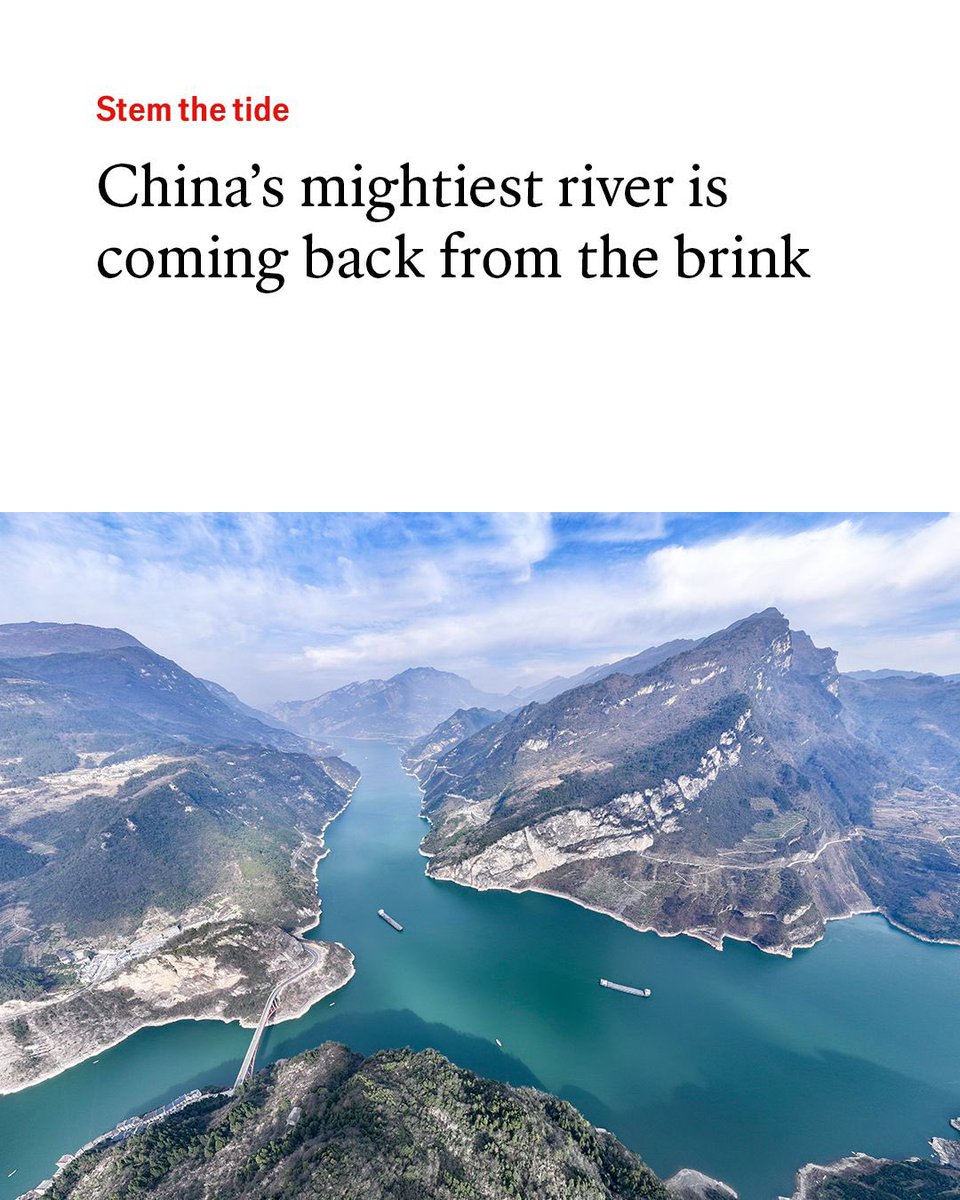
The Economist just dropped another classic:
“China’s mightiest river is coming back from the brink”
(The Economist, 2026)
But eco-authoritarianism is not all roses
Fish stocks up 200%+. Sturgeons breeding again. Porpoises recovering.
A 6,300 km river brought back from ecological death in a few years.
And still they manage to make it sound like a human-rights violation with a green filter.
The cope is relentless.
Every time China fixes something the West spent decades lecturing about, the headlines twist themselves into pretzels to find the dark side. Success is never allowed to stand on its own. It must be framed as accidental, authoritarian, temporary, or somehow still a failure.
The formula never changes. Deliver results → insert the “yes, but…” → remind everyone that competence without the correct ideology is suspicious.
Here are ten titles that are already jokes the moment you read them:
China builds the world’s largest high-speed rail network – tragically, people can now arrive on time
(The New York Times, 2024)
800 million lifted out of poverty – but did anyone ask if they miss the dirt floors?
(The Guardian, 2021)
China’s EV factories dominate the planet – a clear threat to Western parking lots
(Financial Times, 2025)
Yangtze fish stocks triple after fishing ban – eco-authoritarianism claims another victim (the fishermen’s freedom to go bankrupt)
(The Economist, 2026)
China plants billions of trees – nature recovers without a single democratic consultation
(BBC, 2023)
World’s biggest renewable energy capacity installed – still somehow China’s fault for the climate
(Bloomberg, 2025)
Poverty eliminated in record time – experts warn success may discourage future suffering
(Washington Post, 2020)
Chinese high-speed trains run at 350 km/h – democracy would have preferred a slower, more inclusive timetable
(The Atlantic, 2022)
Belt and Road builds ports and railways across continents – developing countries cruelly denied the right to remain underdeveloped
(Foreign Policy, 2023)
China’s space station completes missions without exploding – suspiciously competent for a non-Western power
(CNN, 2024)
Same script every single time.
China delivers results → Western media delivers the “yes, but…”
They can’t celebrate competence when it doesn’t come wrapped in their preferred ideology.
The cope is becoming performance art at this point.
That was a really cool experience! After about 5 hours of walking we noticed a very remote yurt, lost in the mountains, so we went to check it out.
There we met two Kyrgyz boys (at first we assumed they were Khazak but we were wrong) - two brothers 14 and 12 years old - who lived there with their horses and cows.
As they explain, they were a whole family living there during the summer: these 2 boys, their sister, and parents. The parents were out working when we went there. During the rest of the year, they live down in the city where they have an apartment and where the kids go to school.
They kindly invited us in and we bought some of their homemade cheese and yogurt. We paid them through WeChat, which really goes to show how universal it is in China: even in the most remote places!
We also spoke about life and... guess what... Mbappé, who truly is the only thing people worldwide seem to know about France these days 😅
Having traveled in some 64 countries so far, China is really one of the only countries out there where you can still find people - like them - living truly in accordance with their ancestral ways and their traditions. I've met hundreds of people like them over the years in China.
Which is why the accusations against China on eradicating minority cultures are so shameful: they're literally best in class worldwide in letting people preserve their traditional ways of life.
This is genuinely shocking, and says so much about our approach to China.
I decided to check for independent reviews of the English version Xi Jinping's latest book, published a year ago, to see what people had to say about it since I hadn't read it myself.
To my surprise, I couldn't find any: not a single thoughtful review about the book out there! Even on Amazon, check it for yourself (https://t.co/1LVlhACA53): the book has only 3 ratings, that's it.
No matter where you stand on China, you’ve got to admit that’s pretty crazy: the sitting president of the world's rising superpower publishes a 700-page book explaining exactly what he's doing and why, and we don’t even care to look.
If there ever was a fact that illustrates just how willfully ignorant we are about China, this is it.
All the more because we then go spew the usual clichés around how secretive and impenetrable the Chinese system is: the book is on Amazon for $21 for crying out loud!
Anyhow, this felt so wrong that I figured I'd fix it. I bought the book, read it attentively and wrote what I hope you'll agree is a thoughtful review of it.
The book contains genuinely surprising passages, such as Xi writing that oversight of the Communist Party by "the judiciary, the public, and the media" was not just something the Party must “readily accept,” but something that he framed as historically decisive - an essential component to "escaping the historical cycle of rise and fall" that has doomed every dynasty in China's history.
Other passage that I'm sure would surprise many: a common narrative out there is that China blames the West for the century of humiliation and is driven by revenge. Well, Xi explains that's not true at all: the century of humiliation was China's own mistake, originated in the Ming Dynasty's disastrous "policy of national seclusion" that "resulted in China missing out on the opportunities presented by the Industrial Revolution" and "led to China’s decline."
All in all, the book is remarkably self-reflective and thoughtful. For instance Xi recognizes that his drive for “full and rigorous internal governance” - including to rid the Party of corruption - risked "instill[ing] fear and apprehension, or intimidate members into inaction.” He emphasizes the need for pragmatism in this regard, codified in a framework called the “Three Distinctions” that separates honest mistakes - made while experimenting, reforming, or operating without precedent - from deliberate violations committed for personal gain.
And many other surprises still. I found it a genuinely fascinating read for anyone interested in how the Chinese system works and how Xi thinks - or anyone interested in governance, period, as so much of what he writes is pretty universally applicable.
This is the link to my review of the book, an article I titled "The Book the West Refuses to Read": https://t.co/DYowWEESOd
The Story of Wesam Mekdad
“I am a Palestinian from #Gaza. I fled my homeland in search of safety and the opportunity to work so that I could send money back to my family, who are surviving under the horrors of war.
The road was grueling and full of obstacles. First, I went to Egypt, where I waited a full year just to secure a Turkish visa. From Turkey, I attempted to cross into Greece. I failed twice, enduring imprisonment both times. It was only on my third attempt that I finally reached Greek soil.
Once there, I was placed in a refugee camp for a year, waiting for a residence permit. But the moment I finally received it, my life was shattered again: I was unjustly imprisoned for four years. My trial was a sham, and it became deeply clear to me that refugees are not treated equally under the law there.
Eventually, I was released. Seeking a fresh start, I traveled to Berlin, where I met my wife and we were married. Together, we moved to the Netherlands to apply for asylum. I truly believed that the Netherlands, as a nation built on human rights, would understand our plight.
Because I am an innocent man and had absolutely nothing to hide, I was entirely honest with the authorities. I openly told them about my imprisonment in Greece. Tragically, my honesty was weaponized against me.
We were shuttled endlessly between different reception centers. During this time, my wife became pregnant. We held onto the hope that the authorities would show compassion for our situation and for our unborn child. Instead, the hammer fell: we received a negative decision.
My asylum application was rejected. I was handed a deportation order to Egypt and a two-year entry ban from Europe. My wife’s application was also rejected; she was ordered back to Germany. They told us coldheartedly that even if our child were born on Dutch soil, it would change nothing. The fact that my family in Gaza is trapped in an active war zone seemed to mean absolutely nothing to them.
Desperate to prove who we are, I went to the Palestinian Embassy in the Netherlands and obtained official documents confirming my Palestinian nationality and the identity of my family in Gaza. I handed these papers to the authorities. Yet, it feels as though we are screaming into a void. No one is listening.
Is this fair? Why is this happening when all I ever wanted was to build a stable, quiet life for myself, my wife, and our daughter? Why am I being condemned for a prison sentence I served unjustly in Greece? I had hoped the Dutch authorities would help me prove my innocence, but instead, they simply wronged me again.
Where are human rights? Where are the rights of a child? Where are the rights of a woman?
I have lodged an appeal and am now awaiting the judge’s decision. In the meantime, the stress, anxiety, and suffocating uncertainty mount every single day. I am constantly terrified of what tomorrow will bring. I have been stripped of my right to work and my freedom of movement is heavily restricted.
Then, the breaking point came. One day, I received devastating news. In a flash of pure despair, unable to contain the agony inside me, I smashed a television and damaged the door. It was inside my own room—not someone else's. I harmed no one.
The center staff called the police. They knew my wife was nine months pregnant. When the officers arrived, I told them myself. My wife looked them in the eyes and told them that I would go with them voluntarily and respectfully. I had not used violence against a single soul. I remained calm because I believed I would simply give a statement at the station and return to her. Yet, they treated us as if we were dangerous. They treated a heavily pregnant woman as a threat.
This is my story. I feel that my wife, my daughter, my family in Gaza, and I have been deeply, profoundly wronged by the system. But I still believe that eventually, the truth will come to light. Justice cannot remain hidden forever.”
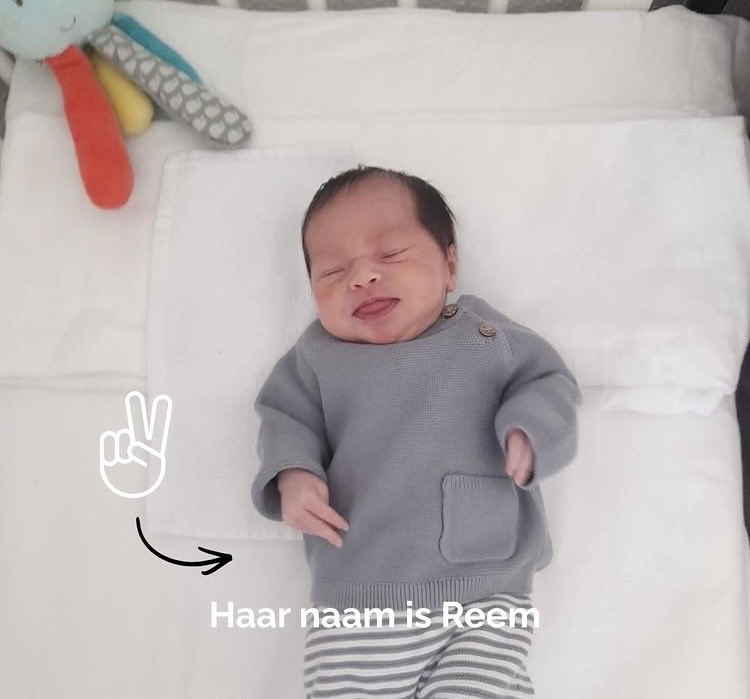
Baby Reem born premature (5 days after the attack)
La démocratie et la liberté? Vous rigolez? Le dernier rapport de l'organisation "Alliance of Democracies" (👇https://t.co/isI6YFv0Ao, une organisation **Européenne** fondée par un ancien secrétaire général de l'OTAN) montre que la France est un des pays où les citoyens se sentent LE MOINS en démocratie AU MONDE! On est dorénavant en dessous du Zimbabwe et du Kyrgystan!
Il y a un moment où il faut se réveiller quand même, à ce niveau là on n'est même plus dans de l'aveuglement, on est dans la mythologie.
@MarioNawfal No, it's not. What will happen likely tonight is that Iran will be attacked... again... just like 2 other times before, but Iran is likely prepared and will hit back real hard...


![RnaudBertrand's tweet photo. This is genuinely shocking, and says so much about our approach to China.
I decided to check for independent reviews of the English version Xi Jinping's latest book, published a year ago, to see what people had to say about it since I hadn't read it myself.
To my surprise, I couldn't find any: not a single thoughtful review about the book out there! Even on Amazon, check it for yourself (https://t.co/1LVlhACA53): the book has only 3 ratings, that's it.
No matter where you stand on China, you’ve got to admit that’s pretty crazy: the sitting president of the world's rising superpower publishes a 700-page book explaining exactly what he's doing and why, and we don’t even care to look.
If there ever was a fact that illustrates just how willfully ignorant we are about China, this is it.
All the more because we then go spew the usual clichés around how secretive and impenetrable the Chinese system is: the book is on Amazon for $21 for crying out loud!
Anyhow, this felt so wrong that I figured I'd fix it. I bought the book, read it attentively and wrote what I hope you'll agree is a thoughtful review of it.
The book contains genuinely surprising passages, such as Xi writing that oversight of the Communist Party by "the judiciary, the public, and the media" was not just something the Party must “readily accept,” but something that he framed as historically decisive - an essential component to "escaping the historical cycle of rise and fall" that has doomed every dynasty in China's history.
Other passage that I'm sure would surprise many: a common narrative out there is that China blames the West for the century of humiliation and is driven by revenge. Well, Xi explains that's not true at all: the century of humiliation was China's own mistake, originated in the Ming Dynasty's disastrous "policy of national seclusion" that "resulted in China missing out on the opportunities presented by the Industrial Revolution" and "led to China’s decline."
All in all, the book is remarkably self-reflective and thoughtful. For instance Xi recognizes that his drive for “full and rigorous internal governance” - including to rid the Party of corruption - risked "instill[ing] fear and apprehension, or intimidate members into inaction.” He emphasizes the need for pragmatism in this regard, codified in a framework called the “Three Distinctions” that separates honest mistakes - made while experimenting, reforming, or operating without precedent - from deliberate violations committed for personal gain.
And many other surprises still. I found it a genuinely fascinating read for anyone interested in how the Chinese system works and how Xi thinks - or anyone interested in governance, period, as so much of what he writes is pretty universally applicable.
This is the link to my review of the book, an article I titled "The Book the West Refuses to Read": https://t.co/DYowWEESOd](https://pbs.twimg.com/media/HLoLNd2agAAsWoq.jpg)