A dangerous precedent has now been set, and it is largely the consequence of the state’s lackadaisical approach to addressing pressing social and economic challenges. It took the emergence of a vigilante group for the state to respond to the issue of immigration.
The next vigilante group will likely rally around a different grievance, because societies learn from the state how to engage the state. When lawful channels are perceived to be ineffective, people inevitably begin seeking unlawful alternatives.
What makes this even more dangerous is that genuine public grievances create fertile ground for opportunists. Once the state leaves a vacuum, it is quickly occupied by individuals and groups whose interests may have little to do with solving the problem and everything to do with advancing their own agendas. Legitimate frustrations become convenient vehicles for ulterior motives.
This growing lawlessness is not something the state can simply distance itself from. It is, in many respects, the predictable consequence of prolonged inaction, inconsistency and weak enforcement. The state should be ashamed that it allowed matters to deteriorate to this point. The rule of law cannot be restored by reacting only after vigilante groups force its hand. It must be upheld consistently, impartially and proactively.
The Hayden is built to last.
Crafted from genuine leather that looks better with age, this isn't just a bag, it is an investment in your daily grind.
Get the lifetime companion you deserve.
From Protest to Power: Why Most Movements Fail To Reach The Promised Land
The classic pattern of movements that peak fast but cannot institutionalise gains.
We have seen this story before when it comes to movements. The crowds grow. The slogans spread. The media pays attention. For a moment, it feels like history is shifting.
And then suddenly: the movement splits, the leaders fight, the momentum disappears, and the system survives. Again.
There is a pattern most people do not recognise until it is too late when it comes to movements:
A movement rises.
It captures attention.
It fills the streets.
It dominates public conversation.
And then—almost as quickly as it appeared—it fractures, fades, or is quietly absorbed into the very system it set out to challenge.
Not because the cause was wrong. Not because people did not care. But because the movement never learned how to convert energy into power.
The Lifecycle No One Talks About
Most civic movements follow the same four stages:
Outrage → Mobilisation → Fragmentation → Death
We romanticise the first two. We misunderstand the third. We pretend the fourth will not happen to us. But it almost always does.
Because passion alone cannot sustain a movement. Only structure can.
1. Outrage: The Spark
Every movement begins with something that feels intolerable. A moment. A pattern. A breaking point. A triggering event (crime, inequality, corruption, immigration tension)
Outrage is powerful because it is simple. It does not require expertise, only recognition. People do not need to agree on everything. They only need to agree that something is wrong. And that is enough to bring them together.
Outrage creates emotional clarity. It gives people a shared enemy. It transforms private frustration into public energy. But outrage has a ceiling. It can gather people. It cannot organise them.
2. Mobilisation: The Illusion of Power
Outrage becomes action. People march. They post. They organise. They show up. This is the phase where movements feel unstoppable.
Numbers grow. Visibility increases. New leaders emerge, sometimes intentionally, often by accident. And because momentum itself is intoxicating, many movements begin to mistake activity for power.
This is where movements feel like they’re “winning.”
But mobilisation creates the feeling of power—not power itself. Because at this stage, most movements still cannot answer basic questions:
* Who speaks for us?
* How are decisions made?
* What exactly are we trying to build?
* What replaces the current system?
* What happens when disagreements emerge?
* Who has legitimacy?
* Who has authority?
* Who is accountable?
Without answers to these questions, mobilisation is not power. It is pressure. And pressure, on its own, does not build systems. It only forces reactions.
Visibility Is Not Organisation
One of the biggest mistakes modern movements make is confusing attention with strength. Social media accelerates mobilisation. It creates the appearance of mass coordination. But virality is not structure. A movement can trend for weeks and still collapse the moment difficult decisions need to be made.
Because visibility does not answer:
* Who controls resources?
* Who resolves disputes?
* Who determines strategy?
* What mechanisms exist for accountability?
Many modern movements are not organised communities. They are emotional waves held together by algorithms. And algorithms cannot govern.
The Danger of Centralizing Movements Around One Charismatic Figure
Many movements begin by rallying around a single powerful figure. A charismatic speaker. A recognisable face. A symbolic personality people can emotionally attach themselves to.
At first, this feels efficient. A central figure creates clarity. They unify messaging. They attract attention. They become the emotional symbol of the struggle. People rally around them because human beings naturally gravitate toward recognisable leadership.
But over time, centralisation creates fragility. Because when an entire movement becomes dependent on one person, the movement’s strength becomes tied to that individual’s survival, reputation, decisions, and vulnerabilities.
And every serious power structure understands this. The moment a movement starts threatening established interests, the system adapts.
Power studies emerging movements carefully.
It studies the leadership.
Who has influence?
Who has ambition?
Who has weaknesses?
Who can be pressured?
Who can be isolated?
Who can be absorbed?
Because it is far easier to neutralise one leader than millions of dissatisfied people.
This is why movement leaders are often approached long before the movement reaches its full potential.
Sometimes through money. Sometimes through status. Sometimes through access. Sometimes through fear. Sometimes through promises of political inclusion.
The offer is rarely framed as betrayal. It is framed as “working together. “Being reasonable.” “Having a seat at the table.” “Thinking about the future.”
And often, the leader convinces themselves they are acting strategically. But once leadership becomes compromised—even subtly—the entire movement slows down.
Not always visibly. Not immediately. But strategically.
Suddenly, momentum stalls. Actions are delayed. Demands soften. Messaging becomes inconsistent. Urgency disappears. Internal confusion increases.
And because the movement is centralised around that figure, nobody knows how to move without them. The leader becomes a bottleneck. Not necessarily because they are evil. Sometimes simply because they are trapped between preserving their new position and preserving the movement’s original mission.
This is the hidden danger of personality-driven politics:
when influence flows upward toward one individual instead of outward through strong structures, the movement becomes easier to capture.
Strong movements do not eliminate leadership. They decentralise power.
They build systems that can survive compromised leaders, exhausted leaders, arrested leaders, unpopular leaders, or departing leaders.
Because if removing one person can destabilise the entire movement, then the movement was never truly organised. It was concentrated.
3. Fragmentation: The Breaking Point
If a movement survives long enough, the cracks begin to show.
Disagreements surface. Factions form. Messaging becomes inconsistent. Trust erodes.
Some say the movement has gone too far. Others say it has not gone far enough. Leadership is questioned, often rightly. But because there was never a clear structure to begin with, there is no agreed process for resolving conflict. So disagreement becomes personal. And personal conflict becomes fragmentation.
At this stage, people stop fighting the system and start fighting each other. Purity tests emerge. Suspicion grows. Every disagreement becomes betrayal. The movement becomes consumed by internal legitimacy battles instead of external objectives. And because there are no trusted internal institutions, every conflict becomes existential.
This is where movements discover whether they were truly organisations, or simply crowds experiencing the same emotion at the same time.
Most movements collapse here.
The Romanticisation of Spontaneity
Modern activism often romanticises decentralisation, spontaneity, and the rejection of hierarchy. But rejecting structure does not eliminate power. It only makes power informal, unaccountable, and unstable.
In so-called “leaderless” movements, leadership still emerges. It simply emerges without legitimacy, transparency, or mechanisms for accountability. And eventually, invisible power becomes more dangerous than formal power. Because when authority is undefined, influence shifts to whoever controls attention, access, or perception.
Not necessarily competence. Not necessarily wisdom. And certainly not accountability.
Protest and Governance Are Different Skillsets
A movement can be excellent at resistance and still be completely incapable of governance.
Because protest rewards: emotion, speed, visibility, moral clarity.
Governance requires: discipline, systems, administration, negotiation, long-term planning.
These are not the same instincts. In fact, they often contradict each other.
The skills required to disrupt power are not automatically the skills required to wield it responsibly. This is why many movements struggle the moment they approach real political influence. The methods that helped them grow become the very methods that prevent them from stabilising.
Movements that never transition from emotional mobilisation into institutional development eventually exhaust themselves. Because sustained power requires more than passion. It requires administration.
4. Death: The Quiet Ending
Movements rarely end dramatically. They do not always explode. Most simply fade.
Momentum slows. Public attention shifts. Internal divisions deepen.
The people who once showed up every day begin disappearing quietly.
The slogans remain. The energy does not.
Sometimes the movement is absorbed into political structures. Sometimes it radicalises into irrelevance. Sometimes it simply dissolves into cynicism and exhaustion.
But the result is the same:
What once felt like a turning point becomes a moment that passed.
Not because change was impossible. But because the movement never evolved beyond reaction.
The Missing Link: Structure
Movements do not fail because they lack passion. They fail because they lack structure.
Because between mobilisation and power, there is a step most movements skip: organisation.
Not in the loose sense. In the disciplined, uncomfortable, necessary sense.
Structure means:
* clear decision-making systems,
* legitimate and accountable leadership,
* defined ideological boundaries,
* coherent and implementable policy,
* political education,
* resource management,
* conflict-resolution mechanisms,
* organisational infrastructure that extends beyond moments.
Without this, a movement cannot stabilise. And if it cannot stabilise, it cannot govern.
The Hard Truth
If a movement does not build structure, someone else will impose it. Political parties will co-opt it. The state will contain it. Opportunists will redirect it. And slowly, almost invisibly, the original purpose is diluted.
Not through open defeat, but through absorption.
Because systems do not fear outrage. They fear organisation.
From Protest to Power
If a movement is serious about winning—not just being heard—it must evolve.
It must move:
* from emotion to policy,
* from crowd to constituency,
* from protest to institution,
* from reaction to governance.
This is the difference between a moment and a legacy.
Between noise and power. Between something that trends—and something that transforms society.
The Question Every Movement Must Answer
Not: How many people can we mobilise?
But: What are we building that will outlast the moment?
Because a protest can disrupt a nation for a day. But a structured movement can reshape it for generations.
And that is the decision every movement eventually faces:
Do we want to express frustration?
Or do we want to build power?
Because history remembers very few crowds. It remembers institutions.
You can read the full artcile on my blog: https://t.co/xHBnw3JYH1
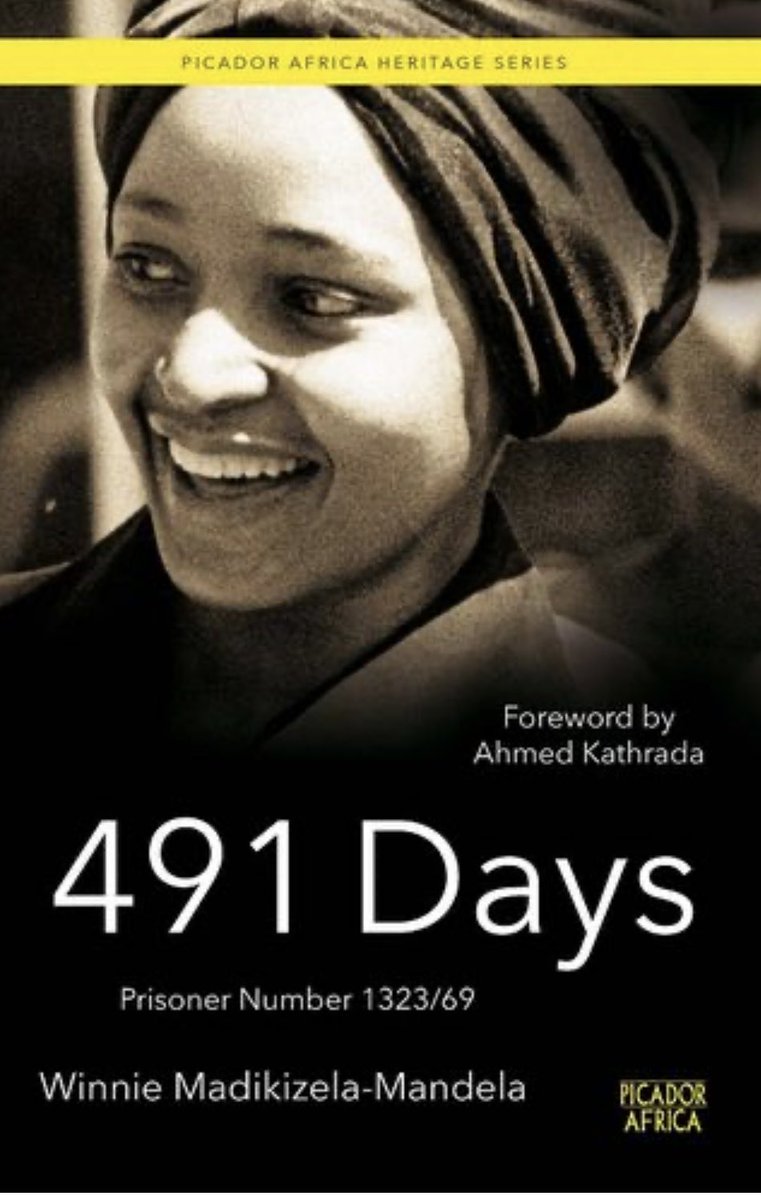
With my own limited and humble exposure to Mama Winnie Madikizela-Mandela, I find myself listening for voices that are no longer here to speak; those of her daughter Zindzi Mandela and her granddaughter Zoleka Mandela. Their absence in this documentary leaves a gap.
Like many, I am disappointed. What was presented as Mama Winnie telling her story in her own voice feels, instead felt like a narrowing of that voice. To reduce a life as expansive, as politically charged and as symbolically loaded as hers to the Stompie matter and the Truth and Reconciliation Commission is, at best, incomplete.
Yes, that chapter must be confronted, history demands honesty. However, when a singular narrative is repeatedly foregrounded, it begins to function less as reflection and more as framing. Sociologically, this is how complex figures are flattened through a selective emphasis that privileges scandal, controversy over context, and unbalanced individual moments over the broader political machinery within which those moments occurred. This documentary stripped away the conditions of apartheid brutality, the gendered nature of her persecution, and the burden she carried as both symbol and human being.
Mama Winnie was not a footnote in the struggle. She was a central force within it. A woman who embodied defiance under a system designed to break both body and spirit. To tell her story responsibly requires a wider lens. A lens that holds contradiction, yes, but also honours scale, influence and historical positioning.
Alas. For many of us who lived through those years and for those who have studied and understood them. No selective retelling will dislodge what we know to be true. She remains, unequivocally, one of the most recognisable faces and formidable forces of our liberation struggle.
Long live Mama Winifred Nomzamo Nobandla Madikizela-Mandela.
PS. Oh but I loved her Miranda Priestly moment “The little boys and girls of Lusaka” 🤣🤣🤣Be ku shoda nje u rha sies
ANC 2002 51st National Conference ft. President Thabo Mbeki, Deputy President Jacob Zuma and National Chairperson Mosiuoa ‘Terror’ Lekota. ✊🏿
Siyamazi uMbeki, uphethe iNEPAD ngesandla, uliqhawe lama qwawe. 🖤💚💛
Imivuzo yemisebenzi yakho,
Iyabonakala nanamhlanje,
Siyohlezi sikukhumbula njalo,
You will never be forgotten,
Uqhubeke ulale ngokuthula mama,
Qhawekazi
Mama Winnie Madikizela Mandela!🕊️
#SheMultiplied#RememberingMamaWinnie
On February 10, 1985, at a United Democratic Front (UDF) rally at Jabulani Stadium in Soweto, Zindzi Mandela famously read a letter from her imprisoned father, Nelson Mandela. Footage: Villon Films
If in any way I was also inside the Mbeki orbit, I won’t lie shame I’d probably also be working overtime to keep that PR machine polished and humming. One thing about uChief, he doesn’t play when it comes to networks. Therefore being anywhere near his inner circle is like unlocking a masterclass in strategic connections. You’re suddenly in rooms where decisions are shaped, ideas are sharpened, and business cards actually mean something. Career growth? Professional leverage? Business opportunities? The doors aren’t just open rather they’re held wide for you.
And let’s be honest, proximity comes with perks. When you’re benefiting from that ecosystem, it becomes very easy to soften your critiques or suddenly see things in a more “balanced” light towards him. The returns are real. Access is real. Influence is real. So you can’t be shocked when some people become full-time praise singers when they are welcomed in his orbit, just because incentives matter.
Still, credit where it’s due. The Mbeki brand is tightly managed and remarkably disciplined. After Tata Nelson Mandela(Who also had a solid post presidency), the team around former President Thabo Mbeki did the necessary groundwork to make sure his post-presidency presence wasn’t just ceremonial. His post presidency office and foundation have remained structured, functional, and intentional about maintaining relationships and influence. That kind of long-game thinking doesn’t happen by accident. Love him or critique him, the machinery behind him is extremely solid, well organized and it shows, equally beneficial to him and those in his inner circle.