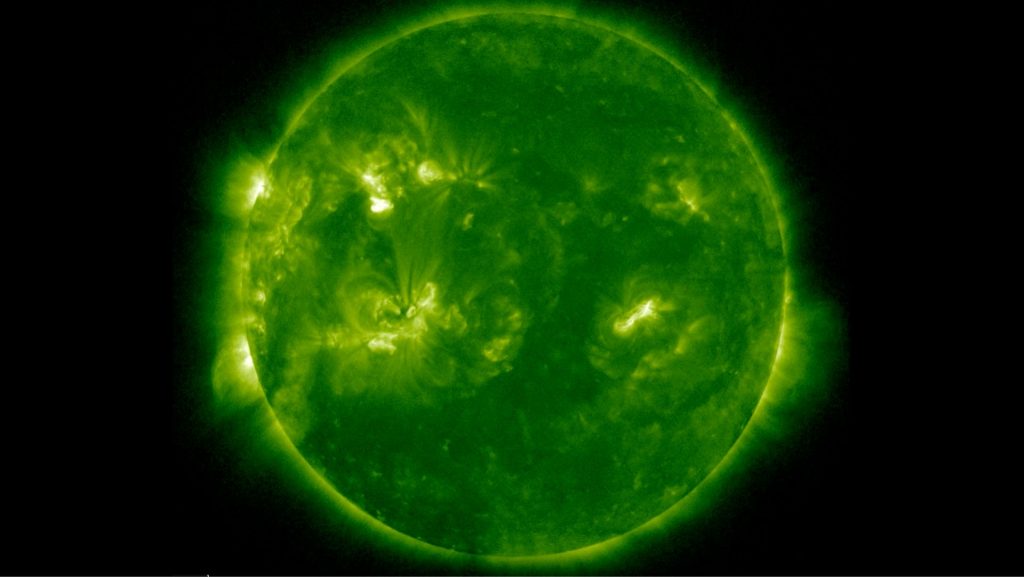
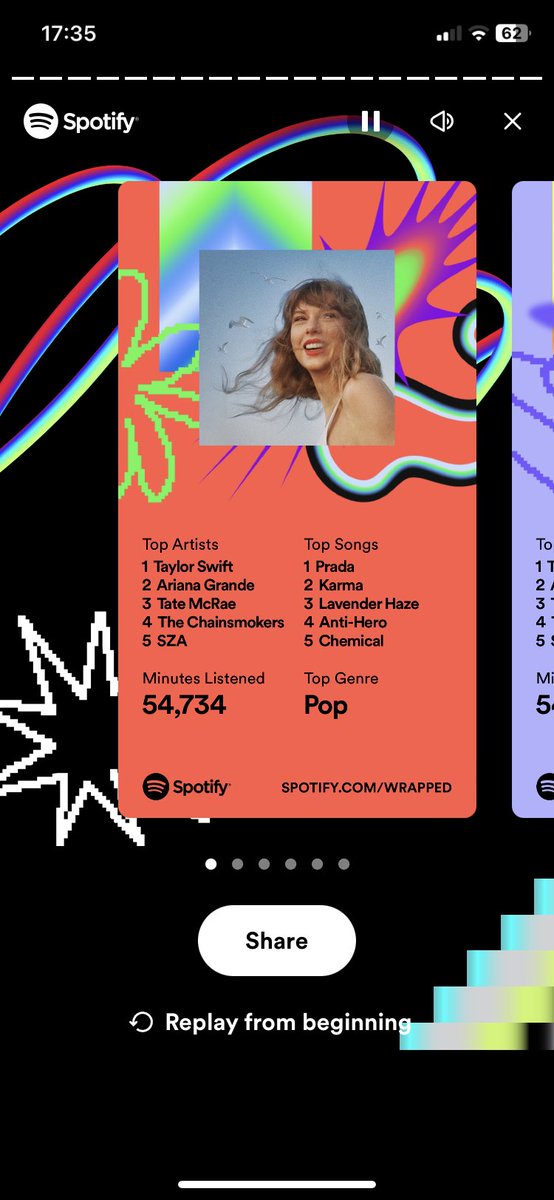
The three body problem. it introduced me to a whole concept of astrophysics i haven't heard of and i went on a rabbit whole trying to solve the sad problem😭
The South African National Space Agency (SANSA) has put out a warning for elevated geomagnetic storm activity to affect the Earth on Tuesday. https://t.co/0snsoEfDtm
Here’s a 17min deep dive on advanced prompting techniques for LLMs.
Fully demonstrated on a real-world, multi-step AI workflow.
Watch for a complete breakdown.
ChatGPT Advanced Voice Mode reciting the beginning of “A Tale of Two Cities” but pretending to fall asleep → acting boldly on stage → with a British accent → while running from a lion
Exciting updates on Project GR00T! We discover a systematic way to scale up robot data, tackling the most painful pain point in robotics. The idea is simple: human collects demonstration on a real robot, and we multiply that data 1000x or more in simulation. Let’s break it down:
1. We use Apple Vision Pro (yes!!) to give the human operator first person control of the humanoid. Vision Pro parses human hand pose and retargets the motion to the robot hand, all in real time. From the human’s point of view, they are immersed in another body like the Avatar. Teleoperation is slow and time-consuming, but we can afford to collect a small amount of data.
2. We use RoboCasa, a generative simulation framework, to multiply the demonstration data by varying the visual appearance and layout of the environment. In Jensen’s keynote video below, the humanoid is now placing the cup in hundreds of kitchens with a huge diversity of textures, furniture, and object placement. We only have 1 physical kitchen at the GEAR Lab in NVIDIA HQ, but we can conjure up infinite ones in simulation.
3. Finally, we apply MimicGen, a technique to multiply the above data even more by varying the *motion* of the robot. MimicGen generates vast number of new action trajectories based on the original human data, and filters out failed ones (e.g. those that drop the cup) to form a much larger dataset.
To sum up, given 1 human trajectory with Vision Pro
-> RoboCasa produces N (varying visuals)
-> MimicGen further augments to NxM (varying motions).
This is the way to trade compute for expensive human data by GPU-accelerated simulation. A while ago, I mentioned that teleoperation is fundamentally not scalable, because we are always limited by 24 hrs/robot/day in the world of atoms. Our new GR00T synthetic data pipeline breaks this barrier in the world of bits.
Scaling has been so much fun for LLMs, and it's finally our turn to have fun in robotics! We are building tools to enable everyone in the ecosystem to scale up with us. Links in thread:
Claude 3.5 Sonnet creates fully working ChatGPT clone from just a screenshot in 2 minutes.
It uses Llama-3 running locally on your computer (100% free and without internet).
Claude 3.5 Sonnet creates fully working ChatGPT clone from just a screenshot in 2 minutes.
It uses Llama-3 running locally on your computer (100% free and without internet).
Yes, you can. Voting is a right, not a requirement. This thinking is regressive guys, let’s find more productive ways of convincing people to vote — giving the merits of casting a ballot, for example…