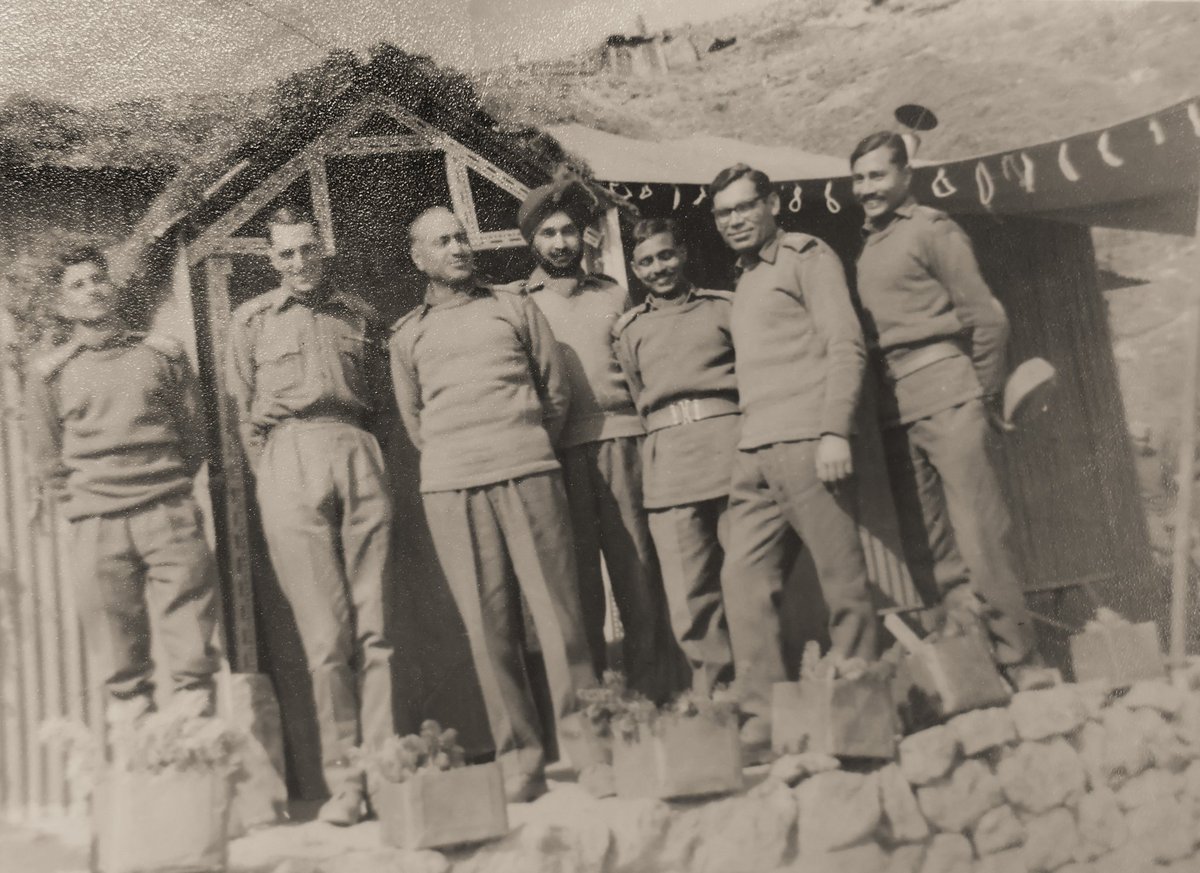
Lt Col Laxman Singh Bhati and Officers of 5 Mahar at Doka La, Sikkim.
The same location which saw the 72 days long stand off in 2017. In 1965 Lt Col Laxman Singh saw Doka La as a strategic location, so he occupied it and now we all know its importance.
That is the fraud.
American power on screen is “craft.”
British power on screen is “heritage.”
Indian power on screen is suddenly evidence of political conditioning.
Same cinema. Same nationalism. Different skin colour.
The Economist has a wonderfully colonial rulebook for cinema. When America straps a camera to Pentagon hardware and sells state power with a soundtrack, it is “spectacle.” When a film is made with CIA-adjacent mythology around national revenge, it is “serious storytelling.” But when India puts its own enemies and terrorist attack scars on screen, suddenly the magazine reaches for the psychiatrist’s couch.
That is the real joke here. Fighter jets, spies, commandos and national vengeance are perfectly acceptable as long as the flag fluttering in the background is American or British. Then it is culture. It is craft. It is cinema doing what cinema does. The Economist has invented a very elegant little rule for cinema: Top Gun: Maverick can fly on Pentagon muscle, RAMBO & Zero Dark Thirty can ride CIA mythology, James Bond can sell six decades of British spy glamour, Dunkirk can turn wartime memory into national legend, and all of that is called storytelling. But the moment India puts terror, retaliation and national memory on screen with Dhurandhar, the magazine starts diagnosing the audience instead of reviewing the film.
What @TheEconomist cannot digest is not one film. It is the fact that Indians are no longer outsourcing their memory to London’s approval. A country that has lived through decades of Pakistan-sponsored terror is apparently expected to process all that pain in whispers, with tasteful disclaimers, and preferably under the supervision of foreign editors who still think they are qualified to explain India to Indians.
And that is why the review reeks. Not of sophistication, but of the old imperial tic: Western nationalism on screen is a nation telling its story; Indian nationalism on screen is a pathology requiring diagnosis. The costume has changed. The sneer has not.
The funniest part is that The Economist probably thinks this is fearless criticism. It is not. It is just another imported lecture from people who never mind propaganda when it wears aviators, a tuxedo, or a CIA badge, but develop exquisite moral sensitivity the moment India stops being apologetic on its own screen.
Just FYI: Decades of Pakistan-sponsored terror are apparently meant to be processed quietly, apologetically, and preferably without ever producing a mass-market cultural response. That is the old script. India is no longer following it.
Some folks hike for the views, but I hike for the history.
I’ve been climbing Mount Sharp since 2014, reading layers of Martian rock. Each one holds clues from a time when Mars was more Earth-like. The Red Planet has stories to tell – and I’m enjoying every chapter.
Someone recently said to me,
“The problem with social media is that it took away the audience and gave everyone a stage.”
I think about this nearly every day.
The art of communication is essentially the art of storytelling. Our ancient culture has its roots in storytelling. But we need to revive & refine those skills. In the meantime, here’s an Australian giving us a master class…👏🏽👏🏽👏🏽